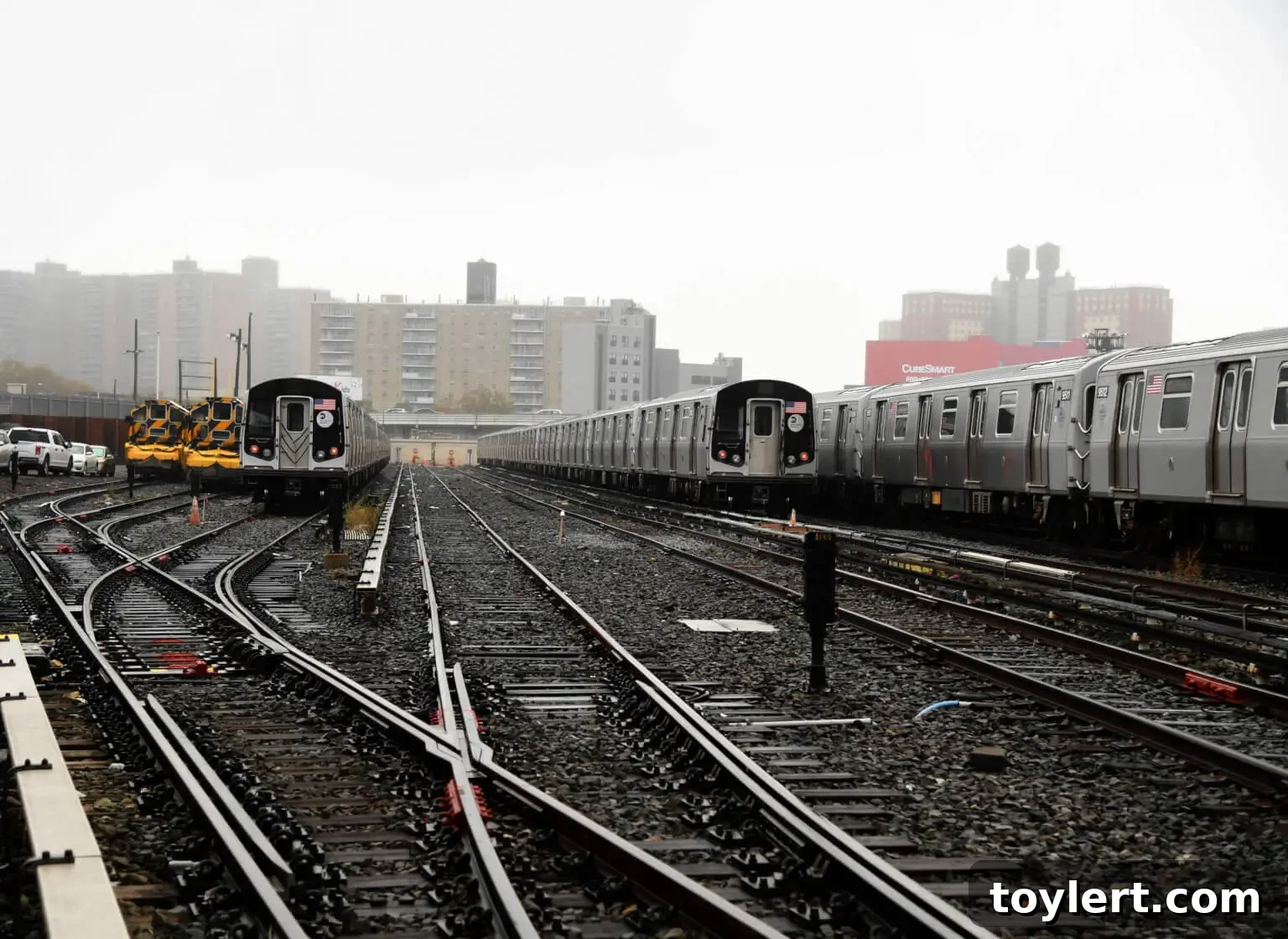
Major D Train Service Disruptions Announced for Southern Brooklyn: Critical Flood-Proofing at Coney Island Yard Underway
D Train Service Cuts Impact Southern Brooklyn for Extensive Flood-Proofing Project
The Metropolitan Transportation Authority (MTA) has announced significant service disruptions for the D train in southern Brooklyn, set to last for over three months this fall. This extensive undertaking is critical for flood-proofing the vital Coney Island Yard, a complex that suffered severe damage during Superstorm Sandy in 2012. The announcement, made on August 17, details a comprehensive plan to bolster the infrastructure against future extreme weather events, ensuring the long-term resilience of New York City’s transit system.
Commuters reliant on the D train will experience a complete suspension of service between Bay 50th Street and Coney Island-Stillwell Avenue for a substantial 15-week period, commencing September 18 and continuing through January 3. This crucial window allows the MTA to deploy specialized teams and equipment, dedicating resources to a project of paramount importance for the security and operational continuity of the subway network.
New York City Transit Interim President Craig Cipriano underscored the necessity of these proactive measures, stating, “Superstorm Sandy showed us that we need to ensure that all of our NYC Transit facilities need to be protected, resilient and fortified against future natural disasters.” This sentiment reflects a broader commitment from the MTA to not only repair but fundamentally upgrade its infrastructure in the face of escalating climate challenges, prioritizing the safety and reliability of transit services for millions of New Yorkers.
Understanding the D Train Service Changes: What Riders Need to Know
The upcoming D train service curtailments represent a significant but necessary adjustment for thousands of daily commuters in southern Brooklyn. From Saturday, September 18, 2021, until Monday, January 3, 2022, D train service will not operate south of Bay 50th Street. This means all stations between Bay 50th Street and the Coney Island-Stillwell Avenue terminal, including Neck Road, Sheepshead Bay, Brighton Beach, Ocean Parkway, West 8th Street-New York Aquarium, and Coney Island-Stillwell Avenue, will not be served by D trains.
This 15-week duration has been meticulously planned to coincide with periods that, while still impacting ridership, allow for a concentrated effort to complete the complex flood-proofing work. The MTA understands the inconvenience this will cause and is working to provide alternative transportation options and clear communication channels. Riders are strongly advised to plan their commutes well in advance, consult the MTA’s official website, and utilize real-time transit apps for the most up-to-date information regarding service changes and alternative routes.
Alternative Travel Options for Affected D Train Commuters
To mitigate the impact of the D train service suspension, the MTA will be implementing several alternative transportation strategies. These may include:
- Enhanced Bus Service: Supplemental bus service will be available to connect affected neighborhoods with operational subway lines, particularly the F, N, and Q trains. Specific routes and increased frequency will be announced closer to the start date.
- Free Shuttle Buses: Dedicated shuttle buses are often provided to bridge gaps in subway service, connecting riders between the disrupted D train segment and active stations on other lines.
- Utilizing Nearby Subway Lines: Riders in areas like Coney Island and Brighton Beach may be able to access the N and Q trains at nearby stations. Understanding the walking distances or local bus connections to these alternative lines will be crucial.
- Commuter Rail Options: While not directly replacing subway service, some commuters might find express bus services or Long Island Rail Road (LIRR) options from certain Brooklyn neighborhoods to be viable alternatives for longer journeys into Manhattan.
The MTA emphasizes the importance of checking official sources for the most current information regarding these alternatives, as details can evolve. Digital screens at stations, in-train announcements, and the MTA’s website and social media channels will be vital resources for navigating these service changes.
The Imperative for Resilience: Lessons from Superstorm Sandy
The decision to undertake such an extensive and disruptive project stems directly from the devastating lessons learned during Superstorm Sandy in October 2012. The storm, which brought unprecedented flooding to coastal areas of New York City, inflicted catastrophic damage across the MTA’s vast network. The Coney Island Yard, strategically located near the waterfront, was one of the hardest-hit facilities.
During Sandy, the yard was inundated by several feet of saltwater, submerging tracks, damaging critical signal systems, destroying electrical infrastructure, and compromising maintenance equipment. The sheer scale of the damage paralyzed operations, requiring months of intense repair work and significantly impacting D, F, N, and Q train services that rely on the yard. The costs associated with these repairs ran into hundreds of millions of dollars, not to mention the immeasurable cost of prolonged service disruptions to the public.
Craig Cipriano’s statement serves as a stark reminder that while the immediate aftermath of Sandy has passed, the long-term threat of climate change and extreme weather events remains. This flood-proofing project is not merely a repair; it is an investment in future preparedness, aiming to prevent a recurrence of such widespread damage and the subsequent operational shutdowns.
Coney Island Yard: The Heart of Southern Brooklyn’s Subway Operations
The Coney Island Yard is not just any transit facility; it is one of the largest and most critical rail yards in the entire New York City subway system. Spanning over 74 acres, it serves as a central hub for the storage, inspection, maintenance, and repair of a significant portion of the MTA’s train fleet, particularly for the D, F, N, and Q lines. Hundreds of subway cars are housed here, undergoing routine checks, major overhauls, and emergency repairs.
Its strategic location also makes it a vital dispatch point for trains entering service, directly influencing the frequency and reliability of trains on several major lines that connect southern Brooklyn to Manhattan and other boroughs. When the Coney Island Yard is compromised, the ripple effects are felt throughout the entire system, highlighting why its resilience is non-negotiable for the MTA.
The flood-proofing efforts at this critical facility are multifaceted, involving the installation of new flood barriers, elevating key electrical and signal equipment above potential flood levels, improving drainage systems to swiftly remove excess water, and fortifying existing structures. These upgrades are designed to create a robust defense against future storm surges and heavy rainfall, safeguarding not only the physical assets within the yard but also the continuity of subway service for millions of New Yorkers.
MTA’s Broader Vision for Climate Resilience
The Coney Island Yard flood-proofing project is a cornerstone of the MTA’s broader, system-wide climate resilience program. Following Superstorm Sandy, the MTA embarked on an ambitious journey to assess vulnerabilities and implement protective measures across its vast network of tunnels, yards, stations, and power infrastructure. This includes projects at other flood-prone locations, such as subway tunnels under the East River and coastal train depots.
This comprehensive approach involves significant investment in innovative engineering solutions, technological advancements, and enhanced operational protocols. The MTA recognizes that a truly resilient transit system must be able to withstand and recover quickly from increasingly frequent and severe weather events. This commitment to resilience is not just about protecting infrastructure; it’s about protecting the city’s economy, enabling its workforce, and maintaining the quality of life for its residents.
While the service disruptions caused by these projects are undoubtedly challenging for commuters, they represent a vital investment in the future. By proactively addressing vulnerabilities now, the MTA aims to prevent even greater disruptions and far more extensive repair costs down the line. It’s a strategic trade-off: short-term inconvenience for long-term reliability and safety.
Navigating the Changes: Tips for D Train Commuters
For those affected by the D train service changes, preparedness is key. Here are some essential tips:
- Stay Informed: Regularly check the MTA website (mta.info), download the MyMTA app, and follow MTA social media channels for real-time updates and service advisories.
- Plan Ahead: Allow extra travel time for your commute. Explore alternative routes using online trip planners like Google Maps or Citymapper, which integrate MTA data.
- Identify Alternatives: Familiarize yourself with the bus routes and other subway lines (F, N, Q) that can serve as alternatives from your usual D train station. Understand where shuttle buses will operate.
- Consider Off-Peak Travel: If your schedule allows, consider adjusting your travel times to avoid peak hours, which may see increased demand on alternative services.
- Patience and Understanding: These projects are complex and essential. While inconvenient, understanding the critical nature of the work can help manage expectations during this period.
Looking Towards a More Resilient Future for NYC Transit
The intensive flood-proofing work at the Coney Island Yard marks another critical step in the MTA’s ongoing mission to build a more robust and resilient transit system. By confronting the challenges posed by climate change head-on, the authority is not only safeguarding its physical assets but also ensuring the enduring functionality of New York City’s public transportation backbone.
Upon completion of this project in early January, southern Brooklyn D train riders will benefit from a more secure and reliable service, less susceptible to the devastating impacts of future storms. This long-term investment underscores the MTA’s dedication to providing a safe, efficient, and dependable transit experience for all New Yorkers, come what may.
The MTA extends its gratitude to all affected commuters for their patience and understanding during this essential construction period. The temporary inconvenience will pave the way for a stronger, more resilient subway system, ready to serve the city for generations to come.