131 Remsen Street: A Timeless Grandeur in Brooklyn Heights
Nestled within the prestigious Brooklyn Heights Historic District, 131 Remsen Street stands as a magnificent testament to the opulence and architectural prowess of 19th-century New York. This remarkable brownstone, with its imposing facade and rich history, offers a captivating glimpse into Brooklyn’s past, seamlessly bridging the gap between its Gilded Age origins and its vibrant present. Far more than just a building, it embodies the enduring legacy of a neighborhood that has consistently attracted the city’s most influential residents, shaping the very fabric of urban elegance. Join us as we explore the captivating journey of this iconic edifice, from its construction amidst a burgeoning era of wealth to its current role as a cherished landmark.
The Golden Age of Brooklyn Heights: A Canvas for Prosperity
The mid-19th century marked an extraordinary period of transformation for Brooklyn. As New York City burgeoned into a global economic powerhouse, Brooklyn, directly across the East River, emerged as a vital hub for industry, commerce, and residential development. Its bustling docks became the arteries of trade, fueling fortunes for merchants, industrialists, and financiers who sought to establish their homes in proximity to their enterprises, yet removed from the clamor of Manhattan’s growing metropolis. Brooklyn Heights, with its elevated position offering breathtaking views of the harbor and lower Manhattan, quickly became the borough’s most coveted address. It was here, in the flourishing 1850s, that a wave of ambitious construction reshaped the neighborhood, giving rise to the magnificent brownstone mansions that define its character even today.
Streets like Remsen, replete with their stately homes, were meticulously planned to cater to the discerning tastes of this burgeoning elite. Families whose wealth stemmed from shipping empires, textile mills, banking institutions, and innovative industries invested heavily in these grand residences, transforming Brooklyn Heights into a veritable showcase of Victorian-era prosperity. These homes were not merely places of dwelling but symbols of status, architectural expressions of their owners’ success and refined sensibilities. The very air of Brooklyn Heights during this era hummed with the ambition and cultural sophistication of a city coming into its own, a city proud of its unique identity while intimately connected to the larger narrative of American prosperity. The construction of 131 Remsen Street epitomized this period, rising as a jewel in the crown of a district built on ambition and designed for luxury.
131 Remsen Street: An Architectural Masterpiece Unveiled
A Monument to Italianate Grandeur
Constructed around the 1850s, a time when Brooklyn Heights was witnessing unprecedented growth and architectural ambition, 131 Remsen Street (then under a different numbering system) immediately distinguished itself as a residence of unparalleled scale and sophisticated design. Its sheer size alone was remarkable: a colossal 50 feet wide and 88 feet long, encompassing an astounding 15,000 square feet of living space. This was not merely a house; it was a mansion built to impress, a testament to the boundless aspirations of its original owner.
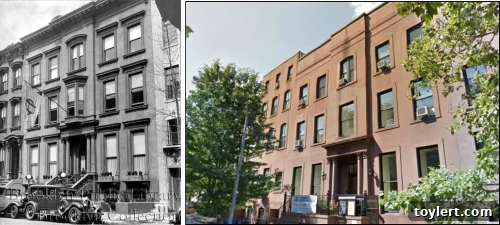
The architectural style chosen for this magnificent home was Italianate, a popular choice during the mid-19th century that drew inspiration from Renaissance villas and palazzo designs. The Italianate style, characterized by its distinctive classical elements and robust forms, perfectly captured the era’s taste for grandeur and romanticism. A photograph from 1935, preserving a snapshot of its original glory, reveals a building virtually unchanged from its initial construction. The facade was adorned with exquisitely crafted brownstone window hoods and sills, lending a sense of weight and intricate detail to each opening. A projecting oriel window, a distinctive bay that extends beyond the main wall of the building, gracefully crowned the space above the main entrance, adding depth, character, and an additional vantage point from which to observe the bustling street below. Above, a series of elegant attic dormers peeked out from the roofline, hinting at additional spacious accommodations within. The entire structure was topped by a large, rugged cornice, a decorative molding that not only provided a stately finish but also dramatically emphasized the building’s robust construction and classical proportions. An elegant, sweeping front stairway, a quintessential feature of brownstone architecture, led majestically to the massive, imposing front door, inviting visitors into a world of refined luxury and old-world charm.
Life Within the Mansion Walls
To imagine life within 131 Remsen Street during its prime is to conjure images of Gilded Age extravagance. A residence of this magnitude would have been home to a prominent family, likely a captain of industry or a leading figure in finance, whose daily life would have been meticulously managed by a dedicated staff of servants. The immense square footage would have accommodated grand reception rooms, formal dining halls, libraries, and numerous bedrooms, each exquisitely furnished with the finest materials of the era. Social gatherings would have been a hallmark of such a residence, with lavish balls, intimate soirées, and intellectual discussions filling its capacious interiors. This house was not merely a shelter; it was a center of social activity, a place where business deals were subtly forged, alliances solidified, and cultural trends celebrated.
The original occupants would have been integral to the social fabric of Brooklyn Heights, participating in its civic life, contributing to its cultural institutions, and enjoying the exclusive amenities the neighborhood offered. The very design of the house, from its grand entrance to its private living quarters, spoke volumes about the social standing and refined lifestyle of those who called it home. It stood as a bastion of privacy and privilege, yet simultaneously an outward declaration of success and taste.
Transformation Through Time: From Private Residence to Iconic Institution
As the decades turned, Brooklyn, like all major urban centers, underwent significant socio-economic shifts. The early 20th century brought changes in family structures, economic downturns, and evolving urban planning, often prompting large private residences to transition into new roles. Many mansions in Brooklyn Heights eventually became multi-family dwellings, schools, or, as was the fortunate fate of 131 Remsen Street, a prestigious private club. The building’s inherent grandeur and robust construction made it an ideal candidate for adaptive reuse, allowing its historical integrity to be preserved while serving a new communal purpose.
It is widely understood that this magnificent address eventually became home to a distinguished social institution, likely referred to as “The Brooklyn Club.” Such private clubs were popular among the city’s elite, offering a sanctuary for members to socialize, conduct business, dine, and relax in an atmosphere of exclusivity and camaraderie. The transition from a single-family home to a private club would have involved careful renovation to accommodate larger public spaces while retaining the residential feel in specific areas. The grand reception rooms would have become elegant lounges and dining halls, the libraries perhaps transformed into reading rooms or private meeting spaces. The club would have attracted a diverse membership of influential professionals and community leaders, maintaining the building’s legacy as a hub of prominent social activity. This change marked a crucial chapter in the building’s history, demonstrating its adaptability and ensuring its continued relevance as a landmark within Brooklyn Heights, cherished by its members and admired by the public.
Preserving the Legacy: 131 Remsen Street Today
Today, 131 Remsen Street remains an integral and highly celebrated feature of the Brooklyn Heights streetscape. Its conversion into a private club or similar institutional use has allowed this architectural gem to withstand the test of time, escaping the fate of demolition or unsympathetic alteration that befell many other historic buildings. The building’s continued existence is a testament to the foresight of those who recognized its architectural and historical value and committed to its preservation.
The entire Brooklyn Heights neighborhood gained landmark status in 1965, becoming New York City’s first historic district. This designation has provided an invaluable layer of protection, ensuring that structures like 131 Remsen Street are maintained according to stringent preservation guidelines, safeguarding their original character and contributing to the district’s overall charm and integrity. The area continues to attract discerning residents and visitors alike, drawn by its tree-lined streets, historic architecture, and vibrant community spirit. 131 Remsen Street, with its majestic presence, stands as a prime example of successful urban preservation, demonstrating how historical buildings can gracefully evolve to serve contemporary needs while retaining their essential historical narrative.
The current state of the building, whether still operating as a private club or having undergone further transformations, continues to uphold its status as a significant architectural asset. Its well-preserved facade and enduring grandeur are a daily reminder of Brooklyn’s rich heritage and the meticulous craftsmanship of a bygone era. For those walking past, it evokes a sense of wonder and curiosity about the lives lived within its walls, both past and present. It remains a cornerstone of Remsen Street’s elegant row, contributing significantly to the aesthetic and historical depth of Brooklyn Heights, an area frequently cited as one of New York City’s most desirable and historically rich neighborhoods.
The Enduring Narrative of Brooklyn Heights
The story of 131 Remsen Street is intrinsically woven into the larger narrative of Brooklyn Heights itself. It represents the very essence of “then and now” – a journey from a private dwelling of unparalleled luxury in the 1850s to a cherished landmark that continues to anchor the aesthetic and historical identity of a world-renowned neighborhood. This building, alongside its brownstone brethren, tells a tale of ambition, architectural innovation, community development, and steadfast preservation. It reminds us that cities are living entities, constantly evolving, yet deeply rooted in their past.
Understanding and appreciating structures like 131 Remsen Street is crucial for recognizing the cultural heritage embedded within our urban landscapes. They serve as tangible links to previous generations, offering insights into their lifestyles, values, and artistic expressions. The enduring charm of Brooklyn Heights, largely attributed to the meticulous preservation of its historic architecture, ensures that the legacy of these magnificent buildings will continue to inspire and educate for centuries to come. The visual splendor of Remsen Street, with 131 as a shining example, continues to captivate residents and visitors, cementing Brooklyn Heights’ reputation as a timeless urban sanctuary.
Conclusion
From its conception as a colossal Italianate mansion in the bustling 1850s to its current status as a distinguished institution and cherished landmark, 131 Remsen Street encapsulates the dynamic history and enduring allure of Brooklyn Heights. This architectural marvel, with its grand scale and intricate details, stands as a vivid reminder of the Gilded Age prosperity that shaped the neighborhood and the city. Its journey through time, from a private family residence to a venerable club, reflects the adaptive spirit of urban architecture and the unwavering commitment to historical preservation.
As we gaze upon its stately facade, we are transported through epochs, witnessing the continuous evolution of Brooklyn while appreciating the steadfast beauty of its past. 131 Remsen Street is more than just an address; it is a repository of stories, a symbol of architectural excellence, and a proud testament to the timeless grandeur of Brooklyn Heights. Its ongoing presence ensures that the rich narrative of this iconic neighborhood continues to be told, inspiring future generations to cherish and protect these irreplaceable urban treasures.