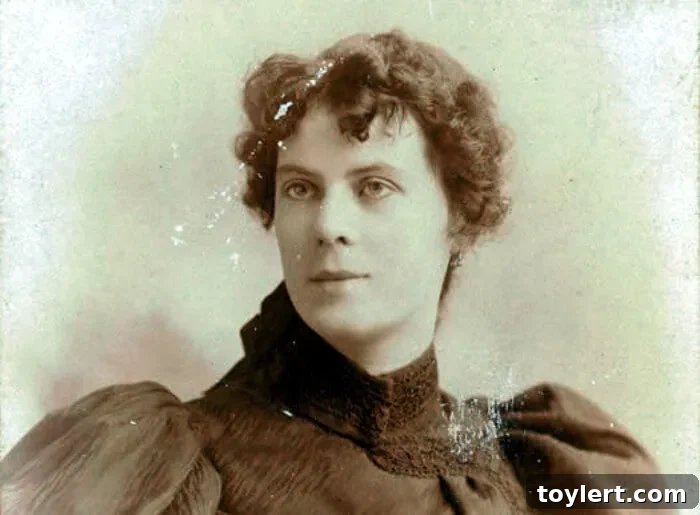
May 5th is a date celebrated by millions as Cinco de Mayo, a vibrant commemoration of heritage and victory. Yet, for those intimately familiar with the annals of Troy, New York’s rich and often surprising past, this date also marks a different kind of anniversary: the passing of one of the city’s most colorful and undeniably interesting figures. Her name was Mary Alice Fahey, though she was universally known throughout the Collar City as “Mame Faye.” For over four decades, Mame Faye presided over Troy’s most renowned house of ill repute, carving out a legendary status that stretched across the entire Capital Region and beyond. Her establishment, a veritable institution, was strategically nestled in the very heart of the city’s infamous Red Light District, affectionately dubbed “The Line,” directly opposite the bustling railroad station.
The stark reality of “The Line’s” existence, and the illicit activities it harbored, was an open secret. The district operated with a brazen visibility that almost defied belief, especially given its proximity to law enforcement. The police station itself was merely three buildings away, a stone’s throw from the very epicenter of Mame Faye’s enterprise. This close proximity meant there was no plausible deniability; the law, and indeed the entire populace of Troy, was intimately aware of “The Line” and what transpired within its walls. What Mame Faye and her industrious colleagues engaged in was unequivocally illegal, a fact that seemed to paradoxically empower its presence. Despite its unlawful nature, the sex industry in Troy flourished, even reaching a point where its operations were, incredibly, advertised in local newspapers.
Mame Faye: The Enduring Legend of Troy’s Underworld
Troy, during its golden age, was a city of remarkable contrasts. On one hand, it was an industrial titan, a beacon of wealth and progress. On the other, it harbored a thriving, albeit illicit, underworld openly managed by figures like Mame Faye. While a flourishing sex industry was certainly not the image the Collar City’s civic leaders wished to cultivate or proudly display, its undeniable presence forms an essential, dramatic chapter in Troy’s complex narrative. Mary Alice Fahey’s story is not merely that of a madam; it is a fascinating exploration of societal norms, economic realities, and the powerful personalities that navigated the grey areas of American urban life in the late 19th and early 20th centuries. Her ability to operate so openly and successfully for such an extended period speaks volumes about the pragmatic realities and unspoken agreements that often underpinned civic life during this era.
The Roots of a Legend: Mary Alice Fahey’s Early Life
Mary Alice Fahey was born in 1866, a pivotal year in American history, marking the immediate aftermath of the Civil War and the dawn of a new industrial age. She was the child of Thomas Fahey and Margaret McNamara Fahey, two of the thousands of resilient Irish immigrants who embarked on the arduous journey across the Atlantic to America in the mid-19th century. Like countless others, the Faheys were drawn to Troy by the irresistible promise of employment within the city’s booming iron and textile industries. These factories were the engines of Troy’s tremendous wealth, transforming it into one of America’s richest cities – a true jewel of industry and prosperity nestled gracefully along the banks of the Hudson River. This background as the child of Irish immigrants, seeking a new life amidst the industrial might of Troy, likely instilled in Mame Faye a unique blend of resilience, adaptability, and an acute understanding of the societal structures and opportunities available, or indeed unavailable, to working-class populations.
The journey of Irish immigrants to cities like Troy was often fraught with hardship, yet it was also a testament to hope and determination. Fleeing famine and political turmoil in their homeland, they arrived in America seeking refuge and a chance for a better life. Troy, with its burgeoning factories and demand for labor, offered just that. The Fahey family, like many others, contributed to the vibrant cultural tapestry and the relentless work ethic that defined Troy. This early exposure to the challenges and opportunities of a rapidly industrializing city, coupled with the inherent resilience passed down through generations of immigrants, undoubtedly shaped Mary Alice Fahey into the formidable woman who would later become “Mame Faye.” It’s plausible that her family’s experience, understanding the struggles of those on the fringes, may have subtly influenced her later path and her ability to manage a business that catered to complex human needs in a less-than-legal setting.
Troy: An Industrial Powerhouse and a City of Contradictions
To truly understand Mame Faye’s prominence, one must first grasp the context of Troy, New York, during her lifetime. In the late 19th and early 20th centuries, Troy was a powerhouse, a testament to American industrial might. Known proudly as the “Collar City” due to its dominance in the detached collar and shirt manufacturing industry, Troy also boasted formidable ironworks, textile mills, and a strategic location at the confluence of the Hudson River and the Erie Canal. This geographical advantage facilitated the rapid transport of raw materials and finished goods, making Troy a central hub of commerce and innovation. The city was home to numerous millionaires, grand architecture, and a vibrant cultural scene. Its wealth was palpable, reflected in the opulent mansions and thriving downtown, attracting a diverse population of workers, entrepreneurs, and dreamers.
This immense wealth and industrial prosperity, however, created a unique social environment. A large influx of transient male workers, sailors, and businessmen passed through Troy regularly, often far from home and seeking various forms of entertainment and companionship. This demographic reality, coupled with prevailing social attitudes that often relegated women to limited economic opportunities, created fertile ground for industries like the one Mame Faye would come to dominate. The demand for the “oldest profession” was an undeniable byproduct of industrial growth and urbanization, a shadow industry that often thrived in the very cities that prided themselves on their moral rectitude and economic advancement.
“The Line”: Troy’s Open Secret
“The Line” was not merely a cluster of establishments; it was an integral, if unspoken, part of Troy’s urban landscape. Located, as it was, directly across from the railroad station, it was perhaps the first sight for many weary travelers and the last stop for others before departing. Its highly visible placement and close proximity to the police station speak volumes about a tacit understanding between elements of the city’s power structure and the proprietors of the Red Light District. This wasn’t necessarily explicit corruption, but often a pragmatic acceptance. Prostitution, though illegal, was frequently seen as an undesirable but necessary evil, a way to manage social tensions and provide an outlet for certain demands, particularly in port cities and industrial hubs. For authorities, it was often easier to contain and regulate such activities within a designated district rather than attempting to eradicate them entirely, which was often viewed as an impossible task.
Mame Faye, through her shrewd management and extended tenure, became the undisputed “Queen” of this district. Her ability to navigate the complex social and legal landscape for over four decades is a testament to her intelligence, resilience, and likely, a keen understanding of human nature and local politics. She offered discretion, a sense of order, and perhaps even a degree of safety to both her employees and her clientele within her establishment. Unlike transient operations, Mame Faye’s bordello was a fixture, known for its consistent operation and perhaps even a certain level of decorum, under the watchful eye of its formidable madam. This stability contributed to her widespread recognition throughout the Capital Region; her name was synonymous with “The Line” and its particular brand of enterprise.
The Madame’s Role: More Than Just Business
In the historical context of the late 19th and early 20th centuries, madams like Mame Faye often held positions of considerable, albeit informal, power within their communities. They were astute businesswomen, managing finances, personnel, and public relations in a highly precarious and legally ambiguous environment. Beyond the immediate business of their establishments, madams frequently acted as unofficial social safety nets. They provided lodging, meals, and a livelihood for women who often had few other economic options due to poverty, lack of education, or societal ostracization. For many women, working in a bordello, while stigmatized, could offer a better standard of living and more independence than factory work or domestic service, albeit at a significant social cost.
Mame Faye’s longevity suggests a level of professionalism and community engagement that went beyond mere profit. It’s plausible she maintained good relationships with various community figures, possibly even contributing discreetly to local causes or supporting those in need. Her operation wasn’t just a place for illicit encounters; it was a hub within a specific social ecosystem, providing a service that, while morally debated, was in consistent demand. Her reputation wasn’t merely local; it resonated throughout the broader region, indicating a consistent quality of service or perhaps an unforgettable personality that left a lasting impression on all who encountered her or heard her tales.
Mame Faye’s Legacy: A Glimpse into Troy’s Hidden History
The story of Mary Alice “Mame” Faye is more than just a footnote in Troy’s history; it is a vibrant thread woven into the very fabric of the city’s past, illustrating the complex interplay of industrial growth, immigration, social reform efforts, and human nature. Her four-decade reign over Troy’s most famous bordello makes her a pivotal figure in understanding the social history of urban America during a transformative period. She embodied the spirit of a city that was at once respectable and notoriously vibrant, a place where wealth and vice often coexisted in plain sight.
As the decades progressed, social attitudes began to shift. The progressive era brought renewed calls for moral reform, and overt Red Light Districts like “The Line” gradually faced increasing pressure. While the official “closing” of such districts rarely meant the end of prostitution, it did force operations underground and change their public face. Mame Faye’s ability to maintain her business for so long highlights a particular era of tolerance and pragmatism that eventually gave way to more stringent enforcement and societal condemnation. Her passing on May 5th marks the end of an era, a final chapter for a woman who, against all odds, became an indelible part of Troy’s unique heritage. Her legend endures, reminding us that history is often found not just in grand monuments and official records, but in the colorful, controversial, and deeply human stories of figures like the unforgettable Mame Faye.