From Feral to Fabulous: A Century-Old Brooklyn Home’s Remarkable Transformation by BFDO Architects
In the vibrant heart of Brooklyn, even the most neglected historic homes hold untold potential. This was precisely the case for a century-old wood-frame house in Windsor Terrace, which, prior to its acquisition by a young family, had fallen into significant disrepair, becoming home to a colony of feral cats. What followed was an extraordinary journey of renovation, spearheaded by Alexandra Barker of Gowanus-based BFDO Architects. The project was so comprehensive that Barker herself described it as “probably one of the most extensive guts I’ve done,” underscoring the profound scale of transformation required to breathe new life into this venerable structure.
The initial state of the property presented a formidable challenge. Beyond the obvious issues stemming from years of neglect and animal habitation, the house, a two-story wood-frame edifice featuring a classic bay window at the front and an existing extension on the main floor, demanded a complete overhaul. The structural integrity and interior finishes had deteriorated to such an extent that very few elements were salvageable. This critical assessment paved the way for a holistic approach to renovation, ensuring that the rejuvenated home would not only meet contemporary living standards but also stand robustly for another century.
An Unprecedented Gut Renovation: Building Anew While Honoring the Past
The term “gut renovation” often implies a significant revamp, but in the context of this Brooklyn residence, it truly meant starting almost from scratch. Alexandra Barker’s statement, “Everything was replaced, except the joists,” perfectly encapsulates the depth of this project. The decision to retain the existing joists was a strategic one, offering a foundational anchor to the original structure while allowing for a complete redesign of every other component. This level of intervention goes beyond mere cosmetic upgrades; it speaks to a meticulous process of deconstruction and reconstruction, addressing not just aesthetic deficiencies but also fundamental structural, mechanical, and environmental improvements.
The challenge for BFDO Architects was to meticulously strip away decades of wear and tear, and in some cases, outright damage, to reveal the essential bones of the house. This extensive deconstruction phase was crucial for identifying any underlying issues that could compromise the long-term viability of the renovation. The architects and their team approached this task with precision, ensuring that the retained joists were structurally sound and capable of supporting the entirely new interior that would soon emerge.
The Architectural Vision: Marrying Heritage with Modern Functionality
The house’s original features, such as its two-story wood-frame construction and charming bay window, hinted at its historical character. BFDO Architects’ vision was not to erase this history but to reinterpret it through a modern lens, creating a home that respects its origins while catering to the needs of a contemporary family. The existing extension on the main floor, too, was integrated into this new narrative, likely reimagined to enhance flow and utility.
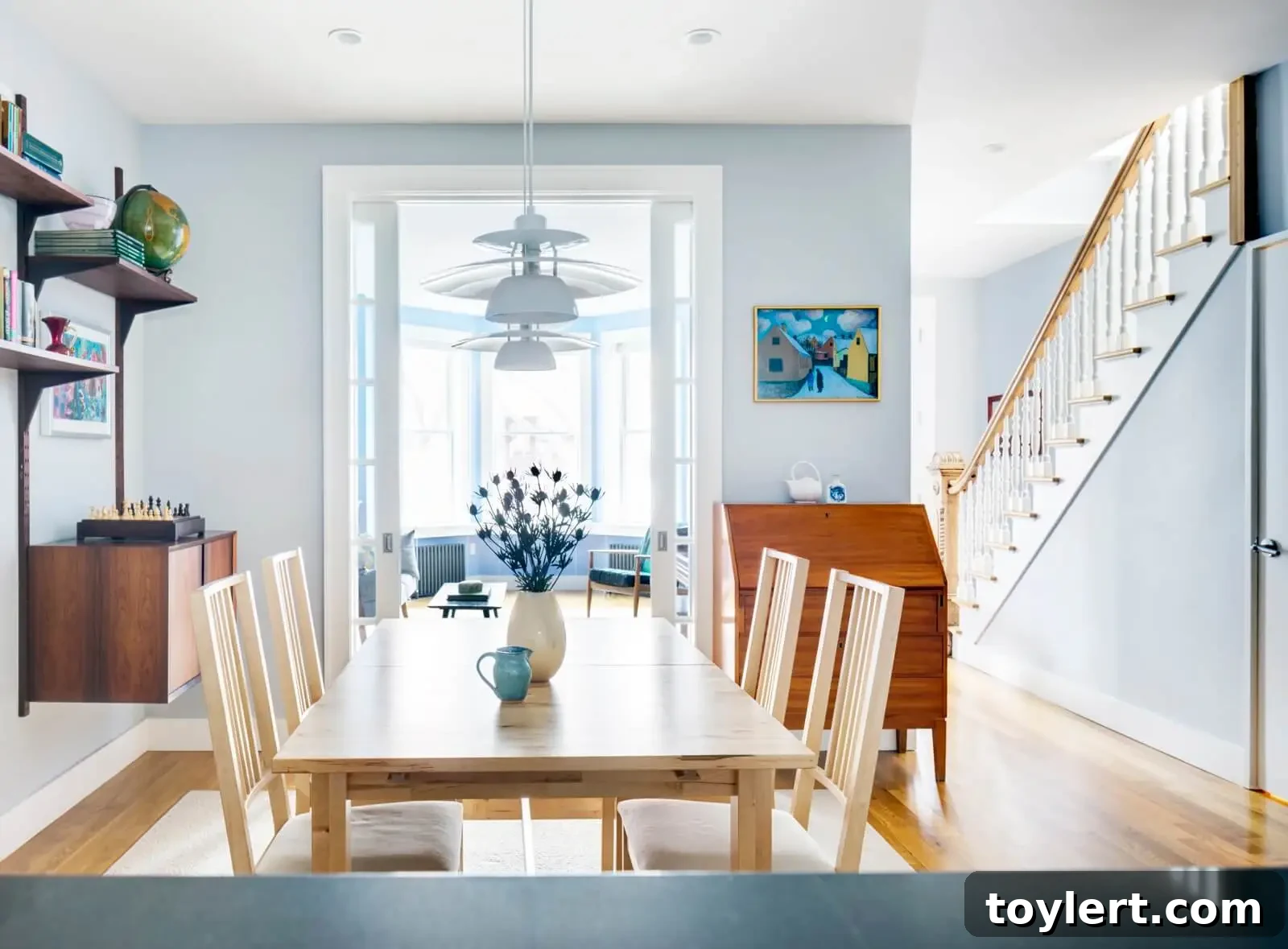
One of the most telling examples of this blend of preservation and innovation can be found in the home’s central staircase. In an undertaking where virtually every element was replaced, the architects made a deliberate choice to salvage only the newel posts, handrails, and spindles. These were carefully removed, restored, and then reincorporated into the new staircase structure. This decision speaks volumes about BFDO’s commitment to retaining whispers of the home’s past, allowing these beautifully crafted elements to stand as poignant reminders of its original grandeur amidst an otherwise brand-new interior. It creates a fascinating dialogue between the old and the new, adding layers of character and depth to the redesigned space.
Crafting Cohesive Interiors: A Symphony of New Materials and Finishes
With the structure stabilized and the decision made to rebuild the interiors almost entirely, the design team had a blank canvas to create a cohesive and functional living environment. Every new element was chosen with careful consideration for aesthetics, durability, and the specific needs of the young family. The result is a home that feels both fresh and timeless, a testament to thoughtful architectural planning.
The Heartbeat of the Home: A Revitalized Staircase
While the newel posts, handrails, and spindles were salvaged, the remainder of the staircase components required replacement. This included all the treads and risers, which are the horizontal and vertical surfaces of each step. The careful selection of new materials for these elements, designed to complement the restored original pieces, resulted in a staircase that is both visually stunning and structurally sound. The integration of old and new here is a masterful design move, preventing the space from feeling entirely sterile while firmly grounding it in a modern context. It provides an elegant transition between the home’s two stories, serving as a focal point that is both functional and artful.
Underfoot Elegance: The Enduring Appeal of White Oak Flooring
A crucial element in setting the tone for the entire interior was the choice of flooring. The architects opted for white oak throughout the main living areas, a selection celebrated for its enduring beauty, versatility, and robustness. White oak offers a light, airy aesthetic that contributes to a sense of openness and spaciousness, especially valuable in urban homes where natural light can be at a premium. Its subtle grain patterns and warm undertones provide a sophisticated backdrop, allowing other design elements to shine while maintaining a cohesive and inviting atmosphere. Furthermore, white oak is renowned for its durability, making it an ideal choice for a young family requiring resilient surfaces that can withstand daily wear and tear for decades to come.
Defining Spaces: New Walls, Doors, and Trim
Beyond the flooring and staircase, the renovation extended to every single wall, door, and piece of trim within the house. This comprehensive approach allowed BFDO Architects to redefine spatial relationships, optimize layouts, and introduce a consistent design language throughout the home. New walls were constructed to create efficient room configurations, improving flow and functionality. The selection of new doors, likely chosen for their clean lines and modern hardware, contributes to a streamlined aesthetic, while carefully chosen trim work provides subtle architectural detailing that frames each space with precision. This meticulous attention to detail ensures that even the seemingly minor elements contribute significantly to the overall refined and contemporary feel of the residence.
Bringing in the Light: The Impact of Replaced Windows
A significant aspect of the renovation involved replacing all the windows. This decision was multifaceted, addressing issues of energy efficiency, natural light, and aesthetic integration. Old, inefficient windows are often a major source of heat loss and drafts, so new, high-performance windows dramatically improve the home’s thermal envelope, leading to lower energy bills and a more comfortable interior climate year-round. Aesthetically, the new windows were likely chosen to enhance the home’s curb appeal, complement the renewed interior, and maximize the influx of natural light, which is crucial for creating bright and inviting living spaces. This upgrade not only modernized the home’s exterior appearance but also transformed the interior ambiance, connecting residents more intimately with the Brooklyn streetscape while maintaining privacy and comfort.
A Home Reborn: Meeting the Needs of a Modern Family
The culmination of this extensive renovation is a home that is perfectly tailored for its new occupants—a young family. The transformation from a dilapidated, cat-infested dwelling to a pristine, modern abode is nothing short of spectacular. The careful planning and execution by BFDO Architects ensured that every corner of the house now serves a purpose, offering functional elegance and a comfortable environment for growth and daily life. The open-plan areas likely foster family interaction, while individual spaces provide necessary privacy and tranquility.
This project exemplifies how a deep gut renovation, when approached with vision and expertise, can completely revitalize a historic property. It’s about more than just replacing old with new; it’s about reimagining how a space can function, enhancing its intrinsic beauty, and creating a sustainable foundation for future generations. The challenges posed by the house’s initial condition only served to highlight the ingenuity and dedication of Alexandra Barker and her team at BFDO Architects, solidifying their reputation for transforming complex architectural puzzles into stunning, livable realities.
The Enduring Legacy of Thoughtful Design in Brooklyn
The renovation of this Windsor Terrace home stands as a powerful example of the potential that lies within Brooklyn’s rich architectural heritage. Many of the borough’s century-old properties possess remarkable bones and character, but require significant investment and expert design to adapt them for contemporary living. Projects like this highlight the critical role of skilled architects in preserving the essence of these historic structures while making them highly functional, energy-efficient, and aesthetically pleasing for today’s families.
BFDO Architects demonstrated an exceptional ability to navigate the complexities of such a comprehensive undertaking, from the initial structural assessments to the meticulous selection of every interior finish. Their work not only delivered a beautiful and highly functional home for a young family but also contributed to the ongoing revitalization of Brooklyn’s architectural landscape, proving that even the most challenging properties can be transformed into beacons of modern design and comfortable living. This house, once a testament to neglect, now proudly stands as a symbol of thoughtful renovation and enduring architectural quality.