The Enduring Legacy of William Ulmer: Bushwick’s Brewing Baron and Architectural Patron
In the vibrant tapestry of Brooklyn’s industrial past, few figures cast as long and influential a shadow as William Ulmer. A name synonymous with the golden age of brewing, Ulmer’s entrepreneurial spirit and vision not only crafted millions of gallons of beloved beer but also shaped the very landscape of Bushwick, leaving behind an architectural heritage that continues to captivate residents and historians alike. His story is intertwined with that of Brooklyn itself, a city that, by the 1890s, had astonishingly become home to 45 active breweries, firmly cementing its reputation as America’s undisputed brewing capital.
Brooklyn: The Brewing Capital of America
The late 19th and early 20th centuries marked a spectacular boom for Brooklyn. Fuelled by a massive influx of German immigrants, who brought with them centuries of brewing traditions and a profound appreciation for beer, the borough transformed into a veritable powerhouse of fermentation. By the turn of the 20th century, Brooklyn stood as the fourth largest city in America, and its brewing industry was a colossal economic engine. The sheer number of breweries – 45 by the 1890s – meant that beer wasn’t just a beverage; it was a cornerstone of social life, a source of countless jobs, and a driving force behind urban development.
From massive industrial complexes churning out lagers by the train carload to smaller, neighborhood-specific operations, Brooklyn’s breweries catered to a diverse and thirsty populace. The German community, in particular, found comfort and continuity in the familiar tastes of their homeland, establishing a culture where beer was integral to celebrations, daily meals, and community gatherings. As time progressed, this appreciation spread far beyond the German population, making beer the king of beverages for Brooklynites of all backgrounds. Amidst this fermenting landscape, William Ulmer emerged not merely as a brewer, but as one of its most prominent “princes,” a visionary who understood the scale and potential of this burgeoning market.
William Ulmer: A Titan of Industry in Bushwick
William Ulmer’s journey to becoming Bushwick’s most well-known brewer is a testament to ambition and astute business acumen. An immigrant himself, Ulmer arrived in New York City in 1851 from Württemberg, Germany. After gaining experience in the local brewing scene, he established his own brewery in 1872 at 710 Bushwick Avenue. His initial success allowed him to expand rapidly, leading to the construction of a much larger, state-of-the-art complex at Belvidere and Locust streets in Bushwick, which opened in 1883.
This magnificent facility was an engineering marvel of its time, designed to meet the ever-increasing demand for Ulmer’s high-quality brews, most notably his popular “Bushwick Pilsener.” By the turn of the 20th century, the William Ulmer Brewery complex was a bustling hub of activity, producing an astounding three million gallons of beer annually. This immense production volume speaks volumes about the efficiency of his operation, the popularity of his product, and the sophisticated distribution networks he established to reach thirsty patrons across Brooklyn and beyond. Ulmer’s commitment to quality, combined with his strategic location in the heart of Bushwick’s “Brewers’ Row,” ensured his place among the elite brewers of his era.
Ulmer’s influence extended far beyond the vats and bottling lines of his brewery. He was a significant employer in the area, providing livelihoods for hundreds of workers, from master brewers to delivery drivers. His success contributed directly to the prosperity of Bushwick, fostering a vibrant community around his industrial enterprise. Ulmer also demonstrated a keen interest in real estate, investing his considerable wealth in developing properties throughout the neighborhood. This dual role as an industrialist and a property owner further cemented his legacy and impact on the physical and social fabric of Bushwick.
Theobald Engelhardt and Ulmer’s Architectural Legacy
The story of William Ulmer’s legacy in Bushwick is incomplete without acknowledging the profound contributions of Theobald Engelhardt, arguably Brooklyn’s most prolific and influential architect of the late 19th and early 20th centuries. Engelhardt, a fellow German immigrant, became the go-to architect for Brooklyn’s brewing magnates. His mastery of various architectural styles, particularly his ability to blend utility with ornate beauty, made him the perfect collaborator for visionaries like Ulmer.
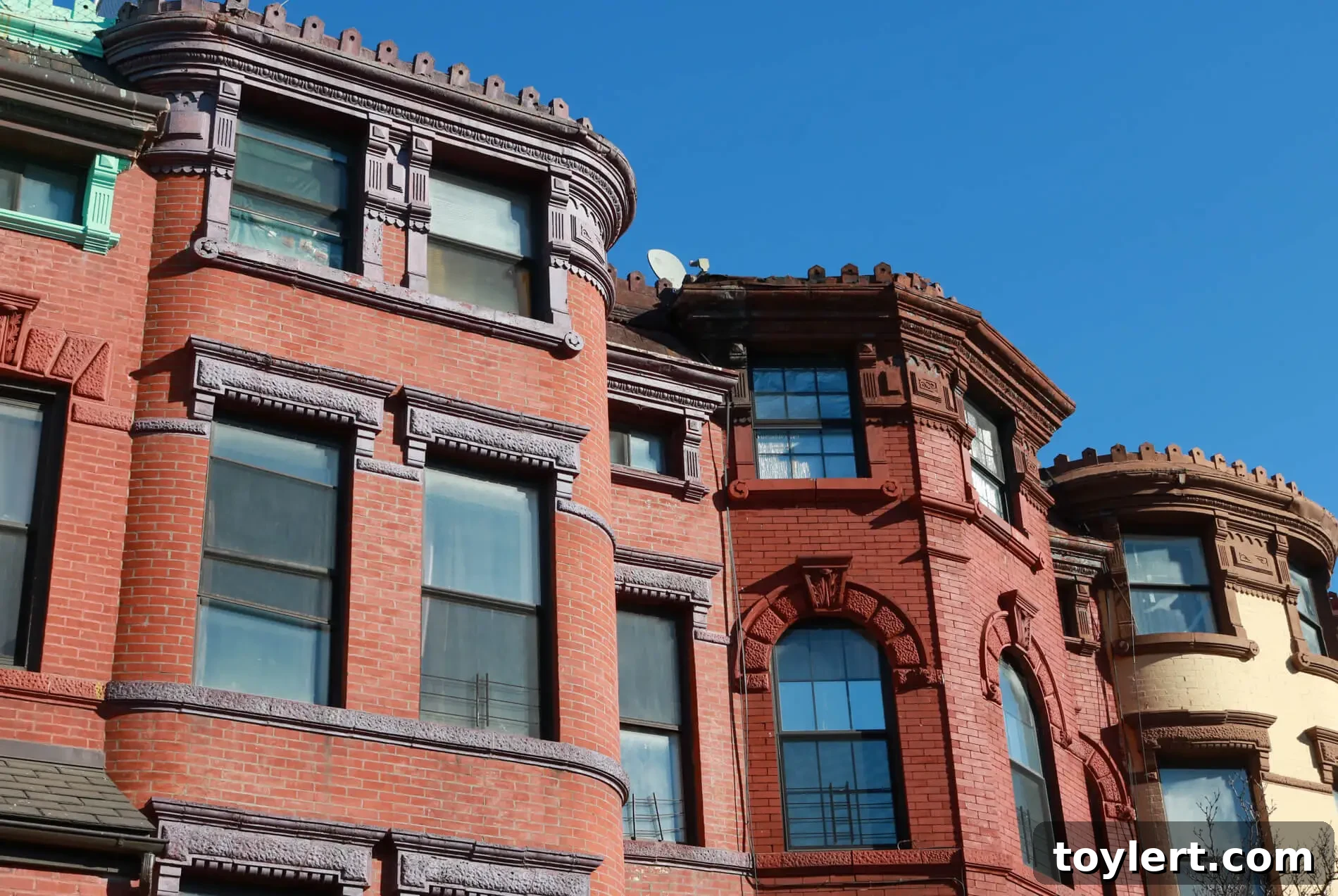
Engelhardt was responsible for designing not only many of Brooklyn’s grand brewery structures – including significant portions of the Ulmer Brewery complex itself – but also churches, commercial buildings, and, crucially, high-quality residential properties. His work for William Ulmer included a range of projects that truly shaped the aesthetic of Bushwick. Among these, the magnificent Queen Anne style row houses at 683-691 Bushwick Avenue stand as enduring testaments to the prosperity of the era and the architectural prowess of Engelhardt, built around 1890.
The Queen Anne Row Houses on Bushwick Avenue
The Queen Anne style, immensely popular in America from the 1880s to the 1910s, is characterized by its picturesque asymmetry, steeply pitched roofs, dominant front-facing gables, and a delightful mix of textures and materials. Engelhardt’s designs for 683-691 Bushwick Avenue perfectly encapsulate these elements, creating a visually rich and distinctive streetscape. These homes feature characteristic bay windows, often topped with conical or polygonal turrets that add a touch of romanticism and grandeur. The facades are adorned with patterned shingles, decorative brickwork, terra cotta panels, and intricate wooden ornamentation, showcasing a meticulous attention to detail that was a hallmark of the style.
These row houses were likely built either as speculative investments by Ulmer, aiming to provide high-quality housing for prosperous residents, or specifically for his family members and high-ranking employees, reflecting the status and success associated with the Ulmer brewing empire. Their elaborate detailing and robust construction speak to a period of great wealth and confidence in Brooklyn’s future. The inclusion of classical columns, stained glass accents, and varying rooflines further distinguishes these properties, making them outstanding examples of Queen Anne architecture in a neighborhood rich with historical buildings.
Today, these residences are not just beautiful homes; they are vital pieces of Bushwick’s architectural heritage, offering a tangible link to a bygone era when beer barons reigned and master architects crafted enduring urban masterpieces. Their preservation is a testament to the community’s recognition of their historical and aesthetic value, allowing future generations to appreciate the artistry and legacy of figures like Ulmer and Engelhardt.
Bushwick: A Neighborhood Forged by Fermentation
The history of Bushwick is inextricably linked to its brewing heritage. The presence of numerous breweries, with Ulmer’s as a shining example, transformed the neighborhood into a bustling industrial and residential district. Beyond the factories themselves, breweries fostered a vibrant social ecosystem. Beer gardens, saloons, and community halls flourished, serving as gathering places where residents could socialize, unwind, and build strong community bonds. The steady employment offered by the breweries also attracted a diverse workforce, contributing to Bushwick’s rich cultural tapestry.
However, the golden age of Brooklyn brewing was not destined to last forever. The advent of Prohibition in 1920 dealt a devastating blow to the industry, forcing many breweries, including Ulmer’s, to cease operations or drastically alter their business models. While some attempted to pivot to producing “near beer,” soda, or ice, the spirit of the original industry was largely extinguished. Changing tastes, consolidation within the industry, and the rise of national brands in the post-Prohibition era further contributed to the decline of local brewing.
Despite the eventual closure of the Ulmer Brewery and many others, their physical legacy endures. Many of Engelhardt’s structures, including parts of the Ulmer complex and the iconic Queen Anne homes, have survived, adapted, and been lovingly preserved. Today, Bushwick is experiencing a renaissance, with a burgeoning craft brewing scene that respectfully nods to its storied past. This new wave of brewers and residents appreciates the historical significance of the neighborhood, working to maintain its unique character while embracing its future.
A Lasting Impression
William Ulmer’s story is a compelling narrative of immigration, enterprise, and lasting impact. His contributions to Brooklyn’s brewing industry were monumental, establishing a brand that became a household name and a facility that was a beacon of industrial prowess. More than just a brewer, Ulmer was an active participant in the development of Bushwick, commissioning architectural gems like the Queen Anne row houses on Bushwick Avenue, designed by the inimitable Theobald Engelhardt.
These buildings stand as enduring symbols of an era of unprecedented growth and prosperity, reflecting the ambition and vision of the men who built Brooklyn. They remind us that history is not just found in textbooks but is etched into the very bricks and mortar of our urban landscapes. The legacy of William Ulmer, the brewing baron, continues to enrich Bushwick, inviting us to appreciate the intricate connections between industry, architecture, and the vibrant communities they foster.