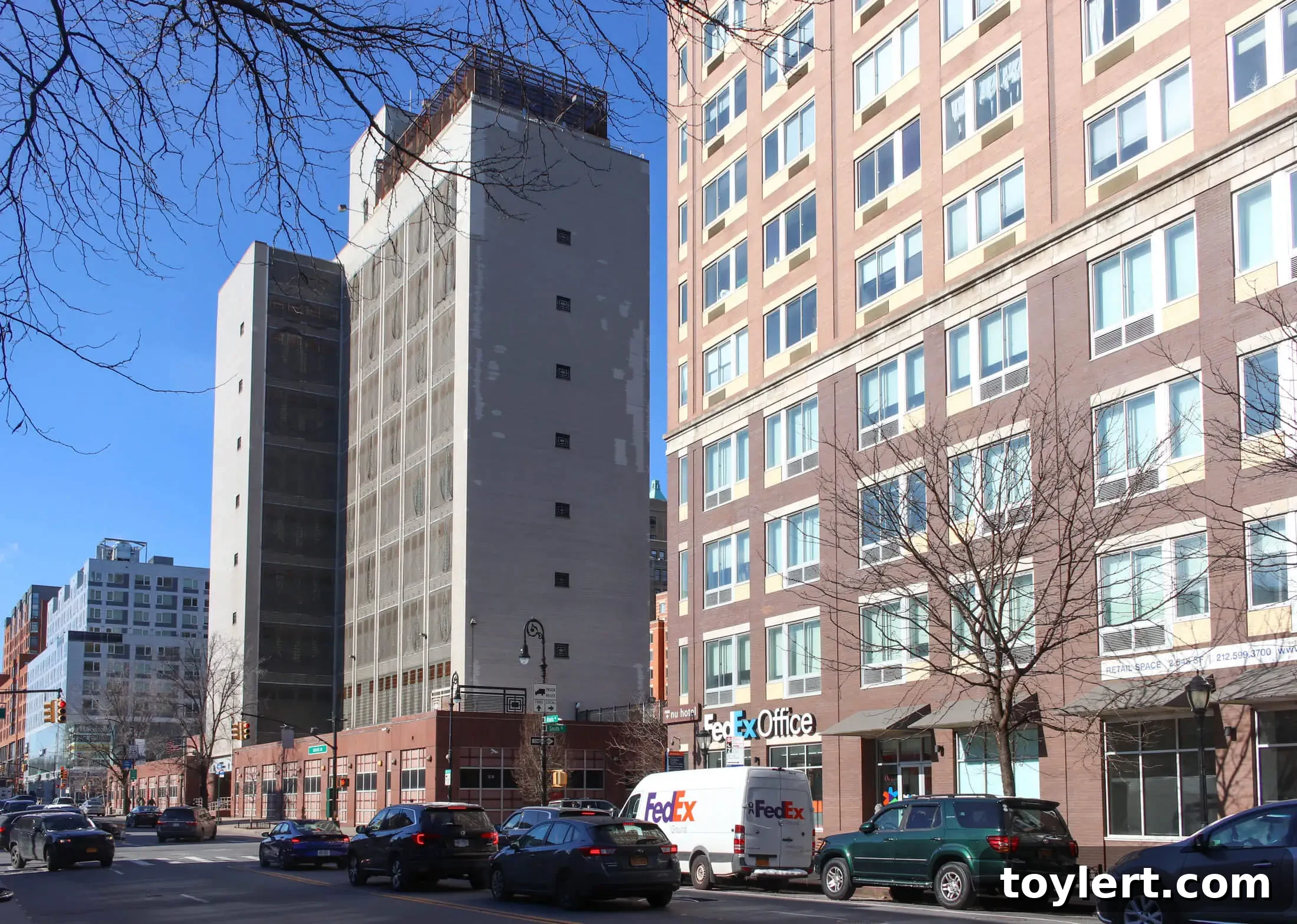
Transforming Justice: Demolition of Brooklyn Detention Complex Paves Way for Rikers Island Closure
A significant stride in New York City’s ambitious journey toward criminal justice reform is currently unfolding in Boerum Hill, Brooklyn. Construction workers are making advanced preparations to commence the demolition of the Brooklyn Detention Complex, located at 275 Atlantic Avenue. This pivotal undertaking represents the latest, tangible step in the city’s long-term, comprehensive strategy to finally close the notorious Rikers Island correctional facility.
The contracted demolition company, North Star, has been granted its official notice to proceed and initiated mobilization efforts at the 275 Atlantic Avenue site late last year. Tasked not only with the deconstruction of the existing jail structure but also with the construction of an interim secure entry point, commonly known as a “sally port,” North Star is currently navigating the crucial preliminary phases. City representatives, addressing Community Board 2’s Land Use Committee, confirmed that the company is diligently acquiring all necessary permits and meticulously planning the extensive work schedule. This preparatory phase is anticipated to conclude, paving the way for deconstruction to commence in earnest as spring approaches.
The Blueprint for Change: NYC’s Justice Reform Initiative
The planned closure of the currently empty 11-story Brooklyn Detention Complex is a foundational element of a larger, transformative vision first unveiled in 2017 by then-Mayor Bill de Blasio. This groundbreaking plan seeks to permanently shut down Rikers Island, a facility long plagued by accusations of violence, mismanagement, and systemic issues, and replace it with a network of four new, state-of-the-art “borough-based” jails. These modern facilities are strategically planned for construction in Brooklyn, Queens, Manhattan, and the Bronx, aiming to decentralize the city’s correctional infrastructure and foster a more humane and efficient justice system.
Each of these new correctional centers is being designed with a focus on rehabilitation, community integration, and improved detainee welfare. Collectively, these four facilities will offer a total capacity for just over 3,000 detainees. This figure represents a dramatic reduction from the city’s current maximum capacity, which hovers around 11,000 individuals, predominantly housed on Rikers Island. The timeline for this monumental shift projects the new borough-based jails to open their doors in 2027, coinciding with the historic closure of Rikers Island.
Unpacking the Demolition Process: More Than Just Tearing Down Walls
The demolition of a structure as substantial as the Brooklyn Detention Complex is a highly complex undertaking, requiring meticulous planning and adherence to stringent safety and environmental regulations. North Star’s role extends beyond mere destruction; it involves a controlled dismantling process. The construction of a “sally port” on the site is an intriguing detail, suggesting the area’s continued utility in the city’s correctional logistics even during the transition phase. A sally port, in essence, is a secure, controlled entry and exit point, crucial for maintaining security protocols during transport or access to sensitive facilities.
The acquisition of necessary permits is a multi-faceted process, involving various city agencies and ensuring compliance with zoning, environmental impact, and public safety standards. Given the age of the original structure, a significant aspect of the planning involves comprehensive assessments for hazardous materials, most notably asbestos. Asbestos, commonly used in construction prior to the 1980s, requires specialized and highly controlled removal procedures to prevent airborne release, which poses serious health risks. Therefore, the demolition will undoubtedly involve a sophisticated abatement process to ensure worker and community safety before the main structural deconstruction can fully commence. This commitment to environmental stewardship and public health underscores the gravity of the project.
Community Engagement and Environmental Stewardship in Boerum Hill
The site at 275 Atlantic Avenue is situated within the vibrant community of Boerum Hill, meaning the demolition and subsequent development will inevitably impact local residents and businesses. Community Board 2’s Land Use Committee meetings serve as vital forums for transparent communication between city representatives, the demolition contractors, and the public. These sessions allow for updates on project progress, addressing concerns regarding noise, dust, traffic disruptions, and safety measures during the demolition phase. Proactive engagement with the community is crucial for minimizing inconvenience and fostering a collaborative environment throughout such a significant urban transformation project.
Environmental considerations are paramount in projects of this scale, particularly within a densely populated urban area. Beyond asbestos abatement, comprehensive plans must be in place for managing construction waste, controlling runoff, and mitigating air and noise pollution. The city and its contractors are expected to implement best practices to ensure that the demolition proceeds with the least possible environmental footprint and minimal impact on the quality of life for Boerum Hill residents. This commitment reflects a broader understanding that urban development must be sustainable and community-centric.
The Promise of a New Era: Borough-Based Facilities and a More Humane System
The overarching goal of the Rikers Island closure and the establishment of borough-based jails is to fundamentally reshape New York City’s approach to incarceration. The current model, centered on an isolated island facility, has been criticized for making family visits challenging, hindering access to legal services, and complicating the provision of rehabilitative programs. By contrast, the new facilities are designed to be closer to courthouses, communities, and families, thereby fostering stronger support networks for detainees and improving their chances for successful reentry into society.
The drastic reduction in detention capacity, from approximately 11,000 to just over 3,000, signifies a profound philosophical shift. It reflects a commitment to reducing reliance on incarceration, prioritizing alternatives to detention for non-violent offenses, and investing in community-based programs. This shift is predicated on the belief that a smaller, more localized, and more humane correctional system can be more effective in promoting public safety and fostering genuine rehabilitation. The new jails are envisioned to incorporate modern architectural designs that maximize natural light, provide ample program space, and facilitate better mental health and educational services, a stark contrast to the often grim and outdated conditions prevalent on Rikers Island.
Challenges and the Path Forward for NYC Justice Reform
While the vision for closing Rikers Island and establishing new borough-based jails is ambitious and widely supported by justice reform advocates, the path has not been without its challenges. The projects have faced considerable community opposition in some proposed locations, concerns over escalating costs, and the inherent complexities of constructing multiple large-scale public facilities simultaneously. Managing budgets, adhering to aggressive timelines, and navigating public sentiment require sustained political will and rigorous project management.
The demolition of the Brooklyn Detention Complex is more than just the dismantling of a building; it is a powerful symbol of progress and a testament to the city’s unwavering commitment to overhauling its criminal justice system. As demolition proceeds in Boerum Hill and planning continues for the other sites, New York City moves steadily towards a future where justice is administered with greater fairness, dignity, and a focus on rehabilitation rather than mere containment. The journey to 2027 and the final closure of Rikers Island is a monumental undertaking, but one that promises to leave a lasting, positive legacy on the lives of New Yorkers and the fabric of its justice system.