Sunset Park’s Bold Vision: Transforming a Controversial Hotel into a Much-Needed School
A recent unsettling incident involving a prostitution-related raid on a Sunset Park hotel has inadvertently shone a spotlight on one of the neighborhood’s most pressing challenges: severe school overcrowding. What began as a local scandal has rapidly evolved into a catalyst for a groundbreaking community-led initiative, proposing the conversion of the controversial 39 Hotel into a state-of-the-art educational facility. This ambitious vision not only addresses a critical educational need but also aims to reclaim public space from what many residents perceive as a harmful proliferation of illicit hotel operations in this vibrant Brooklyn neighborhood.
The incident at the 39 Hotel on 39th Street in October sent shockwaves through the tight-knit Sunset Park community. While the raid itself was distressing, it brought to the forefront a deeper underlying issue that has plagued the neighborhood for years. The 39 Hotel, much like several others in the area, has become emblematic of what residents decry as an “epidemic of hotels.” This phenomenon is largely attributed to a notorious loophole in the area’s zoning regulations, which has allowed commercial properties to be easily repurposed into hotels, often with little oversight or consideration for community impact. These establishments, some operating under questionable circumstances, have become a source of growing frustration, impacting the quality of life and safety in this densely populated Brooklyn enclave.
The Zoning Quagmire: Fueling Sunset Park’s Hotel Boom
For years, Sunset Park residents have grappled with the consequences of lenient zoning laws that inadvertently foster the proliferation of hotels. Unlike more restrictive residential or manufacturing zones, certain commercial districts within Sunset Park have offered an easier path for developers to convert existing structures or build new ones specifically for hotel use. This has led to a noticeable increase in establishments that, while technically legal, often operate outside the spirit of community well-being. The concern isn’t just about aesthetics; it’s about the tangible effects on local infrastructure, public safety, and the very character of the neighborhood.
Residents have reported increased transient activity, noise complaints, and a general feeling that their community is being exploited for commercial gain without corresponding benefits for its inhabitants. The 39 Hotel’s alleged activities, culminating in the police raid, served as a stark, undeniable illustration of these anxieties, pushing the community to seek proactive solutions rather than simply reacting to problems. Community leaders and residents have long advocated for stricter zoning enforcement and changes to prevent the unchecked expansion of these types of commercial enterprises. They argue that the current regulations fail to protect residential areas from the negative externalities associated with certain hotel operations.
The “epidemic” description reflects a widespread feeling of powerlessness, where community input often falls on deaf ears when pitted against development interests. However, the recent events have galvanized local activism, transforming abstract grievances into a concrete proposal that demands immediate attention from city planners and policymakers. This grassroots movement underscores a growing demand for more balanced urban development that prioritizes community needs over speculative real estate ventures, especially when those ventures contribute to neighborhood decay.
A Crisis in the Classrooms: The Plight of Sunset Park Schools
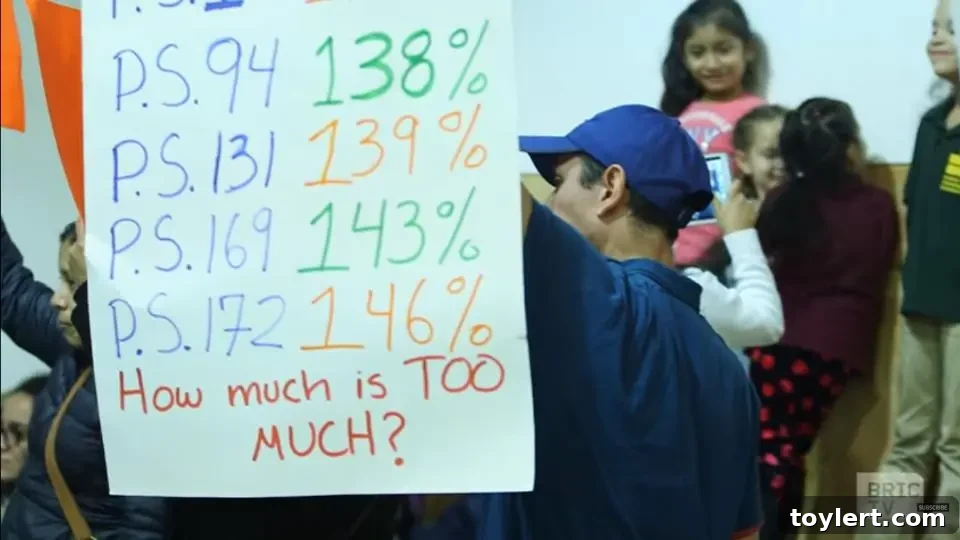
Parallel to the hotel issue, Sunset Park faces an escalating crisis in its public education system. The neighborhood is home to a rapidly growing population, driven by both new families moving in and the natural growth of existing communities. This demographic shift, while a sign of a thriving area, has put immense pressure on local schools, which are simply not equipped to handle the influx of students. Classrooms are often severely overcrowded, facilities are stretched thin, and vital resources are strained to their breaking point. Teachers struggle to provide individualized attention in packed rooms, and students are often educated in subpar conditions, sometimes even in temporary trailers or converted auditoriums that were never designed for sustained learning.
The impact of school overcrowding extends beyond mere discomfort. It directly affects the quality of education, student achievement, and overall well-being. Larger class sizes can lead to less effective instruction, reduced opportunities for student engagement, and increased stress for both students and educators. Parents often express profound frustration over the lack of adequate space for their children, fearing that their educational prospects are being compromised by systemic neglect. For years, community groups, parent-teacher associations, and local elected officials have tirelessly campaigned for new school construction or significant expansions to existing facilities.
Yet, progress has been agonizingly slow, leaving many to feel that their pleas for better educational infrastructure have been consistently ignored by the wider city administration. This ongoing struggle for adequate school space highlights a critical gap in urban planning that has failed to keep pace with demographic changes. The community understands that investing in education is investing in the future, and the current conditions are actively undermining that future for countless Sunset Park children.
From Controversy to Opportunity: The 39 Hotel as a Beacon of Hope
It is against this backdrop of dual crises – unwanted hotels and overcrowded schools – that the Sunset Park community has identified a remarkably synergistic solution. Following the raid, residents immediately seized upon the 39 Hotel site as a prime candidate for conversion into a new school. This isn’t just about finding any space; it’s about strategically reclaiming a site that has been a source of community concern and transforming it into a public good. The location on 39th Street is centrally located within the neighborhood, making it accessible to many families. Furthermore, the existing structure, while requiring significant renovation and redesign, offers a foundation that could potentially expedite the creation of much-needed classroom space, perhaps more quickly than building an entirely new school from the ground up on a vacant lot, which are increasingly scarce in dense urban environments like Brooklyn.
The proposal represents a powerful act of community empowerment. It shifts the narrative from residents being passive victims of urban planning loopholes to active agents in shaping their neighborhood’s future. The idea of turning a place associated with illicit activities into a center for learning and growth carries profound symbolic weight, signaling a desire to prioritize education and community welfare over questionable commercial ventures. This transformation would not only alleviate immediate overcrowding pressures but also send a clear message about the community’s values and its vision for a healthier, more child-friendly Sunset Park. It’s a compelling narrative of redemption for a troubled property, reimagined for a greater purpose.
Community Mobilization: A United Front for Education
The call to transform the 39 Hotel into a school is not a fleeting suggestion but the culmination of sustained community organizing and advocacy. Local residents, galvanized by the incident and years of frustration, have banded together to articulate their vision with clarity and conviction. Organizations such as the Sunset Park Parents’ Association, local community boards, and various neighborhood activist groups have played pivotal roles in amplifying these demands. They have organized town hall meetings, circulated petitions, and engaged in direct outreach to local politicians and city agencies, stressing the urgency of the situation and the viability of their proposed solution.
The frustration expressed by community members, as highlighted in the video via BRIC TV, stems from the bureaucratic inertia that often impedes progress on critical issues. Residents feel that their needs are often caught in complex administrative processes, with decision-making power residing far from the affected neighborhoods. They are tired of being told there are no available sites or insufficient funds when a clear, tangible solution like the 39 Hotel site presents itself. Their collective voice is a powerful testament to the resilience and determination of Sunset Park, demanding that city officials prioritize the education and future of their children over potentially problematic commercial interests. This united front demonstrates the power of grassroots movements to challenge the status quo and push for meaningful change in urban development.
Overcoming Hurdles: The Path to Conversion
While the vision for converting the 39 Hotel into a school is compelling, realizing it will undoubtedly involve navigating a complex web of challenges. The acquisition of the property, for instance, would require significant public funding and potentially eminent domain proceedings if the current owners are unwilling sellers. There would also be legal battles related to zoning changes, as the property’s current designation would likely need to be altered to permit educational use. Furthermore, the building itself would require extensive renovations to meet school safety codes, accessibility standards, and the specific functional requirements of a modern learning environment. This includes creating classrooms, science labs, libraries, administrative offices, and recreational spaces.
Political will is another crucial factor. City Council members, the Department of Education, and the Mayor’s office would need to be onboard, dedicating resources and political capital to push the project forward. Opponents might raise concerns about cost, feasibility, or precedent. However, the strong community backing provides a compelling argument that transcends mere logistical hurdles. It frames the conversion as a moral imperative and an investment in the long-term vitality of Sunset Park. The journey will be arduous, but the community’s unwavering commitment demonstrates a deep-seated belief in the transformative power of education and the possibility of reclaiming local control over neighborhood development. Addressing these challenges transparently and collaboratively will be key to the project’s success, turning a bold idea into a tangible reality.
A Model for Urban Renewal and Community Empowerment
Should the Sunset Park community succeed in transforming the 39 Hotel into a school, it would set a powerful precedent for urban development and community empowerment across New York City and beyond. This initiative goes beyond merely solving a local problem; it offers a model for how neighborhoods can proactively address systemic issues by reimagining existing spaces and challenging conventional planning paradigms. It underscores the importance of local voices in shaping urban landscapes and demonstrates the potential for positive change when residents unite against perceived injustices.
The success of this project would serve as an inspiration for other communities grappling with similar challenges of overdevelopment, inadequate infrastructure, and zoning ambiguities. It would be a testament to the idea that problematic sites can be re-purposed for the greater good, fostering educational opportunities and enhancing the quality of life for future generations. For Sunset Park, a new school born from this struggle would not just be a building; it would be a symbol of resilience, a monument to collective action, and a vibrant hub for learning that truly reflects the aspirations of its diverse and dedicated residents. This transformative project could pave the way for a more responsive and community-centric approach to urban planning across the metropolitan area.
The journey from a troubling raid to a visionary educational proposal highlights the dynamic spirit of Sunset Park. As the community continues to advocate for this vital transformation, all eyes will be on Brooklyn to see if this innovative solution can turn a local grievance into a beacon of hope for educational equity and community-driven urban planning. This initiative stands as a powerful example of how local activism can reshape the urban fabric and deliver tangible benefits to its most important stakeholders: its children and families.