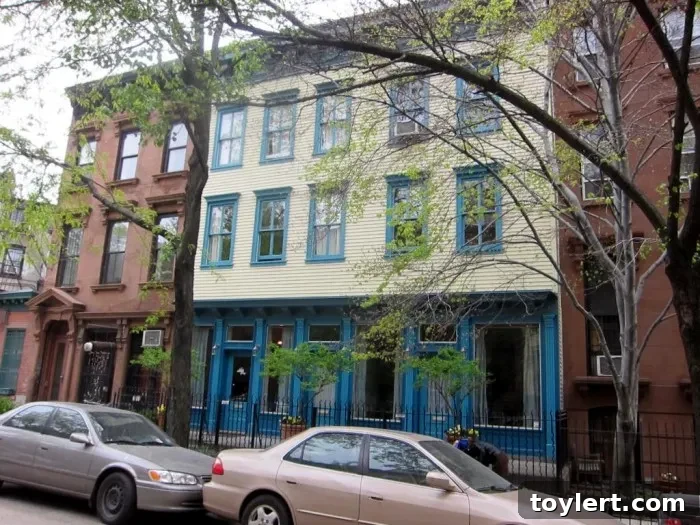
Brooklyn’s Enduring Legacy: Uncovering the Charm of Storefront Wood-Framed Houses on South Oxford Street
Brooklyn, a borough synonymous with architectural innovation and timeless charm, boasts a kaleidoscope of building styles. While its iconic brownstones often steal the spotlight, a deeper exploration reveals a myriad of structures that define its unique character, “one building at a time.” Among these unsung heroes are the captivating storefront wood-framed houses, structures that echo the borough’s dynamic past and present. This article delves into the distinctive appeal of these historic gems, with a particular focus on the striking example at 104-106 South Oxford Street—a testament to Brooklyn’s rich architectural tapestry. These buildings offer a vibrant glimpse into the residential and commercial evolution of neighborhoods like Fort Greene, standing as quaint yet robust symbols of community resilience and enduring design. Their modest facades often belie a wealth of history and intricate details waiting to be discovered by the discerning eye, inviting both residents and visitors to explore Brooklyn’s less celebrated but equally significant architectural contributions.
A Glimpse into Brooklyn’s Past: The Rise of Wood-Framed Storefronts
In the burgeoning Brooklyn of the 19th century, as industrialization spurred rapid growth and diversification, the need for adaptable and cost-effective housing and commercial spaces became paramount. Before the widespread adoption of masonry for grander residences, wood was the primary building material, readily available and relatively inexpensive. Storefront wood-framed houses emerged from this era, combining practical commercial frontage on the ground floor with residential units above. This architectural typology perfectly suited the needs of a rapidly expanding urban population, allowing tradespeople, artisans, and small business owners to live and work in the same building, fostering a vibrant, self-sufficient street life. These structures often feature simple, rectilinear forms, adorned with various architectural details that reflected the popular styles of their time, from Federal and Greek Revival influences to later Victorian embellishments.
Their construction methods, often employing balloon framing, allowed for quicker erection, making them an ideal solution for a city constantly expanding its footprint. The ground-floor storefronts were designed for maximum visibility, featuring large display windows and welcoming entrances, while the upper floors provided comfortable living quarters, complete with distinct windows and sometimes even decorative cornices or gables. They truly represent an earlier phase of urban planning, where functionality and community interaction were intrinsically linked to architectural design. These buildings served as vital hubs for local economies, providing essential goods and services within walking distance of residences, thus cultivating a dense, walkable urban environment that many modern cities now strive to recreate. The efficient use of space and resources inherent in their design made them cornerstones of early Brooklyn neighborhoods, shaping the urban fabric long before the advent of larger commercial districts.
The Unique Allure of 104-106 South Oxford Street
Nestled within the historically rich and architecturally diverse neighborhood of Fort Greene, 104-106 South Oxford Street stands as a quintessential example of these charming wood-framed storefront houses. This particular building embodies the elegance and practicality inherent in its design. Its facade, likely weathered by time but meticulously maintained, speaks volumes of the craftsmanship of its original builders. While precise historical records for every single structure can be elusive, such buildings typically date back to the mid-to-late 19th century, serving a dual purpose that defined urban living for generations. The ground floor, originally a commercial space, would have hosted a variety of businesses—perhaps a local grocer, a haberdasher, or a bustling bakery—catering to the daily needs of the neighborhood. Above, the residential floors offered intimate living spaces for families, providing a close-knit community feel that is often sought after in contemporary urban environments.
The building’s proportions, window arrangements, and any remaining original details, such as cornices, brackets, or even subtle carved elements, contribute to its distinct character. Its position on South Oxford Street, known for its tree-lined beauty and proximity to cultural landmarks like BAM (Brooklyn Academy of Music) and Fort Greene Park, further enhances its significance, placing it squarely within a vibrant historical context. This specific address serves not just as a residence or commercial spot, but as a living artifact, illustrating the architectural ingenuity and adaptive reuse that defines much of Brooklyn’s urban landscape. It’s a quiet sentinel, observing the ebb and flow of Brooklyn life for over a century, while retaining its fundamental charm and contributing to the picturesque streetscape. The careful preservation of buildings like 104-106 South Oxford Street highlights the community’s dedication to honoring its past while embracing the future, making it a compelling destination for architecture enthusiasts and history buffs alike.
Beyond Brownstones: The Enduring Charm of Wood-Framed Architecture
While Brooklyn’s iconic brownstones are widely celebrated for their grandeur and distinctive reddish-brown sandstone facades, the wood-framed houses offer a different, yet equally compelling, narrative. They represent a more approachable, often warmer aesthetic, providing a significant counterpoint to the more formal masonry structures. Wood, as a material, lends itself to intricate detailing and a softer visual texture, often allowing for more whimsical or personal touches in their design. These homes, with their painted clapboard or shingle siding, evoke a sense of quaint village charm, even amidst a bustling city. Historically, they offered a more affordable alternative to the elaborate brownstones, making homeownership accessible to a wider demographic of Brooklynites. This accessibility contributed significantly to the borough’s diverse socio-economic fabric, creating neighborhoods that were rich in cultural and economic variety.
Moreover, the inherent flexibility of wood construction meant these buildings could be more easily adapted and renovated over time, allowing them to evolve with the changing needs of their inhabitants and the commercial landscape. The blend of residential intimacy with ground-floor commercial vibrancy created dynamic streetscapes, where daily life unfolded in a direct and engaging manner. These buildings are not merely houses; they are integrated components of a living, breathing urban ecosystem, reflecting a time when commerce and community were intricately woven together at the street level. Their presence reminds us that Brooklyn’s architectural richness extends far beyond its most famous exports, encompassing a broader palette of materials and styles that collectively tell the story of its growth and transformation. They stand as testaments to resourcefulness and adaptability, showcasing how design can gracefully meet the demands of a changing urban environment while retaining distinct personality and historical resonance.
Preservation Efforts and Modern Adaptations
The preservation of wood-framed houses like those on South Oxford Street presents unique challenges, primarily due to the inherent vulnerability of wood to the elements and the passage of time. Unlike brick or stone, wood requires more diligent maintenance to ward off decay, pests, and fire. However, a growing appreciation for Brooklyn’s diverse architectural heritage has spurred significant efforts to protect and restore these valuable structures. Local preservation societies, community groups, and conscientious homeowners are actively engaged in rehabilitating these buildings, ensuring their longevity while respecting their historical integrity. This often involves careful restoration of original exterior elements, sympathetic repairs using period-appropriate materials, and structural upgrades that fortify them against future deterioration.
Modern renovation techniques allow for structural reinforcement, energy efficiency upgrades, and the sympathetic restoration of original features, bringing these historic homes into the 21st century without sacrificing their soul. Many storefronts, once home to traditional shops, have found new life as trendy boutiques, artisanal cafes, art galleries, or professional offices, contributing to the contemporary vibrancy of neighborhoods like Fort Greene. The residential units above continue to be highly sought after, offering unique character and a connection to history that newer constructions often lack. These adaptive reuse strategies not only save valuable architectural assets but also inject new economic and cultural energy into the surrounding areas, proving that historic buildings can be both beautiful and highly functional in a modern context. The careful balance between preservation and adaptation is key to ensuring that these charming wood-framed homes remain integral to Brooklyn’s urban identity for generations to come, symbolizing a commitment to sustainability and a reverence for the borough’s past.
The Future of Brooklyn’s Architectural Heritage
As Brooklyn continues its journey of transformation and growth, the significance of its architectural heritage, especially buildings like the wood-framed storefronts on South Oxford Street, becomes ever more pronounced. These structures are more than just old buildings; they are living archives, physical embodiments of the borough’s history, culture, and resilience. They remind us of Brooklyn’s roots, of the ingenuity of its early builders, and the evolving dreams of its inhabitants. Protecting and celebrating these diverse architectural styles ensures that Brooklyn retains its distinctive character in an increasingly homogenized world. Future developments must strive for a harmonious coexistence with these historic gems, learning from their adaptable designs and community-centric layouts. The lessons these buildings offer in terms of sustainable urban living and community integration are invaluable for contemporary city planning.
By investing in their continued preservation, through careful maintenance, respectful renovation, and thoughtful urban planning, we safeguard the very essence of what makes Brooklyn such a globally admired and beloved place. The humble wood-framed storefront house, standing proudly alongside its grander brownstone counterparts, represents a crucial layer of this rich narrative, inviting residents and visitors alike to look closer, appreciate deeper, and understand the stories etched into every facade. Their continued presence provides a tangible link to previous generations, fostering a sense of continuity and shared heritage within the community. Ensuring their survival is not just about aesthetics; it is about preserving the soul of a city that thrives on its unique blend of past and present, tradition and innovation, making Brooklyn an enduring model for urban revitalization.
Conclusion: Brooklyn, One Building at a Time
Indeed, understanding Brooklyn is best achieved “one building at a time.” From the grand stoops of its brownstones to the inviting thresholds of its wood-framed storefronts, each structure tells a part of a larger, compelling story. The building at 104-106 South Oxford Street is not merely an address; it is a sentinel of history, a beacon of adaptable design, and a vibrant thread in the fabric of Fort Greene. These unique architectural treasures serve as a powerful reminder that true beauty and historical value often reside in the details, in the unassuming elegance of wood, and in the enduring spirit of community they represent. By cherishing and preserving these distinctive structures, Brooklyn continues to honor its past while confidently building its future, ensuring that its architectural soul remains vibrant and captivating for all who call it home or venture through its storied streets. They are silent testaments to an enduring legacy, inviting us to pause, reflect, and appreciate the craftsmanship and stories embedded within their wooden frames, each contributing to the timeless mosaic that is Brooklyn.