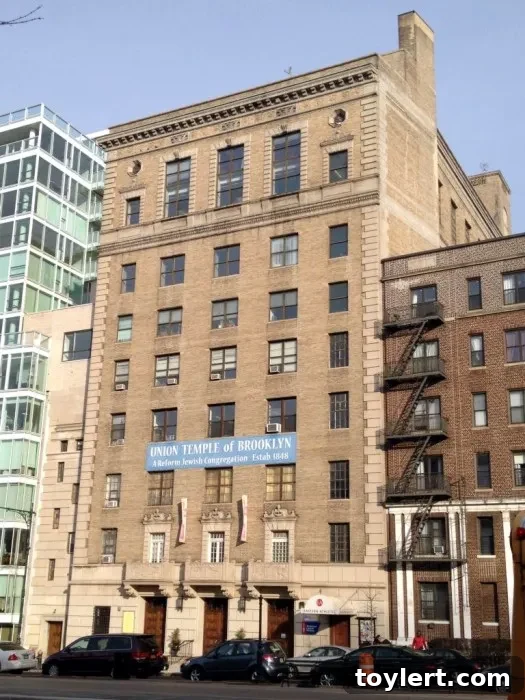
Union Temple: A Timeless Beacon of History and Architecture on Brooklyn’s Eastern Parkway
In the vibrant tapestry of Brooklyn’s architectural landscape, certain structures stand out not just for their aesthetic appeal, but for their profound historical and cultural significance. Among these treasured landmarks is the magnificent Union Temple, located majestically at 17 Eastern Parkway. This iconic building, an embodiment of early 20th-century grandeur, is far more than just a place of worship; it is a monument to Brooklyn’s rich Jewish heritage, a testament to enduring architectural brilliance, and a pivotal piece of the borough’s storied past.
Often hailed as “Brooklyn, one building at a time,” the Union Temple at 17 Eastern Parkway perfectly encapsulates this sentiment. Its imposing facade and intricate details invite passersby to pause and appreciate the craftsmanship and vision that went into its creation. Situated on one of Brooklyn’s most distinguished thoroughfares, designed by Frederick Law Olmsted, the temple commands attention and speaks volumes about the ambition and cultural aspirations of its founders.
A Legacy Forged in Time: The Genesis of Union Temple
The story of Union Temple begins in the burgeoning Brooklyn of the early 20th century. As the borough experienced rapid growth and an influx of diverse communities, the need for new religious and civic institutions became apparent. The congregation, originally known as Temple Israel of Brooklyn, was established in 1869, making it one of the oldest Reform congregations in the city. By the 1920s, the congregation had outgrown its previous homes and envisioned a grand new edifice that would reflect its prominence and serve the spiritual and community needs of its growing membership.
Construction began in 1927, culminating in the temple’s completion and dedication in 1929. The architects entrusted with this ambitious project were Charles B. Meyers and Son, a firm renowned for designing numerous synagogues and public buildings across New York City. Their vision for Union Temple was a synthesis of historical reverence and contemporary functionalism, resulting in a building that not only served its primary purpose but also became an instant architectural landmark.
The choice of Eastern Parkway for its location was strategic. Designed as a grand tree-lined boulevard akin to Parisian avenues, Eastern Parkway was rapidly becoming a prestigious address, home to cultural institutions like the Brooklyn Museum and the Brooklyn Botanic Garden. Placing Union Temple here firmly established its role as a significant cultural and religious anchor within the community, making it accessible and visible to a wide public.
Architectural Grandeur: A Masterpiece in Beaux-Arts Style
Union Temple is a quintessential example of the Beaux-Arts architectural style, characterized by its classical allusions, monumental scale, and meticulous ornamentation. The building’s design draws heavily from Greco-Roman precedents, creating an aesthetic of timeless dignity and enduring strength. Its most striking features include a magnificent columned portico, reminiscent of ancient Greek temples, which serves as a majestic entrance. These towering columns, fluted and capped with classical capitals, immediately convey a sense of gravitas and importance.
The exterior is clad in Indiana limestone, a material favored for its durability and elegant appearance, which contributes to the building’s stately presence. Intricate carvings and sculptural elements adorn the facade, showcasing symbols relevant to Jewish faith and universal themes of wisdom and justice. Large, arched windows allow natural light to flood the interior, while their decorative surrounds add to the overall richness of the design.
Beyond its exterior, the interior of Union Temple continues the theme of grandeur. While primarily functioning as a synagogue, the building was designed to be a multi-functional community center. It houses a magnificent main sanctuary, replete with soaring ceilings, ornate chandeliers, and exquisite stained-glass windows that depict scenes from Jewish history and tradition. The sanctuary’s layout, often featuring a centralized bimah and impressive ark, creates an environment conducive to spiritual reflection and communal gathering. In addition to the main sanctuary, the temple originally included a ballroom, an auditorium, classrooms, offices, and even a gymnasium, highlighting its comprehensive role in the social and educational life of its congregation.
Every detail, from the geometric patterns in the flooring to the decorative plasterwork on the ceilings, reflects the high level of craftsmanship and artistic ambition that defined Beaux-Arts architecture. The skillful use of space, light, and material ensures that visitors are enveloped in an atmosphere of reverence and beauty, making the Union Temple an architectural marvel that continues to inspire awe.
A Pillar of the Community: Cultural and Educational Impact
For decades, Union Temple has served as a vibrant center for Jewish life and a significant contributor to the broader Brooklyn community. Beyond its regular religious services, it has hosted countless events, including interfaith dialogues, cultural festivals, educational programs, and social gatherings. Its spacious facilities have provided a venue for community meetings, artistic performances, and civic engagement, fostering a sense of belonging and collective identity.
The temple’s commitment to education has been particularly strong, with its Sunday school and adult learning programs nurturing generations of congregants in their faith and heritage. Its library and archives have preserved valuable historical documents, offering insights into the history of the Jewish community in Brooklyn and beyond. During periods of social change and upheaval, Union Temple has often stood as a beacon of progressive thought and social justice, actively participating in efforts to promote equality and understanding within its diverse urban environment.
Its strategic location on Eastern Parkway, often referred to as Brooklyn’s “Museum Mile,” has also allowed it to engage with neighboring institutions. Proximity to the Brooklyn Museum, the Brooklyn Botanic Garden, and Prospect Park facilitates cross-cultural engagement and makes the temple a familiar and cherished landmark for visitors and residents alike. It’s a place where history, culture, and community converge.
Eastern Parkway’s Grandeur: Union Temple’s Place in Brooklyn’s Urban Fabric
Eastern Parkway itself is a testament to visionary urban planning, designed in the late 19th century as one of the first parkways in the world. Its tree-lined median and stately architecture were intended to provide a green oasis and a grand promenade for city residents. Union Temple’s placement along this historic boulevard is no accident; it perfectly complements the parkway’s aesthetic and contributes significantly to its grandeur.
The temple stands proudly amongst other notable buildings that line Eastern Parkway, each contributing to the avenue’s distinct character. Its design was carefully considered to harmonize with its surroundings while also asserting its unique identity. This careful integration into the urban fabric is a hallmark of great architecture, where individual buildings enhance the overall beauty and functionality of the city streetscape.
As one strolls down Eastern Parkway, the Union Temple emerges as a symbol of historical continuity and architectural excellence, anchoring the visual narrative of this iconic Brooklyn artery. It reminds us of a time when civic and religious buildings were designed to inspire and endure, becoming integral parts of a city’s identity and heritage.
Preservation and Enduring Legacy
Today, Union Temple continues its legacy as a vital institution in Brooklyn. While facing the challenges common to historic buildings in a dynamic urban environment, efforts have been made to preserve its architectural integrity and ensure its continued relevance. Its landmark status, whether official or de facto, underscores its importance to the borough’s collective memory and its cultural landscape.
The building stands as a powerful reminder of Brooklyn’s diverse religious and architectural heritage. It tells a story of community building, artistic endeavor, and the enduring power of faith. As Brooklyn continues to evolve, structures like Union Temple provide a crucial link to the past, reminding us of the foundations upon which this vibrant borough was built.
To visit Union Temple is to step back in time and witness a period of immense growth and aspiration in New York City. It is an opportunity to appreciate the detailed craftsmanship of a bygone era and to understand the profound impact that a single building can have on the cultural and spiritual life of a community. The Union Temple at 17 Eastern Parkway is not merely a building; it is a living monument to Brooklyn’s enduring spirit, a place where history resonates, and architectural beauty continues to inspire for generations to come.