Williamsburg’s Evolving Skyline: New 23-Story Tower Rises Behind Historic Dime Savings Bank
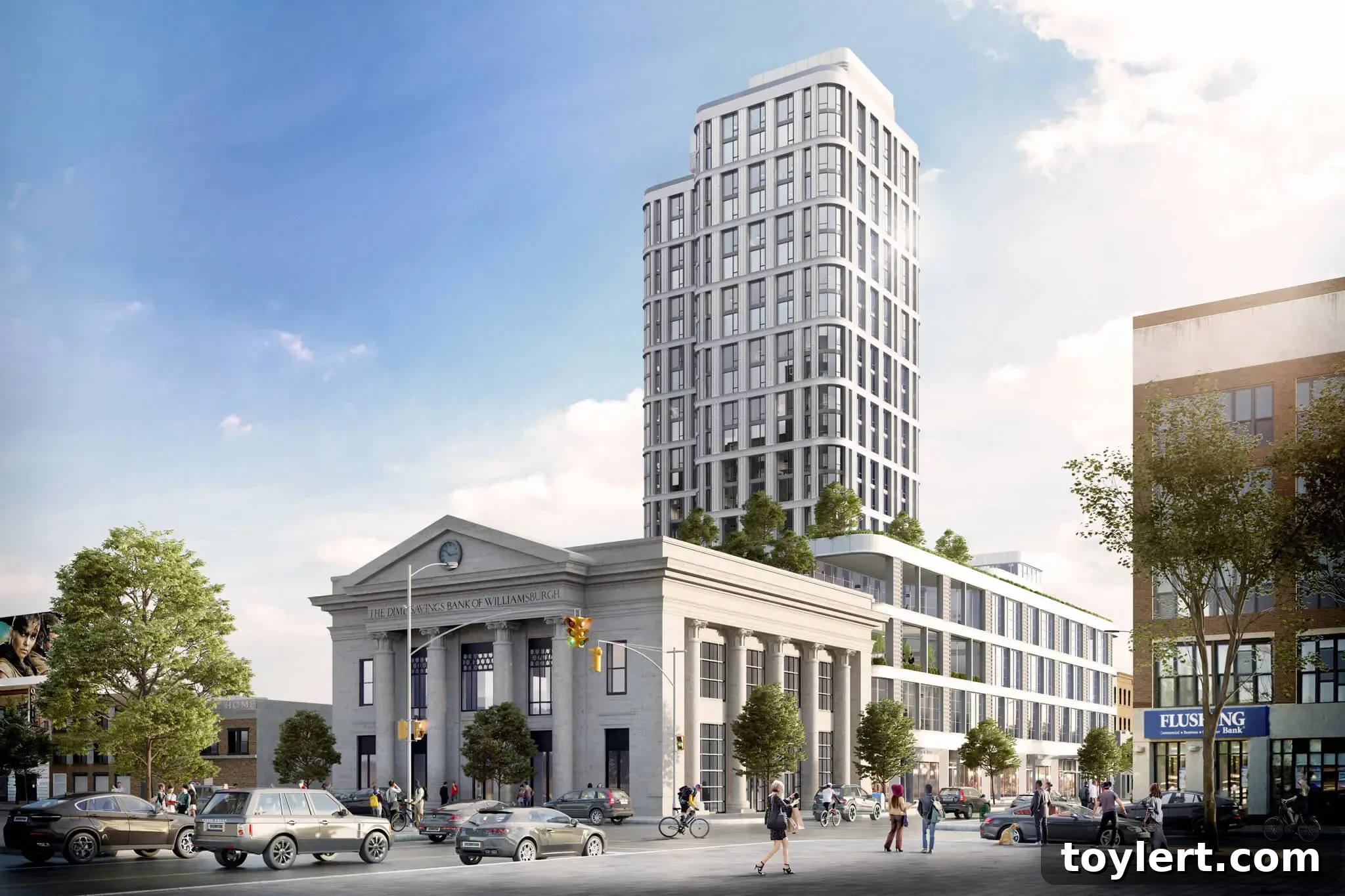
Freshly unveiled renderings offer an even clearer glimpse into the future of Williamsburg’s dynamic skyline, showcasing the impressive 23-story skyscraper that is rapidly taking shape behind the iconic neo-Classical Dime Savings Bank of Williamsburgh, located at 209 Havemeyer Street. This development marks a significant moment for the neighborhood, promising to redefine its architectural landscape while paying homage to its storied past.
Set to become one of the tallest and most prominent structures in the vicinity, this new mixed-use tower is poised to inject unprecedented height and density into an area steeped in history. For decades, parts of Williamsburg were fragmented by infrastructural developments like the BQE, elevated train tracks, and the establishment of a streetcar and bus depot in the 20th century. This new development signifies a powerful resurgence, bringing a renewed sense of verticality and urban sophistication to a district that was once the very heart of Williamsburg before its physical division.
Architectural Vision and Design by Fogarty Finger
The architectural brilliance behind the mixed-use building at 277 South 5th Street comes from the esteemed firm of Fogarty Finger Architects. Known for their innovative designs that often blend modern aesthetics with contextual sensitivity, Fogarty Finger has conceived a structure that will tower 264 feet high, gracefully rising behind and in conversation with the long-standing bank. The design aims to create a harmonious dialogue between the past and the present, ensuring that the new development complements, rather than overwhelms, the historic grandeur of its neighbor.
Early news of this ambitious project first surfaced last year, generating considerable excitement and anticipation within the local community and real estate circles. Initial conceptual renderings provided a preliminary glimpse into the tower’s form and scale in May, sparking discussions about its potential impact on the neighborhood’s character. However, these latest renderings delve deeper, revealing refined details of the facade, material choices, and the intricate relationship between the new tower and the preserved bank building. The design language appears to be one of understated elegance, employing sophisticated materials and thoughtful fenestration to create a contemporary yet timeless presence.
The building’s mixed-use nature suggests a vibrant blend of functions, likely incorporating luxury residential units alongside potential commercial or retail spaces at its base. This multi-faceted approach is characteristic of modern urban developments, seeking to create self-contained communities within larger neighborhoods. Residents can anticipate breathtaking views of the Manhattan skyline, the East River, and the burgeoning Brooklyn landscape, complemented by a suite of high-end amenities that are now standard in such premier developments, ranging from state-of-the-art fitness centers to communal lounges and private outdoor spaces.
The Historic Dime Savings Bank: A Cornerstone Preserved
The Dime Savings Bank of Williamsburgh is more than just a building; it is a profound piece of Brooklyn’s heritage. Its neo-Classical architecture, characterized by imposing columns, grand entrances, and intricate detailing, has stood as a symbol of financial stability and community pride for generations. Preserving this architectural gem while facilitating modern development around it is a testament to the evolving philosophy of urban planning, which increasingly seeks to integrate the old with the new in a respectful and functional manner.
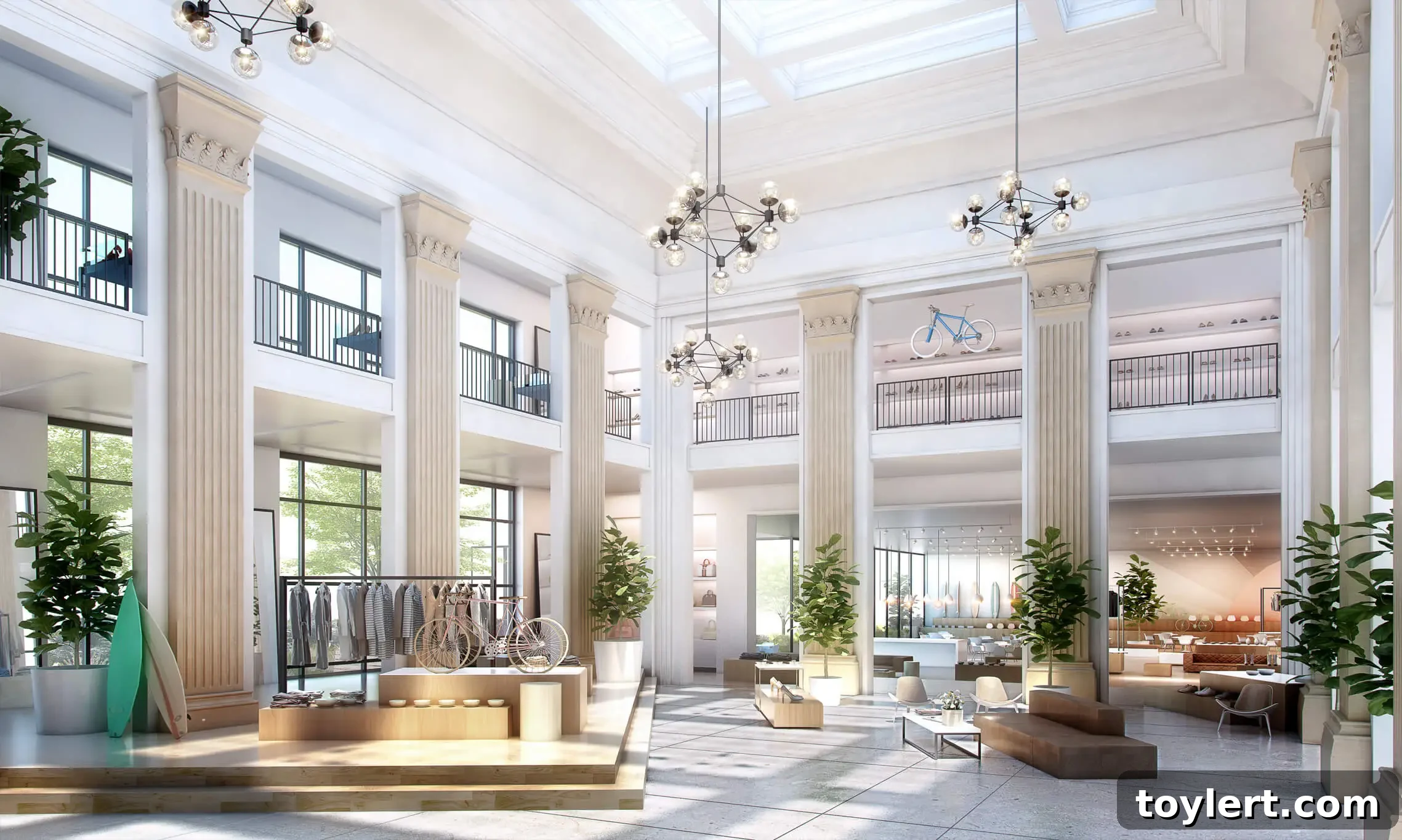
The decision to build a significant tower directly behind the bank was not made lightly. It involved careful consideration of the bank’s historical significance, its structural integrity, and the visual impact of the new construction. The development plan likely involves retaining the bank’s facade and potentially repurposing its interior for new uses, ensuring its continued presence as a landmark. This approach allows the neighborhood to embrace growth and modernity without erasing the tangible reminders of its rich past, a balance that is crucial for maintaining a sense of identity amidst rapid change.
The bank building itself, situated prominently at 209 Havemeyer Street, serves as a crucial anchor in the narrative of this development. Its classical proportions and durable materials stand in stark contrast to the sleek, vertical lines of the new tower, creating a compelling visual juxtaposition. This interplay between historical reverence and contemporary ambition is a hallmark of urban renewal projects in densely populated cities like New York, where every square foot tells a story and every new construction re-interprets that narrative for a new era.
Williamsburg’s Dynamic Evolution and Urban Renaissance
Williamsburg’s journey from a working-class neighborhood, fragmented by industrial infrastructure, to a global hotspot for culture, arts, and real estate, is nothing short of remarkable. The BQE (Brooklyn-Queens Expressway) and elevated train tracks, while essential for connectivity, historically created physical barriers that dissected the neighborhood, impacting its organic growth and community cohesion. However, in recent decades, Williamsburg has experienced an unprecedented renaissance, driven by artistic migration, investment, and a desire for vibrant urban living outside of Manhattan.
This new 23-story skyscraper at 277 South 5th Street epitomizes this ongoing transformation. It addresses the growing demand for housing and commercial space in a highly desirable area, contributing significantly to the borough’s ongoing urbanization. The increase in height and density is a direct response to market forces and the city’s need to accommodate a growing population, further solidifying Williamsburg’s status as a premier residential and commercial destination. Developments like these are catalysts for further growth, attracting new businesses, fostering job creation, and enhancing the overall economic vitality of the community.
The concept of “more height and density” in Williamsburg also brings with it discussions about infrastructure capacity, public spaces, and the evolving demographics of the neighborhood. While new developments undoubtedly bring challenges, they also bring opportunities for improved services, enhanced public amenities, and a fresh wave of energy and innovation. The careful integration of such a large-scale project within an established urban fabric requires meticulous planning and a forward-thinking approach, aiming to enrich the lives of both new and long-time residents.
The Future of Brooklyn’s Skyline: A Blend of Heritage and Modernity
The development at 277 South 5th Street is more than just another building; it is a microcosm of Brooklyn’s broader urban development narrative. Across the borough, from Downtown Brooklyn to Greenpoint, towering structures are reshaping the skyline, reflecting a dynamic period of growth and reinvention. These projects are not merely about adding buildings; they are about crafting new communities, creating sustainable living environments, and positioning Brooklyn as a global leader in urban innovation.
As the construction progresses, the visual impact of the new tower will become increasingly apparent, fundamentally altering the streetscape around Havemeyer Street and South 5th Street. The careful positioning and design by Fogarty Finger Architects aim to minimize any negative impacts, such as excessive shadowing, while maximizing the visual appeal and functional benefits of the new structure. The dialogue between the robust, historical presence of the Dime Savings Bank and the sleek, modern silhouette of the skyscraper will offer a compelling architectural narrative for generations to come.
This project serves as a powerful reminder of how rapidly urban environments can evolve, balancing the imperative for progress with the reverence for history. The new renderings provide not just a preview of a building, but a glimpse into the future of a neighborhood that continues to redefine itself, one impressive structure at a time. As Williamsburg continues its upward trajectory, developments like this will play a crucial role in shaping its identity, offering both a nod to its rich past and a bold leap into its exciting future.