Community Voices Heard: Brad Lander’s District Unveils Participatory Budgeting Winners
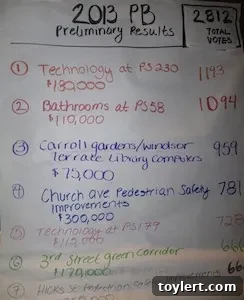
The ballots have been counted, and the vibrant spirit of civic engagement has once again triumphed in Council Member Brad Lander’s district. After an enthusiastic week of voting, the preliminary winners for the district’s Participatory Budgeting initiative have been announced, showcasing a powerful commitment to community-driven development and direct democracy. The outcome reflects the collective priorities of residents, channeling nearly $1 million towards projects that will directly enhance schools, libraries, and public spaces. This exciting conclusion to the voting process marks a significant step in translating community needs into tangible improvements.
Understanding Participatory Budgeting: Empowering Local Voices
Participatory Budgeting (PB) is a revolutionary democratic process in which community members directly decide how to spend a portion of a public budget. It’s an innovative approach to local governance that empowers ordinary citizens to propose ideas, develop projects, and ultimately vote on which initiatives receive funding. This model transforms abstract budget discussions into tangible improvements, fostering a stronger sense of ownership and accountability within the community. For Council Member Brad Lander’s district, this year’s PB cycle galvanized thousands of residents to actively shape their neighborhoods, demonstrating the profound impact of collective decision-making. It ensures that funding addresses the most pressing and relevant needs identified by those who live and work in the area, moving beyond top-down mandates to embrace grass-roots innovation.
The process typically involves several key stages: community idea collection, where residents submit initial proposals for projects they believe are vital; volunteer budget delegates working tirelessly to develop these ideas into concrete, feasible proposals; public assemblies to refine projects and gather broader input; and finally, the highly anticipated voting period where all eligible community members cast their ballots for their preferred projects. This comprehensive approach ensures transparency, inclusivity, and direct citizen engagement at every single step, making the budgeting process truly democratic.
The Top-Voted Projects: Direct Impact on Education and Public Resources
The preliminary results, initially shared by Council Member Brad Lander on Twitter, highlight a clear community-wide focus on enhancing educational environments and strengthening vital public institutions. These top three projects represent substantial investments that promise long-lasting and widespread benefits for countless residents, from school children to library patrons.
1. Advancing Education at P.S. 230: 34 Smartboards ($180,000)
Leading the pack with overwhelming community support is the ambitious project to install 34 cutting-edge smartboards at P.S. 230, securing a significant $180,000 in funding. This initiative underscores a collective commitment to modernizing classrooms and equipping students with the tools necessary for 21st-century learning. Smartboards are interactive whiteboards that integrate technology seamlessly into lessons, allowing for dynamic presentations, collaborative activities, and enhanced student engagement. By providing teachers with these sophisticated educational resources, this project aims to create more interactive, stimulating, and effective learning environments, ultimately fostering better academic outcomes and preparing students for a technologically driven future. It’s an investment not just in infrastructure, but in the future intellectual capital of the community, directly benefiting hundreds of students and educators for years to come.
2. Enhancing Facilities at P.S. 58: Bathroom Renovations ($110,000)
Coming in a strong second, the renovation of eight essential bathrooms at P.S. 58 will receive a crucial $110,000. While perhaps less flashy than technological upgrades, clean, safe, and modern restroom facilities are absolutely fundamental to student well-being, health, and a positive, respectful school environment. Outdated or poorly maintained bathrooms can contribute to hygiene issues, discomfort, and even discourage school attendance. This vital project will provide P.S. 58 students and staff with significantly improved sanitation, enhanced accessibility, and greater dignity, demonstrating that community members prioritize basic infrastructural needs that directly impact the daily lives and comfort of children. It’s a testament to the community’s understanding that a conducive and healthy learning environment extends far beyond the classroom walls.
3. Boosting Digital Access: Computers for Libraries ($75,000)
Securing the third spot, a $75,000 allocation will fund the acquisition of 29 new computers for the beloved Carroll Gardens and Windsor Terrace libraries. In an increasingly digital world, consistent and reliable access to computers and the internet is absolutely essential for education, employment opportunities, and active civic participation. Libraries serve as critical community hubs, offering free access to resources that many residents might otherwise lack due to economic or other barriers. These new computers will significantly expand digital literacy opportunities, provide invaluable research tools for students of all ages, offer crucial job search resources for adults, and ensure general internet access for all community members, effectively bridging the digital divide and reinforcing the libraries’ irreplaceable role as indispensable community assets. It’s a key investment in equitable access to information and technology for diverse populations within the district.
A Broader Spectrum of Community Improvements: Beyond the Top Three
While the top three projects rightly captured significant attention, the Participatory Budgeting initiative funded a total of seven projects with approximately $1 million dedicated to their implementation. The full list of winning projects, which collectively received an impressive 2,812 votes from deeply engaged community members, can be viewed in detail here. These additional initiatives further demonstrate the wide range of priorities held by the district’s residents, addressing various crucial facets of urban life and community well-being.
- Church Avenue Pedestrian Safety Improvements: This critical project aims to enhance crosswalks, improve signage, and implement effective traffic calming measures to make one of the district’s busiest thoroughfares significantly safer for pedestrians, cyclists, and drivers alike. It reflects a strong community commitment to improving urban mobility and drastically reducing accidents in high-traffic areas.
- A Green Corridor on 3rd Street: This environmentally conscious initiative involves transforming a section of 3rd Street into a more environmentally friendly and aesthetically pleasing space. This could be achieved through strategic tree planting, the creation of vibrant community gardens, or the implementation of other innovative green infrastructure solutions, contributing positively to urban beautification, air quality, and residents’ overall well-being.
- Safety Measures for Hicks Street: This project focuses on implementing specific, targeted interventions, such as improved street lighting, additional traffic calming elements, or enhanced surveillance systems, to proactively address long-standing safety concerns and create a more secure and reassuring environment for residents living along Hicks Street.
The remarkable diversity of these projects — spanning from cutting-edge educational technology to vital public infrastructure, and from enhancing public safety to implementing crucial environmental upgrades — truly showcases the holistic and comprehensive approach that communities take when given the direct power to allocate public funds. Each project, whether large in scope or more localized, represents a tangible improvement explicitly chosen by the people, for the direct benefit of the people.
The Power of the Vote: Civic Engagement in Action
The remarkable total of 2,812 votes cast for projects in Council Member Brad Lander’s district this year speaks volumes about the enthusiasm, dedication, and profound commitment of its residents. This impressive turnout is not merely a number; it represents thousands of individuals who actively took the time to learn about the proposed projects, carefully weigh their options, and ultimately make their collective voices heard through the ballot box. It powerfully underscores the success of Participatory Budgeting as an effective mechanism for strengthening local democracy and fostering a deep, abiding sense of civic responsibility among community members. Every single vote cast directly contributed to the allocation of essential funds, thereby directly impacting the quality of life in cherished neighborhoods like Carroll Gardens, Windsor Terrace, and beyond. This consistently high level of participation proves unequivocally that when given a genuine, meaningful opportunity to influence decisions that directly affect their lives, communities eagerly step up to the challenge with vigor and determination.
Such profound and widespread engagement ensures that public resources are consistently directed towards initiatives that resonate most deeply and authentically with community members, addressing specific needs and aspirations rather than generic, top-down directives that may not fully align with local realities. It effectively creates a robust, dynamic feedback loop between constituents and their elected representatives, fostering significantly greater trust, transparency, and collaborative efforts between government and the people it serves.
Looking Ahead: Sustaining the Impact of Participatory Budgeting
The successful conclusion of this year’s Participatory Budgeting voting week in Council Member Brad Lander’s district is far more than just an announcement of winners; it’s a profound testament to the enduring power and potential of community collaboration. As these carefully chosen projects move from initial concept to tangible reality, they will serve as powerful, visible reminders of what can be truly achieved when citizens are directly involved and empowered to shape their shared future. The significant improvements at P.S. 230 and P.S. 58, the substantially enhanced digital access at local libraries, and the crucial safety and environmental upgrades thoughtfully implemented throughout the district will collectively and profoundly enrich the lives of thousands of residents for years to come.
Participatory Budgeting stands as an exemplary model for transparent, accountable, and truly democratic governance. It actively encourages residents not just to voice their complaints or concerns, but to actively propose innovative solutions and collaboratively allocate vital public resources. The continued success and steadily growing participation in initiatives like this demonstrate a remarkably bright future for citizen-led development, inspiring other districts, municipalities, and even cities to thoughtfully adopt similar empowering frameworks. It’s a living, breathing example of how local communities can collaboratively build a better, more responsive, and ultimately more equitable urban environment for absolutely everyone.