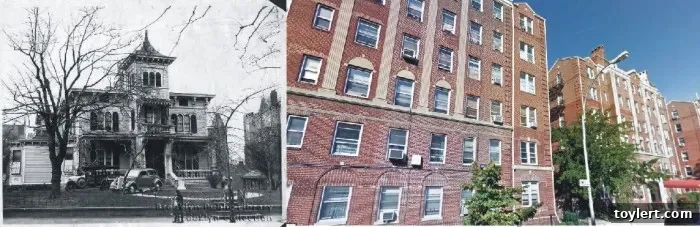
Brooklyn’s Enduring Charm: Tracing the Evolution of 751 St. Marks Avenue from Suburban Oasis to Urban Gem
Step back in time to an era when Brooklyn, the vibrant borough we know today, was a very different landscape. It’s truly remarkable to consider that immediately following the harrowing years of the Civil War, vast stretches of what are now bustling neighborhoods like Bedford-Stuyvesant and Crown Heights were largely considered the tranquil “suburbs” of a rapidly expanding New York City. This perception, so alien to modern sensibilities, laid the groundwork for Brooklyn’s unique development and the enduring appeal of its architectural treasures.
During this pivotal period, Brooklyn began its transformation from a collection of independent towns into a bustling urban center, yet still offering a distinct escape from Manhattan’s intense density. The allure of Central Brooklyn, particularly the areas east of Downtown, was undeniable. Its appeal stemmed primarily from two significant factors: the availability of spacious plots of land and, crucially, the burgeoning network of public transportation. Major thoroughfares such as Atlantic Avenue, Fulton Street, and Bedford Avenue became vital arteries, connecting these nascent suburban enclaves directly to the heart of the city.
This strategic connectivity made Central Brooklyn an exceptionally desirable location for affluent New Yorkers seeking to build grand country villas. These weren’t mere houses; they were often elaborate homes designed to offer the best of both worlds – the peaceful serenity of a country estate combined with convenient access to the economic and cultural opportunities of city life. Imagine a time when horse-drawn streetcars and, later, elevated trains brought residents from their stately homes to their offices and entertainments in Manhattan or Downtown Brooklyn, all while returning to tree-lined streets and expansive gardens in the evening. Properties like 751 St. Marks Avenue, implicitly referenced in our visual, stand as silent testaments to this fascinating era, encapsulating the dreams and aspirations of a generation. Their very existence tells a story of ambitious development, evolving communities, and the relentless march of urban progress.
The Post-Civil War Boom: Brooklyn’s Suburban Grandeur Takes Shape
The period following the American Civil War (1861-1865) marked a profound shift in American society, driving unprecedented urbanization and economic growth. New York City, already a commercial powerhouse, experienced an explosion in population and industrial activity. Manhattan, with its limited land, quickly became overcrowded, prompting a natural outward migration. Brooklyn, with its vast undeveloped tracts and strategic waterfront, was perfectly positioned to absorb this growth.
Wealthy merchants, industrialists, and professionals, seeking respite from the grime and congestion of Lower Manhattan, looked eastward. They envisioned grand homes amidst more open spaces, where their families could thrive away from the city’s intensity but not completely disconnected from its benefits. Bedford-Stuyvesant and Crown Heights, then characterized by farms and undeveloped lots, began to attract significant investment. The land was more affordable, and the promise of a healthier, more spacious lifestyle was a powerful draw.
This era saw the construction of some of Brooklyn’s most iconic residential architecture. Architects and builders crafted freestanding mansions, stately brownstone rows, and elegant brick homes, each designed to reflect the prosperity and refined tastes of their owners. These “country houses in the city” often featured generous setbacks, expansive front porches, bay windows, and intricate detailing, embodying the Victorian aesthetic that dominated the late 19th century. They were designed not just for shelter, but as statements of success, blending suburban tranquility with urban sophistication.
Connecting the Borough: The Transportation Revolution
The vision of suburban living in Central Brooklyn would have remained largely aspirational without the parallel development of an efficient transportation infrastructure. The growth of these neighborhoods was intrinsically linked to the expansion of public transit, which transformed once remote areas into accessible and desirable locations.
Key Transportation Arteries:
- Atlantic Avenue: A major east-west artery, Atlantic Avenue was crucial for linking Brooklyn to the ferry terminals connecting to Manhattan and later, for its elevated train lines and streetcar routes. It facilitated the movement of goods and people, making commuting to and from downtown Brooklyn and beyond feasible.
- Fulton Street: Often referred to as Brooklyn’s “Main Street,” Fulton Street became a bustling commercial corridor and a primary route for streetcar and elevated train services. It directly connected residential areas deep within Brooklyn to major shopping districts and transportation hubs, cementing its role as a vital lifeline.
- Bedford Avenue: Running north-south through the heart of Brooklyn, Bedford Avenue served as a central spine, connecting various neighborhoods and providing crucial access for local residents. Its streetcar lines were instrumental in the day-to-day lives of Brooklynites, linking homes to schools, markets, and social institutions.
These routes, initially served by horse-drawn omnibuses and streetcars, rapidly evolved with technological advancements. The introduction of steam-powered elevated trains and, eventually, electric trolleys and subway lines dramatically reduced travel times and expanded the reach of Brooklyn’s residential areas. The ability to commute swiftly and reliably meant residents could enjoy the space and peace of their “country villas” while still engaging actively with the economic and cultural pulse of New York City.
Architectural Heritage: The Enduring Legacy of Brooklyn’s Grand Homes
The architectural landscape of neighborhoods like Crown Heights and Bedford-Stuyvesant is a rich tapestry woven with styles from the late 19th and early 20th centuries. The homes built during this “suburban” era were often grand and meticulously crafted, reflecting a period of immense prosperity and optimism. Properties along St. Marks Avenue, for example, frequently showcase a blend of architectural influences, making them truly unique.
Common Architectural Styles:
- Victorian Era Grandeur: This broad category encompasses several substyles prevalent at the time, including Queen Anne, Romanesque Revival, and Neo-Grec. Victorian homes are characterized by their elaborate ornamentation, asymmetrical facades, varied textures, and rich detailing such as turrets, stained glass, and decorative masonry.
- Brownstone Rows: While many freestanding villas were built, the brownstone row house became an iconic symbol of Brooklyn. These elegant homes, typically faced with distinctive brown sandstone, offered a blend of spacious interiors and urban density. They represented a refined form of city living, often featuring high stoops, ornate cornices, and detailed window surrounds.
- Brick and Limestone: Beyond brownstone, many residences were constructed from sturdy brick, often trimmed with elegant limestone or terra cotta accents. These materials provided durability and a classic aesthetic that continues to define much of Brooklyn’s historic housing stock.
The vision for these homes was not just about aesthetics; it was about creating comfortable, spacious environments for family life. High ceilings, large windows, multiple fireplaces, and generous room proportions were standard features, designed to accommodate the lifestyles of the era. A property like 751 St. Marks Avenue would have initially been a single-family residence, likely with multiple stories, perhaps a carriage house in the rear, and a manicured garden, embodying the era’s ideal of sophisticated suburban living.
The Shifting Tides: Urbanization and Community Evolution
As the 20th century progressed, Brooklyn’s character continued to evolve dramatically. The suburban ideal that defined areas like Crown Heights began to shift under the weight of increasing population density, immigration waves, and economic changes. What were once “country villas” slowly became integrated into a more cohesive urban fabric.
The construction of the subway system in the early 1900s further cemented Brooklyn’s connection to Manhattan, transforming it from a collection of distinct communities into an integral part of the greater metropolis. This increased accessibility, while beneficial for growth, also brought new challenges. Many grand single-family homes, originally built for a specific social class, were gradually subdivided into multi-family apartments to accommodate a growing and increasingly diverse population.
Mid-century economic downturns, coupled with societal shifts like “white flight” to newer, more distant suburbs, led to periods of decline in some of these historic neighborhoods. However, the resilience of Brooklyn’s communities and the inherent quality of its architecture ensured that these areas never lost their fundamental charm. Grassroots movements for historic preservation and community revitalization began to emerge in the latter half of the 20th century, recognizing the irreplaceable value of Brooklyn’s built environment.
Brooklyn Today: A Modern Metropolis with Deep Historical Roots
Today, Brooklyn stands as a global icon of urban vibrancy, cultural diversity, and artistic innovation. The transformation from its post-Civil War suburban identity to its current status as a sought-after borough is nothing short of remarkable. Neighborhoods like Crown Heights and Bedford-Stuyvesant, once quiet residential havens, are now dynamic communities brimming with life, a testament to their enduring appeal.
The “then and now” comparison reveals a fascinating interplay between preservation and progress. While the horse-drawn streetcars are long gone, replaced by extensive subway lines and buses, the original thoroughfares like Atlantic Avenue, Fulton Street, and Bedford Avenue continue to serve as major arteries, albeit with far greater traffic and commercial activity. The “best of both worlds” concept has evolved: residents still seek a balance between urban amenities and green spaces, now found in renovated brownstones, community gardens, and beautifully maintained parks.
The historic architecture, including properties such as 751 St. Marks Avenue, has become highly prized. Many of these grand homes have been meticulously restored, with their original details lovingly preserved, while their interiors have been updated to meet contemporary living standards. This blend of historic charm and modern convenience is a key part of Brooklyn’s allure, attracting a diverse mix of long-time residents and new arrivals drawn to its unique character.
751 St. Marks Avenue: A Microcosm of Brooklyn’s Journey
While the exact historical details of 751 St. Marks Avenue beyond its existence and likely architectural style are not extensively documented here, we can infer its journey mirrors the broader narrative of its neighborhood and Brooklyn as a whole. Imagine this property beginning its life as a magnificent single-family villa, a testament to post-Civil War prosperity. Its original owners would have reveled in its spacious rooms, its proximity to the new transportation lines, and its quiet, tree-lined street.
Over the decades, as Brooklyn became more densely populated, 751 St. Marks Avenue might have undergone various transformations. It could have been divided into multiple apartments, housing several families, reflecting the economic pressures and changing demographics of the early to mid-20th century. Its elegant facade might have weathered periods of neglect, only to be rediscovered and lovingly restored by a new generation of owners passionate about preserving Brooklyn’s architectural legacy.
Today, 751 St. Marks Avenue likely stands as a beautifully preserved example of its era, perhaps restored to its single-family grandeur, or thoughtfully maintained as a multi-unit dwelling that nonetheless honors its historical integrity. It serves as a physical link to the past, a tangible representation of Brooklyn’s journey from suburban aspiration to urban sophistication. Its story, and the stories of countless similar properties, are what give Brooklyn its soul – a borough deeply rooted in its history, yet constantly looking towards the future.
Conclusion: Brooklyn’s Ever-Evolving Narrative
From the spacious country villas of its post-Civil War “suburban” phase to the vibrant, diverse urban landscape it embodies today, Brooklyn has continuously reinvented itself while holding onto the threads of its rich history. The transformation of areas like Bedford-Stuyvesant and Crown Heights, facilitated by groundbreaking transportation networks, illustrates a timeless desire for quality living – a blend of accessibility, community, and beauty.
The legacy of this era is etched into the very fabric of the borough, most notably in its stunning architectural heritage. Properties such as 751 St. Marks Avenue are more than just buildings; they are living archives, each brick and window pane whispering tales of bygone eras and the enduring spirit of Brooklyn. As the borough continues to evolve, its past remains a vital part of its present, offering a compelling narrative of adaptation, resilience, and captivating charm that continues to attract and inspire people from around the globe.