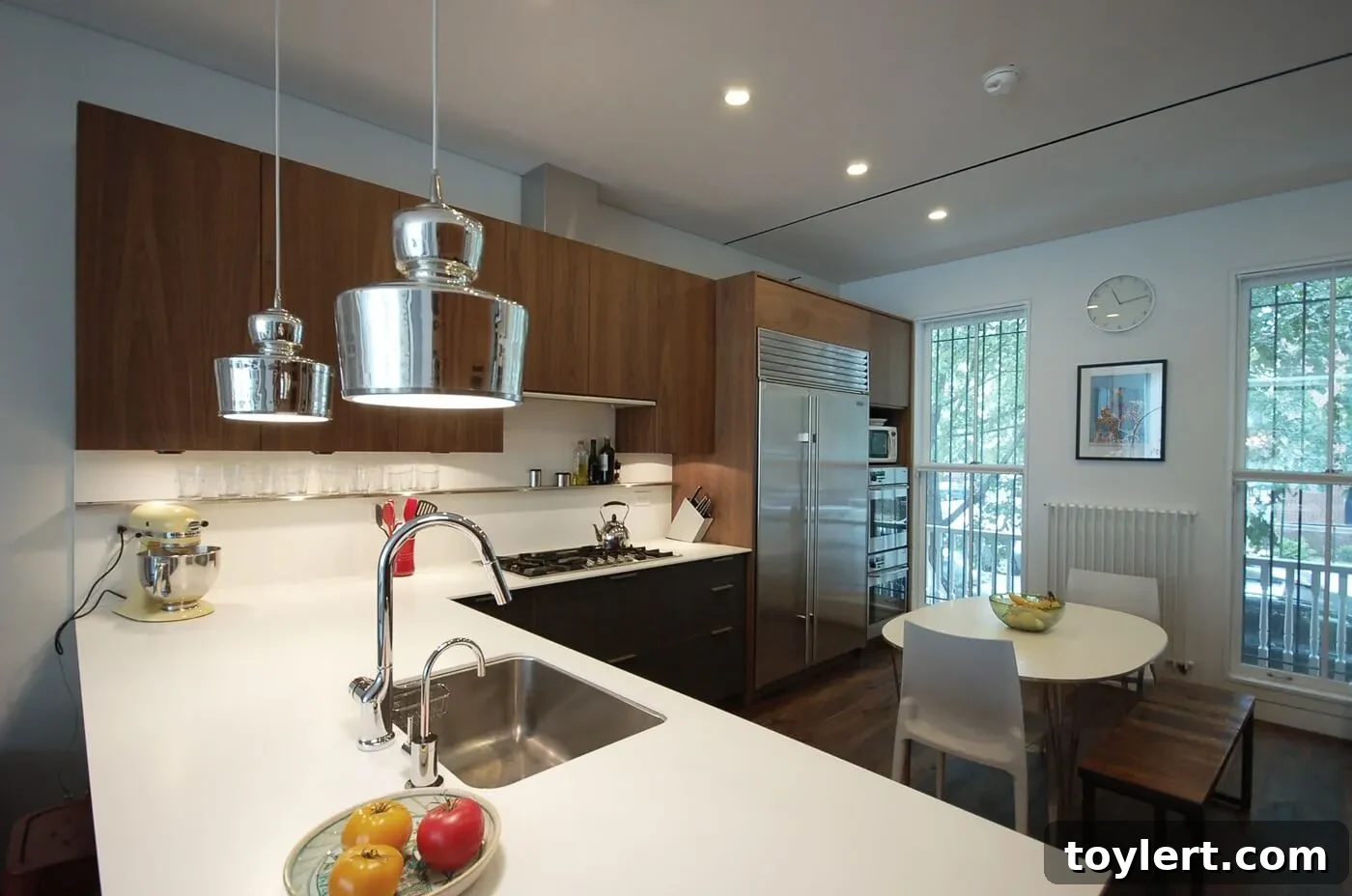
From Neglect to Modern Marvel: SA-DA Architecture’s Visionary Transformation of a Fort Greene Townhouse
Nestled behind the quaint, painted shingles of an 1860s wood-frame house in Brooklyn’s historic Fort Greene neighborhood, with its charming peaked roof and an inviting old-fashioned front porch, lies an unexpected architectural revelation. Step inside, and you’re transported from the mid-19th century into a realm informed by the sleek, minimalist principles of modernism. This striking contrast, a meticulously crafted, detail-free interior prioritizing expansive space and abundant natural light, defies traditional expectations for such a venerable structure. It’s a testament to the transformative power of visionary design, proving that historical shells can house cutting-edge contemporary living spaces without losing their inherent charm.
The Visionaries Behind the Transformation: SA-DA Architecture
The journey to this architectural rebirth began in 2011 when Alexander Stoltz and Amy Chase, the dynamic duo behind the renowned SA-DA Architecture firm, acquired the Fort Greene house. This purchase wasn’t merely an investment; it was an ambitious family project, a blank canvas for their expertise, and a challenging undertaking in a competitive estate sale market. Their firm, celebrated for its innovative approach to residential and commercial design, brings together a unique blend of architectural rigor and interior design finesse. Alexander Stoltz, a licensed architect with deep roots in SoHo and an impressive degree from MIT, combines a keen understanding of urban landscapes with a profound appreciation for structural integrity. Amy Chase, an Atlanta native, complements this with her Master’s in interior design from Pratt, bringing a sophisticated eye for aesthetics, functionality, and the human experience within built environments. Together, they possess the multidisciplinary expertise required to tackle projects of this scale and complexity, particularly those demanding a delicate balance between historical context and contemporary intervention.
A History of Neglect: The State of the 1860s Fort Greene House
The acquisition, however, was far from acquiring a move-in-ready dream home. As Stoltz candidly described it, the house had endured “the depths of neglect” for decades. Prior to its purchase by SA-DA Architecture, the property had served as an SRO, or Single Room Occupancy, for an extended period. This usage typically involves dividing larger homes into multiple small, independent living units, often leading to significant wear and tear, makeshift alterations, and a general disregard for the property’s structural and aesthetic integrity. The 1860s wood-frame structure, once a proud example of Brooklyn’s architectural heritage, was teetering on the brink of ruin, a shadow of its former self. The challenges facing Stoltz and Chase were not just aesthetic; they were fundamentally structural and historical, requiring a comprehensive and courageous approach to renovation.
The SRO Era and its Toll on the Fort Greene Townhouse
The SRO conversion had stripped the house of nearly all its original character. Walls were crudely erected, plumbing and electrical systems were haphazardly installed, and essential maintenance was largely ignored. This prolonged period of neglect had left the house in a truly dilapidated state. Structural elements were compromised, finishes were beyond repair, and the very essence of the historic home had been eroded by decades of intensive, piecemeal occupancy. For any design professional, let alone a family looking for a home, this condition would present a formidable barrier. Yet, for Stoltz and Chase, it represented an opportunity to entirely reimagine the space, unburdened by the need to meticulously restore non-existent or irrevocably damaged historical details.
Salvaging the Scarcely Salvageable: Two Fireplaces
In a project where so much had been lost, the idea of preservation took on a different meaning. Stoltz, a firm believer in the importance of safeguarding beautiful architectural details, found himself in a unique predicament. “I actually do believe beautiful details should be preserved,” he remarked, “but this house had practically zero.” The extent of the damage was profound: “The roof was leaking and ready to fall in. It was in such terrible shape, all we could save were two fireplaces.” These two fireplaces became symbolic anchors, the sole remaining links to the house’s storied past, standing as quiet witnesses to its dramatic transformation. Their preservation, a small victory in a vast undertaking, provided a subtle historical counterpoint to the impending modernist intervention, a whisper of the past within a thoroughly contemporary narrative.
Embracing Modernism: Principles of Space and Light
With the understanding that traditional restoration was largely out of the question, Stoltz and Chase pivoted towards a bold modernist vision. Their design philosophy for this Fort Greene townhouse centered on the core modernist principles of maximizing space, optimizing natural light, and creating a seamless, uncluttered flow. This approach was not merely a stylistic choice but a strategic response to the property’s condition and the desire to create a highly functional, serene family home. By stripping away extraneous details and opening up the interior, they aimed to transform the once dark, segmented SRO into a bright, airy sanctuary that felt inherently contemporary while respecting the building’s footprint and external façade.
The Modernist Approach to an Historic Shell
The decision to impose a minimalist, modernist aesthetic onto an 1860s wood-frame house might seem contradictory, but it was executed with thoughtful precision. Instead of fighting the historical context, SA-DA Architecture allowed the clean lines, open spaces, and emphasis on natural materials to create a dialogue with the robust, enduring shell. The exterior, with its distinctive shingles and peaked roof, retains its classic charm, hinting at history. The interior, however, offers a striking and deliberate contrast, a deliberate design choice that speaks to the evolution of architectural thought and the adaptability of old structures to new purposes. This juxtaposition is what makes the project truly compelling, a bridge between two distinct eras of design.
Maximizing Natural Light and Openness
One of the paramount goals for the renovation was to flood the interior with natural light and foster a sense of openness. This involved strategic interventions such as expanding window openings where possible, introducing skylights, and designing an open-plan layout that allows light to penetrate deep into the core of the house. Walls that once compartmentalized the SRO units were dismantled, creating expansive living areas that encourage interaction and offer unobstructed sightlines. The result is a luminous environment that feels far more spacious than its actual square footage, enhancing the residents’ well-being and creating a vibrant, inviting atmosphere throughout the day.
The Design Philosophy of SA-DA Architecture
SA-DA Architecture’s approach to the Fort Greene townhouse was deeply rooted in their commitment to crafting spaces that are both beautiful and eminently livable. Their philosophy marries aesthetic sophistication with practical functionality, ensuring that every design decision contributes to a harmonious and efficient home. This project, in particular, showcases their ability to translate complex challenges into elegant solutions, leveraging their architectural and interior design expertise to create something truly exceptional from a daunting starting point.
Crafting a Detail-Free Aesthetic
The concept of a “detail-free interior” is central to this renovation. It’s not a lack of consideration, but rather a deliberate choice to remove visual clutter and allow the inherent qualities of space, light, and materiality to shine. Finishes are clean and understated, built-in elements serve multiple functions, and ornamentation is minimal. This minimalist approach fosters a sense of calm and order, creating a serene backdrop for daily life. It also ensures that the architecture itself remains the primary focus, celebrating the pure forms and volumetric qualities of the space rather than relying on decorative elements. This simplicity requires immense precision and a high level of craftsmanship to execute flawlessly.
Blending Form and Function
Beyond aesthetics, SA-DA Architecture meticulously integrated form and function into every aspect of the design. The layout was carefully considered to support the flow of family life, with distinct zones for living, dining, and sleeping, yet maintaining an overarching sense of connection. Storage solutions are cleverly integrated and unobtrusive, contributing to the “detail-free” aesthetic while ensuring practicality. Material choices were made not only for their visual appeal but also for their durability, sustainability, and ease of maintenance, reflecting a holistic approach to creating a home that is as robust as it is beautiful.
Challenges and Triumphs of the Renovation
Renovating a severely neglected 1860s SRO property into a modernist family home was undoubtedly fraught with challenges. From structural compromises to the sheer scale of demolition and rebuilding required, Stoltz and Chase faced numerous hurdles. Yet, their expertise and unwavering vision allowed them to navigate these obstacles, ultimately transforming a dilapidated structure into a beacon of contemporary design within a historic neighborhood.
Structural Overhaul and Beyond
The initial phase of the renovation involved a significant structural overhaul. With the roof leaking and on the verge of collapse, and decades of SRO modifications compromising the integrity of the building, extensive reinforcement and reconstruction were necessary. This went far beyond cosmetic fixes, delving into the very bones of the house. New plumbing, electrical systems, and HVAC had to be installed from scratch, integrating modern amenities seamlessly into the revitalized structure. This foundational work was critical to ensuring the longevity and safety of the home, paving the way for the sophisticated interior design that would follow.
Overcoming Historical Limitations
While the lack of original details freed the architects from strict historical replication, the age of the building still presented inherent limitations and complexities. Working with an old wood-frame structure required careful planning to ensure modern interventions could be safely and effectively implemented without undermining the building’s heritage. Building codes, historical district regulations (if any), and the inherent quirks of an almost 160-year-old building all contributed to the intricate puzzle that SA-DA Architecture masterfully solved, turning potential constraints into catalysts for innovative solutions.
The Fort Greene Context: Blending Old and New
Fort Greene, known for its tree-lined streets, historic brownstones, and vibrant cultural scene, provided a rich backdrop for this architectural endeavor. The neighborhood itself is a blend of old-world charm and contemporary urban living, making it an ideal location for SA-DA Architecture’s project. The house, with its preserved exterior and radically modern interior, embodies this spirit of harmonious coexistence between past and present, contributing a unique architectural statement to the community.
A Neighborhood Reimagined
The transformation of this particular townhouse contributes to the ongoing evolution of Fort Greene, a neighborhood that continuously reimagines itself while cherishing its history. SA-DA Architecture’s project stands as an example of how historic properties can be adapted for modern living, offering a blueprint for sustainable urban development that respects heritage while embracing contemporary needs and aesthetics. It’s a powerful narrative about how thoughtful design can breathe new life into forgotten structures.
Key Design Elements and Features
While the original text focuses on the conceptual approach, a project of this magnitude, aiming for a “detail-free” modernist interior, would inherently incorporate several distinct design elements to achieve its goals:
- Open-Plan Living: The removal of internal walls created expansive, interconnected spaces, particularly on the main living floors, fostering a sense of fluidity and enhancing social interaction.
- Minimalist Finishes: Walls, floors, and ceilings were treated with clean, simple finishes – perhaps polished concrete, wide-plank light wood flooring, or pristine white walls – to emphasize space and light over ornamentation.
- Integrated Storage Solutions: To maintain the “detail-free” aesthetic, storage was likely built-in and seamlessly integrated into the architecture, appearing as flush panels or hidden compartments, reducing clutter.
- Strategic Lighting Design: Beyond natural light, artificial lighting would be carefully planned, utilizing recessed fixtures, hidden LED strips, and minimalist pendants to provide ambient and task lighting without becoming a focal point.
- High-Performance Windows and Doors: Upgraded windows and doors would not only enhance energy efficiency but also be chosen for their clean lines and ability to maximize views and light penetration.
- Carefully Selected Materials Palette: A limited and refined palette of materials – such as glass, steel, light woods, and concrete – would contribute to the cohesive, minimalist feel, chosen for their texture and understated elegance.
- Preserved Fireplaces as Art: The two salvaged fireplaces would likely be cleaned and perhaps restored to their original material glory, standing as sculptural elements or focal points that subtly nod to the house’s history amidst the modern backdrop.
The Impact of Thoughtful Design: A Home Reborn
The SA-DA Architecture project in Fort Greene is more than just a renovation; it’s a profound act of architectural transformation. It demonstrates how a property once deemed beyond salvage can be reborn through ingenuity, expertise, and a clear design vision. The home now stands as a private residence that is both a functional living space for a family and a compelling example of how modernist principles can be successfully applied to historic structures. It tells a story of neglect reversed, of space reimagined, and of light brought back into darkness, offering a fresh perspective on urban living in one of Brooklyn’s most cherished neighborhoods.
Conclusion: A Testament to Modernist Vision in Historic Brooklyn
Alexander Stoltz and Amy Chase of SA-DA Architecture have achieved something truly remarkable with their Fort Greene townhouse project. By embracing a modernist philosophy and making strategic, bold design choices, they have not only salvaged a deeply neglected 1860s property but have also redefined what a family home can be within a historic context. The contrast between the exterior’s traditional charm and the interior’s minimalist, light-filled spaces is not just aesthetically pleasing; it is a powerful statement about adaptability, vision, and the enduring appeal of thoughtful design. This Brooklyn townhouse stands as a shining example of how architects and designers can honor the past while boldly stepping into the future, creating spaces that are both timeless and perfectly attuned to contemporary life.