Transforming Brooklyn Row Houses: Innovative Renovations for Modern Living
Brooklyn row houses, with their distinctive architecture and rich history, are much more than just buildings; they are canvases for innovative transformation. Built a century or more ago, primarily conceived as single-family residences, these iconic structures are continually being reimagined by today’s owners to suit a diverse array of contemporary lifestyles. From sprawling family homes to multi-unit dwellings or creative live-work spaces, their inherent versatility allows for endless possibilities, making them highly sought-after properties in one of New York City’s most vibrant boroughs.
The enduring appeal of these homes lies in their unique blend of historic charm and robust construction. Many feature intricate details like ornate cornices, original wood trim, and grand stoops that evoke a bygone era. Yet, beneath their classic facades, these homes offer the sturdy bones and generous footprints necessary for extensive modern upgrades. Homeowners and architects alike are embracing the challenge of preserving their character while infusing them with 21st-century functionality, energy efficiency, and aesthetic appeal. This careful balance of old and new is what truly defines the spirit of Brooklyn row house renovations.
A Custom Approach to Urban Living: The Braude Pankiewicz Project
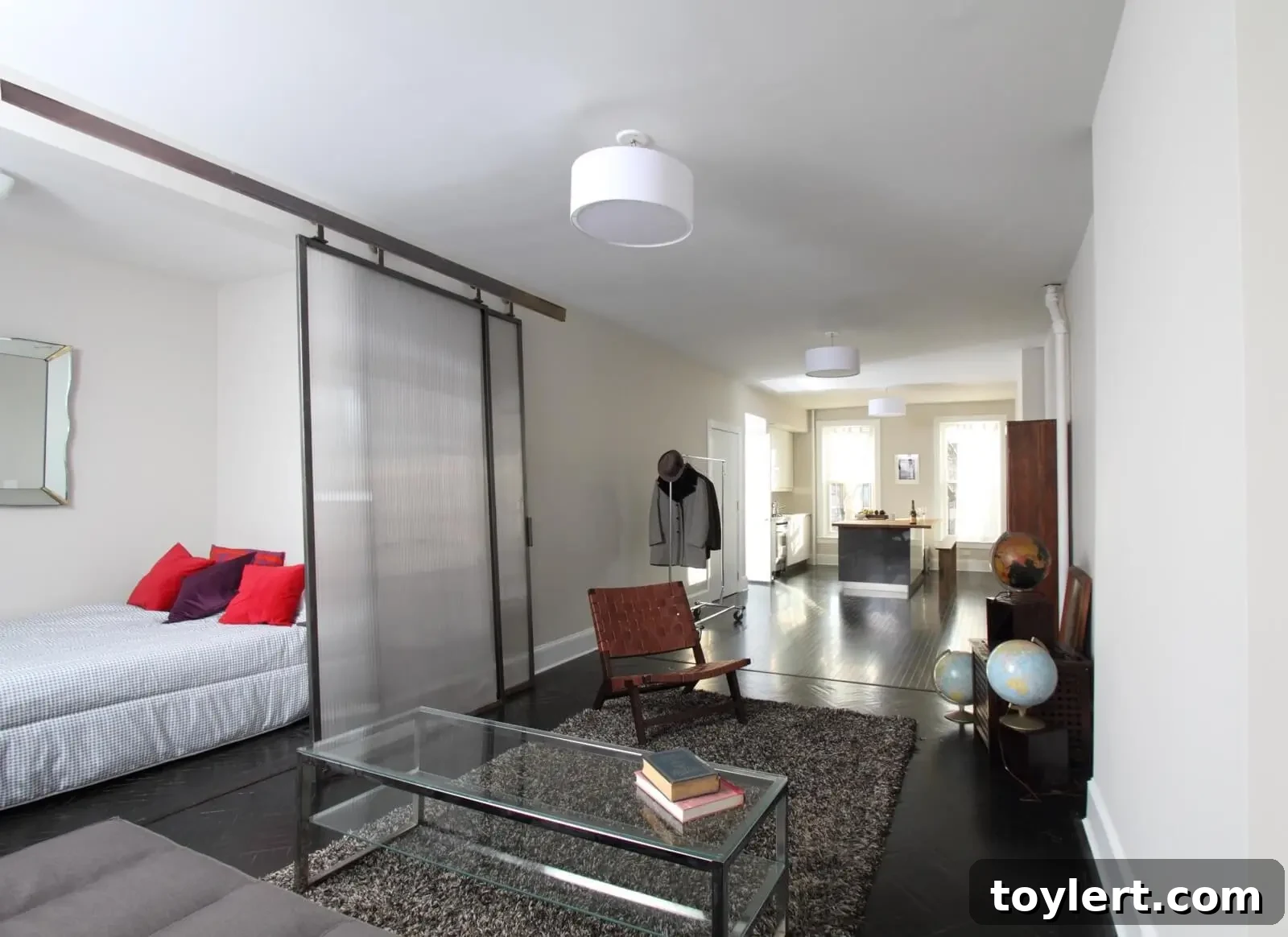
In a compelling example of personalized urban design, a recent project involving a four-story Brooklyn row house demonstrates an unusually inventive approach to configuring living spaces. Spearheaded by the South Slope-based firm, Braude Pankiewicz Architects, this renovation deviates from the common trend of creating a duplex or multiple rental units, offering a unique solution tailored specifically to the owner’s needs and lifestyle.
The owner, a single man, envisioned a dwelling that prioritized his personal comfort and privacy while also seamlessly accommodating visiting friends and family. Instead of the typical duplex conversion, which might divide the house into two large, independent units, his vision was more nuanced. He chose to retain the entire elegant parlor floor as his private domain, a sophisticated sanctuary designed exclusively for his use. This decision allowed for a spacious, dedicated living area, often featuring higher ceilings, large windows, and original architectural details that are characteristic of this prime floor.
Above his private level, the architects crafted a self-contained guest apartment on the floor immediately above. This innovative configuration provides an ideal balance: guests enjoy their own independent space, complete with essential amenities, while remaining conveniently close to their host. It fosters a welcoming environment for visitors, ensuring both comfort and privacy for everyone involved, a thoughtful consideration often overlooked in more traditional conversions.
Optimizing Space and Functionality Across All Levels
Beyond the innovative parlor and guest apartment setup, the architects made strategic decisions for the other levels of the building. The garden level underwent a light renovation, making it suitable for rental. This approach not only helps offset renovation costs but also contributes to the owner’s financial flexibility and property value. Similarly, the top floor, being in decent condition, was maintained as is, retaining its existing tenant. This comprehensive strategy showcases a practical and financially astute approach to maximizing the potential of every square foot within the property.
Talia Braude, one of the two principals at Braude Pankiewicz Architects, highlighted the distinctiveness of this project: “Instead of creating a duplex, he kept the parlor floor for himself and created a guest apartment for visiting friends and family on the floor above.” This statement underscores the personalized nature of the design and the firm’s ability to translate unique client desires into functional, beautiful spaces. It exemplifies how modern architectural solutions can cater to individual preferences, moving beyond standardized renovation templates often seen in the urban landscape.
Innovation Born from Constraints: Designing with a Tight Budget
One of the most impressive aspects of this project was its execution under a tight budget. Rather than hindering creativity, financial constraints often become powerful catalysts for innovation in architectural design. This project by Braude Pankiewicz Architects is a testament to how limited resources can inspire ingenious solutions, leading to spaces that are both aesthetically pleasing and highly functional without exorbitant costs.
Architects working with budget limitations are prompted to make smart material choices, prioritize essential renovations, and explore multi-functional design elements. This often involves selecting durable, cost-effective materials that still offer visual appeal and longevity. For instance, instead of custom millwork throughout, strategic built-ins in key areas might provide ample storage and a bespoke feel. Lighting, often an expensive component, can be designed to maximize natural light and use energy-efficient fixtures, reducing both installation and long-term operating costs. Such thoughtful planning ensures every dollar is invested wisely to achieve maximum impact.
Smart Material Selection and Design Efficiency
A tight budget encourages a focus on efficiency in every aspect, from space planning to construction methods. For instance, instead of reconfiguring entire structural elements, the design might concentrate on enhancing existing layouts through clever partitioning or open-plan solutions where feasible. This approach minimizes demolition and reconstruction costs, channeling resources towards impactful upgrades like kitchen and bathroom remodels, or improvements to lighting, insulation, and essential systems. It’s about making strategic, high-value improvements rather than overhauling everything.
Furthermore, innovative architects can identify opportunities for re-purposing or restoring existing features. Original hardwood floors, once hidden under layers of carpet, can be refinished to reveal their inherent beauty and save on new flooring expenses. Similarly, historical details such as fireplace mantels, crown molding, or intricate staircase banisters can be carefully restored, adding character and value without the prohibitive cost of replication. This preservation not only honors the building’s heritage but also provides a unique, authentic aesthetic that new materials often struggle to replicate, contributing significantly to the home’s charm and market appeal.
Key Considerations for Brooklyn Row House Renovations
Renovating a Brooklyn row house involves a unique set of considerations that balance historical preservation with modern living demands. Successful projects typically address several key areas, ensuring a harmonious blend of past and present:
- Preserving Historic Character: Many homeowners are keen to retain original details such as ornate fireplaces, decorative moldings, grand staircase banisters, and classic window frames. Architects often work meticulously to restore these features or replicate them faithfully where original elements are too damaged, maintaining the home’s unique historical narrative.
- Maximizing Natural Light: Row houses, often narrow and deep, can struggle with natural light in their interior spaces. Innovative design solutions, such as strategically placed skylights, internal light wells, larger windows, or open-plan layouts, are crucial for bringing essential brightness and an expansive feel into the core of the home.
- Optimizing Space and Layout: Contemporary living often demands more open, flexible spaces than traditional layouts provided. Architects frequently reconfigure internal walls to create open-concept living areas, more functional and spacious kitchens, and larger, spa-like bathrooms, all while ensuring structural integrity and flow.
- Integrating Modern Amenities: Seamlessly integrating updated plumbing, electrical systems, energy-efficient HVAC, and smart home technology is vital for comfort, convenience, and efficiency. This often requires careful planning to conceal new infrastructure within existing walls and floors, respecting the home’s original lines.
- Energy Efficiency and Sustainability: Modern renovations increasingly focus on improving insulation, installing energy-efficient windows and doors, and upgrading heating and cooling systems to reduce environmental impact and long-term utility costs. Sustainable material choices are also gaining prominence.
- Navigating Permitting and Regulations: Renovations in historic districts, which many Brooklyn row houses inhabit, often come with stringent regulations from the Landmarks Preservation Commission. Experienced architects like Braude Pankiewicz are adept at navigating these complex permitting processes, ensuring compliance and smooth project execution without unnecessary delays.
The Braude Pankiewicz Architects Philosophy: Client-Centric Design
The success of the Crown Heights project, and indeed many others, stems directly from Braude Pankiewicz Architects’ steadfast commitment to client-centric design. Their approach is not merely about constructing or renovating buildings, but about deeply understanding the unique aspirations and practical needs of each homeowner. By listening intently and engaging in collaborative dialogue, they transform abstract ideas and personal visions into tangible, livable spaces that truly reflect their clients’ personalities and lifestyles.
Operating from South Slope, the firm possesses a deep understanding of Brooklyn’s architectural heritage and its contemporary urban fabric. This local expertise is invaluable when dealing with the specific challenges and opportunities presented by historic row houses. They are skilled at harmonizing modern design principles with the inherent character of these older structures, ensuring that renovations feel both fresh and respectful of the past, creating homes that stand the test of time.
Their innovative spirit, as evidenced by the budget-conscious project, also highlights their exceptional problem-solving prowess. They view constraints not as obstacles, but as creative prompts to develop smarter, more efficient, and often more imaginative solutions. This dedication to finding optimal outcomes, regardless of the project’s scale or budget, positions them as leaders in Brooklyn’s competitive architectural landscape, consistently delivering outstanding results tailored to individual needs.
Investing in Brooklyn Row Houses: A Legacy of Value
Investing in a Brooklyn row house renovation is more than just an expense; it’s an investment in a lifestyle and a legacy. These homes consistently appreciate in value, not only due to their prime location in highly desirable neighborhoods but also because of their timeless appeal and the quality of their transformations. A thoughtfully renovated row house offers a unique living experience, seamlessly blending historical charm with the conveniences and aesthetics of modern design.
Furthermore, living in a Brooklyn row house means being part of a vibrant, diverse community. Each neighborhood, from Crown Heights to South Slope, boasts its own distinct character, rich cultural scene, and excellent amenities, including parks, shops, and restaurants. The strong sense of belonging and community spirit is a significant draw for residents, making these properties highly desirable. The ability to customize and personalize such a historically significant dwelling adds an immeasurable layer of satisfaction and pride for homeowners.
Conclusion: Redefining Urban Homeownership
The story of this particular Brooklyn row house, meticulously reimagined by Braude Pankiewicz Architects, serves as an inspiring example of how urban homeownership can be redefined. It illustrates that with creativity, strategic planning, and expert architectural guidance, historic properties can be transformed into highly personalized, functional, and beautiful homes that meet the specific demands of contemporary life, even within tight budget constraints.
From embracing unconventional layouts to maximizing every square foot for both personal enjoyment and potential financial gain, Brooklyn row houses continue to offer unparalleled opportunities for innovative design and bespoke living. They stand as enduring testaments to architectural versatility and the lasting appeal of thoughtful urban transformation, truly unlocking the full potential of these cherished historical gems for generations to come, enriching the lives of their inhabitants and contributing to the vibrant fabric of Brooklyn.