The Enduring Legacy of Architecture: From Visionaries to Amalgamists
Great architecture stands as a profound testament to human creativity and ingenuity, shaping our experiences and defining our landscapes across generations. It’s a timeless art form, and like any masterpiece, its creation often appears deceptively effortless in the hands of true masters. Some architects possess an unparalleled knack for design, crafting buildings that exude an intrinsic beauty, a sense of absolute completion, and an aesthetic perfection that makes it almost impossible to envision them in any other form. Their work feels so inherently right, so harmonious with its surroundings, that it seems to have simply sprung into existence, rather than being the product of meticulous planning and countless revisions.
Then there are those singular architects whose minds operate on an entirely different plane from their contemporaries. Rather than reinterpreting historical precedents or refining existing styles, they boldly chart a new course, inventing a future where none existed before. Their vision might manifest through revolutionary shapes that defy convention, the innovative use of materials previously unimagined in construction, or simply a radically different philosophical approach to space and form. The buildings they conceive are as distinct and groundbreaking as their thought processes, pushing the boundaries of what architecture can be and often paving the way for future movements.
The Art of the Amalgamist: Weaving Architectural Narratives
Beyond these two distinct categories, a third, equally compelling group of architects emerges: the amalgamists, the quilters, the borrowers of style. These designers possess a unique talent for drawing inspiration from diverse sources, weaving together disparate elements to create something new yet resonant with the echoes of the past. At their most average, these architects produce commendable work, often crafting homages to bygone eras. Their creations might feature enough innovative twists to earn a “neo” prefix – think neo-Gothic, neo-Tudor, or neo-classical designs that respectfully nod to their historical predecessors while injecting a contemporary sensibility. This approach allows for the revival of beloved aesthetics, tailored to modern living and building techniques.
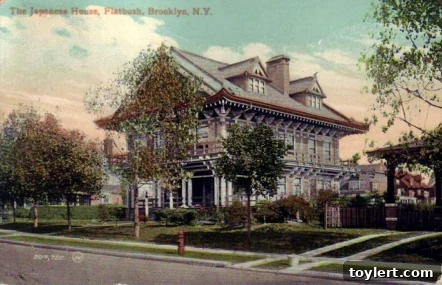
However, it is the truly exceptional amalgamists who elevate this practice to an art form. These masters don’t merely combine styles; they synthesize them, forging a cohesive and original architectural language from seemingly incompatible elements. Imagine the delicate balance required to seamlessly blend the intricate ornamentation of Victorian Queen Anne with the serene simplicity of traditional Japanese aesthetics, or the horizontal lines of the American Prairie School movement. Such an architect can create a structure that is simultaneously all of these influences and yet, remarkably, something far greater than the sum of its individual parts. Their buildings stand as complex narratives, telling stories of cultural exchange, historical evolution, and bold design choices. It is within this rarefied category of architectural brilliance that we find figures like John J. Petit.
John J. Petit: A Master of Eclectic Design in Brooklyn
For those who follow the “Buildings of the Day” columns, the name John J. Petit might already be a familiar one. His influence on Brooklyn’s architectural landscape, particularly in the early 20th century, is undeniable and deeply ingrained in the character of some of its most iconic neighborhoods. Petit wasn’t merely an architect; he was a visionary who understood how to craft homes that were not only grand and aesthetically pleasing but also perfectly suited to their environment and the aspirations of their inhabitants. His ability to draw from a wide palette of architectural styles and synthesize them into cohesive, stunning residences set him apart. He was, in essence, a prime example of that exceptional amalgamist, demonstrating a profound skill for combining diverse elements to forge truly unique and enduring structures.
Petit’s legacy is particularly prominent in the leafy, picturesque enclaves of Prospect Park South and Ditmas Park, where he designed many of the finest and most distinctive homes. These neighborhoods, envisioned as suburban idylls within the bustling borough of Brooklyn, provided a fertile ground for his creative expression. The recent opportunity to dedicate extensive attention to these majestic homes, as part of an ongoing project, has naturally led to a deeper appreciation for the work of John Petit himself. His contributions are integral to understanding the charm and historical significance of these areas, making him a pivotal figure in Brooklyn’s architectural narrative. Exploring his work reveals a meticulous designer who understood both the grandeur of traditional styles and the nuanced art of blending them to achieve something truly remarkable.
Prospect Park South: Petit’s Canvas for Architectural Dreams
Prospect Park South, a historic district conceived as a pioneering example of suburban development within an urban setting, provided John J. Petit with an ideal canvas for his architectural prowess. Developed by Dean Alvord at the turn of the 20th century, the neighborhood was designed to offer spacious homes on generously sized lots, adorned with mature trees and verdant gardens, all just a short train ride from Manhattan. This grand vision demanded architects capable of translating dreams of pastoral elegance into brick, wood, and stone. Petit rose to this challenge with extraordinary flair, becoming one of the most prolific and influential designers in the area.
His homes in Prospect Park South are quintessential examples of his eclectic genius. One can observe the graceful lines of Colonial Revival, the intricate detailing of Queen Anne Victorian, and sometimes even hints of more rustic Shingle Style or Italianate influences, all harmoniously coexisting within a single facade. Petit’s skill lay not just in replicating these styles, but in artfully combining their most appealing features to create residences that felt both historically rooted and uniquely contemporary. He masterfully handled scale and proportion, ensuring that even the largest homes maintained a sense of welcoming warmth and domestic charm. His designs significantly contributed to the neighborhood’s distinctive character, solidifying its reputation as an architectural marvel and a testament to early 20th-century suburban planning.
Ditmas Park: A Testament to Petit’s Versatility
Adjacent to Prospect Park South, Ditmas Park shares a similar vision of spacious suburban living, yet possesses its own unique character and appeal. This neighborhood, too, benefited immensely from John J. Petit’s architectural vision, showcasing his remarkable versatility and adaptability as a designer. While the overarching aesthetic of “Victorian Flatbush” unifies these areas, Petit’s work in Ditmas Park often presents subtle variations, demonstrating his ability to respond to different plot sizes, client preferences, and prevailing design trends.
In Ditmas Park, Petit continued to explore and refine his eclectic approach. His homes here often feature robust, gabled roofs, expansive wrap-around porches, and a rich tapestry of textures and materials, from clapboard siding to intricate shingle work and decorative brick. The interiors, too, reflected a dedication to craftsmanship and a sophisticated understanding of flow and functionality, providing ample space for growing families and entertaining guests. Whether he was designing a grand Colonial Revival or an elaborate Queen Anne, Petit imbued each home with a distinctive personality, ensuring it contributed to the neighborhood’s overall charm while standing out as a unique architectural statement. His designs are a crucial part of what makes Ditmas Park an architectural treasure, reflecting a period of immense growth and stylistic exploration in Brooklyn.
The Grandeur of Flatbush: A Journey Through Architectural Splendor
The allure of the “huge homes in Flatbush” is undeniable, and my personal fascination with them runs deep. These magnificent residences, particularly those concentrated in areas like Prospect Park South and Ditmas Park, represent a significant chapter in American architectural history. They are not merely houses; they are monuments to an era of prosperity, ambition, and a profound appreciation for elaborate design. Their sheer scale, often featuring multiple stories, sprawling footprints, and impressive detailing, speaks to a desire for grandeur that transcended mere functionality.
These homes stand as living museums of turn-of-the-century design, where architectural styles from across the globe were reinterpreted and brought to life in a distinctly American context. From the ornate turrets and asymmetrical forms of Queen Anne Victorians to the stately columns of Colonial Revivals, and the charming cottages of the Shingle Style, Flatbush offers an unparalleled panorama of architectural splendor. It’s this rich tapestry of styles, often blended with such finesse by architects like John J. Petit, that makes these neighborhoods so captivating. They embody a unique blend of suburban tranquility and urban sophistication, providing a historical snapshot of Brooklyn’s development and its enduring commitment to architectural excellence. Petit’s designs are an indispensable thread in this vibrant tapestry, cementing his status as a key architect whose vision continues to define the grandeur of Flatbush.
The Enduring Appeal of Petit’s Legacy
The work of architects like John J. Petit reminds us that true architectural genius lies not just in innovation or pure replication, but often in the masterful synthesis of ideas. His ability to weave together disparate stylistic elements into harmonious, functional, and aesthetically captivating homes is a testament to his unique skill and enduring vision. Petit’s buildings are more than just structures; they are character-filled residences that tell stories, evoke eras, and continue to inspire admiration more than a century after their construction.
The preservation and appreciation of such architectural heritage are paramount. It allows us to connect with the past, understand the evolution of design, and draw inspiration for future constructions. Petit’s contribution to Brooklyn, particularly in shaping the distinctive charm of Prospect Park South and Ditmas Park, serves as a powerful reminder of how individual artistic vision can profoundly influence and enrich our built environment. His legacy continues to stand tall, literally and figuratively, shaping the identity of these beloved neighborhoods and reminding us of the timeless art of building dreams.