Revitalizing Wallabout: A Blueprint for Historic Preservation and Local Job Creation
The urban tapestry of Brooklyn is intricately woven with rich history and vibrant communities, each boasting its own unique charm. Among its many distinguished neighborhoods, Wallabout stands out with a particularly captivating architectural heritage, defined by its charming and historically significant wood-frame homes. At the forefront of efforts to safeguard this distinctive character while simultaneously empowering its residents lies an innovative initiative pioneered by the Myrtle Avenue Revitalization Project (MARP). This ambitious program is designed to seamlessly integrate the crucial work of historic preservation with a robust local job training framework, presenting a compelling model for sustainable community development not only within New York City but also as a potential inspiration for urban centers nationwide.
MARP’s Vision: Harmonizing Heritage with Economic Opportunity
For years, the Myrtle Avenue Revitalization Project (MARP) has served as a pivotal force in fostering economic prosperity and enhancing the overall quality of life along Brooklyn’s historic Myrtle Avenue corridor. Their latest groundbreaking venture extends this unwavering commitment into the adjacent Wallabout neighborhood, specifically targeting its recently landmarked historic district. Recognizing the dual challenges of unemployment or underemployment prevalent within the community and the highly specialized needs associated with preserving historic structures, MARP has conceived a truly groundbreaking program. This initiative is strategically designed to equip local residents with advanced, specialized skills in historic home restoration and rehabilitation, thereby transforming them into active stewards of their own neighborhood’s past while simultaneously securing their economic future through meaningful employment.
Empowering the Workforce: The Local Job Training Component for Historic Restoration
At the very heart of MARP’s multifaceted strategy is a comprehensive and meticulously designed job training program. This program is tailored specifically for unemployed or underemployed individuals residing in the Wallabout area, focusing on creating tangible pathways to stable careers. However, this is far more than just general construction training; it is about cultivating highly specialized craftsmanship—a skillset absolutely essential for authentic historic preservation. Participants in this program will embark on an intensive learning journey, mastering the intricate techniques required to meticulously restore the distinctive wood-frame homes that are the hallmark of Wallabout’s unique charm.
The curriculum is expected to cover a wide array of specialized skills, including but not limited to, traditional carpentry techniques passed down through generations, a deep understanding of period-specific building materials and their appropriate application, advanced methods for repairing and restoring historic windows and doors to their original glory, and precise masonry restoration techniques that scrupulously respect the original architectural integrity of each structure. Such highly specialized training not only furnishes participants with valuable, in-demand skills within a niche market but also instills in them a profound sense of pride, ownership, and direct connection as they actively contribute to enhancing the beauty, structural longevity, and cultural significance of their very own community.
The profound benefits of such a program resonate far beyond individual skill development and employment. By meticulously cultivating and nurturing a highly skilled local workforce, MARP actively fosters a vibrant micro-economy uniquely centered around the specialized field of historic preservation. This strategic approach significantly reduces the community’s reliance on external contractors, ensuring that valuable economic activity remains within the neighborhood and that the financial benefits circulate locally. Furthermore, it guarantees that critical restoration projects are undertaken by individuals who are not only professionally competent but also deeply invested in the long-term success, aesthetic integrity, and historical accuracy of the neighborhood. It establishes a powerful and self-sustaining cycle: preservation directly creates specialized jobs, and these newly created jobs empower residents to become active agents of further preservation and comprehensive revitalization, fostering a truly sustainable model of growth.
Wallabout’s Enduring Appeal: A Testament to Architectural History
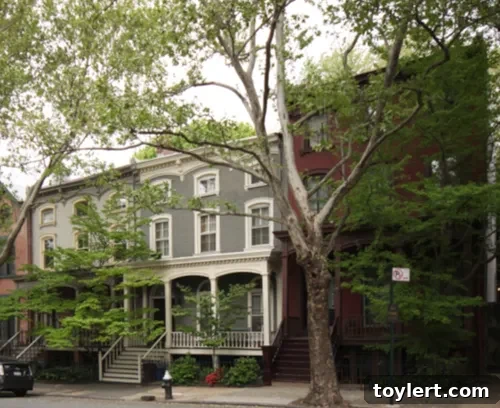
Wallabout, frequently celebrated for its captivating fusion of historic architecture and dynamic urban evolution, occupies a profoundly significant position in Brooklyn’s rich narrative. This distinctive neighborhood, beautifully depicted here with its quintessential wood-frame homes, achieved official landmark status just a few years ago—a powerful testament to its unique architectural character, profound historical value, and the community’s dedication to its preservation. In stark contrast to the more ubiquitous brownstone row houses found throughout much of Brooklyn, Wallabout proudly boasts a remarkable concentration of exceptionally well-preserved 19th-century wood-frame residences. These homes are not merely old buildings; they represent a distinct and invaluable architectural style and building tradition, offering a tangible, living link to Brooklyn’s early development. Their historical significance is further amplified by Wallabout’s close proximity to the historic Brooklyn Navy Yard, suggesting a rich maritime and industrial heritage that shaped its initial growth and residential patterns.
The Imperative of Historic Preservation in Urban Renewal
The preservation of these unique historic wood-frame homes is not merely an aesthetic choice; it is a crucial imperative driven by a multitude of compelling reasons. Beyond their inherent architectural beauty and visual appeal, these structures serve as invaluable educational resources, providing tangible insights into past construction methodologies, evolving design sensibilities, and the complex social histories of previous generations. Robust historic preservation efforts are fundamental in preventing the irreversible loss of irreplaceable cultural assets, thereby maintaining the unique identity, authentic charm, and distinct sense of place that continues to attract both new residents and curious visitors to Wallabout. Furthermore, numerous comprehensive studies consistently demonstrate that designated historic districts frequently experience sustained increases in property values, generate significant heritage tourism revenue, and foster a stronger, more cohesive sense of community pride and historical continuity among residents. By strategically focusing its program on the restoration of these specific structures, MARP ensures that Wallabout’s distinct visual character and its profound historical narrative are not only saved from decay but are actively celebrated, meticulously maintained, and respectfully passed down for the enlightenment and enjoyment of future generations.
Ensuring Success: The Strategic Role of the Preservation League of New York State
To rigorously ensure the efficacy, sustainability, and unparalleled quality of this ambitious program, MARP has forged a strategic and vital partnership with the Preservation League of New York State (PLNYS). The PLNYS is widely recognized as a highly respected, authoritative statewide organization singularly dedicated to the protection, enhancement, and advocacy for New York’s invaluable historic buildings, districts, and diverse cultural landscapes. Their direct involvement in this initiative unequivocally underscores MARP’s serious commitment to adhering to the highest standards and best practices in both historic preservation and responsible program development, guaranteeing a foundation of expertise and credibility.
The PLNYS has been tasked with undertaking a comprehensive and meticulously detailed feasibility study—a critical initial step for any innovative and potentially transformative community initiative of this scale. This rigorous study will encompass a detailed analysis of a wide array of crucial factors. This includes identifying the highly specific skill sets required for the unique architectural characteristics of Wallabout’s historic homes, assessing the potential pool of eligible trainees within the community, designing an optimal and effective curriculum that meets industry standards, exploring and securing potential funding sources from various public and private sectors, and ultimately developing a robust, adaptable, and forward-thinking overall program framework. Over the course of several months, a team of dedicated PLNYS experts will meticulously develop a recommended program structure that is both eminently practical in its application and structurally robust in its design, thereby ensuring that MARP’s inspiring vision can be successfully translated into a tangible, impactful, and enduring reality. This methodical and expert-driven approach guarantees that when the program eventually launches, it will be firmly built upon a solid foundation of rigorous research, strategic planning, and professional insight, thereby maximizing its potential for achieving widespread positive outcomes and long-term success.
A Model for Sustainable Urban Development and Community Resilience
The Wallabout initiative, passionately championed by MARP and expertly supported by the PLNYS, represents far more than just a localized Brooklyn project; it stands as an exemplary and pioneering model for sustainable urban development and enhanced community resilience. It elegantly and powerfully demonstrates how historic preservation—an endeavor often perceived solely as a cultural or aesthetic pursuit—can be skillfully and powerfully leveraged as an indispensable tool for tangible economic development and profound social equity. By deliberately creating clear, accessible pathways to skilled employment through the respectful preservation of invaluable local heritage, this innovative program simultaneously addresses multiple, interconnected community needs with remarkable synergy.
The palpable anticipation surrounding the announcement of the program’s next crucial steps, initially projected for Spring 2013, powerfully underscored the immense excitement and the profound potential impact inherent in this innovative, integrated approach. Such programs are not merely beneficial but absolutely vital in today’s rapidly evolving urban environments, where the judicious preservation of the past can brilliantly illuminate innovative pathways to a more prosperous, equitable, and sustainable future. They serve as compelling reminders that our built heritage is not simply static history to be observed, but rather a dynamic, living resource—a resource fully capable of inspiring the acquisition of new, valuable skills, fostering vibrant local economies, and profoundly strengthening the very fabric of community bonds for generations to come.
Looking Ahead: Envisioning a Brighter Future for Wallabout
As the Myrtle Avenue Revitalization Project continues to forge ahead with its groundbreaking Wallabout initiative, the potential for truly transformative and enduring change is immense and inspiring. The strategic marriage of historic preservation and local job creation offers an incredibly potent and effective formula for profoundly enriching the entire community. Imagine a Wallabout where meticulously restored wood-frame homes stand as proud, living testaments to the neighborhood’s enduring legacy and architectural grandeur, and where these crucial restorations are expertly carried out by skilled, empowered local residents who have not only found meaningful employment but also a profound sense of purpose and connection to their heritage. This aspirational vision embodies the very essence of sustainable community building—a holistic approach that respectfully honors the past, vigorously empowers the present, and diligently constructs a more resilient, prosperous, and culturally rich future for all.
This program is a powerful testament to the unwavering belief that the unique character and historical significance of our cherished neighborhoods are unequivocally worth preserving, not solely for their undeniable aesthetic appeal, but more importantly, for the tangible social, economic, and cultural benefits they profoundly impart. It stands as a shining beacon of innovation and hope for other communities nationwide and globally, communities seeking to intelligently intertwine cultural heritage with economic empowerment. This initiative unequivocally proves that with strategic foresight, meticulous planning, collaborative effort, and dedicated commitment, urban revitalization can indeed achieve truly remarkable, mutually beneficial outcomes for every stakeholder involved.