Brooklyn’s Commercial Real Estate Market Soars: A Deep Dive into 2012’s Record Growth
While the residential housing sector in New York City experienced a robust year in 2012, new data reveals that Brooklyn’s commercial real estate market didn’t just keep pace – it surpassed expectations, demonstrating extraordinary vitality and setting new benchmarks. A comprehensive report from TerraCRG, a leading Brooklyn commercial real estate firm, meticulously details this remarkable ascent. The findings paint a compelling picture of burgeoning investor confidence, strategic acquisitions, and a market rapidly expanding its footprint across the borough.
Unprecedented Market Expansion: A Look at the Numbers
The year 2012 marked a significant turning point for Brooklyn’s commercial real estate. The TerraCRG report highlights an astonishing 40 percent increase in commercial sales transactions compared to the previous year, 2011. This surge in activity wasn’t just about the sheer number of deals; the financial scope of these transactions also exploded. Total sales volume reached an astounding $4.38 billion across the borough, effectively doubling the figures recorded in 2011. Such exponential growth underscores a powerful resurgence in investor interest and a burgeoning belief in Brooklyn’s long-term commercial viability. This rapid expansion positioned Brooklyn not just as an alternative to Manhattan, but as a primary destination for significant real estate investment.
The Strategic Allure of Residential Development Sites
Among the various property categories analyzed, development sites specifically zoned for residential buildings emerged as the undisputed frontrunner in investor demand and growth. These highly coveted parcels of land, earmarked for future housing projects, attracted massive capital injections throughout 2012. Investors collectively spent a staggering $695 million on these sites, representing an incredible 221 percent increase from the previous year. This monumental leap indicates a clear strategic shift within the market: developers and investors were actively positioning themselves to capitalize on Brooklyn’s rapidly growing population and the persistent demand for modern, urban living spaces. The intense focus on residential zoning suggests a forward-looking perspective, anticipating continued demographic shifts and urbanization trends that promise sustained returns on housing investments. This sector’s performance vividly illustrates the underlying confidence in Brooklyn’s ability to attract and accommodate a thriving residential community.
Multifamily Sector: The Engine of Transactions and Stability
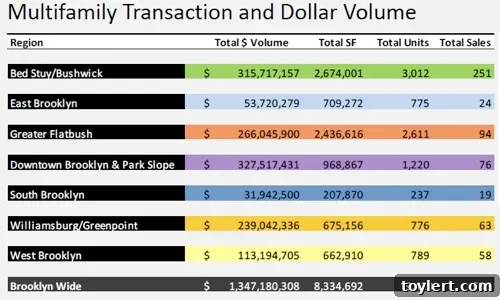
While development sites captured the highest percentage growth in spending, the multifamily sector remained the bedrock of transactional activity and a cornerstone of stability. Properties comprising multiple residential units accounted for a substantial $1.3 billion in sales and led all categories with an impressive 585 transactions. This consistent high volume of sales in multifamily properties reflects several underlying market dynamics. Firstly, the stable and predictable rental income generated by multifamily buildings makes them an inherently attractive asset class for investors seeking steady, long-term returns in a dynamic urban environment. Secondly, Brooklyn’s diverse and expanding population ensures a constant, robust demand for rental housing, further bolstering the appeal of these assets irrespective of broader economic fluctuations. The sheer number of transactions also points to a highly liquid and active market segment, where a wide range of buyers and sellers, from individual investors to large institutional funds, were frequently engaging. This broad-based confidence across different investor profiles underscores the enduring strength and resilience of Brooklyn’s multifamily real estate market.
Geographic Hotspots: Bed-Stuy, Bushwick, and Crown Heights Lead the Way
The TerraCRG report meticulously segmented Brooklyn into various zones to identify areas of concentrated activity and emerging growth. One particular zone, encompassing the vibrant and rapidly transforming neighborhoods of Bedford-Stuyvesant (Bed-Stuy), Bushwick, and Crown Heights, stood out significantly. This combined area recorded more commercial transactions than any other region analyzed in the report, tallying an impressive 529 deals in total. This clustering of activity in these specific neighborhoods is not coincidental; it reflects a strategic shift in investment patterns.
These areas, historically rich in culture and community, were at the forefront of Brooklyn’s ongoing transformation, attracting new residents, diverse businesses, and burgeoning creative industries. The relatively more affordable price points compared to established prime locations, coupled with evolving infrastructure, improved transit options, and significant community development initiatives, made them exceptionally ripe for investment and poised for substantial appreciation. Investors recognized the latent potential in these neighborhoods, anticipating their continued rise as desirable residential and commercial destinations.
- Bed-Stuy: Renowned for its magnificent historic brownstones, tree-lined streets, and strong community ties, Bed-Stuy saw increased interest from investors looking to capitalize on its architectural charm, growing retail corridors, and burgeoning cultural scene. It offered a blend of classic Brooklyn appeal with new urban vibrancy.
- Bushwick: A dynamic hub for artists, entrepreneurs, and young professionals, Bushwick’s industrial spaces were rapidly being reimagined into creative offices and residential lofts. Its evolving food scene and nightlife, alongside developing residential offerings, attracted a diverse mix of commercial and residential development.
- Crown Heights: With its grand avenues, diverse population, and strategic location, Crown Heights presented opportunities in both established and emerging commercial corridors. Its accessibility and community-driven development drew a wide range of investors keen on long-term growth.
The collective strength and transactional volume within these neighborhoods underscore a broader trend of development spreading purposefully beyond Brooklyn’s traditional commercial hubs. This expansion into areas offering greater potential for growth and value creation played a crucial role in the borough’s overall market success in 2012.
Escalating Investor Confidence: The Rise of Larger Acquisitions
Beyond the sheer volume and total value of sales, the 2012 report also signaled a significant and telling shift in investor behavior: an increasing comfort with and appetite for larger-scale acquisitions. The TerraCRG data noted a remarkable 59 sales transactions exceeding $10 million. This figure represents approximately double the number of such high-value deals recorded in 2011, indicating a profound change in the investment landscape. This trend is a strong, undeniable indicator of escalating investor confidence in Brooklyn’s market stability, its capacity for continued growth, and its future appreciation potential.
Larger transactions typically involve sophisticated institutional investors, well-capitalized private equity firms, and experienced developers who conduct extensive due diligence and are prepared to commit substantial capital for long-term strategic projects. Their increased presence and willingness to undertake significant investments suggest that Brooklyn’s commercial real estate market was rapidly maturing, moving beyond smaller, more speculative ventures towards more substantial, impactful projects that would irrevocably shape the borough’s landscape for decades to come. This influx of major capital further solidified Brooklyn’s position as a premier investment destination.
Driving Forces Behind Brooklyn’s Commercial Renaissance
The impressive figures from 2012 were not merely arbitrary spikes; they were the culmination of several powerful socioeconomic and urban development trends converging synergistically in Brooklyn. Understanding these underlying drivers provides crucial context for the market’s explosive growth:
- Post-Recession Economic Recovery: Following the global financial crisis of 2008, the broader economy began a steady and sustained recovery. Capital markets became more fluid, and investors, having weathered the downturn, were ready and eager to deploy funds into promising assets, with real estate offering tangible value.
- Manhattan’s Spillover Effect and Affordability: As Manhattan’s commercial and residential spaces became increasingly saturated and prohibitively expensive, Brooklyn emerged as a viable, and often more affordable, alternative. Businesses and residents alike began looking across the East River for opportunities, quality of life, and better value.
- Robust Demographic Shifts and Urbanization: Brooklyn continued to experience robust population growth, attracting a diverse mix of young professionals, growing families, and creative industries from around the world. This consistent influx fueled an ever-increasing demand for housing, retail services, office space, and modern amenities.
- Significant Infrastructure Investments: Ongoing and planned improvements in transportation infrastructure, including expanded subway services, new ferry lines, and better road networks, made various Brooklyn neighborhoods more accessible than ever before. This enhanced connectivity further boosted their appeal for both residents and businesses.
- Evolving Cultural and Brand Identity: Brooklyn solidified its brand as a vibrant, dynamic, and culturally rich borough, distinct from its Manhattan counterpart. This unique identity attracted a new wave of entrepreneurs, artists, tech startups, and innovative companies, creating a self-reinforcing cycle of growth, desirability, and economic diversification.
- Favorable Interest Rate Environment: A period of relatively low interest rates made borrowing capital more affordable and attractive. This environment incentivized both developers to embark on new construction projects and investors to acquire existing properties, thereby stimulating overall market activity and expansion.
Implications for the Future of Brooklyn Real Estate
The groundbreaking performance of 2012 set a new benchmark and laid a robust foundation for Brooklyn’s future real estate trajectory. The sustained and intense demand for residential development sites indicated a clear, long-term commitment to expanding housing capacity within the borough. This expansion, in turn, supports broader economic growth by accommodating a larger workforce and consumer base, creating a virtuous cycle of development and prosperity. The strong performance of multifamily assets further underscored Brooklyn’s undeniable appeal as a residential hub, ensuring a steady stream of rental income for investors and diverse housing options for its growing population.
Furthermore, the emergence of neighborhoods like Bed-Stuy, Bushwick, and Crown Heights as significant commercial hotspots pointed to a healthy decentralization of growth. This trend suggested that investment and development were spreading purposefully beyond Brooklyn’s traditional prime locations, fostering revitalization and economic activity in historically underserved or overlooked areas. This geographical expansion brought with it both immense opportunities for urban renewal and significant challenges, including critical questions of affordability, the dynamics of gentrification, and the crucial need for equitable development strategies that truly benefit all existing and new residents of these transforming communities.
Looking Ahead: Sustaining the Momentum in a Dynamic Market
While the TerraCRG report specifically captures the dynamic environment of 2012, the trends identified within its pages – rapid growth in sales volume, intense interest in residential development, the foundational stability of multifamily investments, and the rise of new commercial epicenters – established a clear and compelling trajectory for Brooklyn’s commercial real estate market. The borough was demonstrably and rapidly maturing into a primary destination for sophisticated investment, moving confidently beyond its traditional role as merely an alternative to Manhattan. Sustaining this impressive momentum in the years that followed would undoubtedly require careful urban planning, continued strategic infrastructure development, and the implementation of thoughtful policies that effectively balance aggressive growth with essential community needs and long-term sustainability.
The year 2012 wasn’t just another successful year for Brooklyn real estate; it was a pivotal moment, a resounding testament to Brooklyn’s evolving economic power, its undeniable appeal to a global audience of investors, businesses, and residents, and its profound transformation into one of the most dynamic urban centers in the world. The foundations laid in this period continue to influence its growth trajectory, underscoring its enduring significance in the broader New York City metropolitan area.