Satirical Showdown: Tax Dodgers Unmask Economic Inequality in Sunset Park
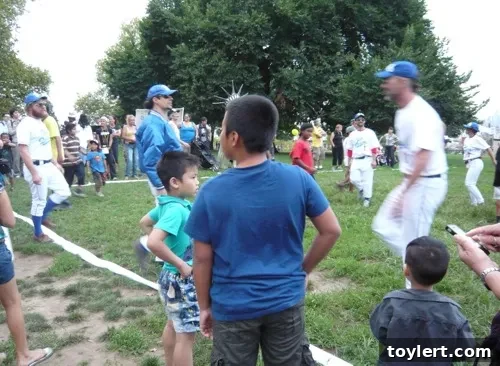
In a compelling display of street theater and political satire, the collective known as “The Tax Dodgers” recently staged a memorable event in Sunset Park, Brooklyn, transforming a seemingly innocuous children’s baseball game into a potent metaphor for systemic economic injustice. This past Saturday, under the watchful eyes of parents and community members, the group engaged local children in what they candidly described as a “crooked game,” deliberately and dramatically stealing bases from the young participants. The performance was a stark, playful, yet deeply critical commentary on the distribution of wealth and power, resonating particularly with the sentiments of the “99 percent” – a rallying cry popularized by the Occupy Wall Street movement. The audacity of their actions, coupled with the direct engagement with the community, underscored a powerful message about who makes the rules and who ultimately bears the cost.
One of the Tax Dodgers, embodying the very essence of the powerful elite they sought to critique, succinctly articulated their philosophy: “We make the rules.” This single statement encapsulated the entire essence of the satirical game, highlighting the arbitrary and often unfair nature of economic systems that disproportionately benefit a select few at the expense of the majority. The children, representing the future and the innocent public, found themselves at a disadvantage in a game designed to illustrate a rigged system. Their bewildered, sometimes frustrated, reactions mirrored the public’s growing disillusionment with an economic landscape perceived as profoundly unjust. Parents observing from the sidelines were left to ponder the deeper implications, witnessing their children experience a microcosm of the very real economic struggles many families face daily.
The Game of Inequality: A Playful Yet Profound Protest
The choice of a baseball game was ingenious. Baseball, often called America’s pastime, carries connotations of fairness, sportsmanship, and equal opportunity. By subverting this familiar and cherished activity, The Tax Dodgers amplified their message. Imagine the scene: a sunny afternoon in Sunset Park, children eagerly playing, only for the rules to be arbitrarily bent by figures representing unchecked power. The act of “stealing bases” was not merely a theatrical device; it was a potent visual allegory for the erosion of economic opportunities, the unfair accumulation of wealth, and the systemic advantages enjoyed by a privileged few. Each stolen base represented a lost opportunity, a depleted resource, or an unjust gain, vividly illustrating how the “game” of life is often tilted against those with less power and influence.
The interaction between the adult “Tax Dodgers” and the children was central to the performance’s impact. It was designed to provoke thought and conversation, not just among the adults present, but also to plant seeds of critical thinking in the younger generation. The group’s members, likely clad in attire that evoked corporate or governmental authority, played their roles with commitment, making the experience visceral and memorable for everyone involved. This form of direct action, using humor and absurdity, bypasses traditional forms of protest to engage audiences on a more personal and immediate level, encouraging them to question the underlying structures of society.
Connecting the Dots: Occupy Wall Street and Community Activism
When the satirical baseball game concluded, the event seamlessly transitioned into a more traditional yet equally impactful demonstration. A significant group, primarily composed of dedicated Occupy Wall Street (OWS) activists, united with local community members and sympathizers to embark on a march through the vibrant streets of Sunset Park. This convergence was no accident. The Tax Dodgers’ performance directly echoed the core grievances of the OWS movement, which galvanized public attention around the issues of corporate greed, financial inequality, and the disproportionate influence of the wealthiest “1 percent” on political and economic systems. The march served as a physical manifestation of this shared struggle, linking the playful critique of the baseball game to the broader, more serious demands for systemic change.
The destination of their march held significant symbolic and practical importance: the Sunset Park Rent Strike building. This choice underscored the critical intersection of economic inequality with pressing local issues, particularly the housing crisis. For years, communities like Sunset Park have grappled with the relentless pressures of gentrification, rising rents, and the threat of displacement. A rent strike, by its very nature, represents a powerful act of collective resistance against unjust housing practices and exploitative landlords. It is a direct assertion of community power and a demand for housing justice, making the Rent Strike building a natural focal point for activists advocating for the rights of the “99 percent.”
Voices from the Front Lines: Advocacy at the Rent Strike Building
Upon reaching the Rent Strike building, the energy of the crowd intensified. Residents deeply affected by housing instability and dedicated activists who champion their cause briefly addressed the assembled multitude. Their speeches provided a raw, unfiltered perspective on the everyday impact of economic disparities. They spoke of the struggles to afford rising rents, the fear of eviction, and the psychological toll of precarious housing situations. These personal testimonies transformed the abstract concept of economic inequality into tangible, human experiences, reinforcing the urgency of the issues at hand.
The activists articulated clear demands: for stronger tenant protections, rent control measures, and policies that prioritize community well-being over corporate profits. They emphasized the interconnectedness of housing justice with broader economic justice, arguing that the inability to secure stable, affordable housing is a direct consequence of a system that favors capital over people. The Sunset Park Rent Strike building, therefore, became more than just a destination; it became a beacon of resistance, a forum for collective voice, and a symbol of ongoing struggle against oppression. The event served as a potent reminder that while the theatrics of the Tax Dodgers garnered initial attention, the sustained fight for change is waged by community organizers and brave residents on the front lines.
The Enduring Power of Political Satire and Community Action
The combined event, featuring The Tax Dodgers’ performance and the subsequent march to the Rent Strike building, powerfully demonstrated the multifaceted nature of modern activism. It highlighted how political satire can effectively dismantle complex issues, making them accessible and relatable to a wider audience, including children. By injecting humor and unexpected scenarios into the protest, The Tax Dodgers created an unforgettable experience that transcended traditional forms of dissent, sparking conversation and critical thought long after the event concluded.
Furthermore, the seamless integration of the satirical performance with the march and speeches by OWS activists and Sunset Park residents showcased the strength of coalition building. It illustrated how diverse groups, united by common goals of social and economic justice, can amplify their messages and exert greater pressure for change. The event served as a powerful reminder that the fight for a more equitable society is ongoing and requires continuous innovation, community engagement, and unwavering determination. From a “crooked game” of baseball to impassioned speeches, the day in Sunset Park was a testament to the enduring spirit of resistance against systems perceived as unfair, underscoring the collective yearning for a world where the rules are truly made for everyone, not just a privileged few.