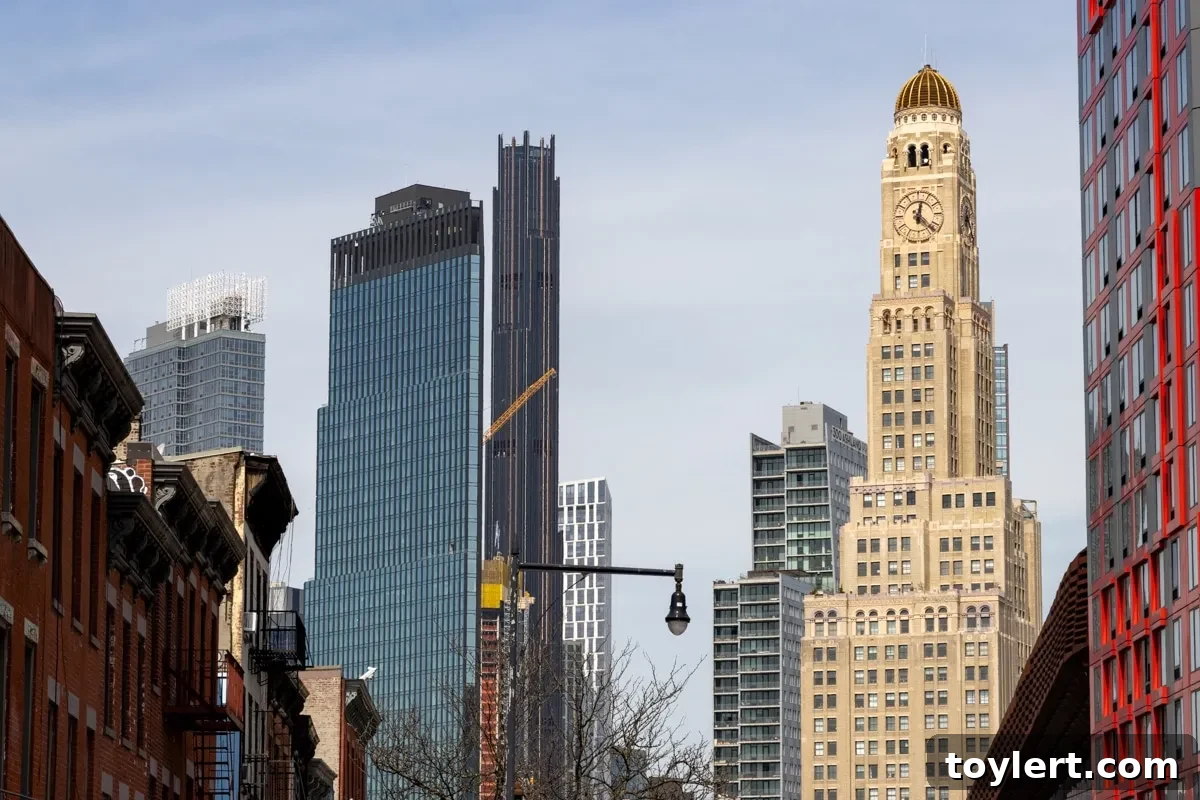
Decoding NYC’s Housing Boom: A Deep Dive into Brooklyn’s Unprecedented Growth (2010-2023)
New York City’s skyline is constantly evolving, a testament to its dynamic growth and relentless demand for urban living. Over the past 13 years, the city has witnessed a monumental surge in housing development, with new constructions reshaping neighborhoods and accommodating a burgeoning population. Visualizations recently released by the Department of City Planning (DCP) shed light on these transformative shifts, revealing that the majority of this development, particularly between 2010 and 2023, has been concentrated in the vibrant enclaves of North and Northwest Brooklyn. While the citywide expansion has been substantial, introducing over 297,500 new housing units, the data also uncovers a nuanced relationship between policy and progress, notably highlighting slowdowns during periods when the city’s influential 421-a tax abatement program expired.
The Evolving Landscape of NYC Housing: An Overview (2010-2023)
The imperative to create more housing in New York City stems from a confluence of factors: a steadily growing population, an ever-increasing demand for urban living, and a persistent affordability crisis. To better understand and manage this complex ecosystem, the Department of City Planning plays a crucial role in tracking and analyzing housing trends. The DCP recently updated its comprehensive housing database with the latest figures from 2023. In tandem with this update, they unveiled two insightful new visualizations. These digital tools meticulously track not only how much housing is created across the five boroughs but also precisely where these new developments are taking root. This commitment to data transparency offers invaluable insights for urban planners, policymakers, and residents alike, fostering informed discussions about the future of housing in one of the world’s most dynamic cities.
The 421-a Enigma: Tax Abatements and Development Cycles
A significant factor influencing the pace and location of housing development in New York City has been the controversial yet impactful 421-a tax abatement program. This program, designed to incentivize residential construction, offered property tax exemptions for newly built multi-family rental and condominium buildings. Its primary goal was to stimulate development, particularly in areas that might otherwise be less economically attractive for builders. However, the program has consistently been a point of contention, praised by developers for making projects viable and criticized by housing advocates for its perceived cost to taxpayers and its limited impact on genuinely affordable housing for low-income residents.
The data released by the DCP clearly illustrates the profound influence of 421-a on construction cycles. Periods coinciding with the expiration of the program consistently show a noticeable slowdown in housing unit creation. This direct correlation underscores how heavily developers relied on these tax incentives to undertake new projects. Without the promise of significant property tax reductions, the financial viability of many potential developments diminished, leading to a temporary contraction in new construction. Understanding this dynamic is crucial for future policy discussions, as it highlights the delicate balance between fostering development and ensuring equitable outcomes for all New Yorkers. The recurring debate around such incentives forces a reevaluation of what kind of housing is being built, for whom, and at what cost to the public.
Brooklyn Takes the Lead: A Borough Transformed
Among New York City’s diverse boroughs, Brooklyn has unequivocally emerged as the powerhouse of housing development over the past decade and more. The comprehensive housing database reveals that since 2010, Brooklyn has added an astonishing 133,961 housing units through new construction. This figure is nearly double that of the borough with the second-highest level of development, Queens, which saw the creation of 78,161 new homes during the same period. This unprecedented growth has fundamentally transformed Brooklyn, solidifying its status as not just a cultural hub but also a rapidly expanding residential center within the metropolitan area.
Brooklyn’s appeal stems from a multitude of factors, making it a magnet for residents and developers alike. Its excellent transportation links to Manhattan, vibrant cultural scene, diverse communities, and significant areas ripe for redevelopment (especially former industrial zones) have all contributed to its rapid expansion. From revitalized waterfronts to historic brownstone districts, the borough offers a broad spectrum of living environments, attracting a diverse demographic. While Queens has also experienced substantial growth, particularly in areas like Long Island City and Flushing, Brooklyn’s sheer volume of new units underscores a more widespread and sustained development boom that has redefined its urban fabric. This extensive development reflects a conscious shift in urban planning and investment, recognizing Brooklyn’s potential to accommodate a significant portion of the city’s growing housing needs.
North and Northwest Brooklyn: Epicenters of Development
Within Brooklyn’s broader development narrative, the regions of North and Northwest Brooklyn stand out as true epicenters of growth. These areas, encompassing neighborhoods such as Williamsburg, Greenpoint, Bushwick, Downtown Brooklyn, Brooklyn Heights, Dumbo, and Fort Greene, have experienced the most intense transformation. Specifically, the data highlights that Community Board 1 (CB1) and Community Board 2 (CB2) have seen the highest rates of housing unit creation. These community boards cover prime locations, including the rapidly gentrifying waterfront areas of Williamsburg and Greenpoint (CB1), and the bustling commercial and residential heart of Downtown Brooklyn, Brooklyn Heights, and Dumbo (CB2).
The reasons behind this hyper-concentration of development are complex. Strategic rezoning initiatives, particularly along the waterfront, opened up vast tracts of formerly industrial land for residential use. This, combined with existing excellent public transit infrastructure, proximity to Manhattan, and a burgeoning demand for modern amenities, made these areas incredibly attractive for large-scale development projects. However, this growth has not been without its challenges. These same areas are also characterized by some of the highest housing costs in the entire borough, and indeed, the city. The influx of new luxury and market-rate units in these neighborhoods often sparks debates about gentrification, displacement of long-term residents, and the widening gap in housing affordability. While the creation of new units helps to increase overall supply, the question of whether this supply meets the needs of all income levels remains a critical point of discussion in these rapidly changing communities.
Data-Driven Insights: The Power of Visualization
The Department of City Planning’s release of updated data and, crucially, new interactive visualizations, represents a significant step forward in fostering transparency and understanding complex urban development patterns. These tools are far more than mere charts and graphs; they offer a dynamic and accessible way for a diverse audience—from urban planners and real estate professionals to community organizers and individual residents—to grasp the intricate details of housing growth. By visually representing where and how much housing is being built, the DCP empowers stakeholders to draw their own conclusions, identify trends, and engage in more informed discussions about neighborhood change and future policy directions. These visualizations make abstract numbers tangible, allowing users to explore the geographical spread of development, identify hotspots, and understand the timeline of growth and its correlation with various city policies. Such data-driven approaches are indispensable for effective urban governance, enabling city officials to respond more strategically to housing needs and challenges.
Navigating the Future: Challenges and Opportunities for NYC Housing
As New York City continues its journey of growth and transformation, the lessons learned from the past 13 years of housing development are invaluable. The impressive volume of new units, particularly in Brooklyn, underscores the city’s capacity for expansion, yet the persistent affordability crisis and the impact of policy cycles like 421-a reveal ongoing challenges. Looking forward, the city faces the crucial task of balancing the need for increased housing supply with the imperative to create truly affordable options for all income levels, prevent displacement, and ensure that development contributes positively to existing communities.
Future urban planning will likely involve continued debates around zoning reforms that encourage denser, more diverse housing types, as well as the implementation of incentive programs that are more robustly tied to the creation of deeply affordable units. Infrastructure development—including public transit, schools, and green spaces—must keep pace with residential growth to maintain and improve quality of life. The focus on specific areas like North and Northwest Brooklyn highlights the success of targeted development, but also prompts questions about equitable distribution of resources and opportunities across all five boroughs. Ultimately, New York City’s housing future is complex, demanding innovative solutions, sustained public discourse, and a commitment to data-informed decision-making to build a more equitable and sustainable urban environment for generations to come.