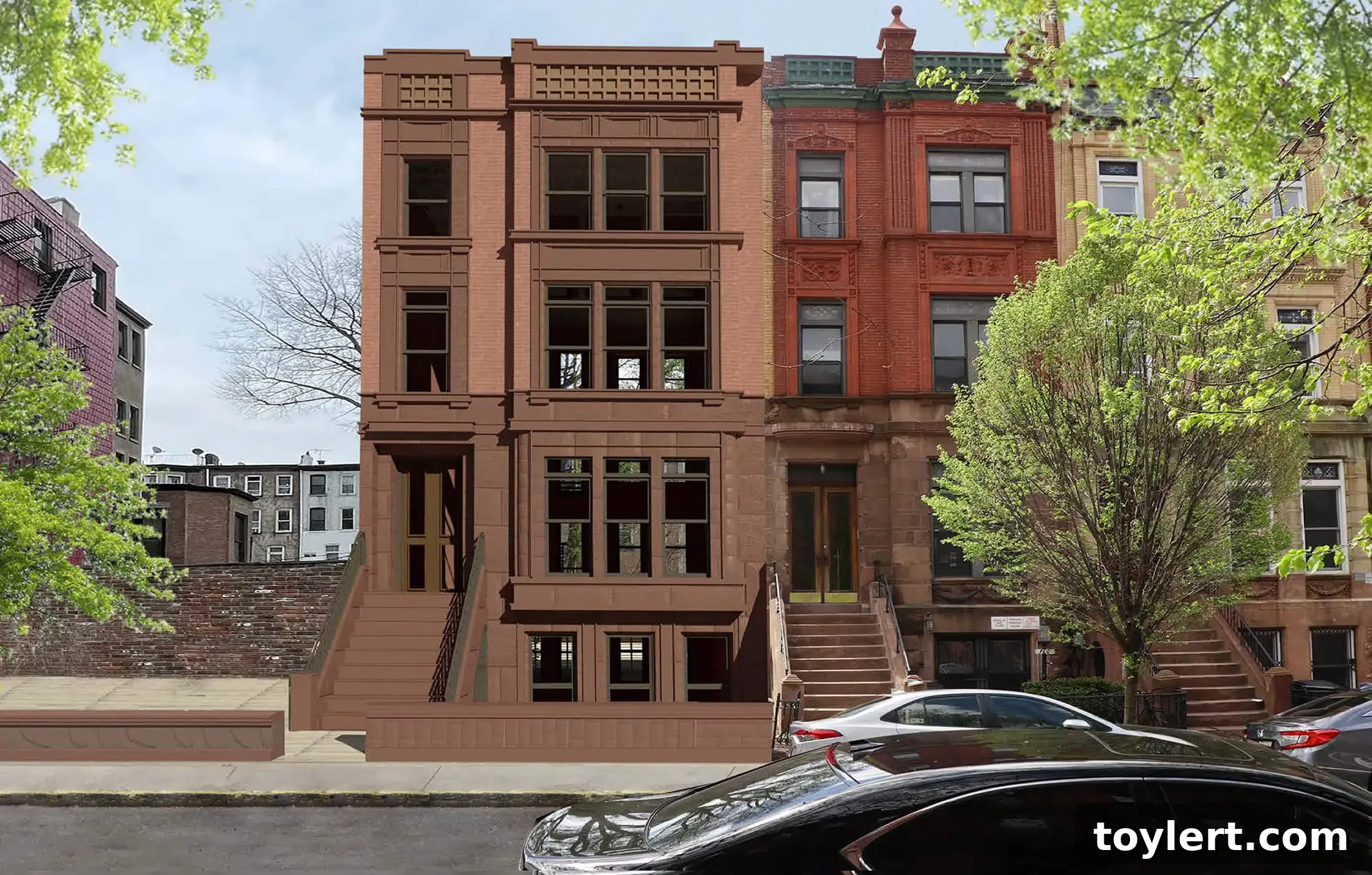
Revised Design for 162 Hancock Street Receives Landmark Approval in Bed Stuy
A significant milestone has been reached for an upcoming four-story building project on one of Bed Stuy’s most architecturally distinguished blocks. The revised design for 162 Hancock Street has officially received the green light from the city’s esteemed Landmarks Preservation Commission (LPC). This approval, however, comes with a directive: the project’s architect and preservation consultant must continue to refine specific details in close collaboration with the agency’s expert staff. This collaborative approach underscores the delicate balance required when introducing modern structures into historically rich urban tapestries.
While the architectural plans are moving in a promising direction, local stakeholders, including the active block association and numerous nearby residents, emphasize that the journey is not yet complete. Their ongoing vigilance highlights the community’s deep investment in preserving the unique character and aesthetic integrity of their beloved neighborhood.
Navigating the Strictures of Historic Districts: The LPC Process
The Landmarks Preservation Commission plays a pivotal role in safeguarding New York City’s architectural heritage. Tasked with protecting over 37,000 landmark properties and 150 historic districts, the LPC’s approval process is rigorous and meticulously detailed. For any new construction or significant alteration within a designated historic district, designs must not only meet modern building codes but also harmonize with the existing architectural context, scale, and materials of the surrounding area. This often requires an iterative process of submission, review, and refinement, as was the case for 162 Hancock Street.
Architect Ana Maria Torres of AT Architects, a firm recognized for its sensitive approach to urban infill projects, partnered with preservation consultant Jacqueline Peu-Duvallon to steer the updated plans through this exacting process. Their recent presentation of the refined designs for 162 Hancock Street to the LPC on Tuesday was met with a unanimous show of support from the commissioners. This consensus is a testament to the thoroughness of their revisions and their commitment to aligning the new structure with the high standards of the Bedford Historic District.
The path to approval was not without its challenges. At an earlier June hearing, the commission had expressed concerns regarding various elements of the initial proposal. Commissioners had requested further refinement, particularly focusing on how the building’s facade, massing, and material palette would integrate seamlessly with the block’s historic fabric. This initial feedback is a standard part of the LPC’s review, designed to encourage designs that are contextually appropriate and respectful of the surrounding landmarked structures.
The Bedford Historic District: A Tapestry of Architectural Grandeur
The proposed site at 162 Hancock Street is situated within the esteemed Bedford Historic District, a jewel in Brooklyn’s crown known for its stunning collection of Victorian-era brownstones, ornate stoops, and tree-lined streets. Established in 1979, the district encompasses a magnificent array of Italianate, Neo-Grec, Queen Anne, and Romanesque Revival style row houses, primarily built between the 1870s and 1890s. These architectural masterpieces contribute to the neighborhood’s distinct charm and strong sense of place, making it one of Bed Stuy’s most architecturally breathtaking blocks. The challenge for any infill project here is not to replicate the past, but to create a contemporary design that acknowledges and complements this rich historical narrative without dilution or mimicry.
The concept of “infill development” in such a sensitive area requires a deep understanding of historical architecture, urban planning, and community dynamics. It necessitates a design philosophy that respects the existing rhythm, scale, and material palette of the streetscape, while simultaneously offering modern functionality and aesthetic appeal. The LPC’s role is to ensure that new construction enriches the district rather than detracting from its unique character.
The Evolution of a Design: Responding to Feedback
Following the directives from the June hearing, Ana Maria Torres and Jacqueline Peu-Duvallon embarked on a comprehensive re-evaluation of the building’s design. While specific details of the revisions were not extensively publicized, typical adjustments in such scenarios often involve:
- Facade Articulation: Reconsidering window proportions, rhythm, and decorative elements to better echo patterns found in adjacent historic buildings.
- Material Selection: Opting for materials that are either historically consistent or provide a harmonious contrast, such as variations in brick color, stone accents, or metalwork that complement the predominant textures of the district.
- Massing and Setbacks: Adjusting the building’s overall volume and relationship to the street line, perhaps by incorporating stepped facades or setbacks on upper floors to reduce perceived bulk and respect existing cornice lines.
- Roofline and Architectural Details: Refining roof elements, cornices, and other architectural ornamentation to ensure they contribute positively to the streetscape without overwhelming it.
The unanimous approval indicates that these revisions successfully addressed the LPC’s prior concerns, demonstrating a thoughtful and responsive design process. The collaborative engagement with the agency’s staff is crucial here, transforming feedback into actionable design improvements that ultimately lead to a more contextually appropriate and aesthetically pleasing outcome.
Community Voices: The Ongoing Dialogue
Despite the LPC’s approval, the local block association and other residents remain committed to ensuring the project’s final execution aligns with their vision for the neighborhood. Their statement that “while the plans are heading in the right direction, there is still work to be done” reflects a common sentiment in landmarked districts where community groups often act as vigilant stewards of their environment. This “work” might pertain to several areas:
- Construction Management: Minimizing disruption, noise, and traffic during the construction phase, which can significantly impact residents in dense urban environments.
- Final Material Specifications: Ensuring that the specific choices for bricks, windows, doors, and other exterior finishes are of high quality and truly match the intent of the approved design.
- Landscaping and Public Realm Improvements: Opportunities for sidewalk enhancements, tree planting, or other features that contribute to the public space around the building.
- Long-term Impact: Considering how the new building will interact with its neighbors in terms of light, air, and privacy, as well as its contribution to the overall residential quality of the block.
The involvement of community groups like the block association is vital. They provide a local perspective, often raising practical concerns that may not be fully covered by architectural drawings or regulatory reviews. Their continued engagement serves as a healthy check and balance, ensuring that the development not only meets technical requirements but also genuinely contributes to the well-being and visual appeal of the community.
Balancing Preservation with Progress: A Model for Urban Development
The 162 Hancock Street project serves as an excellent case study for the complex yet essential process of infill development in historic districts. It highlights the inherent tension between the need for new housing and modern infrastructure, and the imperative to preserve the unique character and history of a place. The LPC’s role is not to halt development, but to guide it in a manner that respects and enhances the city’s irreplaceable architectural assets.
The successful navigation of this process by AT Architects and Jacqueline Peu-Duvallon, culminating in unanimous LPC approval, demonstrates that thoughtful design, coupled with proactive engagement with regulatory bodies and community groups, can lead to positive outcomes. This project signifies a commitment to creating new architecture that is both contemporary and deeply respectful of its historic context, providing a valuable precedent for future developments in similar landmarked areas across New York City.
As the project moves into its final stages of detail refinement and eventual construction, all eyes will be on 162 Hancock Street. Its successful integration into the Bedford Historic District will stand as a testament to the power of collaborative planning and design, ensuring that Bed Stuy continues to evolve while honoring its celebrated past. The ongoing dialogue between architects, preservationists, and residents ensures that this new addition will contribute positively to the block’s breathtaking architectural narrative for generations to come.