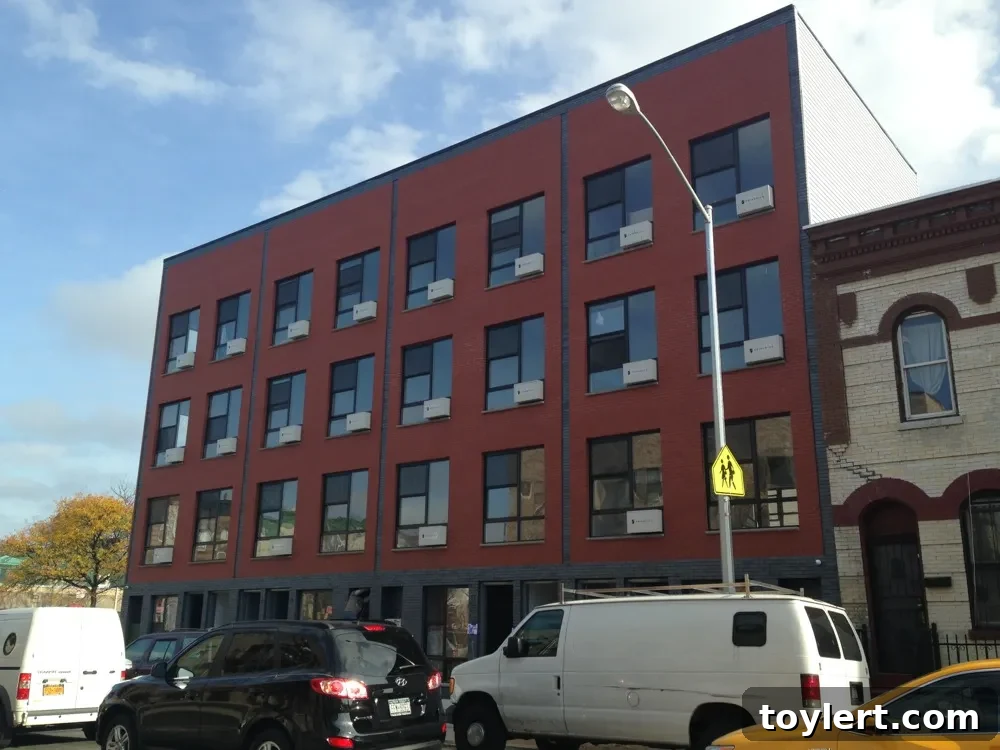
The urban landscape of Bushwick, Brooklyn, is in a constant state of fascinating evolution, a dynamic transformation that is perhaps nowhere more evident than at the corner of 1012-1018 Decatur Street. A recent visit to this bustling intersection revealed significant progress on a new residential development, signaling a vibrant shift for what was once a long-standing fixture of the neighborhood’s industrial past. Workers were diligently putting the finishing touches on the interior walls of the ground floor, a clear indicator that this ambitious project is nearing its final stages of completion. This site, which for many years served as a humble tire repair shop, now stands as a striking symbol of Bushwick’s ongoing revitalization, trading worn-out rubber for modern living spaces.
Bushwick’s Enduring Transformation: From Industrial Hub to Cultural Beacon
Bushwick has undergone a remarkable metamorphosis over the past two decades. Once a predominantly industrial and working-class neighborhood, it has blossomed into a sought-after destination for artists, young professionals, and families alike, drawn by its vibrant arts scene, diverse community, and relative affordability compared to other parts of Brooklyn. The narrative of Bushwick is one of resilience and reinvention, a testament to how urban areas can adapt and thrive. Property developments like the one at 1012-1018 Decatur Street are not isolated incidents but rather integral threads in this larger tapestry of change, reflecting the increasing demand for contemporary housing in a borough where space is a premium.
The influx of new residents has spurred a parallel growth in local businesses, from independent coffee shops and artisanal bakeries to trendy boutiques and innovative restaurants. This commercial renaissance further enhances the appeal of Bushwick, creating a self-sustaining ecosystem that supports both its long-term residents and its newer arrivals. The development on Decatur Street, therefore, represents more than just a new building; it embodies the spirit of an entire neighborhood embracing its future while respectfully acknowledging its past.
A Closer Look at the 1012-1018 Decatur Street Development
The construction timeline for this five-story apartment building has been remarkably swift, a common sight in Brooklyn’s fast-paced development scene. The structure recently “topped out,” meaning its highest point has been reached, and the visual evidence suggests significant interior work has already been accomplished on the upper floors. The swiftness of this progress underscores the efficiency and urgency often associated with urban housing projects designed to meet growing demand.
Architectural Impressions and Quality Assessment
Upon initial inspection, despite the presence of individual window air conditioning units – a detail sometimes viewed critically in new constructions – the overall quality of the development appears to be commendable, especially for a private project in this rapidly evolving area. While central air conditioning is often preferred for a seamless aesthetic, window units can offer flexibility and individual control, and their inclusion does not necessarily detract from the structural integrity or the quality of interior finishes.
The building’s facade and design elements suggest a conscious effort to blend modern aesthetics with the surrounding streetscape. Developers in Bushwick often walk a fine line, aiming to introduce contemporary design without clashing with the neighborhood’s established character. The materials chosen for the exterior and the visible elements of the interior, such as the ground-floor wall finishes, convey a sense of durability and thoughtful craftsmanship. This attention to detail is crucial for new buildings that seek to become lasting fixtures in a community, rather than fleeting trends.
Speculation naturally turns to the interior layout and potential amenities. Given the market trends in Bushwick, it is likely that these apartments will feature open-concept living spaces, modern kitchens with stainless steel appliances, and updated bathrooms. The focus will undoubtedly be on maximizing natural light and offering efficient layouts designed for urban living. Shared amenities, such as a rooftop terrace offering panoramic city views, a fitness center, or a communal lounge, are increasingly common in such developments and would significantly enhance the living experience for future residents.
The Symbolic Transformation of a Corner Lot
The evolution of this particular corner from a utilitarian tire repair shop to a multi-story residential building serves as a powerful metaphor for Bushwick’s broader narrative. Tire shops, auto repair garages, and light industrial businesses were once the backbone of many Brooklyn neighborhoods, providing essential services and jobs. As the urban fabric shifts, these spaces are frequently repurposed, making way for residential units, retail establishments, or creative workspaces.
This transition is not without its complexities, often sparking discussions about gentrification, affordability, and the preservation of neighborhood character. However, well-executed developments like 1012-1018 Decatur Street can contribute positively to the area by increasing housing stock, improving street aesthetics, and attracting new residents who contribute to the local economy and cultural landscape. The key lies in creating developments that are thoughtfully integrated into the existing community, respecting its history while contributing to its future vitality.
Real Estate Trends and Community Impact in Bushwick
The demand for housing in Bushwick continues to outpace supply, driving up property values and rental prices. This sustained interest from developers and homebuyers alike underscores the neighborhood’s enduring appeal. New constructions are vital for accommodating the growing population and for offering diverse housing options, from studios ideal for single professionals to multi-bedroom units suitable for families.
While the economic benefits of development are clear, the social implications are equally significant. New buildings bring new residents, contributing to the cultural mosaic and supporting local businesses. However, it also raises questions about the balance between growth and the displacement of long-term residents and businesses who may struggle with rising costs. Thoughtful urban planning and community engagement are essential to ensure that development benefits all segments of the population and maintains the unique character that makes Bushwick so special.
The long-term vision for Bushwick involves fostering a sustainable, inclusive, and vibrant community. Projects like the one on Decatur Street are critical pieces of this puzzle, contributing to the housing needs of a thriving urban center. They represent an investment in the neighborhood’s future, an acknowledgment of its dynamic energy, and a commitment to providing quality living spaces for those who choose to call Bushwick home.
Conclusion: A New Landmark for Decatur Street
The nearing completion of the apartment building at 1012-1018 Decatur Street is more than just a construction milestone; it’s a testament to Bushwick’s relentless pace of change and its ability to reinvent itself. From the busy hum of a tire repair shop to a modern residential edifice, this corner embodies the spirit of an entire neighborhood embracing a new chapter. With its apparent quality and strategic location, this development is poised to become a valuable addition to the community, offering contemporary living options in one of Brooklyn’s most exciting and evolving neighborhoods. As the finishing touches are applied, it will undoubtedly attract new residents eager to experience the unique charm and vibrancy that Bushwick has to offer.
Five-Story Apartment Building Rising Quickly on Decatur Street in Bushwick [Brownstoner]