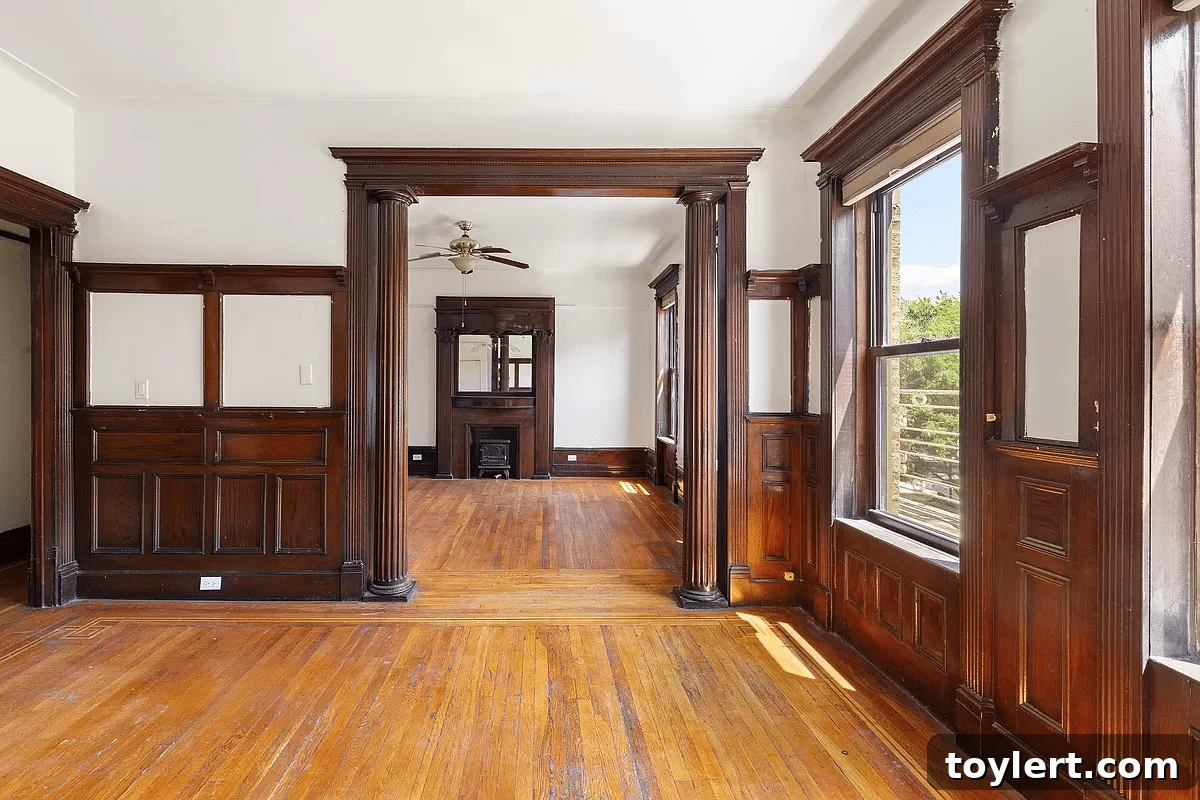
Nestled in the vibrant heart of Brooklyn, an exceptional income-restricted two-bedroom, one-bath co-op at 465 Eastern Parkway offers a rare opportunity to own a piece of prewar charm combined with contemporary affordability. This second-floor residence embodies the elegance of an earlier era, boasting soaring high ceilings, intricate architectural details, and remarkably low monthly maintenance fees—a significant advantage for discerning buyers in today’s competitive real estate market. The building, an early 20th-century architectural gem, stands proudly on one of Brooklyn’s most iconic thoroughfares, placing residents within a leisurely 15-minute stroll of cultural landmarks like the world-renowned Brooklyn Museum and the serene beauty of the Brooklyn Botanic Garden. This unique blend of historical character, financial sensibility, and prime location makes it an highly sought-after address for those looking to immerse themselves in authentic Brooklyn living.
The history of 465 Eastern Parkway is as rich and intricate as its facade. This walkup apartment building was constructed as a symmetrical twin to its neighbor at No. 469, a testament to the grand urban planning of its time. The vision for these stately residences was brought to life by the esteemed builder Patrick McTiernan, a prominent figure in Brooklyn’s development during the early 20th century. McTiernan’s commitment to quality craftsmanship and enduring design laid the foundation for these architecturally significant structures. The buildings’ captivating aesthetics are attributed to the talented architect Frederick L. Hine, whose impressive portfolio often graced the city’s burgeoning neighborhoods. Hine, notably connected to the real estate world through his wife, Carrie, who was also a developer, masterfully crafted a symmetrical facade in elegant pale stone. This facade is adorned with exquisite neo-Classical details that elevate its aesthetic appeal, including robust quoining, delicate swags, and stately columns. These elements collectively contribute to a timeless architectural presence, reflecting the grandeur and ambition of Brooklyn at the turn of the century. The construction period itself was a boom time for urban development, and properties like these were designed to cater to a growing middle and upper-middle class seeking sophisticated city living.
The appeal of these new, splendidly located apartments on Eastern Parkway was immediately evident to prospective tenants. Records from February 1913 showcase advertisements touting the residences as “new, splendidly located,” underscoring their prime position and modern amenities for the era. At the time, apartments within these magnificent buildings were renting for a modest $30 to $52 a month, prices that reflected the burgeoning real estate market and the promise of a thriving community. These early advertisements paint a vivid picture of a desirable address, attracting residents who valued both convenience and architectural beauty. Eastern Parkway itself was designed by Frederick Law Olmsted and Calvert Vaux, the same landscape architects behind Central and Prospect Parks, envisioning it as a grand boulevard—America’s first parkway—connecting Brooklyn’s green spaces and cultural institutions. Living on such a historic thoroughfare meant access to planned urban beauty and a higher quality of life, a legacy that continues to define the area today. The buildings were not just structures but integral components of a thoughtfully designed urban fabric, offering residents more than just shelter but a lifestyle of prestige and access.
The journey of 465 Eastern Parkway into its current co-op structure is a fascinating narrative, mirroring broader trends in urban housing and community ownership. An intriguing article from 1920 reveals an early attempt at collective ownership: a group of tenants from both 465 and 469 Eastern Parkway banded together with the ambitious intent of purchasing the pair of buildings and converting them into a co-operative. This initiative, pioneering for its time, reflects a nascent desire among residents to control their living environments and share in the equity of their homes. While the specifics of why this early co-op dream did not fully materialize remain somewhat unclear from historical records, it highlights a foundational aspiration for community-oriented housing that would later define the property’s future. The concept of co-operative ownership, though common today, was still relatively novel in the early 20th century, often encountering legal and financial hurdles. Despite the initial setback, the spirit of collective action and community engagement persisted, laying subtle groundwork for what was to come decades later.
Decades passed, and by the 1970s, Brooklyn, like many urban centers, faced significant challenges, including economic downturns and urban blight. During this tumultuous period, many buildings across the city, including 465 Eastern Parkway, fell into disrepair or abandonment, leading to the city taking ownership. This municipal intervention was often a measure of last resort, designed to prevent further deterioration of housing stock and to stabilize communities. The city’s ownership marked a new chapter for the building, a period of transition where its future was uncertain. However, the story took a positive turn in the 1990s as New York City underwent a revitalization. The city’s Department of Housing Preservation and Development (HPD), committed to fostering affordable and stable housing, played a pivotal role in rehabilitating 465 Eastern Parkway. HPD facilitated the transfer of ownership to the building’s then-current shareholders, transforming it into an HFDC (Housing Development Fund Corporation) co-op. This move was a strategic step toward empowering residents and ensuring long-term affordability.
Understanding the HDFC co-op model is crucial for prospective buyers and illuminates the unique value proposition of 465 Eastern Parkway. Housing Development Fund Corporations (HDFCs) are non-profit organizations established under New York State law to facilitate the creation and preservation of affordable housing in New York City. These co-ops typically originate from buildings that the city took over due to abandonment or foreclosure and subsequently rehabilitated. The HDFC framework enables residents, often those with moderate incomes, to purchase shares in their buildings at significantly lower prices than market-rate co-ops. However, this affordability comes with specific, beneficial restrictions: most HDFC co-ops have income caps for buyers, meaning a household’s income cannot exceed a certain percentage of the Area Median Income (AMI) to qualify for purchase. Additionally, there are usually resale restrictions, such as flip taxes or limits on the profit shareholders can make when selling, which are designed to keep the units permanently affordable for future generations. These regulations ensure that the co-op’s mission of providing accessible housing remains intact, creating stable and diverse communities. For a property like 465 Eastern Parkway, being an HDFC co-op means it offers an unparalleled opportunity for eligible buyers to acquire a beautifully preserved prewar home in a prime Brooklyn location without the prohibitive costs often associated with such properties, fostering genuine community ownership and long-term residency.
Beyond the compelling history and unique HDFC status, the location of 465 Eastern Parkway offers an enviable Brooklyn lifestyle. Living here places residents directly on Eastern Parkway, a grand tree-lined boulevard that provides a picturesque setting for daily life and easy access to a wealth of amenities. The aforementioned proximity to the Brooklyn Museum, with its world-class collections and dynamic exhibitions, means cultural enrichment is just a short walk away. Equally accessible is the expansive Brooklyn Botanic Garden, offering 52 acres of meticulously curated landscapes, a tranquil escape from urban bustle, and seasonal wonders throughout the year. For those who crave even more green space, the iconic Prospect Park, designed by the same visionaries as Eastern Parkway, is also within easy reach, providing vast lawns, walking trails, and recreational facilities. The neighborhood of Crown Heights itself is a vibrant tapestry of cultures, featuring an eclectic mix of historic brownstones, bustling commercial strips, and a growing array of trendy cafes, diverse restaurants, and unique boutiques. Excellent public transportation options, including multiple subway lines, ensure seamless connectivity to Manhattan and other parts of Brooklyn, making commuting and city exploration remarkably convenient. This strategic location offers residents a perfect balance of historic charm, cultural immersion, and modern urban convenience, truly encapsulating the best of Brooklyn living.
The combination of prewar architectural grandeur, the financial advantages of an HDFC co-op, and a superlative location makes 465 Eastern Parkway an exceptional find in the Brooklyn real estate landscape. The high ceilings and generous layouts typical of prewar construction provide a sense of spaciousness and an inviting canvas for personal touches, while the low monthly maintenance underscores the inherent value and efficient management of the co-operative. This property represents more than just an apartment; it’s an entry point into a vibrant community, a connection to Brooklyn’s storied past, and a secure investment in an enduring neighborhood. For eligible buyers seeking a genuine Brooklyn experience—one that celebrates history, fosters community, and embraces cultural richness—this two-bedroom, one-bath co-op offers an unmatched opportunity. It stands as a testament to thoughtful preservation and forward-thinking urban planning, providing not just a residence, but a home with character, convenience, and considerable charm. Living on Eastern Parkway means participating in the legacy of a grand urban design, surrounded by beauty and historical significance at every turn.
In conclusion, 465 Eastern Parkway stands as a beacon of affordable elegance and historical significance within Crown Heights. Its prewar details, from the high ceilings to the neo-Classical facade, tell a story of Brooklyn’s architectural heritage. The building’s unique journey from early co-op aspirations to city ownership and its eventual transformation into a thriving HDFC co-op reflects the resilience and adaptability of New York City’s housing landscape. Coupled with its unbeatable location, offering immediate access to world-class cultural institutions and green spaces, this income-restricted co-op presents a rare and invaluable opportunity. It’s an ideal choice for individuals or families seeking to plant roots in a dynamic and historically rich neighborhood, enjoying the benefits of community living and long-term affordability in one of Brooklyn’s most coveted areas. Investing in a home like this is not just buying property; it’s embracing a lifestyle that is uniquely Brooklyn—a blend of history, culture, and vibrant urban life.
1 | 2 | 3 | 4 Single Page