The End of an Era: 664 Jefferson Avenue and Bed-Stuy’s Evolving Landscape
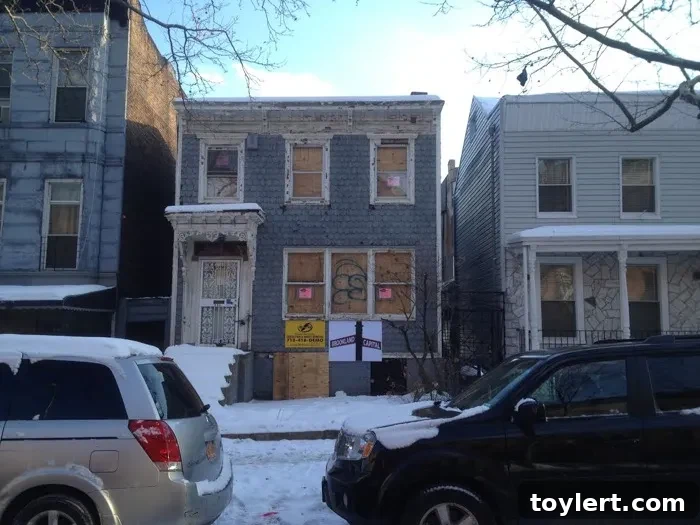
Bedford-Stuyvesant, Brooklyn, is a neighborhood rich in history, celebrated for its stunning brownstones and a unique architectural tapestry that tells the story of generations. However, like many historic urban areas, Bed-Stuy faces a constant tension between preserving its past and accommodating the demands of modern development. This dynamic is brought into sharp focus by the recent developments surrounding the unassuming frame house located at 664 Jefferson Avenue. Long rumored to be one of the oldest structures in the entire neighborhood, this property now stands at the cusp of demolition, making way for new construction and marking the end of a quiet chapter in local history.
A Glimpse into the Past: The Legacy of 664 Jefferson Avenue
The little frame house at 664 Jefferson Avenue may not possess the grandiosity of its brownstone neighbors, but its rumored status as one of Bed-Stuy’s oldest residences speaks volumes about its historical significance. Such wooden structures are rare survivors in a borough increasingly dominated by brick and masonry. These homes often date back to the 19th century, predating much of the brownstone construction boom, offering a direct link to the earliest days of settlement and development in the area. They provide invaluable insight into the architectural styles, building techniques, and everyday lives of early Brooklynites.
Unfortunately, the passage of time, coupled with neglect and the relentless forces of nature, proved too much for this venerable structure. Accounts from Brownstoner readers who observed the house firsthand painted a grim picture: severe water damage had rendered the property unsalvageable. Water, a seemingly innocuous element, can be a merciless destroyer of old buildings, particularly those constructed with wood. It can compromise foundations, rot timbers, foster mold growth, and ultimately undermine the structural integrity to a point where restoration becomes prohibitively expensive, if not impossible. The decision to demolish such a historic property is rarely taken lightly, but in cases of severe structural degradation, it often becomes an unfortunate necessity, reflecting the immense challenges inherent in preserving very old, non-landmarked buildings.
Navigating the Bureaucracy: Permits, Orders, and Demolition
The journey of 664 Jefferson Avenue toward its final fate is intertwined with the intricate permitting processes governed by New York City’s Department of Buildings (DOB). The first clear sign of impending change came with the filing of a new building permit, signaling the developer’s intention to replace the existing structure. However, the path to redevelopment is rarely linear.
Prior to the formal demolition, an internal renovation attempt led to complications. A stop work order was issued by the DOB in December for interior demolition activities that commenced without the necessary permits. This highlights a crucial aspect of urban development: every significant alteration, be it structural or even extensive interior work, requires proper authorization to ensure safety, adherence to building codes, and accountability. Unpermitted work can lead to fines, delays, and a halt in construction, underscoring the importance of following established protocols.
Following the stop-work order, the proper channels were pursued. A demolition permit was subsequently approved in January, although it had not yet been officially issued at the time of reporting. The distinction between “approved” and “issued” is critical; approval means the plans meet regulatory requirements, while issuance grants the formal authority to proceed with the work. Once issued, the path is clear for the historic structure to be carefully and legally dismantled, paving the way for a new chapter on this significant parcel of land.
Preservation vs. Progress: Bed-Stuy’s Evolving Character
The story of 664 Jefferson Avenue is a microcosm of the larger narrative unfolding across Bed-Stuy and other rapidly gentrifying neighborhoods in Brooklyn. The pressure for new housing and modern amenities often clashes with efforts to preserve the historic character that makes these areas so desirable in the first place. This tension is particularly palpable in areas adjacent to established historic districts.
The house at 664 Jefferson Avenue is situated just down the block from the recently expanded Stuyvesant Heights Historic District. This proximity is significant. Historic districts are designated by the Landmarks Preservation Commission (LPC) to protect areas with distinct architectural, historical, or cultural value. Properties within these districts are subject to stringent regulations regarding alterations, renovations, and new construction, ensuring that any changes respect and maintain the district’s integrity. For example, replacing windows, altering facades, or constructing additions all require LPC approval, which can be a lengthy and often costly process for homeowners and developers alike.
However, 664 Jefferson Avenue, crucially, is not landmarked itself. This means it falls outside the protective umbrella of the historic district’s regulations. While its age and rumored historical importance were recognized by some, without formal landmark designation, it lacked the legal protections that could have mandated its preservation or a historically sensitive restoration. This scenario is common across the city, where buildings of significant age and charm can be demolished if they are not specifically designated as landmarks or part of a historic district. The rising property values and intense demand for housing in Bed-Stuy further exacerbate this situation, creating strong incentives for developers to replace older, less efficient structures with modern, multi-unit buildings designed to maximize space and profit.
The Future of Jefferson Avenue: What Comes Next?
With the demolition permit moving towards issuance, attention now turns to what will rise in place of the historic wood-frame house. New building permits typically outline the scope of the proposed construction, which in today’s Bed-Stuy market often involves multi-family residential units. This could mean a new apartment building or a modern townhouse designed to blend with, or perhaps starkly contrast, the existing streetscape.
The replacement of a single-family historic home with a larger, multi-unit dwelling reflects current urban planning trends focused on increasing housing density in transit-rich areas. While this addresses the pressing need for more housing in New York City, it inevitably alters the aesthetic and fabric of the neighborhood. The new structure will contribute to the ongoing transformation of Bed-Stuy, a neighborhood that continues to attract new residents and investment, leading to a blend of old and new architecture.
For long-time residents and preservationists, the demolition of 664 Jefferson Avenue represents a loss—the erasure of a tangible link to Bed-Stuy’s foundational past. For developers and new residents, it signifies progress and the creation of much-needed contemporary living spaces. The story of this particular house encapsulates the complex negotiations between heritage and growth, a dialogue that defines much of urban life in a dynamic city like Brooklyn.
As the cranes move in and new foundations are laid, the memory of the little frame house at 664 Jefferson Avenue will serve as a poignant reminder of the continuous evolution of Bed-Stuy, where every demolition and every new construction reshapes the identity of a cherished community.