Transforming Clinton Hill: A Deep Dive into the 228 Washington Avenue Development Proposal
A significant and intriguing development proposal is currently under careful consideration for the vibrant Clinton Hill Historic District in Brooklyn, specifically at the prominent address of 228 Washington Avenue. This esteemed neighborhood, renowned for its architectural grandeur, tree-lined streets, and deep historic charm, is poised to witness a potentially transformative project. The proposal aims to blend modern living requirements with the district’s rich heritage, sparking considerable interest among residents, preservationists, and urban planning enthusiasts alike. Recently brought before Community Board Two, the plans outline a strategy that could redefine a key corner parcel within this cherished Brooklyn enclave.
The Ambitious Proposal: Demolition and Modern Infill in a Historic Setting
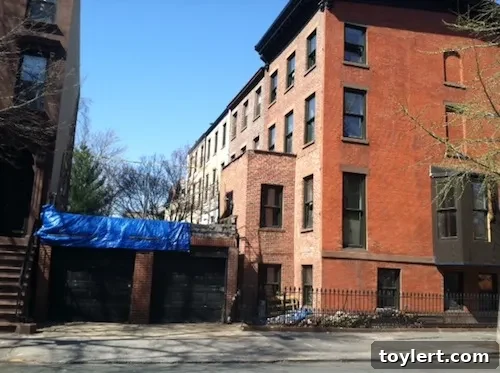
According to the detailed information presented to Community Board Two’s Land Use Committee, an applicant is seeking formal approval to undertake a two-pronged construction initiative. The first, and arguably most impactful, action involves the demolition of an existing circa-1950 garage. This structure, which has stood for decades, currently occupies a valuable portion of the property, particularly facing Willoughby Avenue. Following this demolition, the ambitious plan is to construct an entirely new one-story contemporary style residential building. What makes this proposal particularly noteworthy and complex is its intended connection to an existing rear yard addition, suggesting a thoughtful and integrated approach rather than a mere standalone or isolated structure.
This initiative represents a compelling example of urban infill development, a strategy increasingly common in dense metropolitan areas. It involves repurposing underutilized spaces within established neighborhoods to create new housing opportunities or amenities. In a district as historically rich and coveted as Clinton Hill, such proposals are invariably met with both excitement for the potential for architectural innovation and meticulous scrutiny regarding their impact on the area’s invaluable historical integrity. The current two-car garage, prominently featured in the accompanying image, currently presents a distinct frontage along Willoughby Avenue. Its removal and replacement with a contemporary design will undoubtedly lead to a reimagining of this important streetscape, influencing the visual dialogue between the historic brownstones and newer architectural forms.
228 Washington Avenue: A Brownstone with a Rich Past and Promising Future
The property at 228 Washington Avenue is far more than just a street address; it is a quintessential corner brownstone, emblematic of Clinton Hill’s distinctive architectural character. These stately homes, often built in the late 19th and early 20th centuries, are celebrated for their iconic brown sandstone facades, intricate architectural detailing, and generous interior proportions. They stand as enduring testaments to Brooklyn’s vibrant past and its emergence as a desirable residential destination. Public records confirm that this particular brownstone was actively on the market back in 2008, a period characterized by a burgeoning demand for Brooklyn real estate, particularly in historic neighborhoods. It subsequently changed hands in 2010 for a recorded price of $750,000, a figure that, while substantial at the time, would likely be dwarfed by current market valuations, underscoring the escalating desirability and investment potential of properties within this prestigious district.
The strategic corner location of 228 Washington Avenue presents both unique advantages and specific challenges for any new development. On one hand, it offers enhanced visibility, abundant natural light, and the potential for multiple exposures. On the other hand, it means any new structure will command a prominent presence, necessitating an exceptionally careful consideration of its aesthetic compatibility and contextual fit within the existing streetscape, which is shared by both Washington and Willoughby Avenues. The decision to remove the aging garage and introduce a modern residential component clearly points towards an optimization of land use and space. This reflects a broader trend in urban planning to maximize the utility and inherent value of every available square foot in highly sought-after areas.
Bridging Eras: Contemporary Style Meets Historic Charm in Design
The concept of introducing a “one-story contemporary style residential building” into a district predominantly defined by its ornate Victorian and Romanesque Revival architecture immediately sparks both curiosity and rigorous debate. The fundamental question becomes: how will this modern addition harmoniously integrate with, rather than disrupt, the established architectural vernacular that makes Clinton Hill so special? Architects and developers embarking on such sensitive projects are tasked with the delicate balancing act of designing structures that are simultaneously respectful of their historic surroundings and authentically expressive of modern architectural principles. This intricate process often involves making thoughtful choices in terms of materials, massing (the overall shape and bulk of a building), scale, and fenestration (the arrangement of windows and doors). The ultimate goal is to ensure that the new building complements and enhances, rather than clashes with or diminishes, the character of its historic neighbors.
The phrase “connecting to the existing rear yard addition” further enriches and complicates the design narrative. This suggests that the new contemporary structure is envisioned not merely as a detached or separate unit, but rather as an integral and seamlessly integrated part of the larger property. This approach has the potential to create a fluid, continuous flow between the original brownstone and the modern extension, thereby enhancing the overall functionality, aesthetic appeal, and market value of the entire home. Such innovative integration can result in truly unique living spaces that artfully bridge different architectural eras, offering residents the timeless charm and historical gravitas of brownstone living combined with the contemporary amenities, cutting-edge aesthetics, and efficiencies of modern design. It speaks to a vision where history and modernity can coexist and even elevate one another.
Navigating Historic Preservation: The Crucial Role of Community Boards and the LPC
Any significant alteration, addition, or new construction within a designated historic district, such as Brooklyn’s Clinton Hill, is subject to a rigorous and multi-layered review process involving various municipal bodies. Most notably, these include the New York City Landmarks Preservation Commission (LPC) and the local Community Board, in this case, Community Board Two. Community Board Two plays a crucial advisory role in the process, serving as a vital conduit for gathering public input and formulating recommendations based on community concerns, local guidelines, and neighborhood character. Their Land Use Committee is typically the initial public forum where such development proposals are formally presented, allowing architects and developers to articulate their vision, provide detailed plans, and address preliminary questions from committee members and the public.
The LPC, on the other hand, holds the ultimate authority in either approving or denying applications that affect designated historic landmarks and districts. Their overarching mandate is to preserve and protect the architectural, historical, and cultural heritage of New York City for current and future generations. This means that for a contemporary addition at 228 Washington Avenue to ultimately gain approval, the proposal must demonstrate not only sound architectural and structural design but also an exceptionally sensitive understanding of its context. It must ensure that the new construction does not in any way detract from the special character, visual integrity, and historical significance of the Clinton Hill Historic District. The delicate balance between accommodating necessary urban evolution and steadfastly safeguarding historical integrity represents a constant and often challenging tension for both developers seeking to innovate and preservationists committed to maintaining the past.
Community Engagement and the Path Forward for 228 Washington Avenue
The proposal’s journey through the intricate approval process officially began with its presentation to Community Board Two’s Land Use Committee. These public meetings are critically important opportunities for transparency and robust public participation. Residents, local stakeholders, architectural enthusiasts, and dedicated preservation advocates are strongly encouraged to attend these sessions. They provide an invaluable platform to voice opinions, raise pertinent concerns, and ask direct questions to the applicant and their architectural team. Such active community engagement is absolutely crucial for ensuring that new developments are not only architecturally sound but also genuinely reflect the diverse needs, desires, and values of the community they are intended to impact.
For those interested in the precise details of this intriguing project and eager to see the architectural renderings firsthand – which often provide the clearest visualization of a proposed design – the public is cordially invited to attend the upcoming Land Use Committee meeting. This important session is officially scheduled for Wednesday, April 17, and will take place at 5 Metrotech Center, Room LC400. Attending this meeting offers a unique and direct chance to understand the underlying design philosophy, accurately gauge the potential impact on the immediate surroundings and the broader district, and actively contribute to the ongoing dialogue about sensitive development in one of Brooklyn’s most iconic and beloved neighborhoods. The outcome of this pivotal meeting, followed by the rigorous subsequent review by the LPC, will undoubtedly set a significant precedent for future projects that seek to merge contemporary architectural design with the deeply ingrained historical fabric of Clinton Hill. The potential for what some might describe as a “cute house” could indeed translate into a significant architectural statement and a highly valuable addition to the district’s constantly evolving urban landscape.
For geographical context and to visualize the specific location of this proposed development within the Clinton Hill area, you can explore the area via GMAP.
Ultimately, this project at 228 Washington Avenue beautifully embodies the dynamic and often creative tension between preserving the cherished past and thoughtfully building for the future in Brooklyn’s most treasured historic districts. Its progression and eventual realization will be closely watched by architectural enthusiasts, devoted preservationists, local residents, and prospective homeowners alike, as it promises to contribute a new chapter to the ongoing and fascinating narrative of Clinton Hill’s architectural evolution and urban development.