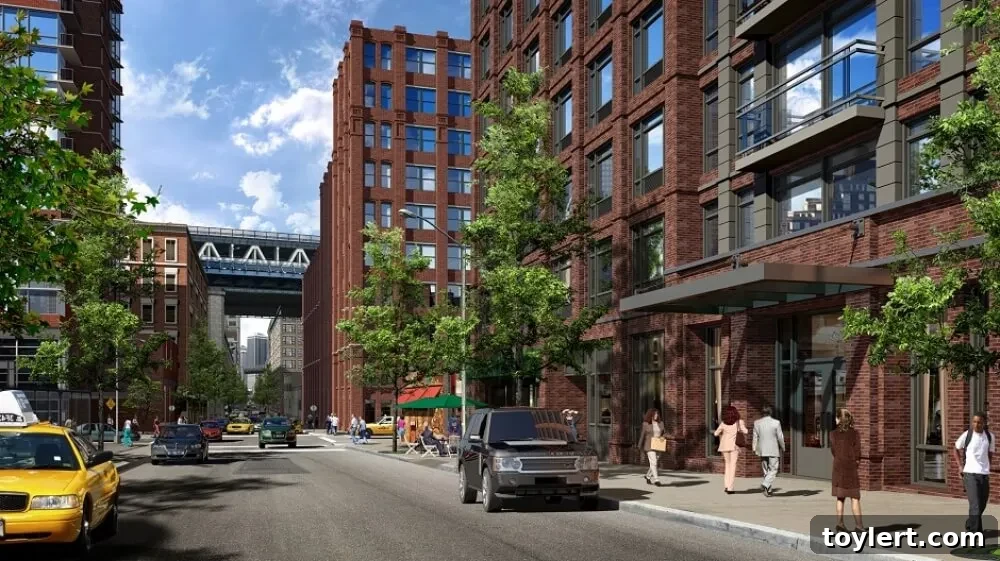
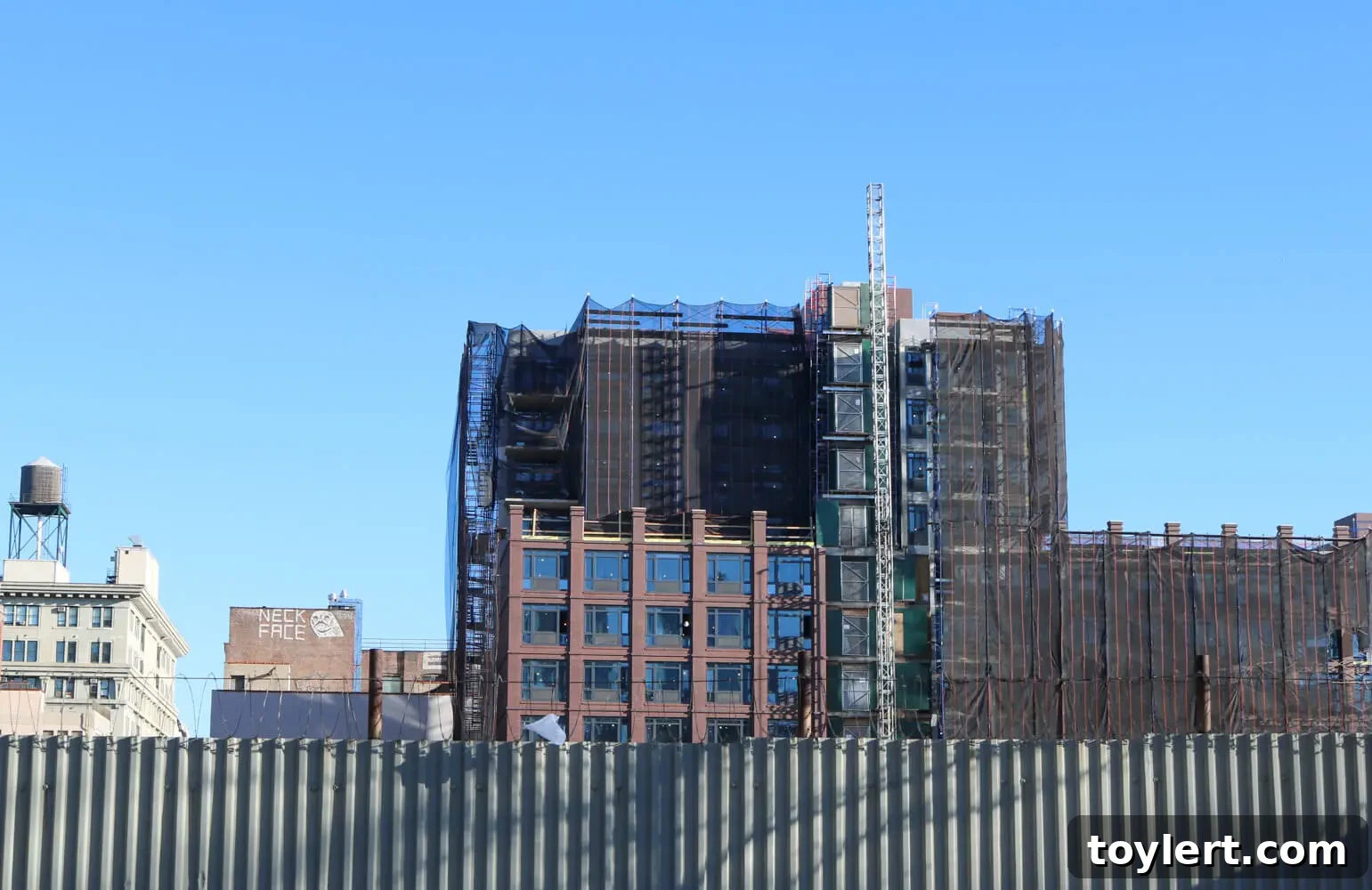
An affordable housing lottery has commenced for 21 exclusive units within the highly anticipated luxury rental development located at 181 Front Street in Dumbo, Brooklyn. This initiative offers a rare opportunity for individuals and families to secure a coveted spot in one of New York City’s most desirable neighborhoods, with one-bedroom apartments starting at an accessible price point of $895. The recent removal of scaffolding has unveiled the building’s striking red brick facade, hinting at the architectural elegance that defines this new addition to the Dumbo skyline.
Unlocking Dumbo: Affordable Luxury Arrives at 181 Front Street
The launch of an affordable housing lottery at 181 Front Street marks a significant moment for the Dumbo real estate market, offering a gateway for a diverse range of residents to experience luxury living in a prime Brooklyn location. This new development, a twelve-story edifice poised to become a prominent feature of the neighborhood, is set to introduce 105 rental units in total upon its completion later this year. Beyond its residential offerings, the building will also contribute to the vibrant streetscape with ground-floor retail spaces, promising to enhance the local economy and provide convenient amenities for its occupants and the wider community.
Dumbo’s Newest Architectural Gem: 181 Front Street
Nestled in the heart of Dumbo, 181 Front Street is more than just a new residential building; it’s a testament to modern urban design harmoniously integrated with the historic charm of its surroundings. The revealed red brick facade pays homage to the industrial heritage of the area while presenting a contemporary aesthetic. This thoughtful design choice ensures the building complements its landmarked neighbors, including the significant redevelopment across the block at 200 Water Street, which once housed the Brillo Manufacturing Co. and later the Jehovah’s Witnesses.
Design and Features of a Modern Dumbo Residence
The architects behind 181 Front Street have meticulously crafted a building that balances aesthetic appeal with functional living. The red brick exterior, a classic material frequently seen in Brooklyn’s historic districts, is likely paired with large windows that invite abundant natural light into the living spaces, offering residents picturesque views of the surrounding urban landscape, the East River, and potentially the Manhattan skyline. Inside, the luxury rentals are expected to feature high-end finishes, modern appliances, and layouts designed for contemporary urban living. These details underscore the development’s commitment to providing an upscale experience, even within its affordable housing component.
A Lifestyle of Convenience and Connectivity
Living at 181 Front Street means embracing a lifestyle characterized by convenience and unparalleled connectivity. Dumbo is renowned for its cobblestone streets, thriving arts scene, boutique shops, and world-class dining options. Residents will find themselves steps away from Brooklyn Bridge Park, offering expansive green spaces, recreational facilities, and stunning waterfront views. The building’s strategic location provides easy access to multiple subway lines and ferry services, making commuting to Manhattan and other parts of Brooklyn effortless. This blend of local charm and urban accessibility makes 181 Front Street an exceptionally attractive address for those seeking a dynamic and fulfilling city life.
Affordable Housing in a High-Demand Neighborhood: The Lottery at 181 Front Street
The launch of an affordable housing lottery for 21 units at 181 Front Street is a critical initiative in addressing the pressing need for accessible housing options in New York City’s competitive real estate market. With prices for a one-bedroom starting at $895, these units present a rare chance to reside in Dumbo, a neighborhood where market-rate rentals often command significantly higher figures. Such lotteries are designed to provide opportunities for individuals and families across various income brackets to live in areas that would otherwise be financially out of reach, fostering economic diversity and inclusivity within the community.
Navigating New York City’s Affordable Housing Lotteries
New York City’s affordable housing lotteries are a lifeline for thousands of residents seeking quality housing. The process typically involves an online application, where prospective tenants submit their financial information to determine eligibility based on income thresholds and family size. These thresholds are usually tied to a percentage of the Area Median Income (AMI), ensuring that units are allocated to those who meet specific affordability criteria. The high demand for these units often means thousands of applications are received for a limited number of apartments, underscoring the vital role these programs play in the city’s housing landscape.
Eligibility and Impact on the Community
The affordable units at 181 Front Street will be offered to applicants who meet specific income requirements, ensuring that the opportunity benefits those who truly need it. By integrating affordable units within a luxury development, New York City aims to create mixed-income communities, challenging the traditional paradigms of urban development. This approach not only provides much-needed housing but also contributes to the social fabric of the neighborhood, encouraging a vibrant and diverse resident base. The availability of these units helps to counteract the forces of gentrification by maintaining a degree of affordability amidst rising property values.
Dumbo: A Neighborhood Reimagined and Redeveloped
Dumbo, an acronym for “Down Under the Manhattan Bridge Overpass,” has undergone a remarkable transformation from an industrial wasteland to one of Brooklyn’s most sought-after enclaves. Its historic cobblestone streets, stunning waterfront views, and proximity to Manhattan have made it a magnet for artists, tech companies, and urban professionals. The area’s redevelopment, which began decades ago, continues to evolve, bringing new residential, commercial, and cultural spaces that blend seamlessly with its preserved industrial architecture.
From Industrial Past to Modern Icon
The story of Dumbo is one of profound transformation. Once a bustling manufacturing hub, characterized by warehouses and factories, the neighborhood began its renaissance in the late 20th century. Artists seeking large, affordable studio spaces were among the first to rediscover its charm, paving the way for developers and businesses. Today, Dumbo is a vibrant district celebrated for its creative energy, home to numerous art galleries, design studios, and tech startups. Its picturesque streets and iconic views of the bridges and Manhattan skyline make it a popular destination for tourists and a coveted residential address.
The Real Estate Dynamics of Dumbo
The allure of Dumbo comes with a high price tag. Real estate in the neighborhood is among the most expensive in New York City, driven by its unique character, amenities, and prime location. Luxury condominiums and high-end rentals dominate the market, making affordable housing initiatives like the one at 181 Front Street indispensable. These lotteries offer a crucial mechanism for maintaining economic diversity within Dumbo, ensuring that the neighborhood remains accessible to a broader cross-section of New Yorkers and not solely to the ultra-wealthy.
Connecting Past and Present: 200 Water Street and Dumbo’s History
The development at 181 Front Street is intrinsically linked to the larger redevelopment and conversion of the landmarked daylight factory at 200 Water Street. This historical edifice, a former Brillo Manufacturing Co. building, holds significant cultural and historical importance. Until 2013, it was part of a substantial portfolio of properties owned by the Jehovah’s Witnesses, whose presence profoundly shaped parts of Brooklyn for over a century. The conversion of such landmarked buildings into modern condominiums represents a recurring theme in Dumbo’s ongoing evolution, blending preservation with progress.
The Legacy of Brillo Manufacturing Co.
The Brillo Manufacturing Co. building at 200 Water Street is a tangible link to Dumbo’s industrial heritage. Brillo, famous for its steel wool soap pads, was a household name, and its factory played a vital role in the local economy. The architecture of such daylight factories, designed with expansive windows to maximize natural light for workers, is a defining characteristic of the era. Its conversion into residential units speaks to the adaptive reuse trend prevalent in many industrial cities, where historical structures are repurposed to meet contemporary housing needs while retaining their unique charm and historical significance.
The Jehovah’s Witnesses’ Enduring Footprint in Brooklyn
For over a century, the Jehovah’s Witnesses maintained a significant presence in Brooklyn, headquartered in Dumbo and Brooklyn Heights. Their distinctive red brick buildings, including the one at 200 Water Street, were an integral part of the neighborhood’s landscape. The organization’s decision to relocate its world headquarters out of New York City led to the sale of numerous properties, triggering a wave of redevelopment that reshaped entire blocks. These sales injected a substantial amount of real estate into the market, paving the way for many of the luxury residential and commercial projects seen in Dumbo today, including the context for 181 Front Street.
that until 2013belonged to the Jehovah’s Witnesses.
The Intersection of Preservation and Progress
The redevelopment of areas like Dumbo, often involving the conversion of historic buildings, exemplifies the ongoing tension and synergy between preservation and progress. While new construction like 181 Front Street adds modern amenities and housing stock, the meticulous conversion of landmarked structures like 200 Water Street ensures that the neighborhood’s rich history is not erased but rather integrated into its future. This careful balancing act defines Dumbo’s unique character, offering residents a blend of old-world charm and cutting-edge urban living.
The Future of Affordable Living in Dynamic Urban Landscapes
The affordable housing lottery at 181 Front Street serves as a microcosm of broader trends in urban development across New York City and other global metropolises. As cities continue to grow and property values soar, the challenge of providing accessible housing remains paramount. Initiatives like this lottery are crucial for maintaining socioeconomic diversity, preventing displacement, and ensuring that vibrant urban centers remain inclusive for all residents, not just the affluent.
Balancing Luxury Development with Community Needs
The integration of affordable units within luxury developments is a strategy aimed at achieving a more equitable distribution of housing opportunities. This approach not only provides housing for lower and middle-income individuals but also fosters more diverse and resilient communities. It encourages interaction among residents from different backgrounds, potentially leading to stronger social cohesion and a richer urban experience. The success of such initiatives relies on effective planning, transparent lottery processes, and sustained commitment from both public and private sectors.
Navigating New York City’s Competitive Housing Market
For many New Yorkers, securing affordable housing is a daunting challenge. The demand consistently outstrips supply, making every housing lottery a highly competitive event. However, these programs offer a beacon of hope, providing pathways to stable and affordable homes in some of the city’s most coveted neighborhoods. As Dumbo continues its evolution, developments like 181 Front Street highlight a commitment to creating a city where economic status does not exclusively dictate access to quality living environments, fostering a more inclusive and equitable urban future.