Red Hook Development Controversy: Unpacking the 145 Wolcott Street “Model Block” Debate
A significant urban planning battle is brewing in the historic Brooklyn neighborhood of Red Hook. At the heart of the dispute is a proposed 15-story mixed-use development at 145 Wolcott Street, poised to introduce 210 new apartments into the vibrant waterfront community. This ambitious project, however, has ignited strong opposition from local residents and Council Member Carlos Menchaca, who accuse the developers of attempting to circumvent established public review processes, thereby sidestepping essential community scrutiny. The central point of contention revolves around the developers’ decision to pursue an obscure city zoning variance through the Board of Standards and Appeals (BSA) rather than opting for the more transparent and publicly engaged Uniform Land Use Review Procedure (ULURP).
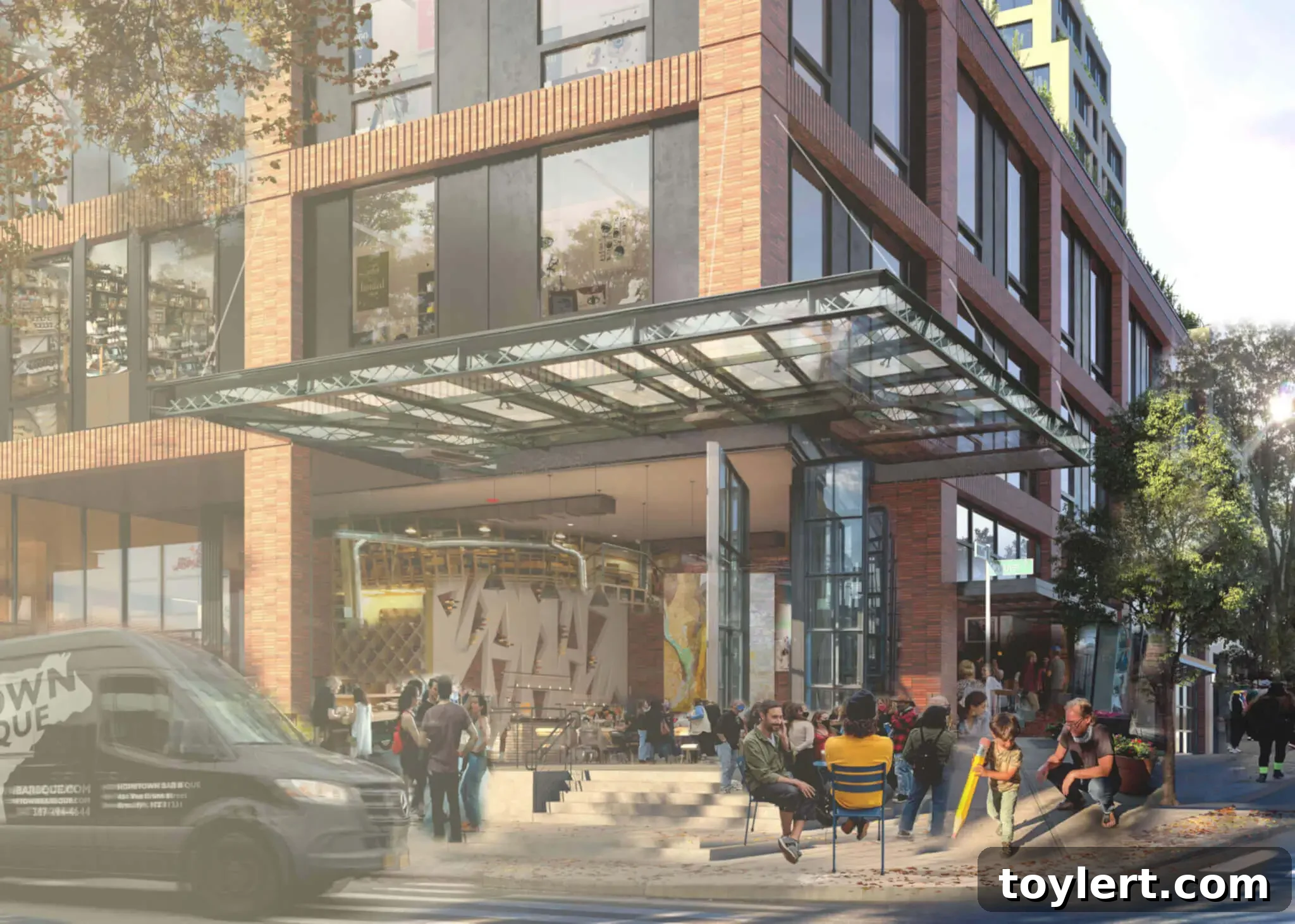
The developer’s plan for 145 Wolcott Street envisions a “Model Block” – a comprehensive urban concept championed by former City Planning executive and acclaimed Red Hook designer, Alex Washburn, in collaboration with his development partner, Four Points. This vision goes beyond mere residential units, proposing a dynamic blend of housing, manufacturing, retail spaces, and dedicated areas for artists. The project is pitched as a transformative initiative designed to revitalize a section of Red Hook currently dominated by last-mile delivery warehouses, which have increasingly proliferated along the neighborhood’s industrial waterfront, often clashing with its historic character and residential fabric. Washburn and his partners believe this integrated approach will foster a more diverse, resilient, and community-oriented environment, creating jobs and opportunities while addressing the pressing need for housing in New York City.
However, Council Member Menchaca has vehemently criticized Washburn and Four Points for their chosen regulatory pathway. His primary concern, echoed by numerous community groups and residents, is the perceived lack of public participation inherent in the variance application process. Menchaca argues that applying to the city’s five-member Board of Standards and Appeals effectively bypasses the more rigorous and extensive Uniform Land Use Review Procedure (ULURP). ULURP is a multi-stage public review process specifically designed to give local communities and elected officials a significant voice in major land use decisions. By avoiding ULURP, critics contend that the developers are deliberately limiting opportunities for meaningful public input, thereby preventing the City Council – which serves as the final arbiter in ULURP applications – from having the ability to approve, modify, or reject the development.
The Vision: Alex Washburn’s “Model Block” Concept for Red Hook
Alex Washburn, a figure with a distinguished background in urban planning, including a tenure as a former City Planning executive, has long been associated with innovative approaches to urban design. His “Model Block” concept for 145 Wolcott Street is presented as a paradigm shift for Red Hook, aiming to create a sustainable, mixed-use community that balances economic development with social and environmental well-being. Washburn’s vision for this specific site is not merely about constructing buildings; it’s about curating a diverse ecosystem that supports a range of activities and livelihoods, directly challenging the monolithic presence of industrial warehousing that has come to define much of the Red Hook waterfront.
The “Model Block” proposal intends to integrate 210 residential units, catering to various income levels, with spaces dedicated to light manufacturing. This integration is crucial, as it seeks to preserve and foster Red Hook’s historic industrial character while adapting it for the 21st century. Beyond housing and manufacturing, the plan incorporates vibrant retail storefronts, intended to activate street life and serve both new and existing residents, along with artist studios and performance spaces. This cultural component aims to tap into Red Hook’s strong artistic community, providing affordable spaces for creators and enhancing the neighborhood’s unique identity. Developers argue that by replacing underutilized or environmentally impactful last-mile delivery warehouses with a thoughtfully designed, multi-functional complex, the project will inject new life, jobs, and community assets into an area ripe for responsible development. They emphasize that the “Model Block” design could serve as a template for future waterfront revitalization efforts, demonstrating how density can be managed in a way that is both productive and community-enriching.
The Heart of the Conflict: Variance vs. ULURP
The fundamental disagreement over the 145 Wolcott Street project boils down to the procedural path chosen by the developers, highlighting a critical tension between different mechanisms within New York City’s complex zoning and land use regulatory framework.
Understanding Zoning Variances and the BSA
A zoning variance is a special type of permit that allows a property owner to deviate from the existing zoning regulations for a particular site. It is typically granted in cases where strict adherence to zoning would create an “unnecessary hardship” or prevent a reasonable return on investment, often due to unique site conditions or an irregular lot shape. The Board of Standards and Appeals (BSA) is the city agency responsible for hearing and deciding these variance applications. Comprised of five members appointed by the Mayor, the BSA operates under specific legal criteria, focusing on whether a property owner can demonstrate a legitimate hardship and that the proposed variance would not unduly impact the neighborhood or public welfare. Developers often favor the variance route because, while still requiring public hearings, it is generally perceived as a more streamlined process than a full rezoning. Crucially, a variance application typically does not require the extensive political buy-in and review from local elected officials that a rezoning through ULURP demands. For projects of significant scale, like the 145 Wolcott Street development, critics argue that using a variance amounts to circumventing the spirit of comprehensive planning and community engagement, transforming what should be a minor deviation into a major land-use change.
The Uniform Land Use Review Procedure (ULURP)
In stark contrast to the variance process, the Uniform Land Use Review Procedure (ULURP) is the city’s primary mechanism for reviewing significant land use actions, including comprehensive rezonings, special permits, and major public projects. ULURP is designed to be a transparent and participatory process, ensuring that communities, borough presidents, and the City Council have ample opportunity to review, comment on, and ultimately influence development proposals. The procedure unfolds over several months, involving:
- Community Board Review: The local Community Board, representing neighborhood interests, holds public hearings and issues an advisory recommendation.
- Borough President Review: The Borough President reviews the proposal and issues a recommendation.
- City Planning Commission Review: The City Planning Commission holds a public hearing and issues a binding vote, often involving modifications.
- City Council Review: The City Council holds its own public hearing and ultimately votes on the application. The City Council’s vote is typically the final step and holds significant weight, as it can approve, approve with modifications, or reject the proposal.
For Council Member Menchaca and Red Hook residents, ULURP represents the democratic safeguard in urban planning. It ensures that projects with broad community impact, like the 15-story “Model Block,” undergo thorough public deliberation, allowing local voices to be heard, concerns to be addressed, and elected officials to exercise their oversight responsibilities. The absence of this comprehensive review process, they argue, deprives the community of its rightful say in shaping the future of its neighborhood.
Community Outcry and Council Member Menchaca’s Stance
The proposed development has ignited a fiery backlash within Red Hook, galvanizing residents and local advocacy groups. Their concerns are multifaceted, ranging from the immediate physical impacts to the broader implications for the neighborhood’s character and future. Residents express apprehension about increased density, potential strains on existing infrastructure (such as schools, transportation, and sanitation services), and the aesthetic impact of a 15-story building in a largely low-rise, historic district. Many fear that such a large-scale project, if approved via a variance, could set a dangerous precedent for future developments, leading to a piecemeal erosion of Red Hook’s unique identity.
Council Member Carlos Menchaca has emerged as a vocal champion of the community’s concerns. His condemnation of the variance application reflects a deep-seated belief in transparent governance and robust public participation in urban planning decisions. Menchaca has been explicit in his criticism, stating that the developers’ approach is a calculated maneuver to avoid the public scrutiny that a project of this magnitude warrants. He contends that by bypassing ULURP, the developers are effectively shutting out the very people who will be most affected by the project, denying them their democratic right to shape their neighborhood’s destiny. For Menchaca, this isn’t just about one building; it’s about the integrity of the city’s land use process and the principle of local self-determination. He views the use of a variance for such a transformative project as an abuse of the system, undermining the intent of a public review process designed to ensure fair and equitable development outcomes.
Red Hook’s Evolving Landscape: A Context for Development
Red Hook, Brooklyn, possesses a distinct character shaped by its industrial past, unique waterfront access, and resilient community spirit. Historically a maritime and manufacturing hub, its remote location – cut off from much of Brooklyn by the Gowanus Expressway – has fostered a tight-knit community with a unique blend of working-class residents, artists, and independent businesses. However, in recent decades, Red Hook has experienced significant shifts. The decline of heavy industry has left many industrial buildings vacant or repurposed, attracting an influx of artists and creative enterprises. More recently, the neighborhood has become a prime target for last-mile delivery warehouses, which exploit its industrial zoning and access to major thoroughfares to serve the growing e-commerce market. These warehouses, while bringing some jobs, often generate significant truck traffic, create dead zones, and contribute little to the vibrant community life that many residents cherish.
Against this backdrop, the 145 Wolcott Street project emerges as a highly symbolic development. Proponents argue it offers a sophisticated alternative to the unchecked proliferation of warehouses, proposing a multi-faceted solution that integrates housing, commerce, and culture. Critics, however, while acknowledging the need for thoughtful development, question whether this specific proposal, and more importantly, its chosen approval pathway, genuinely serves the long-term interests of Red Hook. The debate encapsulates the broader challenges faced by many New York City neighborhoods: how to balance the pressures of growth and development with the preservation of local character, the provision of affordable housing, and the imperative of genuine community engagement. The outcome of the 145 Wolcott Street controversy will undoubtedly have lasting implications for Red Hook’s evolving landscape and for how similar development disputes are navigated across the city.
The Road Ahead: Navigating Public Opposition and Regulatory Pathways
The controversy surrounding 145 Wolcott Street illustrates the complex and often contentious nature of urban development in New York City. As the developers press forward with their variance application to the Board of Standards and Appeals, they face not only the technical requirements of the BSA but also the sustained and vocal opposition of a united community and its elected representative. The BSA process, while public, typically focuses on the legal arguments for hardship and the technical feasibility of the variance rather than the broader policy implications or community desires that are central to a ULURP review. This distinction is precisely why Council Member Menchaca and residents feel their voices are being marginalized.
The immediate future for the “Model Block” project hinges on the BSA’s decision. Even if a variance is granted, it is not uncommon for such decisions, particularly for high-profile and controversial projects, to face legal challenges from community groups or elected officials. These challenges could potentially delay the project further or even force the developers to reconsider their approach. Conversely, a rejection by the BSA could compel the developers to either significantly alter their plans to conform with existing zoning or, more likely, to pursue the ULURP process, thereby opening the door to the public review and City Council oversight that the community has demanded from the outset. This saga underscores the delicate power dynamics at play between private developers seeking to maximize their investments, city agencies tasked with upholding zoning regulations, and local communities striving to maintain control over their neighborhoods’ destiny. The outcome of this specific case will not only determine the fate of 145 Wolcott Street but also send a powerful message about the balance between development expediency and democratic participation in shaping New York City’s urban fabric.
The Red Hook Model Block debate serves as a crucial reminder of the importance of due process in urban planning. It highlights that while innovation in design and addressing housing needs are vital, they must proceed hand-in-hand with robust community engagement and adherence to review procedures designed to ensure equitable and sustainable development. The ongoing dialogue around 145 Wolcott Street underscores the enduring tension between top-down development initiatives and bottom-up community aspirations, a tension that remains central to the evolution of cities like New York.