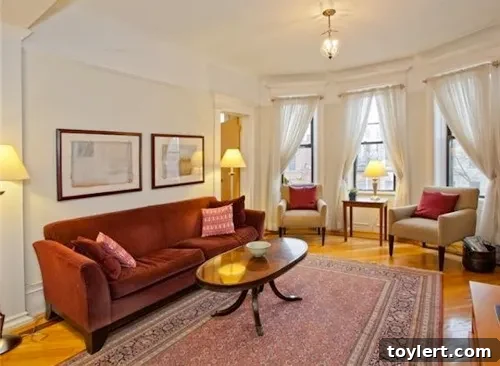
Notorious B.I.G.’s Childhood Home: A Piece of Brooklyn’s Hip-Hop Legacy Hits the Market
For fans of hip-hop history and discerning real estate enthusiasts, a rare opportunity once emerged to own a tangible piece of musical legend. The Clinton Hill residence that served as the childhood home of the iconic rapper, Christopher Wallace, better known to the world as The Notorious B.I.G., Biggie Smalls, or simply Biggie, was listed for sale at $725,000 in 2013. This listing ignited discussions not just about its monetary value, but its immense cultural significance and a long-standing debate concerning Brooklyn’s intricate neighborhood boundaries.
The Genesis of a Legend: 226 St. James Place
Nestled within the historically rich and architecturally stunning neighborhood of Clinton Hill, Brooklyn, 226 St. James Place holds a special place in the annals of hip-hop. It was within these walls that Christopher Wallace spent his formative years, a period that undoubtedly shaped his worldview and influenced the profound lyrical narratives that would later captivate millions. From the everyday observations to the early struggles and triumphs, the environment of this home and its surrounding streets became the backdrop for the stories he so vividly painted in his music.
Biggie’s ascent from the streets of Brooklyn to global superstardom is a testament to his unparalleled talent and resilience. His debut album, “Ready to Die,” released in 1994, is widely regarded as a masterpiece, a raw and introspective look at life in urban America. Tracks like “Juicy” famously chronicle his journey from “negative to positive,” often referencing his humble beginnings. While he later moved to other parts of the borough, this particular address remains synonymous with the very start of his extraordinary journey. Owning this property meant more than just acquiring a brownstone; it was about investing in a legacy, a physical connection to one of the most influential artists of his generation.
The Great Brooklyn Debate: Clinton Hill vs. Bed-Stuy
One of the most intriguing aspects surrounding the sale of Biggie’s childhood home was the renewed debate over its geographical identity. Throughout his illustrious career, Biggie frequently referenced “Bed-Stuy” (Bedford-Stuyvesant) in his lyrics, portraying a tough, gritty neighborhood that molded him. Yet, the official address, 226 St. James Place, is firmly situated in Clinton Hill. This discrepancy sparked considerable discussion among fans, bloggers, and historians alike, questioning whether Biggie was embellishing his origins or if there was a deeper historical context at play.
As noted by local historians and publications, the demarcation lines of Brooklyn neighborhoods have not always been as rigidly defined as they are today. Montrose Morris, a respected voice in Brooklyn’s historical discourse, offered valuable insight into this complex issue. According to Morris, “Long story long, the case could be made that in the ’60s, his street was considered to be part of Bed Stuy. However, by the time he started his career as a criminal, it was definitely called Clinton Hill. And by the time he started rapping, there was no doubt it was Clinton Hill.”
This historical perspective suggests that neighborhood perceptions and boundaries can evolve over time. During Biggie’s childhood in the 1970s and early 1980s, the cultural and social understanding of “Bed-Stuy” might have encompassed a broader area, especially for those living on its immediate borders. Furthermore, the name “Bed-Stuy” carried a certain street credibility and a reputation for resilience and authenticity, which may have resonated with Biggie’s artistic persona and lyrical themes. It’s plausible that by aligning himself with Bed-Stuy in his music, he was not only paying homage to a shared cultural identity but also leveraging its powerful reputation to convey a specific image of “badder and ballsier” than his precise address in Clinton Hill might have suggested to a wider audience.
This debate underscores the fluid nature of urban identity and how artists often interpret and reflect their surroundings through their own lens. For Biggie, Bed-Stuy was more than just a place on a map; it was an ethos, a symbol of the struggle and triumph that defined his early life and informed his groundbreaking music.
The Enduring Legacy of The Notorious B.I.G.
Christopher Wallace, born on May 21, 1972, grew up to become one of hip-hop’s most revered figures. His career, though tragically cut short, left an indelible mark on the music industry. With his deep, resonant voice, unparalleled storytelling ability, and a lyrical style that effortlessly blended street narratives with introspective reflections, Biggie revolutionized the genre. His flow was intricate yet accessible, his rhymes poetic yet raw, painting vivid pictures of life in the inner city, the pursuit of wealth, and the constant introspection of an artist grappling with his success and circumstances.
His second album, “Life After Death,” released just weeks after his untimely passing in 1997, cemented his status as a legendary artist. It was a sprawling, ambitious double album that showcased his versatility and artistic growth. From party anthems like “Hypnotize” to the reflective “Sky’s The Limit,” Biggie demonstrated an incredible range, proving he was more than just a “gangsta rapper.” His influence can be heard in countless artists who followed, and his music continues to resonate with new generations, underscoring the timeless quality of his work.
The sale of his childhood home served as a powerful reminder of his origins and the journey he undertook. It connected the physical space to the profound impact he had on music and culture, allowing fans to feel a closer bond to the man behind the microphone.
Clinton Hill: A Neighborhood of History and Character
Beyond its connection to The Notorious B.I.G., Clinton Hill itself is a neighborhood steeped in history and architectural beauty. Characterized by its tree-lined streets, stunning Victorian mansions, and elegant brownstones, it offers a distinct charm that sets it apart from other Brooklyn locales. The neighborhood is home to Pratt Institute, a renowned art and design school, which injects a vibrant, artistic energy into the area, with galleries, studios, and a diverse student population contributing to its unique cultural fabric.
Historically, Clinton Hill was a prosperous residential area for Brooklyn’s elite in the 19th century. Many of its grand homes and churches date back to this era, showcasing a variety of architectural styles, from Romanesque Revival to Queen Anne. Over the decades, like many urban neighborhoods, it experienced periods of change, but it has consistently maintained its strong community identity and architectural integrity.
Today, Clinton Hill is a highly sought-after residential neighborhood, celebrated for its quiet charm, beautiful parks, and access to an array of amenities, including independent boutiques, cafes, and restaurants. Its proximity to other popular Brooklyn neighborhoods like Fort Greene, Prospect Heights, and yes, Bed-Stuy, further enhances its appeal, offering residents a blend of tranquil living with vibrant urban access. The property at 226 St. James Place, regardless of its famous former resident, stands as a testament to the enduring allure of Clinton Hill’s historic architecture and community spirit.
The Allure of Celebrity Homes in Real Estate
The listing of Biggie Smalls’ childhood home for $725,000 in 2013 wasn’t just another real estate transaction; it was a cultural event. Properties linked to famous personalities often command significant attention and sometimes higher prices due to their unique historical and cultural value. Buyers are not merely acquiring bricks and mortar; they are purchasing a piece of history, a connection to a legend, and the intangible prestige that comes with it.
For hip-hop enthusiasts, owning such a property would have been akin to owning a rare piece of memorabilia, a shrine to one of music’s greatest talents. Even for those unfamiliar with Biggie’s music, the appeal of a historic Brooklyn brownstone in a desirable neighborhood would have been undeniable. The blend of celebrity provenance, architectural charm, and prime location created a compelling proposition for potential buyers. It highlights how real estate can transcend its functional purpose to become a vessel for cultural narratives and collective memory.
A Legacy Preserved
The sale of Notorious B.I.G.’s childhood home underscored the profound and lasting impact he had on the world. It reminded us that while artists may pass, their legacies continue to thrive, often intertwined with the places they once called home. The property at 226 St. James Place stands as a silent monument to the genesis of a rap icon, a beacon for fans, and a cherished part of Brooklyn’s rich cultural tapestry. It represents not just a dwelling, but a cornerstone of hip-hop history, continuing to inspire conversations about music, identity, and the ever-evolving landscape of New York City.
Whether in Clinton Hill or bordering Bed-Stuy in the minds of some, the essence of Biggie’s upbringing in this vibrant part of Brooklyn remains undeniably powerful, connecting his unparalleled artistry to the very streets that nurtured his genius.
Further Reading:
- Late Rapper Notorious B.I.G.’s Childhood Home Lists for $725K [Curbed]
- Where Brooklyn At? Notorious B.I.G.’s Old Apartment On Sale [Gothamist]
- Biggie Smalls’ Childhood Apartment in Brooklyn on the Market [NY Daily News]
- 226 St. James Place 3L Listing [Warren Lewis]
Photo by Warren Lewis