Editor’s note: This is an update of a post that originally ran in 2012. See theoriginal here.
Unearthing the Legacy of 160 Atlantic Avenue: A Glimpse into Cobble Hill’s Financial Heritage
Nestled in the heart of Brooklyn’s vibrant Cobble Hill, the address 160 Atlantic Avenue carries with it a rich tapestry of history, echoing a bygone era when this bustling thoroughfare was the very pulse of local commerce and community life. While today it may house different enterprises, for over a century, this distinguished building stood as a testament to financial stability and architectural prowess: the esteemed home of the South Brooklyn Savings Institution. Its story is not merely that of a bank, but a narrative woven into the fabric of Brooklyn’s rapid growth, reflecting the aspirations, ingenuity, and community spirit that defined the borough in the 19th and early 20th centuries.
From its imposing facade to its storied past, 160 Atlantic Avenue represents a significant landmark in Brooklyn’s architectural and economic narrative. This article delves into the fascinating history of the South Brooklyn Savings Institution, its vital role in the burgeoning community of Atlantic Avenue, and the enduring legacy of the building that housed its grand operations. Join us as we explore how a single building became a symbol of trust, prosperity, and the evolving landscape of one of New York City’s most historic neighborhoods.
Atlantic Avenue: A Bustling Artery of Commerce and Maritime Activity
By the mid to late 1800s, Atlantic Avenue, particularly the blocks closest to the waterfront, had transformed into a dynamic and indispensable commercial hub. This wasn’t merely a street; it was a vibrant artery pulsating with trade, linking Brooklyn’s industrious interior to the vast global network accessible via the Atlantic Ocean. Imagine the scene: horse-drawn carriages clattering over cobblestones, stevedores unloading goods from ships docked nearby, and the cacophony of merchants hawking their wares. Shops and storehouses lined the avenue, ready to supply anything imaginable. A ship preparing for a transatlantic voyage could find everything from durable rigging and provisions to navigation instruments. Local families could procure daily necessities, fresh produce, and fine meats for their tables. Fashionable boutiques offered the latest styles from New York and beyond, catering to a burgeoning middle class eager to display their prosperity. This energetic confluence of maritime trade, local retail, and residential life created an undeniable need for robust financial services.
The strategic location of Atlantic Avenue, bridging the bustling piers with the residential enclaves of Cobble Hill and Brooklyn Heights, made it an economic powerhouse. Sailors, merchants, immigrants, and established residents all contributed to this economic ecosystem, generating a constant flow of capital that required secure and reliable management. It was within this context of burgeoning commerce and diverse economic activity that financial institutions found fertile ground to thrive, offering services crucial for both individual prosperity and communal development.
The Genesis of Financial Stability: South Brooklyn Savings Institution
With such intense commercial activity flourishing, the establishment of a reliable financial institution was not just convenient, but absolutely essential. For many years, the South Brooklyn Savings Institution emerged as the preeminent financial cornerstone of the area. This venerable savings bank, with a mission to foster thrift and provide secure financial services to its community, was founded in 1850. Its inception marked a pivotal moment for Brooklyn, offering a safe haven for the savings of working families, small business owners, and local entrepreneurs, a critical function in an era before widespread federal deposit insurance.
The bank’s initial headquarters and offices were located further down the street, at 136 Atlantic Street. It’s noteworthy that at this time, the thoroughfare was still commonly referred to as “Atlantic Street” before its official designation as “Atlantic Avenue,” reflecting its evolving status from a local street to a major urban artery. From these modest beginnings, the South Brooklyn Savings Institution steadily grew, cementing its reputation as a trustworthy and integral part of the community. Its early success underscored the profound need for accessible banking services that catered to the diverse economic needs of South Brooklyn’s residents and businesses, from small deposits saved for a rainy day to larger accounts managed by successful merchants.
From Modest Beginnings to a Pillar of the Community
The vision of the South Brooklyn Savings Institution’s founders was rooted in the progressive social ideals of the mid-19th century, which emphasized self-reliance and community welfare. Savings banks, unlike commercial banks, were primarily designed to encourage thrift among ordinary citizens, offering a secure place for their deposits and often paying modest interest. This structure made them incredibly popular among recent immigrants, laborers, and burgeoning middle-class families who sought to build financial security for their futures. The institution quickly became a pillar of the Cobble Hill and wider Brooklyn community, known not just for its financial services but also for its perceived role in uplifting the economic well-being of its clientele.
As Brooklyn experienced explosive population growth and industrial expansion throughout the latter half of the 19th century, so too did the South Brooklyn Savings Institution. The bank’s prudent management and unwavering commitment to its depositors earned it an enviable reputation. Its growth reflected the broader prosperity of Brooklyn itself, transitioning from a collection of towns into one of America’s largest and most significant cities. The increasing demand for its services eventually necessitated a more substantial and prominent headquarters, a building that would adequately reflect its stature and the trust placed in it by thousands of Brooklynites.
The Architectural Marvel at 160 Atlantic Avenue
As the South Brooklyn Savings Institution prospered and its customer base expanded, the need for a larger, more imposing, and architecturally significant headquarters became evident. The decision was made to construct a grand new building at 160 Atlantic Avenue, a location that offered both visibility and prestige within the burgeoning commercial district. This move symbolized the bank’s evolution from a nascent financial entity to a well-established institution, ready to make a significant architectural statement on one of Brooklyn’s most important streets. The new building was more than just offices; it was a physical manifestation of the bank’s stability, security, and enduring presence in the community.
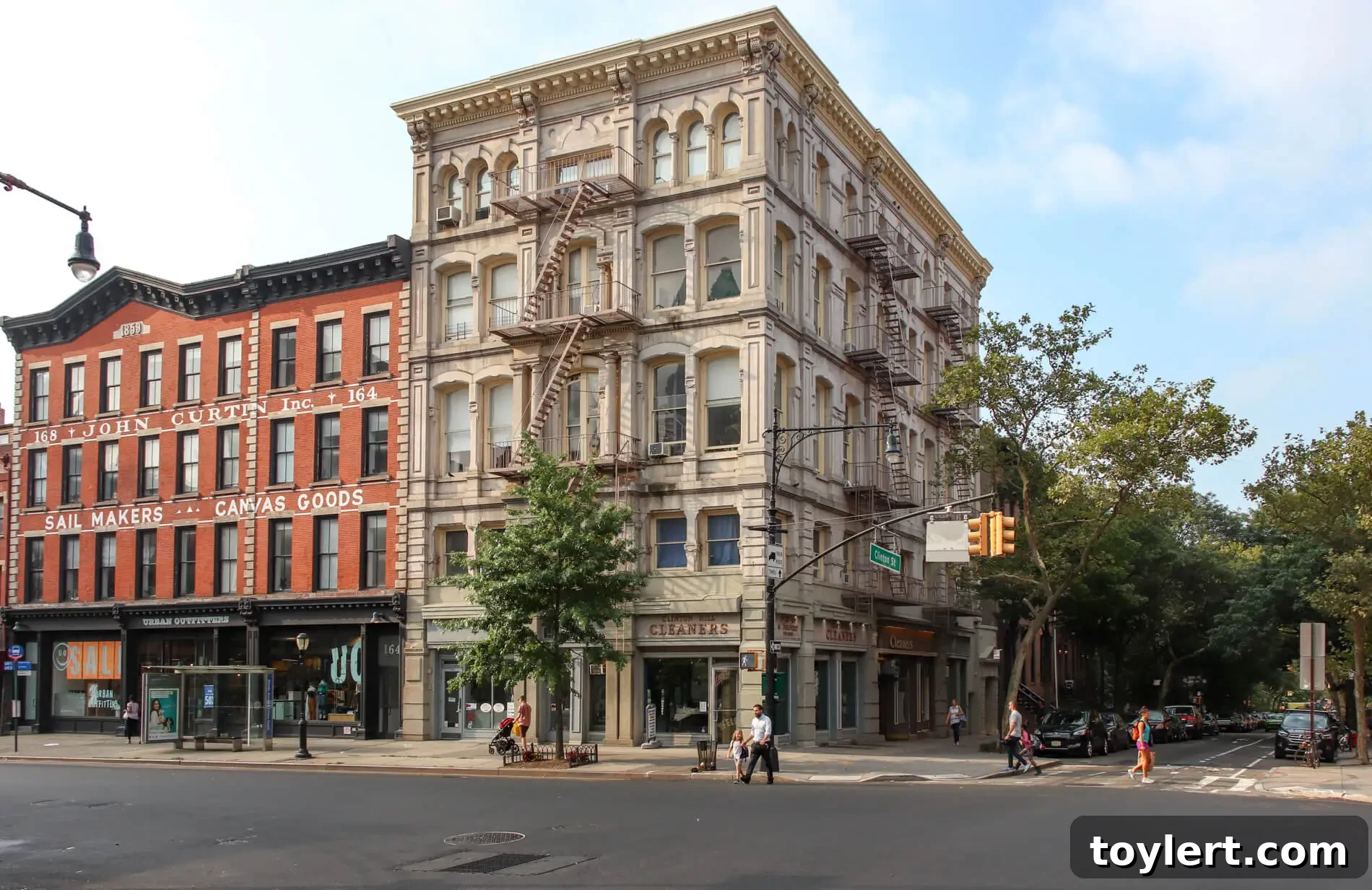
Completed in a style popular for public and financial buildings of the era, the structure at 160 Atlantic Avenue exuded an aura of permanence and solidity. Architects were often commissioned to design buildings that conveyed trustworthiness and financial strength, and this edifice was no exception. It would have featured sturdy construction, likely incorporating elements of Neoclassical or Romanesque Revival architecture, characterized by its robust stonework, dignified columns, and ornate detailing. Such a design was carefully chosen to inspire confidence among depositors and to visually anchor the bank as a pillar of the community, distinguishing it from the surrounding retail establishments and warehouses.
Designing an Icon: Crafting a Statement on Atlantic Avenue
The design of 160 Atlantic Avenue was meticulously conceived to project an image of unwavering reliability and timeless grandeur. While specific original architectural blueprints might be lost to time, the prevailing styles for major financial institutions in Brooklyn during the late 19th century often favored classical motifs that evoked ancient temples—symbols of wisdom, order, and enduring strength. The exterior would have likely featured massive stone blocks, possibly granite or limestone, showcasing expert masonry. A grand entrance, perhaps flanked by substantial pilasters or columns, would invite patrons into a space designed for serious transactions. Large, arched windows would allow ample natural light into the banking hall while maintaining a sense of security.
Intricate carvings or relief sculptures might have adorned the facade, depicting allegorical figures representing commerce, industry, thrift, or security, further reinforcing the bank’s mission and values. The scale of the building itself would have been impressive, towering over its neighbors and commanding attention on Atlantic Avenue. This was a deliberate architectural strategy: to create a landmark that was not only functional but also aspirational, a monument to the financial prudence it championed. The strategic placement and striking design ensured that 160 Atlantic Avenue was easily recognizable and unforgettable, becoming an intrinsic part of the streetscape and a point of pride for the Cobble Hill community.
Beyond the Facade: A Glimpse Inside the Bank
Stepping inside the South Brooklyn Savings Institution at 160 Atlantic Avenue would have been an experience in itself, designed to reassure and impress. The main banking hall, characterized by its lofty ceilings and expansive space, would have been the heart of operations. Natural light, streaming through the large windows, would illuminate the intricate details of the interior, perhaps including polished marble counters, elaborate plasterwork, and decorative metal grilles. The counters, manned by diligent tellers, would be robust and stately, providing a sense of order and gravitas to every transaction.
Imagine the ornate brass fixtures, the dark wood paneling, and the quiet buzz of activity as customers conducted their business. Separate areas might have been designated for different services, such as opening new accounts, making deposits, or meeting with loan officers. The vaults, typically located in the basement, would have been constructed with the utmost security in mind, their massive steel doors a visible symbol of the bank’s commitment to protecting its patrons’ assets. Every element, from the layout of the banking floor to the choice of materials, would have been carefully selected to foster an environment of trust, dignity, and efficiency, reflecting the bank’s crucial role in the economic life of South Brooklyn.
Serving the Community: More Than Just a Bank
The South Brooklyn Savings Institution was far more than just a place to deposit money; it was a cornerstone of the community’s economic and social fabric. It provided essential financial services that empowered individuals and bolstered local businesses. For countless Brooklynites, especially new immigrants and working-class families, the bank represented a vital avenue for social mobility and financial stability. They could open savings accounts, often with small, regular deposits, slowly accumulating capital for future investments, education for their children, or the purchase of a home – a dream for many. The bank fostered a culture of saving and prudent financial management, qualities highly valued in the rapidly industrializing America of the 19th century.
Beyond individual savings, the institution likely played a significant role in local development. Its capital would have been invested back into the community through mortgages for residential properties, loans for local businesses, and potentially even bonds for public works projects. By providing capital for these endeavors, the South Brooklyn Savings Institution directly contributed to the physical and economic growth of Cobble Hill and the surrounding neighborhoods. It facilitated the expansion of local industries, supported the entrepreneurial spirit of small shopkeepers on Atlantic Avenue, and enabled families to achieve homeownership, thereby strengthening the community’s foundation. It was a true community bank, intrinsically linked to the prosperity and progress of its locality.
A Changing Landscape: The Evolution of Atlantic Avenue and its Institutions
As the 20th century progressed, both Atlantic Avenue and the financial industry underwent significant transformations. The heyday of direct waterfront commerce gradually receded as new transportation methods and urban planning altered the landscape. While Atlantic Avenue retained its commercial vibrancy, the nature of its businesses evolved, moving away from purely maritime provisions to a more diverse retail and service economy. Similarly, the banking sector experienced consolidation and regulatory changes, leading to mergers and acquisitions among long-standing institutions.
The South Brooklyn Savings Institution, like many independent savings banks, eventually saw its identity change through these larger economic shifts. While its original mission of serving the local community remained, the institution may have merged with larger entities or adapted its services to meet modern demands. The building at 160 Atlantic Avenue, having served its purpose as a grand financial headquarters for decades, also embraced change. Many historic bank buildings, due to their robust construction and prime locations, are often repurposed for new uses—perhaps as restaurants, retail spaces, or even residential lofts—thereby preserving their architectural heritage while accommodating contemporary needs. This adaptive reuse is a common narrative in historically rich urban areas like Cobble Hill, ensuring that iconic structures continue to contribute to the neighborhood’s character.
Enduring Heritage: The Lasting Impact of 160 Atlantic Avenue
Today, 160 Atlantic Avenue stands as a silent observer to the ceaseless flow of life in Cobble Hill, a venerable structure that subtly narrates tales of its past. While its current occupants may differ from the diligent tellers and ambitious savers of yesteryear, the building itself remains an enduring symbol of a foundational era in Brooklyn’s history. It is a physical embodiment of the growth, resilience, and economic spirit that characterized Atlantic Avenue and the wider borough during a period of immense change and prosperity. Its architecture continues to command respect, serving as a tangible link to the South Brooklyn Savings Institution’s significant contribution to community development.
The legacy of 160 Atlantic Avenue and the institution it housed is a reminder of the vital role that local banks played in fostering economic stability and community growth. It underscores how architectural design can reflect societal values and institutional strength. As we stroll along Atlantic Avenue today, amidst its contemporary boutiques and eateries, these historic structures invite us to pause, reflect, and appreciate the layers of history that have shaped this dynamic Brooklyn neighborhood. 160 Atlantic Avenue is more than just an address; it is a monument to Brooklyn’s enduring heritage, a testament to the institutions that built its foundation, and a captivating chapter in the ongoing story of Cobble Hill.