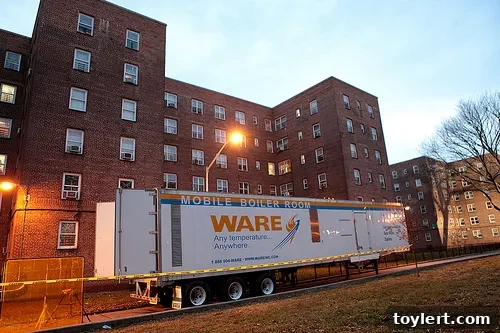
Red Hook Residents Demand Justice: The Enduring Fight Post-Hurricane Sandy
A deep dive into the Red Hook Houses community’s unwavering stand for better living conditions and NYCHA accountability following the devastation of Hurricane Sandy.
In the harrowing weeks following the catastrophic impact of Hurricane Sandy in October 2012, communities across New York City grappled with unimaginable destruction and prolonged hardship. Among the hardest hit were the residents of the Red Hook Houses in Brooklyn, a sprawling public housing complex that became a vivid symbol of both the storm’s fury and the subsequent struggle for recovery and justice. By late November, nearly a month after Sandy made landfall, tenants in Red Hook found themselves in a desperate situation, enduring freezing temperatures without heat or hot water, and a palpable sense of abandonment by the New York City Housing Authority (NYCHA).
As reported by The New York Times, residents vowed to take decisive action against what they perceived as profound neglect and unfair treatment from NYCHA. Despite official assertions that essential services had been restored to all apartments, the reality on the ground told a different story. This glaring discrepancy between agency claims and the lived experiences of thousands of New Yorkers fueled a powerful surge of community organizing. The answer to whether anything had changed was unequivocally no, leading to an organized, citywide protest that marked a critical moment in tenant advocacy.
The Aftermath: A Community Left in the Cold
Hurricane Sandy devastated Red Hook, a low-lying waterfront neighborhood, with unprecedented storm surges that inundated buildings, destroyed infrastructure, and cut off vital services. The impact on the Red Hook Houses was particularly severe. Thousands of residents, including families with young children, the elderly, and those with health conditions, were plunged into darkness and cold for weeks. Power substations were submerged, leaving entire sectors without electricity, which in turn meant no heat, no hot water, and often, no functional elevators, trapping vulnerable individuals in their upper-floor apartments.
Beyond the immediate lack of utilities, the storm also created a public health crisis. Floodwaters contaminated basements and ground-floor units, leading to pervasive mold growth. Garbage collection became sporadic, contributing to unsanitary conditions. Food supplies dwindled as refrigerators failed, compounding the stress on already struggling families. While some emergency aid trickled in, many residents felt that their cries for help were not being adequately heard or addressed, deepening their distrust in the city’s ability, and particularly NYCHA’s, to protect and serve its most vulnerable citizens.
NYCHA’s Response: A Question of Accountability
The New York City Housing Authority, tasked with providing safe and affordable housing to hundreds of thousands of New Yorkers, faced an immense challenge in the wake of Hurricane Sandy. However, the perceived slowness and inadequacy of its response in places like Red Hook Houses ignited widespread indignation. Residents expressed frustration over delayed repairs, poor communication, and a lack of transparency regarding the timeline for service restoration. The official narrative often conflicted sharply with the daily struggles of tenants, who continued to live without basic amenities long after authorities claimed otherwise.
This gap between rhetoric and reality fostered a deep sense of betrayal among the community. Many residents believed that NYCHA’s long-standing issues of bureaucratic inefficiency and chronic underfunding were exacerbated by the disaster, ultimately failing those it was mandated to protect. The collective sentiment was clear: the authority’s actions, or lack thereof, demonstrated a profound disregard for the well-being of its residents, transforming a natural disaster into a prolonged human rights crisis within public housing.
Mobilizing for Change: A Citywide Call to Action
Driven by their shared plight and a resolute determination to force change, tenants from Red Hook Houses and other affected NYCHA developments across the city organized a powerful citywide action. This significant protest was scheduled to take place at NYCHA’s headquarters in Manhattan, demonstrating a unified front against what residents termed institutional neglect. The demonstration, planned for a Tuesday morning from 9 am to 11 am at 250 Broadway, was more than just a venting of grievances; it was a strategic presentation of clear, actionable demands aimed at systemic reform.
The core demands articulated by the protesting residents were comprehensive and impactful, reflecting a deep understanding of the systemic issues at play. Firstly, they called for NYCHA to **cancel rent for November and December**. This was a plea for immediate economic relief, asserting that residents should not be financially penalized for living in conditions rendered uninhabitable by a natural disaster, especially when essential services were not provided for extended periods. It underscored the fundamental principle that rent should correspond to habitable living standards.
Secondly, they demanded a radical shift in governance: to **replace the current NYCHA board with one led by community members**. This revolutionary proposal aimed to decentralize power and empower residents directly, allowing them a substantial voice in the decision-making processes that profoundly affected their homes and communities. It represented a desire for democratic accountability and a belief that those most impacted by NYCHA’s policies should have direct input into their formation and execution.
Thirdly, a critical demand was to **improve transparency and accountability to residents**. Years of opaque operations and perceived indifference had eroded trust. Tenants sought open communication channels, clear access to information regarding repair schedules, budget allocations, and performance metrics. They called for robust mechanisms to hold NYCHA officials directly responsible for their actions and failures, ensuring that the authority would truly serve its residents rather than operate in isolation.
Finally, and perhaps most innovatively, the activists demanded that NYCHA **employ NYCHA residents to repair buildings**. This demand was multi-faceted: it aimed to create desperately needed jobs within the community, offering economic opportunities to those most affected by the storm and existing unemployment. Furthermore, it recognized the invaluable expertise residents possess about their own buildings’ specific needs, promising more efficient, effective, and community-centric maintenance. This strategic proposal sought to foster local empowerment and build sustainable solutions from within the community itself.
Beyond Sandy: The Broader Crisis of Public Housing in NYC
The crisis in Red Hook Houses following Hurricane Sandy was not an isolated incident but a stark manifestation of the deeper, systemic challenges plaguing public housing across New York City. NYCHA, for decades, has been severely underfunded, leading to a monumental backlog of repairs, crumbling infrastructure, and a struggle to provide even basic services. Many buildings, some dating back to the 1930s and 40s, suffer from pervasive issues like leaky roofs, outdated heating systems, pest infestations, and toxic mold – issues that pre-dated Sandy but were catastrophically exacerbated by it.
Hurricane Sandy served as a harsh spotlight, revealing how years of neglect and insufficient investment had left public housing communities uniquely vulnerable to environmental disasters. The inability to quickly restore heat, hot water, and power was not solely due to the storm’s severity, but also to an already fragile system ill-equipped to handle such an event. The lack of robust emergency preparedness, coupled with an often slow and bureaucratic response, underscored the urgent need for comprehensive reform and substantial financial investment to ensure the safety and dignity of all public housing residents.
The Enduring Power of Tenant Activism
The collective action taken by the residents of Red Hook Houses and their allies represented a powerful resurgence of tenant advocacy in New York City. It demonstrated that even in the face of overwhelming adversity and institutional inertia, organized communities possess the strength to demand justice and catalyze change. While the path to systemic reform is often long and arduous, such protests undeniably brought critical media attention to their plight, exerted significant pressure on NYCHA and city officials, and galvanized broader public and political support for vital public housing improvements.
Tenant activism remains an essential force in holding public agencies accountable, advocating for transparency, and ensuring that the voices of marginalized communities are heard. The demands made by the Red Hook residents – from immediate relief like rent cancellation to long-term structural changes like community-led governance and local employment – laid a crucial blueprint for a more equitable, resilient, and responsive public housing system. Their struggle highlighted the fundamental human right to a safe, warm, and dignified home, making their actions a cornerstone of ongoing social justice efforts in New York City.
For more insights into the growing demands for empathy and justice within public housing, consider this impactful report: In Public Housing, a Rising Clamor for Compassion [NY Times]
Photo by NYCHA