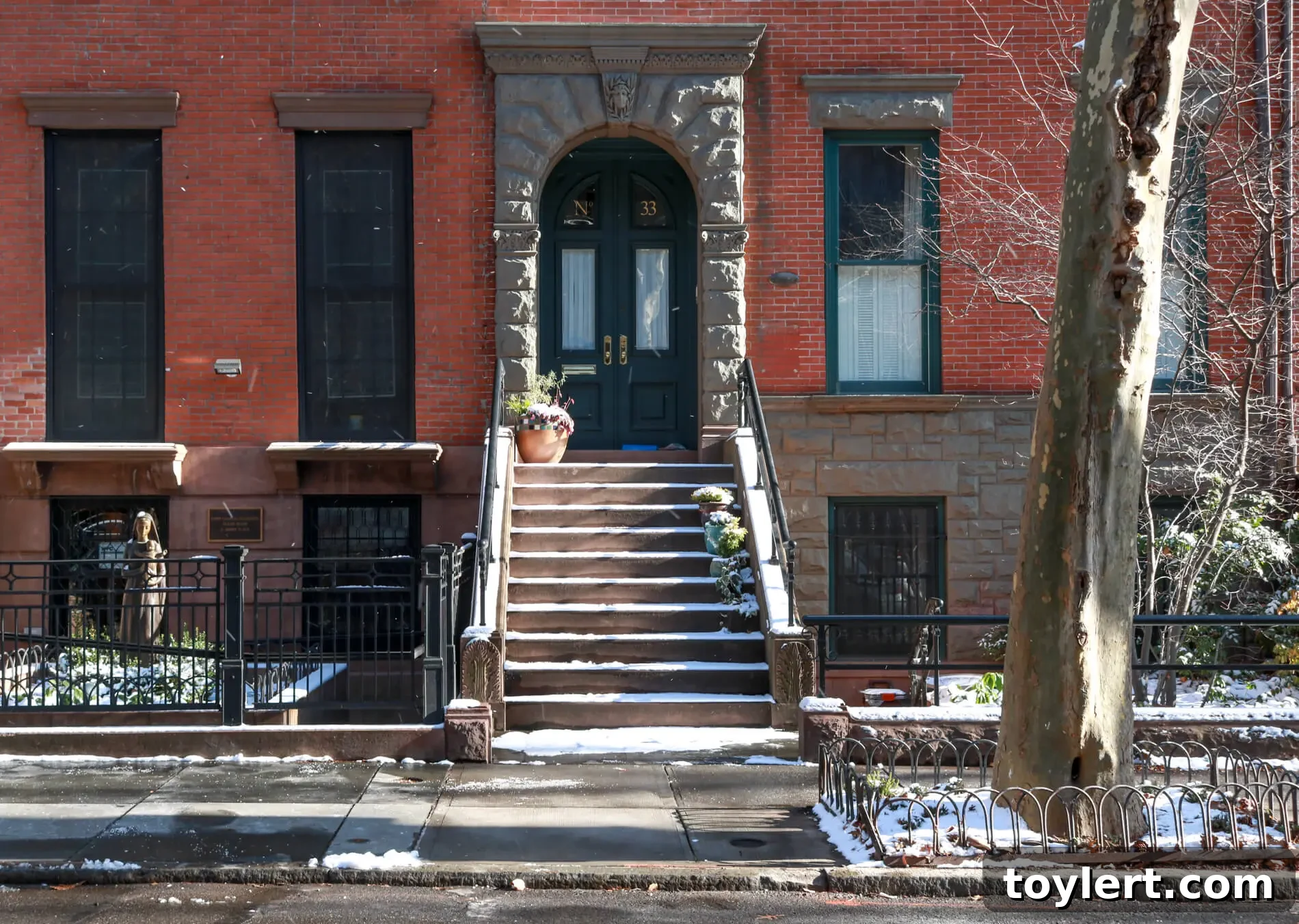
Safeguarding Your Brownstone Steps: A Comprehensive Guide to Winter De-Icing and Protection
As the chill of winter descends upon our cities, brownstone owners face the annual challenge of keeping their iconic stoops and steps clear of ice and snow. Beyond mere convenience, ensuring a safe, slip-free entrance is paramount. However, the delicate nature of brownstone masonry, often centuries old, demands a careful approach to de-icing. Many common de-icing salts and chemical products, while effective on modern concrete, can inflict irreversible damage on historic brownstone, leading to spalling, erosion, and discoloration. This guide delves into the pros and cons of various de-icing solutions, offering practical advice and invaluable tips from seasoned homeowners to help your beloved brownstone navigate the snowy season safely and beautifully.
The Unique Vulnerability of Brownstone Masonry
Brownstone, a type of sandstone, is a porous material that is particularly susceptible to damage from harsh chemicals and fluctuating temperatures. Unlike dense, modern concrete, brownstone can absorb de-icing agents, leading to internal crystallization as the moisture evaporates. This crystallization creates pressure within the stone, causing it to flake, crumble, or “spall” – a process that significantly degrades its structural integrity and aesthetic appeal. Furthermore, the freeze-thaw cycles of winter, exacerbated by the presence of moisture and certain salts, can accelerate this deterioration. Understanding these vulnerabilities is the first step in adopting a protective maintenance strategy that preserves the unique character and longevity of your brownstone stoop.
Choosing Your De-Icer Wisely: Pros and Cons
Selecting the right de-icing product is crucial for brownstone preservation. Here’s a look at common options and their impact:
Rock Salt (Sodium Chloride – NaCl)
Pros: This is the most widely available and cheapest de-icer. It’s effective at melting ice down to about 15°F (-9°C) and works quickly. Its coarse texture also provides immediate traction. Many homeowners default to rock salt due to its familiarity and low cost, making it a ubiquitous sight on winter sidewalks.
Cons: Rock salt is highly corrosive to brownstone. Its chemical properties actively break down masonry over time, causing spalling and pitting. The chloride ions can penetrate the stone, exacerbating damage during freeze-thaw cycles. It also leaves behind a white, powdery residue that can be difficult to clean and can harm plants, grass, and pet paws. The corrosive nature also extends to metal railings and shoe leather, making it a poor choice for any historic property.
Calcium Chloride (CaCl₂)
Pros: Calcium chloride is significantly more effective than rock salt, melting ice down to -25°F (-32°C). It works faster and is generally considered less harmful to plants and animals in moderate amounts. It’s also less corrosive to concrete than sodium chloride, though its impact on brownstone requires caution. It’s often favored for its rapid action and lower temperature efficacy.
Cons: While better than rock salt, calcium chloride can still be damaging to brownstone masonry, albeit at a slower rate. It can cause a greasy residue and tracking issues indoors. Excessive use can still lead to spalling and surface degradation. Its hygroscopic nature means it attracts moisture, which can be problematic if it gets absorbed into porous stone and then refreezes. The cost is also higher than rock salt.
Magnesium Chloride (MgCl₂)
Pros: Magnesium chloride melts ice down to -13°F (-25°C), making it effective in many winter conditions. It is generally considered less corrosive than both sodium and calcium chloride and is often marketed as a more environmentally friendly and pet-safe option. It leaves less residue and is less damaging to vegetation and concrete. Many brownstone owners consider this a superior alternative to traditional rock salt.
Cons: Despite its benefits, magnesium chloride is not entirely benign for brownstone. While less aggressive, prolonged or heavy exposure can still contribute to surface erosion and spalling on highly porous or already compromised masonry. Its effectiveness can diminish in extremely cold temperatures, and it is more expensive than rock salt. Careful application is still necessary.
Potassium Chloride (KCl)
Pros: Potassium chloride works down to about 25°F (-4°C), making it suitable for milder winter days. It is considered one of the least harmful de-icers to plants and is generally safer for pets. It’s also less corrosive to metals and masonry than sodium or calcium chloride. It leaves minimal residue, making cleanup easier.
Cons: Its biggest drawback is its limited temperature effectiveness, making it impractical for severe cold snaps. It’s also more expensive than rock salt. While safer, excessive use on brownstone over many years could still theoretically contribute to subtle surface wear, particularly if the stone is already aged or damaged. It’s a good choice for light frost or dusting of snow, but not for heavy ice.
Urea (Carbamide)
Pros: Urea, commonly found in fertilizers, melts ice down to about 15°F (-9°C). It is generally non-corrosive to metals and is considered safer for masonry, plants, and pets than chloride-based salts. It leaves minimal residue and is readily available. It’s often touted as a “masonry-friendly” alternative.
Cons: Urea is less effective at lower temperatures and works much slower than chloride salts. Its high nitrogen content can stimulate algae growth on surfaces and, if it runs off into storm drains, can contribute to water pollution by promoting algae blooms in local waterways. It is also considerably more expensive per application due to its lower melting efficiency, meaning more product is needed.
Eco-Friendly and Pet-Friendly Options (Glycol-based or proprietary blends)
Pros: Many newer products on the market are formulated with ingredients like propylene glycol or various acetate compounds, designed to be less harmful to pets, plants, and masonry. They often boast lower corrosive properties and are effective at lower temperatures. These options are explicitly designed for sensitive surfaces and environments.
Cons: These specialized blends are typically the most expensive de-icing solutions. Their effectiveness can vary, and it’s essential to read product labels carefully to ensure they are indeed safe for brownstone. Some “eco-friendly” claims might not hold up under heavy use or specific environmental conditions. Always test a small, inconspicuous area first if unsure.
Beyond De-Icers: Comprehensive Winter Brownstone Care
Relying solely on de-icers is a reactive strategy. A holistic approach to winter brownstone care combines preventative measures, diligent maintenance, and smart choices to ensure the safety and longevity of your stoop.
Proactive Anti-Icing Measures
Consider applying an anti-icing solution *before* snow or ice forms. These liquid products create a brine layer that prevents ice from bonding tightly to the surface, making subsequent shoveling or de-icing much easier and requiring less product. Look for brownstone-safe, chloride-free formulations. A small investment in an anti-icer can significantly reduce the need for harsh de-icers later.
The Art of Shoveling
The simplest and safest method for snow removal remains diligent shoveling. Clear snow as it falls, or at least every few hours during a storm, to prevent it from compacting and turning into ice. Use a plastic or rubber-edged shovel to avoid scratching or chipping your brownstone steps. Never use metal shovels directly on the stone. Shovel frequently to minimize the amount of de-icer needed, thus protecting your masonry and reducing environmental impact.
Ensuring Safe Footing
Even after de-icing, wet surfaces can still be slippery. Keep a supply of sand, sawdust, or non-clumping cat litter on hand to provide immediate traction. These materials are non-corrosive and will not harm your brownstone. They are an excellent temporary solution for slippery patches, especially in areas where de-icers are not suitable or in extremely low temperatures where de-icers lose efficacy. Always sweep them away once the ice has melted.
Protecting Your Masonry from Water Damage
Water is brownstone’s natural enemy. Ensure your steps and surrounding areas have proper drainage. Check for cracks or missing mortar in your brownstone stoop and address them before winter sets in. Water seeping into these vulnerabilities will freeze, expand, and cause significant damage (freeze-thaw cycling). Consider applying a breathable, clear masonry sealer specifically designed for brownstone or sandstone to repel water, but consult with a masonry expert first, as some sealers can trap moisture within the stone.
Inspecting for Existing Damage
Before the first snowfall, conduct a thorough inspection of your brownstone stoop. Look for existing cracks, crumbling mortar joints, or any signs of spalling. Addressing these minor issues promptly can prevent them from worsening under winter conditions. Loose railings should also be tightened, as they can pull away from the masonry if someone slips and grabs them.
Gutter and Downspout Maintenance
Ensure that gutters are clear of leaves and debris and that downspouts direct water away from your brownstone foundation and steps. Overflowing gutters can create ice dams on roofs, leading to water runoff that freezes on your steps. Properly functioning drainage systems are crucial for preventing ice formation and protecting your brownstone from water infiltration.
Long-Term Masonry Health
Investing in the long-term health of your brownstone means moving beyond quick fixes. Regular professional inspection by a masonry specialist experienced with historic brownstone is highly recommended. They can identify potential issues early, recommend appropriate repairs using compatible materials (e.g., lime mortar), and advise on protective treatments that won’t compromise the stone’s integrity. A well-maintained brownstone stoop is better equipped to withstand the rigors of winter.
When to Call a Professional
If you observe significant damage, large cracks, widespread spalling, or structural concerns with your brownstone steps, it’s time to call a qualified masonry professional. Attempting DIY repairs on historic brownstone without the correct knowledge and materials can often do more harm than good. Experts can assess the extent of the damage, recommend suitable repair methods, and ensure that any new materials are compatible with the existing brownstone, preserving its historical value and structural integrity.
Community Wisdom for Winter Preparedness
Navigating winter with a brownstone requires vigilance, knowledge, and sometimes, a little help from neighbors. Many homeowners have unique strategies and preferred products they swear by. We invite you to share your experiences, tips, and insights. What de-icing products have you found most effective and least damaging to your brownstone? Do you have any go-to preventative measures? Your collective wisdom is invaluable in helping brownstone owners across the community keep their stoops safe and beautiful throughout the winter months.