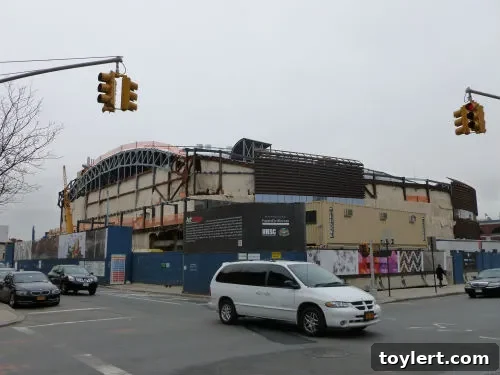
Barclays Center Liquor License: A Critical Public Hearing on Community Impact and Safety
The grand opening of the Barclays Center, a monumental addition to Brooklyn’s vibrant landscape, has been eagerly anticipated by many, yet simultaneously approached with significant apprehension by local residents. As this state-of-the-art venue gears up to host world-class sports and entertainment events, a pivotal public hearing is scheduled to thoroughly review its application for a liquor license. This upcoming hearing brings into sharp focus a profound conflict between the ambitious economic development goals for a major urban hub and the pressing quality-of-life concerns passionately voiced by the surrounding residential communities, particularly in Prospect Heights.
As reported by The Local, the core of the community’s opposition is rooted in a fundamental and critical issue: the conspicuous absence of a formal, publicly disclosed plan for effective crowd control and comprehensive security measures. Residents and various community advocacy groups firmly argue that granting a liquor license without such vital safeguards is not only premature but also potentially irresponsible. They contend that this oversight could severely jeopardize the safety, tranquility, and overall well-being of the entire neighborhood. This ongoing debate perfectly encapsulates the broader challenges inherent in integrating large-scale entertainment venues into the fabric of established urban residential areas.
Unanswered Questions: Ensuring Crowd Control and Community Well-being
The prospect of up to 18,000 patrons exiting the Barclays Center after major events, especially those where alcohol has been readily consumed, naturally raises a multitude of legitimate questions and concerns for local residents. What specific mechanisms will be implemented to effectively manage such a massive influx and egress of people? How will potential issues such as excessive noise, public loitering, instances of public intoxication, widespread litter, and significant traffic congestion be proactively mitigated and managed? These are far from trivial concerns; they directly influence the daily routines, the perceived value of properties, and the fundamental sense of security for thousands of Brooklynites who call this area home.
Gib Veconi, a prominent and respected voice from the Prospect Heights Neighborhood Development Council, and a long-time resident of the area, articulated the community’s profound frustration with remarkable clarity. “It’s premature for them to get community board support for a liquor license when they haven’t even made public any plans for security or crowd control of 18,000 people,” Veconi stated emphatically. His sentiment succinctly captures the community’s core demand: transparency, accountability, and proactive planning are considered non-negotiable prerequisites before any such license is granted. He further underscored the critical necessity for the developers to unequivocally demonstrate “how they can protect quality of life for the neighbors.” This isn’t merely about minor inconvenience; it’s about preserving the residential character, safety, and overall livability of a vibrant and historic Brooklyn neighborhood.
Forest City Ratner officials, the developers behind the ambitious Barclays Center project, have conspicuously remained silent on these pressing community concerns. As per The Local’s report, they refrained from responding to requests for comments regarding the liquor license application, opting instead to defer any official statements until the public hearing itself. This distinct lack of pre-hearing engagement has only served to deepen existing suspicions and strengthen the community’s unwavering resolve to demand concrete answers and firm commitments from all responsible parties.
Beyond the Venue’s Walls: The Broader Impact on Atlantic Yards and Surrounding Areas
The implications of the Barclays Center’s operational activities extend significantly beyond its immediate physical footprint. The Atlantic Yards Report provides invaluable commentary, emphasizing that the central question at hand truly revolves around the precise terms and specific conditions that will govern the liquor license. Their insightful analysis highlights the troubling lack of detailed information disclosed by Barclays Center management concerning their operational plans, thus creating a vacuum of knowledge that has been filled with growing community apprehension and unease.
From its very inception, one of the most contentious aspects of the entire Barclays Center project has been its integration into a densely populated residential area. The Atlantic Yards Report serves as a crucial reminder that the state, in a highly controversial move, overrode existing zoning regulations that typically mandate a 200-foot cordon—a protective buffer zone—around sports facilities. This critical departure from established urban planning principles signifies that the arena “encroaches on a residential neighborhood” in a manner that would normally be strictly prohibited. The direct consequence of this decision is an unusually intimate interface between a massive entertainment venue and the private homes of everyday citizens.
Addressing Pedestrian Safety and Looming Infrastructure Challenges
This overridden zoning has direct, tangible, and potentially hazardous consequences for public safety and pedestrian flow around the arena. For example, patrons making their way back to the interim surface parking lot will be forced to navigate sidewalks that are described as “as narrow as six feet wide.” One must consider the scenario of thousands of people, potentially under the influence of alcohol, converging simultaneously onto these severely constricted pathways. The potential for dangerous bottlenecks, unfortunate accidents, and general public disorder is demonstrably significant. Therefore, a robust and meticulously planned crowd management strategy is not merely a desirable feature; it is an absolute necessity to prevent chaos and ensure the paramount safety of both arena attendees and local residents alike.
The Crucial Delay of the “Code of Conduct”
Further compounding the already mounting community concerns is the persistent delay in the release of the arena’s long-promised “code of conduct.” This essential document, which was initially expected to be made public in the spring, remains conspicuously unavailable. A comprehensive code of conduct typically outlines the acceptable standards of behavior both within the venue and in its immediate vicinity, establishing clear guidelines for patrons, staff, and security personnel. It serves as a foundational and indispensable component of any effective and comprehensive security and crowd control strategy. Without this vital document, residents feel they are being asked to approve a crucial operating permit – the liquor license – in the dark, lacking full knowledge and understanding of how the venue specifically intends to manage its patrons’ behavior or effectively address its potential neighborhood impact.
The continued absence of this code creates a critical and glaring gap in the overall safety and operational framework of the venue. How can community members or regulatory bodies accurately assess the adequacy and effectiveness of the proposed plans when fundamental guiding principles and behavioral expectations are yet to be clearly revealed? This significant lack of transparency actively undermines trust and unfortunately fuels the perception that legitimate community concerns are being sidelined or dismissed in favor of an expedited operational approval process.
The Public Hearing: A Vital Forum for Demands and Regulatory Decisions
The upcoming public hearing, scheduled to commence at 6:30 pm at the 78th Police Precinct, conveniently located at 65 6th Avenue – merely a block from the arena – represents a truly pivotal moment in this ongoing debate. This crucial forum will provide residents and respected community leaders with a vital platform to formally present their objections, voice their grievances, and demand stringent accountability from both the developers and relevant city officials. It is a critical opportunity for their collective voices to be heard directly by the decision-making bodies responsible for the ultimate granting or denial of the liquor license.
For the Barclays Center and Forest City Ratner, this hearing is their definitive chance to directly address and assuage the community’s anxieties, should they choose to engage meaningfully. A failure to provide satisfactory answers, present concrete, actionable plans, and offer genuine commitments could lead to significant and sustained opposition, potentially resulting in stringent conditions being attached to the license, or at the very least, a considerable delay in its approval. The stakes involved in this hearing are undeniably high for all parties with vested interests.
The Inevitable vs. The Responsible: Navigating a Complex Dilemma
As The Local notes, it is “difficult to imagine a major sports venue not getting a liquor license.” This statement perfectly encapsulates the commercial realities and operational norms of managing such a massive entertainment facility. Alcohol sales constitute a significant and often indispensable revenue stream for arenas, contributing substantially to overall profitability and undeniably enhancing the perceived fan experience. From a purely business perspective, obtaining a liquor license is frequently considered a non-negotiable operational necessity.
However, this commercial inevitability must be meticulously balanced against the fundamental responsibility owed to the host community. The diligent residents of Prospect Heights are not necessarily advocating for the outright prevention of the arena’s operation or the complete prohibition of alcohol sales. Instead, their determined fight is laser-focused on ensuring that the privilege of selling alcohol is inextricably linked with stringent conditions and a robust, well-defined framework for effectively managing its myriad consequences. They are passionately advocating for responsible venue operations that unequivocally prioritize public safety, peace, and the preservation of the quality of life for all those living in the immediate vicinity of the Barclays Center.
The ultimate outcome of this impending public hearing will undoubtedly set a significant precedent, not only for the Barclays Center itself but also for future large-scale urban developments situated within or adjacent to residential areas. It profoundly highlights the ongoing and often complex tension between driving economic development, providing vibrant entertainment, and the imperative to maintain livable, safe, and thriving communities. A truly successful urban project is one that flourishes commercially while simultaneously enhancing, or at the very least diligently protecting, the fundamental well-being and peace of mind of its neighbors.
The community’s well-articulated demands for a transparent, comprehensive, and actionable security and crowd control plan are far from unreasonable. They represent a clear and justifiable call for accountability, responsible urban planning, and genuine engagement. As the public hearing draws near, all eyes will be intently fixed on the Barclays Center management and the relevant regulatory bodies to observe if a satisfactory and equitable resolution can be forged—one that effectively serves both the vital commercial interests of the venue and the fundamental rights and needs of the residential community.
Related News and Further Reading:
- Arena Foes Will Fight Barclays Center Booze Permit [The Local]
- With no Code of Conduct Yet for Arena, Barclays Center Neighbors Seek Delay on Liquor License [Atlantic Yards Report]