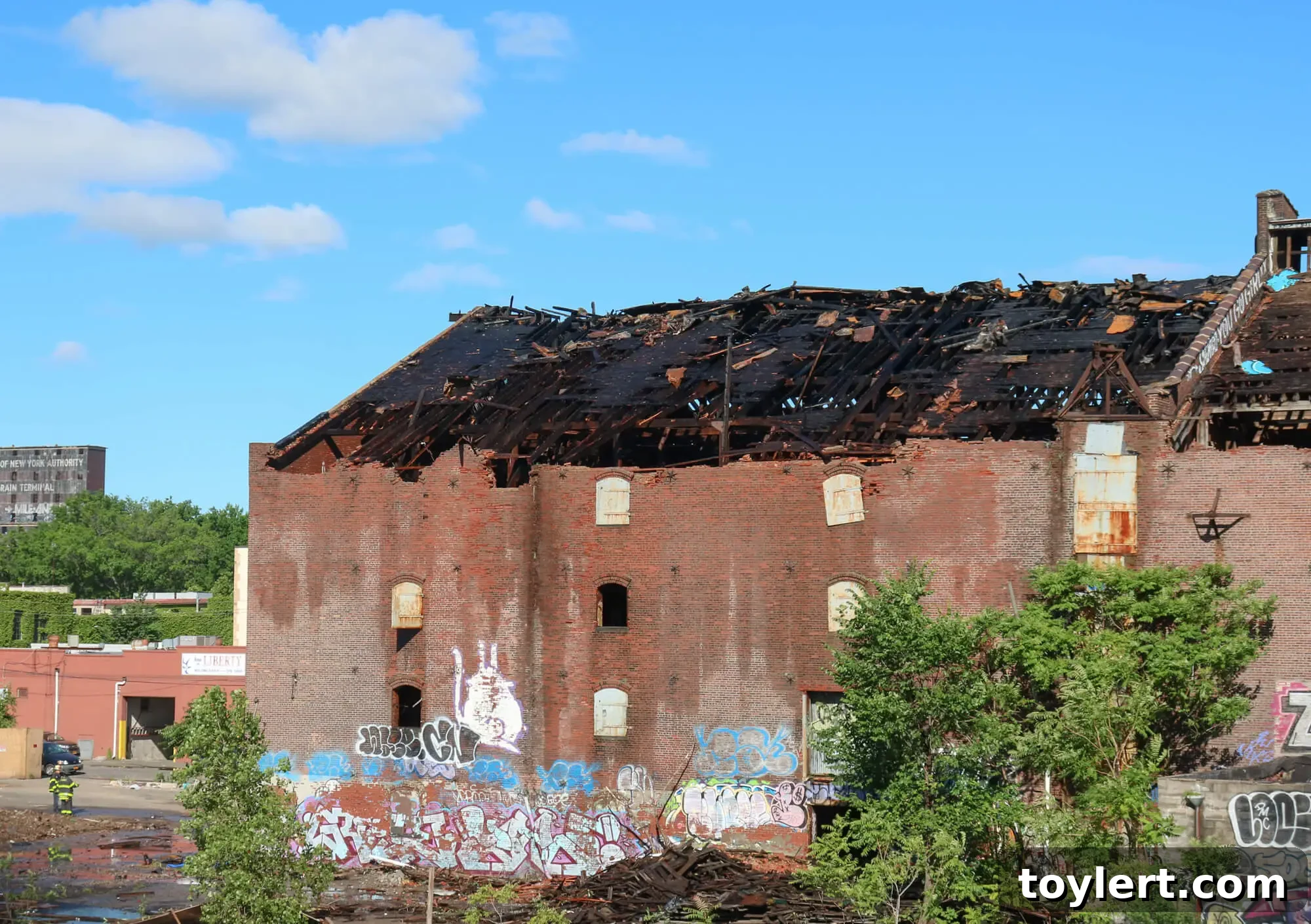
Drama continues to swirl around the former S.W. Bowne Grain Storehouse, located at 595-611 Smith Street in Red Hook, Brooklyn. This iconic structure, a testament to the borough’s rich industrial past, finds itself at the heart of a contentious battle between development interests and fervent preservation efforts, capturing the attention of residents, historians, and urban planners alike.
The Enduring Struggle to Preserve Red Hook’s S.W. Bowne Grain Storehouse
The saga of the S.W. Bowne Grain Storehouse at 595-611 Smith Street in Red Hook, Brooklyn, is a compelling narrative of urban development clashing with historical preservation. This isn’t merely the story of a building; it’s a testament to Brooklyn’s industrial heritage, a symbol of community resilience, and a focal point for the ongoing debate about how modern cities should evolve while honoring their past. The latest chapter in this unfolding drama involves a highly contested demolition permit, a subsequent stop work order, and the unwavering determination of local residents and advocacy groups to save a piece of Red Hook’s soul.
A Glimpse into Red Hook’s Industrial Past: The S.W. Bowne Grain Storehouse
Constructed in the late 19th century, the S.W. Bowne Grain Storehouse stands as a formidable reminder of Red Hook’s pivotal role as a bustling port and industrial hub. Once integral to the grain trade that flowed through New York Harbor, this imposing four-story brick warehouse represents an era when Brooklyn’s waterfront buzzed with commercial activity, processing and storing vast quantities of goods. Its robust architecture – characterized by thick masonry walls, heavy timber framing, and arched windows – speaks to its utilitarian purpose and the enduring quality of its construction. For generations, it has been a distinctive feature of the Red Hook skyline, embodying the grit and dynamism of a working waterfront community. Beyond its practical function, the storehouse contributes significantly to the unique historical tapestry of Red Hook, a neighborhood that has largely resisted the wholesale gentrification seen elsewhere in Brooklyn, retaining much of its authentic character.
The building’s historical significance extends beyond its original use. It serves as an architectural anchor, grounding the rapidly transforming landscape of Red Hook in its foundational industrial roots. As new businesses emerge and residential developments reshape parts of the neighborhood, the S.W. Bowne Grain Storehouse offers a tangible link to a bygone era, providing context and character that modern constructions simply cannot replicate. Its preservation is not just about saving bricks and mortar; it’s about safeguarding the collective memory of a community and ensuring future generations can appreciate the physical manifestations of Brooklyn’s rich heritage.
The Demolition Permit: A Controversial Green Light for Development
The current phase of the controversy began officially with the issuance of a demolition permit by the Department of Buildings on February 7. This permit, which was the culmination of an application originally filed in September 2018, explicitly calls for “a full demolition of a four-story building.” This description accurately pertains to the historic grain warehouse, which, at this juncture, is believed to be the last remaining original structure on the sprawling property at 595-611 Smith Street. The developer behind this initiative is reportedly the Chetrit Group, known for its extensive real estate portfolio and significant developments across New York City. Their intention to raze such a historically important structure immediately sparked outrage and galvanized preservationists.
The approval of the demolition permit sent shockwaves through the Red Hook community and among preservation advocates. For many, the decision appeared to overlook the profound architectural and historical value of the S.W. Bowne Grain Storehouse. Critics argue that issuing a permit for full demolition without a comprehensive plan for adaptive reuse or without adequately considering the structure’s landmark potential represents a severe oversight in urban planning. The fear is that once this irreplaceable piece of Brooklyn’s past is gone, it will be lost forever, paving the way for a less distinctive, more generic development that may not serve the best interests of the Red Hook community or respect its unique character.
Unpermitted Demolitions and Lingering Questions of Oversight
Adding another layer of complexity and suspicion to the unfolding drama is the history of the property itself. Prior to the permit for the S.W. Bowne Grain Storehouse, other buildings on the same site were reportedly demolished some time ago, apparently without the necessary permits. This precedent raises serious questions about the adherence to regulations by the property owners and developers, as well as the effectiveness of oversight from city agencies. The unpermitted destruction of previous structures suggests a pattern that troubles local residents and watchdog groups. It fuels concerns that the current demolition of the iconic grain storehouse might proceed with similar disregard for legal processes or community input.
Such unapproved demolitions not only reflect potential legal infractions but also highlight the vulnerability of historic properties in rapidly developing urban areas. When structures are razed without proper authorization, it undermines the very framework of preservation laws and urban planning. It also erodes public trust, as communities begin to question whether regulatory bodies are adequately protecting their historical assets. This historical backdrop makes the current fight to save the S.W. Bowne Grain Storehouse even more urgent and emotionally charged, as advocates strive to prevent another piece of Red Hook’s tangible heritage from disappearing under questionable circumstances.
The Stop Work Order: A Temporary Reprieve, or a Flouted Mandate?
In a crucial turn of events, a violation of a stop work order was issued on March 5, bringing a temporary halt to any authorized activity on the site. A stop work order is a critical enforcement tool used by the Department of Buildings when safety concerns arise, when work is proceeding without proper permits, or when there are violations of existing permits. In this case, its issuance offered a glimmer of hope to preservationists, indicating that city authorities were acknowledging at least some irregularities or concerns related to the demolition process.
However, the narrative took another troubling turn. According to an email circulated by the Gowanus Landmarking Coalition, a prominent local advocacy group, residents living near the site claim to have recently observed workers on the property. These workers were reportedly engaged in putting up what residents believe to be preparatory scaffolding for demolition, ostensibly in defiance of the existing stop work order. If these reports are accurate, it suggests a blatant disregard for regulatory directives, escalating the tension and frustration among those fighting for the storehouse’s survival. Defying a stop work order carries significant legal consequences, including fines and further penalties, underscoring the seriousness of these alleged actions.
The situation creates a precarious standoff: an official order to cease all work versus persistent reports of continued activity. This highlights the challenges faced by local communities when confronting powerful development interests. The Gowanus Landmarking Coalition and other vigilant residents are playing a crucial role in monitoring the site, documenting any perceived violations, and pushing for strict enforcement of the stop work order. Their ongoing vigilance is paramount in ensuring that legal processes are respected and that the fate of the S.W. Bowne Grain Storehouse is determined through legitimate channels, not through unauthorized actions.
Community Activism and Preservation Efforts in Red Hook
The fight to save the S.W. Bowne Grain Storehouse is a prime example of grassroots community activism in action. Organizations like the Gowanus Landmarking Coalition, alongside countless concerned Red Hook residents, have tirelessly championed the cause of preservation. Their efforts have included extensive public outreach, petitions, legal challenges, and continuous communication with city officials to underscore the building’s irreplaceable value. These groups understand that the storehouse is more than just an old building; it is a vital part of Red Hook’s identity and a tangible link to Brooklyn’s industrial heritage.
Preservation advocates argue forcefully that the S.W. Bowne Grain Storehouse is an ideal candidate for landmark designation. Such a designation would legally protect the structure from demolition and ensure its long-term preservation, potentially through adaptive reuse that could breathe new life into the historic space while maintaining its architectural integrity. They envision a future where the storehouse could serve as a community center, cultural space, market, or even innovative commercial hub, contributing economically and culturally to Red Hook without erasing its past. The battle highlights a broader theme in urban development: how to balance the need for new housing and commercial spaces with the imperative to protect historical assets that define a city’s character.
The dedication of these groups is not merely reactive; it’s a proactive vision for a Red Hook that thrives while respecting its roots. They are mobilizing public opinion, informing policymakers, and ensuring that the voice of the community is heard loudly and clearly amidst the clamor of development. The ongoing surveillance of the site, as evidenced by the reports of scaffolding despite the stop work order, demonstrates their unwavering commitment and the critical role citizen vigilance plays in challenging powerful developers and governmental inertia.
The Broader Context: Red Hook’s Evolving Landscape
The conflict over the S.W. Bowne Grain Storehouse is emblematic of the broader challenges facing Red Hook, Brooklyn, a neighborhood grappling with significant transformation. Historically a working-class port area, Red Hook has experienced renewed interest from developers due to its waterfront access, unique charm, and relative affordability compared to other parts of Brooklyn. This interest brings both opportunities for investment and risks to its established character and historic fabric.
The storehouse is one of the few remaining large-scale industrial structures that visually connect contemporary Red Hook to its 19th-century origins. Its imposing presence evokes the memory of the bustling docks, warehouses, and factories that once defined the area. Losing such a structure would diminish Red Hook’s distinct identity, making it harder to discern its rich past amidst new constructions. Preservationists argue that responsible urban development should prioritize integrating historic buildings into new designs, rather than simply erasing them. This approach not only conserves history but also often leads to more unique, character-filled developments that are highly valued by residents and visitors alike.
The fate of 595-611 Smith Street will set an important precedent for future development battles in Red Hook and other historic Brooklyn neighborhoods. It underscores the delicate balance required to foster economic growth while safeguarding the architectural and cultural heritage that makes these places so special. The community’s resolve to protect the S.W. Bowne Grain Storehouse reflects a deeper commitment to ensuring Red Hook’s future is built upon, rather than at the expense of, its remarkable past.
What Lies Ahead? The Future of the S.W. Bowne Grain Storehouse
As the legal and community drama continues, the future of the S.W. Bowne Grain Storehouse remains uncertain. The interplay of demolition permits, stop work orders, alleged violations, and persistent community advocacy creates a complex and unpredictable situation. Will the developer eventually succeed in their plans for demolition, or will the concerted efforts of preservationists ultimately prevail, leading to the landmarking and adaptive reuse of this significant structure?
The coming weeks and months will be crucial. Vigilance from local residents and groups like the Gowanus Landmarking Coalition will be essential to ensure that the stop work order is strictly enforced and that any further actions on the site comply fully with city regulations. Legal challenges and ongoing public pressure may yet sway the outcome, potentially compelling city agencies to re-evaluate the building’s historical and architectural significance and to consider alternative solutions that honor Red Hook’s heritage.
The S.W. Bowne Grain Storehouse stands not just as a physical structure, but as a symbol of the larger struggle for thoughtful urban development that respects history and community values. Its fate will be a significant indicator of how Brooklyn, and indeed New York City, chooses to balance its relentless drive for progress with its irreplaceable historical legacy. The fight is far from over, and the eyes of Red Hook, Brooklyn, and beyond, remain fixed on 595-611 Smith Street.