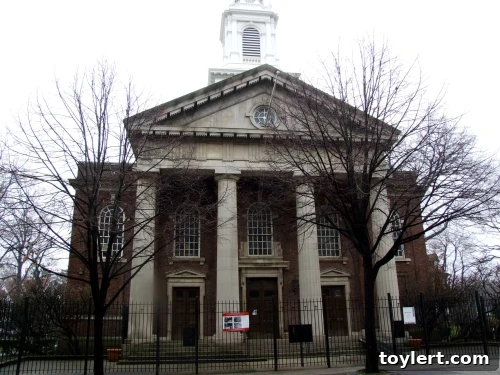
Flatbush-Tompkins Congregational Church: A Beacon of History and Architecture in Brooklyn
Brooklyn, one building at a time. Few structures encapsulate the rich history, architectural grandeur, and enduring community spirit of Brooklyn quite like the Flatbush-Tompkins Congregational Church. Standing majestically at 1802-1806 Dorchester Road, this edifice is more than just a place of worship; it is a vital landmark, a testament to the borough’s past, and a living part of its present. From its origins as the Flatbush Congregational Church to its present-day iteration, its story is deeply interwoven with the fabric of its vibrant Flatbush neighborhood.
The name itself, Originally Flatbush Congregational Church, now Flatbush-Tompkins Congregational Church, hints at a journey of evolution and enduring faith. This architectural gem beckons passersby with its distinctive design and commanding presence, inviting a closer look into its storied past and profound significance.
A Legacy Forged: The Early Years of Flatbush Congregational Church
The tale of this remarkable church begins in an era of rapid growth and transformation for Brooklyn. As the 19th century drew to a close and the 20th century dawned, Flatbush was emerging as a desirable residential area, attracting families seeking a balance of urban convenience and suburban tranquility. With this influx of new residents came the need for spiritual and community institutions. The Flatbush Congregational Church was founded to meet this demand, establishing itself as a cornerstone for the burgeoning community.
From its inception, the church was envisioned as more than just a house of prayer. It was designed to be a central gathering place, fostering fellowship, education, and social support. Its founders understood the importance of creating a space that could serve both the spiritual and civic needs of its congregation and the wider neighborhood. This commitment to holistic community engagement laid the groundwork for the church’s enduring legacy, a legacy that continues to define its mission today.
Architectural Splendor: A Masterpiece on Dorchester Road
The architectural design of the Flatbush-Tompkins Congregational Church is a compelling blend of historical revival styles, making it a significant example of early 20th-century ecclesiastical architecture in Brooklyn. While specifics of its original architect and exact style can vary in historical accounts, it typically showcases elements of the Romanesque Revival or Gothic Revival traditions, or a unique synthesis of both. This fusion often results in a robust, yet intricately detailed structure that commands attention.
Key architectural features that contribute to its distinctive character include:
- Imposing Tower and Spire: A prominent feature, the church’s tower often rises majestically, capped by an elegant spire or a sturdy belfry. This not only serves as a visual landmark but also houses bells whose chimes have echoed through Flatbush for decades, marking time and calling the faithful.
- Exquisite Stonework: The exterior typically features finely crafted masonry, often employing durable materials like brick or stone, meticulously laid to create intricate patterns and sturdy walls. Details such as carved trim, decorative arches, and strong buttresses contribute to its timeless appeal.
- Stained Glass Windows: Inside, and visible from the exterior, are often stunning stained-glass windows. These artistic masterpieces depict biblical scenes, religious symbols, and abstract patterns, casting vibrant hues across the interior and creating an atmosphere of reverence and contemplation. These windows are not merely decorative; they serve as narrative elements, teaching and inspiring generations.
- Grand Entrance: The main entrance is usually marked by an imposing portal, often adorned with decorative carvings, sturdy wooden doors, and perhaps a grand arched entryway, symbolizing a welcoming threshold into a sacred space.
- Interior Layout: Inside, the sanctuary typically boasts high ceilings, exposed structural elements like timber trusses or vaulted arches, and spacious seating. The layout is designed to focus attention towards the altar or chancel, while also providing ample room for congregational gatherings and ceremonies.
The careful preservation of these architectural details over the years speaks volumes about the community’s commitment to maintaining its heritage. Each stone, each pane of glass, tells a story of craftsmanship and dedication.
Evolution and Adaptation: From Flatbush to Flatbush-Tompkins
The journey from the Flatbush Congregational Church to the Flatbush-Tompkins Congregational Church reflects a common narrative among many historic religious institutions: adaptation and unity. In an evolving urban landscape, churches often find strength in numbers, merging congregations to sustain their mission and expand their reach. The addition of “Tompkins” to its name signifies such a pivotal moment, likely indicating a merger with the Tompkins Avenue Congregational Church, another historic Brooklyn institution.
This merger was more than just a change of name; it represented a consolidation of resources, a blending of traditions, and a renewal of purpose. Such unions are crucial for the longevity of religious organizations, allowing them to pool their strengths, expand their ministries, and continue serving their communities effectively in changing times. The combined heritage brought new vibrancy, richer programming, and an even broader base of support, ensuring that the church could continue its vital work for future generations.
A Pillar of the Community: More Than Just a Church
Throughout its existence, the Flatbush-Tompkins Congregational Church has transcended its role as merely a place of worship. It has consistently served as a vital community hub, a center for social justice, education, and cultural enrichment. Its doors have opened to a diverse array of activities and services, reflecting its deep commitment to the welfare of its neighbors.
- Social Services: The church has often been a beacon for social outreach programs, including food drives, support groups, and initiatives aimed at assisting the less fortunate members of the community.
- Educational Programs: From Sunday school classes to adult education workshops and tutoring services, the church has fostered learning and personal growth for all ages.
- Cultural Events: Its spacious halls and sanctuary have hosted countless concerts, art exhibitions, lectures, and community meetings, becoming a nexus for cultural exchange and civic discourse.
- Advocacy: Historically, many Congregational churches have been at the forefront of social reform movements. The Flatbush-Tompkins Congregational Church likely carried this tradition, advocating for equality, peace, and justice within its community and beyond.
Its strategic location on Dorchester Road places it at the heart of a bustling residential area, making it easily accessible and deeply integrated into the daily lives of Flatbush residents. This proximity enhances its ability to connect with and serve a wide spectrum of the population.
Preserving the Past, Building the Future
The Flatbush-Tompkins Congregational Church stands as a remarkable example of architectural preservation and enduring faith in Brooklyn. In a city constantly evolving, buildings like this church serve as anchors, reminding us of the historical foundations upon which our modern communities are built. Its inclusion in local architectural discussions and features like “Building of the Day” underscore its significance not just to its congregation, but to the broader historical and architectural landscape of New York City.
Efforts to maintain its historic structure, from roof repairs to stained glass restoration, are ongoing testaments to the dedication of its members and local preservationists. These efforts ensure that the beauty and integrity of this magnificent edifice will continue to inspire for generations to come. The church today remains an active and vibrant community, adapting to contemporary needs while holding fast to its foundational values and rich heritage.
Conclusion: An Enduring Brooklyn Landmark
The Flatbush-Tompkins Congregational Church on Dorchester Road is far more than just a historical building; it is a living monument to Brooklyn’s enduring spirit. Its architectural majesty, deep historical roots, and unwavering commitment to community service make it an indispensable part of Flatbush. As Brooklyn continues its dynamic evolution, this church stands as a steadfast reminder of the power of faith, community, and the timeless beauty of well-preserved architecture. It is, unequivocally, a building that continues to tell its story, one remarkable detail at a time, enriching the borough and inspiring all who encounter it.