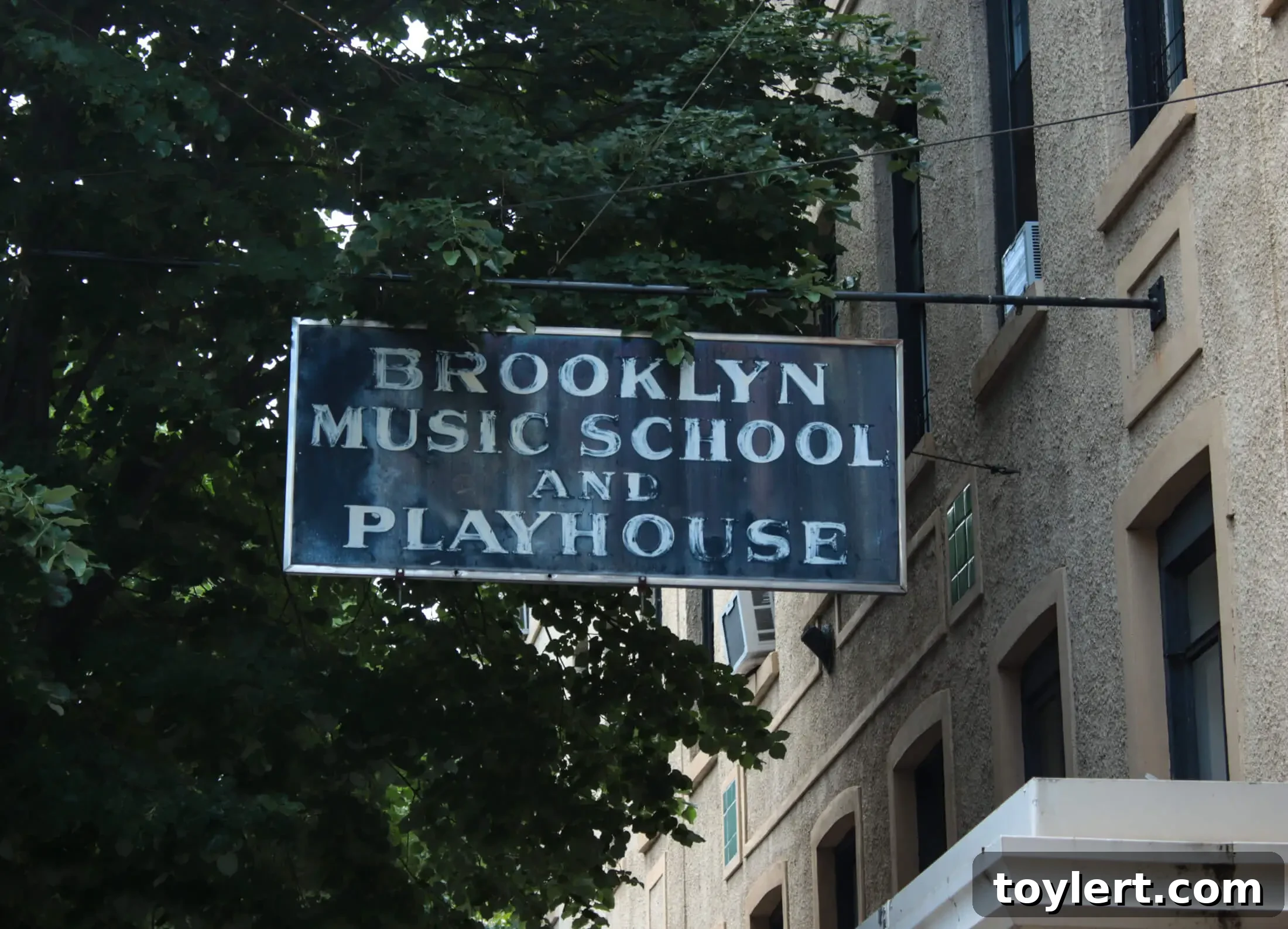
Brooklyn Music School Faces Existential Crisis Amidst Board Conflict and Competing Interests
A venerable institution, the Brooklyn Music School (BMS), a cornerstone of arts education in Fort Greene for over a century, finds itself embroiled in a deeply unsettling internal conflict. Parents and concerned community members are sounding the alarm, asserting that the very core mission of the school is under threat due to a protracted dispute between its governing board and a tenant entity. This conflict, which has been simmering for more than a year, highlights profound questions about governance, conflicts of interest, and the future of accessible music education in New York City.
For generations, the Brooklyn Music School has been a beacon of musical learning, nurturing talent and fostering a love for the arts across diverse communities. Established in 1909, it has operated from three stately, albeit increasingly cramped, brownstones on St. Felix Street in the vibrant Fort Greene neighborhood. Its mission has always been clear: to provide high-quality, affordable music education to students from all economic backgrounds. This commitment to inclusivity and accessibility is what has endeared BMS to countless families and cemented its place as a vital cultural asset in Brooklyn.
The Genesis of Discord: A Partnership Gone Awry
The current turmoil largely stems from the relationship between the Brooklyn Music School and a private institution known as Muse Academy. According to parents, Muse Academy was founded by members of the music school’s own executive board. The original intent behind this venture was ostensibly positive: to create a new revenue stream for the Brooklyn Music School, which operates on an affordable rate structure for its private lessons and programs. To kickstart this initiative, a significant $185,000 loan was extended from BMS to Muse Academy, signaling what was meant to be a mutually beneficial collaboration.
However, what began as a strategic partnership designed to support the Brooklyn Music School’s financial health has, over time, devolved into a contentious rivalry. Parents assert that Muse Academy, an elite private school, has increasingly come to compete directly with its landlord, the Brooklyn Music School, for crucial space and shared resources within the historic St. Felix Street brownstones. This competition is allegedly exacerbated by certain board members who hold positions on the boards of both the Brooklyn Music School and Muse Academy, leading to serious concerns about conflicts of interest and impartiality in decision-making.
Accusations of Prioritization and Conflicts of Interest
The accusations leveled by parents are stark and deeply concerning. They claim that the executive board, influenced by those with dual allegiances, has begun to prioritize the expansion and operational needs of Muse Academy over the fundamental requirements and long-term sustainability of the Brooklyn Music School. This alleged favoritism directly undermines BMS’s long-standing commitment to offering affordable rates and serving a broad spectrum of students, regardless of their financial capacity.
In a historic institution like the Brooklyn Music School, space is a premium. The three brownstones, while architecturally significant, present inherent limitations. As Muse Academy grows, the finite number of practice rooms, performance spaces, and administrative areas becomes a battleground. Parents report instances where resources traditionally available to BMS students and faculty are now allocated to Muse Academy, leading to reduced access, scheduling difficulties, and a palpable sense of marginalization for the core music school community. This perceived shift in priorities directly impacts the quality and availability of programs that have defined BMS for generations.
The Impact on BMS’s Core Mission and Community Trust
The gravest concern articulated by parents is the direct threat to the Brooklyn Music School’s core mission of providing accessible music education. BMS has always prided itself on serving students from diverse economic backgrounds, ensuring that financial barriers do not impede a child’s artistic development. The internal conflict, however, risks eroding this foundational principle. If resources are disproportionately channeled to an elite private school, the capacity of BMS to maintain its affordable rates and robust programming for all students could be severely compromised.
Moreover, the controversy has significant implications for community trust. The Brooklyn Music School is not just a building; it is a community institution, woven into the fabric of Fort Greene and broader Brooklyn. When the integrity of its governance is questioned, and when accusations of self-dealing and conflicting interests emerge, it shakes the very foundation of public confidence. Parents, who are the primary stakeholders, feel unheard and disillusioned, fearing that the legacy their children are meant to inherit is being jeopardized by internal power struggles.
Governance Challenges in Non-Profit Organizations
This situation at the Brooklyn Music School is a poignant illustration of the complex governance challenges that can arise within non-profit organizations, especially those with long histories and deep community roots. Boards of directors are entrusted with the fiduciary responsibility and strategic oversight of an institution, requiring unwavering loyalty to its mission. When board members hold positions in, or have vested interests in, entities that also interact with the primary organization – especially as tenants or partners – the potential for conflicts of interest becomes a critical ethical and legal concern.
Effective governance demands transparency, accountability, and a clear demarcation of responsibilities. For parents at BMS, the perceived lack of these principles is at the heart of their distress. They are advocating for greater transparency regarding board decisions, a re-evaluation of the dual roles held by certain board members, and a renewed commitment to upholding the Brooklyn Music School’s original charitable purpose above all else. The delicate balance between generating revenue to sustain a non-profit and allowing new ventures to overshadow the primary mission is a tightrope walk that requires exceptional ethical leadership.
The Road Ahead: Rebuilding Trust and Securing the Future
The ongoing conflict at the Brooklyn Music School demands immediate and decisive action to safeguard its future. For over a century, BMS has been a sanctuary for aspiring musicians, a place where creativity flourishes, and a symbol of cultural enrichment in Brooklyn. Allowing internal strife to derail its vital work would be a profound loss not only for current students but for future generations.
Moving forward, there is an urgent need for the executive board to address these concerns with utmost seriousness and transparency. Rebuilding trust within the parent community and the broader Fort Greene neighborhood will require a clear and unequivocal reaffirmation of the Brooklyn Music School’s core values: accessibility, affordability, and a steadfast commitment to music education for all. This may necessitate a comprehensive review of governance practices, policies on conflicts of interest, and potentially, a restructuring of the board to ensure that all decisions are made with the sole interest of the Brooklyn Music School at heart.
The community stands ready to support its beloved institution, but that support hinges on clear, ethical leadership that prioritizes the students and the enduring legacy of the Brooklyn Music School. The resolution of this conflict is not merely an internal matter; it is a critical step in preserving one of Brooklyn’s most cherished cultural treasures and ensuring that the harmonies of accessible music education continue to resonate through its historic halls for another century.