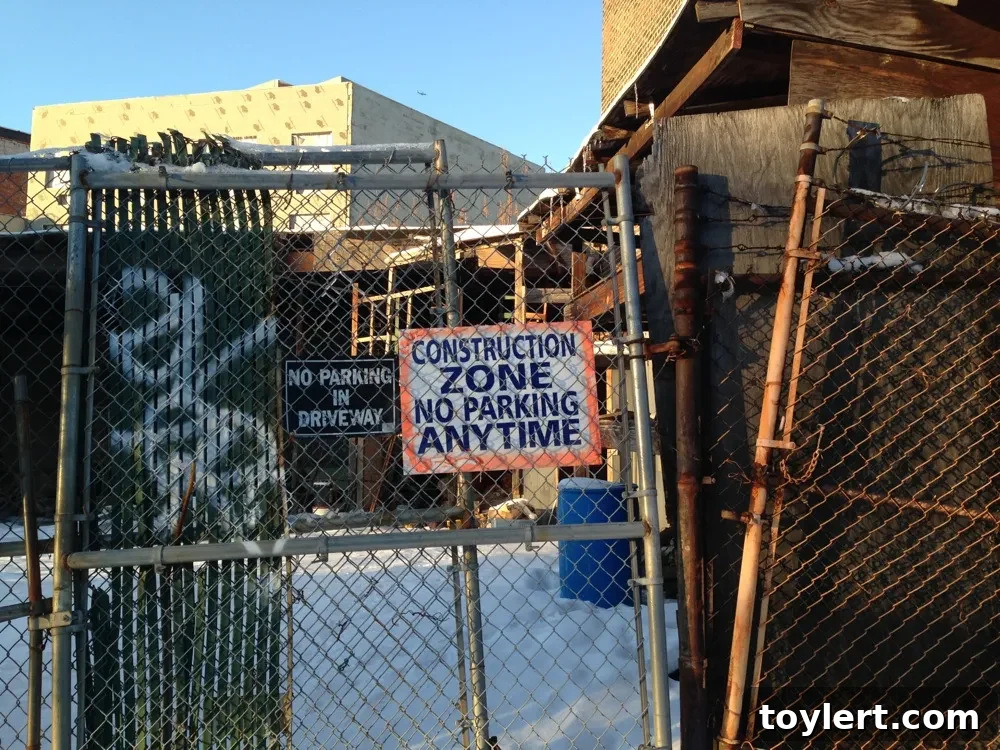
Navigating New York City’s Building Permit Delays: Costs, Causes, and Solutions for Urban Growth
New York City, a vibrant metropolis constantly reinventing its skyline, is currently experiencing an unprecedented construction boom. From towering skyscrapers to essential infrastructure projects and residential developments, the city is a hive of activity. However, this surge in development has brought with it a significant challenge: the New York City Department of Buildings (DOB) is struggling to keep pace with the overwhelming volume of building permit applications. This backlog is not merely an administrative nuisance; it translates directly into substantial financial burdens for developers and poses a broader threat to the city’s economic vitality and housing goals, as reported by The New York Observer.
Recent reports highlight a concerning trend in permit processing times. According to data from the Mayor’s Office of Operations, the time it takes for the DOB to review first submissions for new-building permits has nearly doubled. What once took an average of 8.5 days in the previous year now stretches to an average of 15.7 days. Similarly, Alt-1 permits, which cover alterations to existing structures that affect egress, occupancy, or structural stability, have also seen their review periods extend from 11.5 days to 13.3 days. These statistics paint a clear picture of a system under immense strain, impacting projects across all scales and sectors within New York City’s dynamic real estate landscape.
The Staggering Numbers Behind NYC’s Permit Backlog: A Deeper Dive into Delays
The numbers provided by the Mayor’s Office of Operations offer a stark illustration of the escalating challenges faced by New York City’s construction sector. The nearly twofold increase in the initial review time for new-building permits, jumping from 8.5 to 15.7 days, is particularly alarming. This isn’t just a marginal increase; it signifies a systemic bottleneck that affects the very first step of a project’s official journey. For an industry where time is quite literally money, such delays can ripple through an entire development schedule, impacting everything from groundbreaking to project completion and eventual occupancy. This directly affects project feasibility, financing timelines, and ultimately, the speed at which new infrastructure and housing become available to the city’s residents and businesses.
Beyond new constructions, the extended review period for Alt-1 permits — rising from 11.5 to 13.3 days — demonstrates that even modifications and renovations to existing buildings are not immune to the slowdown. Given the age and density of New York City’s building stock, Alt-1 permits are a constant necessity for maintaining, upgrading, and adapting structures to modern needs and codes. Delays in these crucial permits can impact businesses looking to expand, homeowners undertaking major renovations, and landlords seeking to modernize properties, ultimately stifling both commercial dynamism and residential improvements. These often smaller, yet vital, projects contribute significantly to the city’s economic churn and quality of life.
These figures are more than mere statistics; they represent lost opportunities, increased overheads, and heightened uncertainty for every stakeholder involved in New York City’s property development. The efficiency of the permit review process is a critical barometer of the city’s ability to support growth and innovation within its built environment. When this process falters, the entire ecosystem of architects, engineers, contractors, suppliers, and prospective tenants or buyers feels the pinch, leading to widespread frustration and potentially deterring future investment. Such delays undermine predictable planning, a cornerstone of successful real estate ventures, making the city a riskier proposition for capital.
The High Cost of Waiting: How Permit Delays Impact NYC Developers Financially
The impact of these permit delays extends far beyond bureaucratic inconvenience; they inflict severe financial penalties on developers. Gene Kaufman, one of Brooklyn’s most active architects and a seasoned observer of the city’s construction landscape, underscored the gravity of the situation in a statement to The New York Observer. He revealed that a single day of delay on a significant construction project can cost anywhere from $15,000 to $20,000 in direct expenses. These expenses are manifold and continuous, encompassing crucial items such as interest on high-value construction loans, maintaining project sites with security and utilities, retaining key personnel and management teams even when no physical work can proceed, and incurring storage fees for materials that cannot yet be utilized on site due to lack of a valid permit.
Compounding these operational costs are the substantial losses in potential income. Kaufman estimated these losses to range from $30,000 to $60,000 per day, depending on the scale and nature of the project. This lost income primarily stems from delayed occupancy or sale of units. Every day a project is behind schedule is a day that potential rental revenue isn’t being generated from commercial or residential spaces, or a day that a property sale cannot close, pushing back crucial cash flow. When these direct expenses and lost income figures are combined, a single day of delay can translate into a staggering total financial impact of $45,000 to $80,000 for a large-scale development. Over weeks or months, these figures escalate into millions, severely jeopardizing project viability, eating into profit margins, and significantly eroding the expected return on investment for stakeholders.
For developers operating on tight margins and strict timelines, such unpredictable and escalating costs can be catastrophic. They not only eat into profits but can also strain relationships with lenders, investors, and future tenants or buyers who depend on promised completion dates. Moreover, these delays can have a domino effect, pushing back the start dates of subsequent projects in a developer’s pipeline and creating a cascade of logistical and financial complications across their portfolio. The uncertainty introduced by prolonged permit review times makes financial forecasting more challenging and can make New York City a less attractive prospect for new investment compared to regions with more efficient and predictable regulatory environments, potentially driving capital elsewhere.
Unpacking the Factors Behind Permit Processing Slowdowns in NYC’s DOB
Understanding the root causes of the Department of Buildings’ current struggles is crucial for devising effective solutions that address the systemic issues rather than merely treating symptoms. The most apparent factor is the sheer volume of applications. New York City’s sustained economic growth and an ongoing, insatiable demand for both commercial and residential spaces have spurred a construction boom unlike any seen in recent decades. The DOB, like any municipal agency, is designed for a certain throughput, but it now finds itself overwhelmed by a deluge of permit filings that far exceed its current processing capacity and resource allocation.
Another significant contributor to the slowdown, as consistently highlighted by industry experts and the DOB itself, has been recent code changes. At the end of the year, New York City often implements updates to its extensive building codes, introducing new regulations concerning safety, energy efficiency, accessibility, and environmental standards. While these updates are vital for modernizing the city’s infrastructure, ensuring public welfare, and meeting sustainability goals, they inevitably require a period of adjustment. DOB staff need considerable time to learn, interpret, and consistently apply the new regulations, and developers must adapt their plans to comply, often leading to more complex review processes, a higher rate of initial rejections, or requests for additional information.
Beyond these direct and immediately visible causes, several underlying issues likely contribute to the inefficiency. Outdated technological infrastructure within the DOB can significantly hinder rapid processing. Manual review systems, fragmented digital platforms that do not communicate effectively, or a lack of advanced data analytics tools to identify patterns and bottlenecks can severely impede workflow. Furthermore, potential staffing shortages, coupled with a high demand for experienced and specialized reviewers in a competitive job market, could mean that the existing personnel are stretched thin. This leads to longer queues, increased workload for individual reviewers, and less efficient case management. The inherent complexity of New York City’s zoning laws and the often-necessary coordination with multiple other city agencies (e.g., Department of Transportation, Landmarks Preservation Commission, Department of Environmental Protection) for certain projects can also add layers of bureaucracy and delay, creating a multi-agency bottleneck.
Beyond Dollars and Days: The Ripple Effect on NYC’s Urban Growth and Future
The repercussions of protracted building permit delays in New York City extend far beyond the balance sheets of individual developers. These slowdowns have a profound and detrimental ripple effect on the city’s overall urban development, economic health, and ability to address pressing social issues, particularly the persistent and acute housing crisis. The long-term implications threaten the very fabric of New York City’s progress and its reputation as a global leader.
One of the most critical impacts is on housing supply. New York City faces a chronic shortage of affordable housing, and efficient construction is absolutely vital to mitigating this challenge. When projects, especially those earmarked for affordable housing or community facilities, are stuck in permit limbo for extended periods, it directly hinders the timely delivery of much-needed residential units. This perpetuates high rental costs across all income brackets and limits housing options for a diverse population, ultimately making the city less accessible, less equitable, and less livable for many of its inhabitants. The ability to quickly and efficiently build new homes is fundamental to sustainable urban growth and social stability.
Economically, construction is a major engine for New York City, creating thousands of jobs in a vast array of sectors, from skilled trades and engineering to material manufacturing, logistics, and supporting retail. Permit delays slow down construction starts, which in turn reduces immediate employment opportunities in these vital sectors and can lead to instability within the construction labor market. Moreover, slower project completions mean delayed property tax revenues for the city, impacting its ability to fund essential public services, infrastructure improvements, and critical community programs. Investor confidence can also erode if the regulatory environment is perceived as unpredictable, excessively burdensome, or inefficient, potentially diverting crucial capital to more welcoming markets and hindering long-term economic development.
Furthermore, these delays can stifle innovation and architectural ambition. Developers and architects might become risk-averse, opting for less complex, more easily approved designs rather than pushing the boundaries of sustainable construction, innovative urban design, or adaptive reuse. The city’s reputation as a global leader in architecture, engineering, and cutting-edge development could suffer if its bureaucratic processes consistently hinder progress rather than facilitate it. Ultimately, the permit backlog threatens to slow down the very evolution and modernization of New York City, making it harder for the metropolis to adapt to future challenges like climate change, population shifts, and evolving economic demands, thereby eroding its competitive edge on the global stage.
Streamlining Progress: Strategic Solutions to Accelerate Permit Approvals in NYC
Addressing the complex issue of building permit delays in New York City requires a multi-faceted approach, combining technological innovation, administrative reforms, and strategic resource allocation across the Department of Buildings and related agencies. One of the most promising avenues lies in the comprehensive modernization of the DOB’s technological infrastructure. Implementing advanced online submission portals, robust digital workflow management systems, and potentially even leveraging Artificial Intelligence (AI) for initial compliance checks against building codes could drastically reduce manual processing times, minimize human errors, and provide faster feedback to applicants. A fully integrated digital platform would allow for real-time tracking of applications, improved communication channels between applicants and reviewers, and greater transparency throughout the entire permit lifecycle, benefiting all parties involved.
Alongside technological upgrades, there is a clear and urgent need for increased staffing and comprehensive training within the DOB. A sustained surge in permit applications necessitates a corresponding increase in qualified personnel capable of efficiently reviewing increasingly complex plans. Investing in continuous professional development for reviewers, especially concerning new building codes, sustainable construction practices, and advanced engineering methodologies, would enhance their effectiveness, consistency, and overall speed. Furthermore, creating specialized review teams for specific project types (e.g., residential towers, historic renovations, green buildings) or highly complex developments could help streamline processing by focusing specific expertise where it is most needed, reducing the learning curve for individual projects.
Process optimization is another critical area that demands immediate attention. This could involve a thorough re-evaluation and streamlining of existing review procedures to eliminate redundant steps, reduce unnecessary back-and-forth communication, and clarify submission requirements. Establishing clearer, more concise guidelines for applicants, coupled with robust pre-submission consultation services where developers can get early feedback, could significantly reduce the number of incomplete or non-compliant applications, thereby saving valuable review time later in the process. Implementing a tiered review system, where simpler, low-risk projects receive expedited processing while complex, high-impact ones get more detailed, specialized attention, could also significantly improve overall efficiency and resource allocation.
Finally, fostering greater collaboration and communication between the DOB, other relevant city agencies (such as the Department of Transportation, Environmental Protection, and Landmarks Preservation Commission), and the broader development community is paramount. Regular forums for dialogue, workshops, and joint task forces can help identify pain points, share best practices, and collaboratively develop innovative solutions. Exploring models like certified third-party plan review for certain components of projects, under strict DOB oversight and quality control, could also help alleviate pressure on internal resources and accelerate parts of the approval process. By embracing these strategic reforms and fostering a culture of efficiency and partnership, New York City can work towards a permit approval system that is not only efficient and timely but also robust enough to support the city’s ambitious vision for sustainable, equitable, and forward-looking urban growth.
Paving the Path for Future Construction in New York City: A Forward Look
The challenges currently faced by New York City’s Department of Buildings in managing the immense volume of construction permit applications are undeniable. The extended review times, as consistently highlighted by reports from the Mayor’s Office of Operations and echoed by prominent industry voices like architect Gene Kaufman, translate into significant financial setbacks for developers. This reality profoundly impacts project viability, drives up construction costs, and potentially deters future investment in the city’s crucial real estate sector. Without efficient permitting, the very engine of urban development sputters, hindering progress on multiple fronts.
The confluence of a robust construction boom, driven by strong demand for space, and necessary but increasingly complex building code changes, has placed an unprecedented strain on the DOB’s existing resources and traditional processes. However, New York City’s future growth and its ability to effectively address critical issues such as the persistent housing crisis, infrastructure modernization, and economic development depend fundamentally on a more agile, responsive, and predictable permitting system. Without proactive, comprehensive measures, these delays risk stifling innovation, increasing the cost of living and doing business in the city, and ultimately slowing down the essential evolution of one of the world’s most dynamic urban landscapes.
Moving forward, a concerted and collaborative effort is required from all stakeholders: city agencies, developers, architects, and community representatives. This includes continued and substantial investment in the DOB’s technological capabilities, strategic enhancements to staffing levels and ongoing professional training, and a steadfast commitment to process optimization and transparency. By embracing modern solutions, leveraging data-driven insights, and fostering greater collaboration between city agencies and the private sector, New York City can build a more efficient, transparent, and predictable permitting environment. This will not only alleviate the current backlog but also pave the way for a more sustainable, vibrant, and prosperous future for all its residents and businesses, ensuring that the city continues to build upwards and forwards without unnecessary bureaucratic impediments, securing its place as a global leader in urban development.