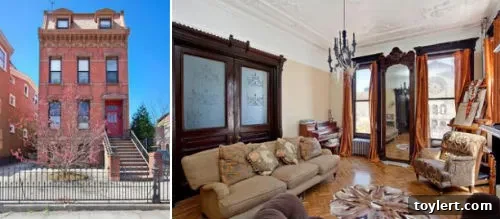
Unveiling the Timeless Grandeur of Bushwick Brownstones: A Deep Dive into 978 Bushwick Avenue
Bushwick, Brooklyn, a neighborhood pulsating with artistic energy and historical depth, harbors architectural treasures that speak volumes of its storied past. Among these gems, the classic brownstone stands as a testament to an era of exquisite craftsmanship and enduring design. While modern developments continue to reshape the urban landscape, homes boasting a profound level of intricate detail are increasingly rare, making properties like 978 Bushwick Avenue exceptionally captivating. This particular address has long captivated observers, not only for its striking facade but also for its unique position within Bushwick’s evolving real estate narrative.
In a borough renowned for its iconic brownstones, finding a residence that truly encapsulates the architectural splendor of the late 19th century in Bushwick can be a challenging endeavor. The property at 978 Bushwick Avenue stands out as a prime example, offering a glimpse into a time when meticulous detail and robust construction defined urban living. Its asking price, once considered remarkably singular for the area, further underscored its distinction and the burgeoning interest in Bushwick’s residential market.
A Legacy Cast in Stone: The Historical Context of Bushwick Avenue
Bushwick Avenue, a grand artery that traverses the heart of the neighborhood, is more than just a thoroughfare; it is a historical corridor lined with architectural marvels. The street itself reflects the aspirations and prosperity of Brooklyn’s past, serving as a canvas for distinguished architects to showcase their talent. The bustling nature of Bushwick Avenue, then as now, signifies its central role in the community, offering both connectivity and a vibrant streetscape.
The history of Bushwick is one of remarkable transformation. From its origins as one of the original six towns of Brooklyn, settled by Dutch farmers in the mid-17th century, it evolved through industrialization in the 19th century into a densely populated residential area. The late 1800s saw a boom in construction, particularly of row houses and brownstones, as Brooklyn rapidly expanded. Many of these homes were built to accommodate a growing middle class, eager for spacious, well-appointed residences close to the city’s burgeoning amenities.
During this period, Bushwick Avenue became a coveted address, attracting prominent families and featuring some of the most impressive architecture in the district. Owning a home on this avenue was a mark of status, and architects were commissioned to create facades that conveyed elegance and permanence. The very presence of a brownstone like 978 Bushwick Avenue on such a prominent street underscores its historical significance and the quality of its original construction.
The Mastermind Behind the Facade: Theobald M. Engelhardt’s Vision
The architectural integrity of 978 Bushwick Avenue is not merely a matter of chance; it is the deliberate creation of a celebrated architect. Columbia University’s Bushwiki notes confirm that this brick and brownstone house was built in 1887 and designed by none other than Theobald M. Engelhardt. This revelation adds another layer of prestige to the property, placing it within the oeuvre of one of Brooklyn’s most prolific and influential architects.
Theobald M. Engelhardt (1851-1935) was a German-American architect responsible for designing hundreds of buildings across Brooklyn, particularly in areas like Bushwick, Williamsburg, and Greenpoint. His distinctive style often incorporated elements of Romanesque Revival, Queen Anne, and Renaissance Revival architecture, characterized by rich ornamentation, varied textures, and robust forms. Engelhardt’s work significantly shaped the urban fabric of late 19th-century Brooklyn, leaving behind a legacy of durable, elegant, and often monumental residential and commercial structures.
A house designed by Engelhardt typically showcases a meticulous attention to detail that extends beyond mere aesthetics. His buildings are known for their quality materials, thoughtful layouts, and intricate brickwork, terra cotta detailing, and ornate stone carvings. For 978 Bushwick Avenue to be attributed to such a master solidifies its standing as a historically significant piece of architecture, worthy of preservation and admiration. Prospective owners often seek out Engelhardt’s work, recognizing the inherent value in owning a piece of Brooklyn’s architectural heritage crafted by such a renowned figure.
The Enduring Allure of Brooklyn Brownstones
What exactly is it about a brownstone that continues to capture the imagination of homeowners and investors alike? The appeal is multifaceted, combining historical charm with robust construction and a distinct aesthetic. Brownstones, primarily constructed from a reddish-brown sandstone, emerged as a popular choice for urban residential buildings in the mid-19th century, particularly in New York City and Boston.
Key characteristics that define the timeless allure of brownstones include:
- Architectural Grandeur: Often featuring tall stoops, ornate cornices, decorative window surrounds, and detailed entryways, brownstones exude a sense of stately elegance.
- Spacious Interiors: Typically built as single-family homes or two-family residences, brownstones offer generous living spaces, high ceilings, and often multiple fireplaces, reflecting the spaciousness of a bygone era.
- Original Details: Many well-preserved brownstones retain original interior details such as intricate millwork, plaster moldings, pocket doors, stained glass, and parquet floors, providing a unique character that modern homes struggle to replicate.
- Durability: Constructed with solid masonry and quality materials, brownstones are known for their exceptional durability and longevity, standing the test of time for over a century.
- Historical Significance: Owning a brownstone is akin to owning a piece of urban history, connecting residents to the rich cultural tapestry and architectural traditions of the neighborhood.
These qualities make brownstones highly sought after in Brooklyn’s competitive real estate market, commanding premium prices and representing not just a home, but a valuable asset that appreciates both financially and culturally.
Bushwick’s Real Estate Evolution: From Singular Price to Soaring Values
The real estate market in Bushwick has undergone a dramatic transformation, particularly since the early 2010s. The original discussion surrounding 978 Bushwick Avenue’s asking price of $1,195,000 in what was likely the early 2010s highlighted its “singular” nature. This perspective is critical in understanding just how much the neighborhood has evolved. A few years prior to that, a “real brownstone” in the area was noted to have sold for approximately $600,000.
These figures serve as powerful benchmarks, illustrating the rapid appreciation that Bushwick has experienced. What was once considered a high, almost unprecedented asking price for a brownstone in Bushwick is now, in many cases, considered a modest entry point for similar properties. The trajectory of Bushwick’s real estate market can be attributed to several factors:
- Artist Influx and Cultural Boom: Following the footsteps of other gentrifying Brooklyn neighborhoods, Bushwick attracted a vibrant community of artists and creatives drawn to its industrial spaces and relatively affordable rents. This influx brought new galleries, studios, cafes, and a distinct cultural identity.
- Improved Amenities: As the population diversified, so did the commercial landscape. Bushwick now boasts an array of trendy restaurants, boutique shops, lively bars, and essential services, enhancing its desirability for residents.
- Accessibility: Excellent public transportation links, particularly the L and M subway lines, connect Bushwick residents to Manhattan and other parts of Brooklyn, making it an attractive option for commuters.
- Relative Affordability (Historically): While prices have soared, Bushwick was for a long time more affordable than neighboring Williamsburg or Bed-Stuy, offering larger spaces for less capital. This drew in new buyers and renters, fueling demand.
- Architectural Heritage: The recognition and appreciation of Bushwick’s rich architectural stock, including its numerous brownstones and historic buildings, have played a significant role in increasing property values.
Today, brownstones on Bushwick Avenue, especially those with preserved details and significant square footage, frequently command prices well over two or three million dollars, underscoring the neighborhood’s profound growth and investment potential.
Investing in History: The Value Proposition of 978 Bushwick Avenue
For potential buyers and investors, a property like 978 Bushwick Avenue represents more than just a home; it’s a tangible investment in history, architecture, and the future of a dynamic neighborhood. The combination of its distinctive design by Theobald M. Engelhardt, its prime location on a historic avenue, and the inherent charm of a classic Brooklyn brownstone makes it an exceptionally valuable asset.
Owners of such properties not only benefit from potential long-term appreciation in a continually desirable market but also enjoy the unique experience of living within a piece of architectural art. Preserving and maintaining these historic homes contributes to the overall character and allure of Bushwick, ensuring that its rich past remains a vibrant part of its present and future.
While the specific listing for 978 Bushwick Avenue referenced in the original context (see Douglas Elliman for historical reference) is likely long past, its legacy continues to resonate. It serves as a compelling case study of a property that embodies the architectural excellence and evolving real estate story of Bushwick. Current valuations for similar properties can be explored via tools like PropertyShark, while its exact location remains a fixed point on the map, accessible through Google Maps.
The question “Do you think they will get their ask of $1,195,000?” posed in the original snippet, while relevant for its time, today almost elicits a chuckle. In Bushwick’s current red-hot market, a meticulously detailed brownstone designed by a master architect on a historic avenue would likely command a figure far exceeding that initial asking price, affirming the incredible growth and enduring appeal of this remarkable Brooklyn neighborhood.