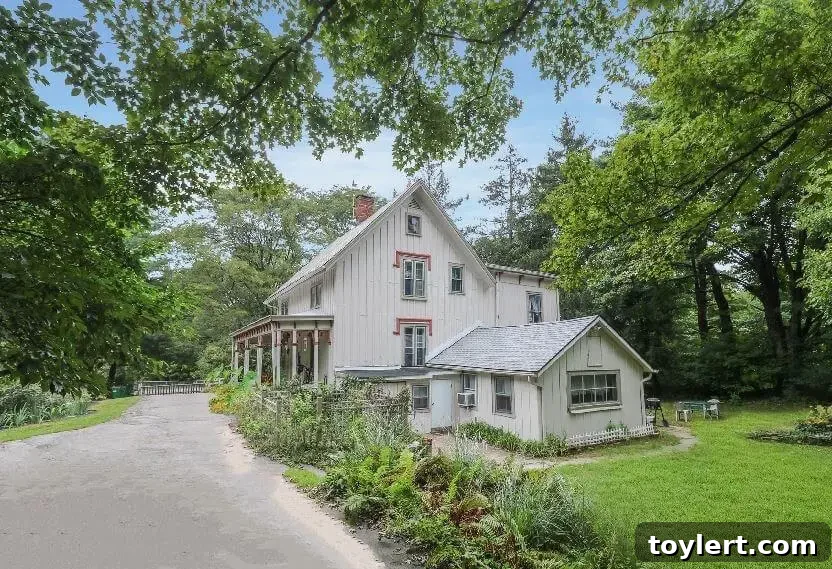
If you’ve ever gazed upon Grant Wood’s iconic 1930 masterpiece, “American Gothic,” you’ve unknowingly encountered the distinctive charm of a board-and-batten house. Standing proudly behind the stern-faced, pitchfork-wielding gentleman is a pristine white Gothic-style dwelling, instantly recognizable by its unique vertical siding. This enduring image serves as a powerful testament to the timeless appeal and historical significance of board-and-batten architecture, a style deeply woven into the fabric of American design.
Far more than just a passing trend, board-and-batten represents a practical, picturesque, and profoundly influential architectural and siding style. Its presence in such a revered piece of art underscores its embedded place in the American consciousness, evoking images of rustic simplicity, enduring craftsmanship, and a connection to the natural landscape. Understanding what board-and-batten truly is, its origins, and its evolution reveals a fascinating journey through American architectural history.
What Exactly is Board-and-Batten Siding? Defining an Architectural Classic
At its core, board-and-batten is a type of exterior siding distinguished by its vertical orientation and the interplay of wider boards and narrower strips, or “battens.” The construction method is straightforward yet highly effective: wide boards are installed vertically, leaving small gaps in between. These gaps are then covered with thinner strips of wood, the battens, which are nailed over the seams. This creates a distinctive, textured look with alternating raised and recessed surfaces, giving the facade a strong sense of verticality and depth.
Historically, this method served a dual purpose. Wood planks, especially those less perfectly milled or prone to natural expansion and contraction with changes in humidity and temperature, would inevitably create gaps. The battens ingeniously covered these seams, providing excellent weather protection and insulation while also adding a striking visual element. This functional simplicity is a hallmark of the style, making it both aesthetically pleasing and remarkably durable, a perfect blend of practicality and beauty.
While the term “board-and-batten” most commonly refers to the siding technique itself, it is also frequently associated with a specific cottage style that gained immense popularity in the United States from the late 1840s to the mid-1860s. These were typically small to medium-sized homes, often exhibiting characteristics of the Gothic Revival movement, designed to blend harmoniously with rural and suburban landscapes. The vertical lines of the siding inherently draw the eye upwards, enhancing the perceived height and grandeur of even modest structures, a quality that resonated deeply with the romantic ideals of the era.
The Anatomy of Board-and-Batten: Materials and Construction
Traditionally, board-and-batten siding was crafted from locally available woods such as pine, cedar, redwood, or fir. These natural materials offered excellent insulation properties and could be easily milled and installed. The specific dimensions of the boards and battens could vary, contributing to the unique character of each individual structure. Common board widths ranged from 8 to 12 inches, with battens typically 2 to 4 inches wide. The depth of the battens created distinct shadow lines that constantly shifted with the sun, giving the house a dynamic and ever-changing appearance throughout the day.
The installation process typically involves securing the wider boards directly to the sheathing or framing of the house. Crucial to this step is ensuring proper spacing between the boards to allow for natural wood movement without warping or buckling. Once the boards are in place, the narrower battens are then precisely nailed over these vertical seams, effectively sealing the gaps. Modern construction techniques often incorporate specialized fasteners, weather-resistant membranes, and advanced finishes to further enhance the longevity and weather performance of the system, but the fundamental principles of overlapping vertical elements remain a testament to its original ingenious design.
Andrew Jackson Downing: The Visionary Behind Board-and-Batten’s Rise
The widespread adoption and stylistic elevation of board-and-batten houses during the mid-19th century can be largely attributed to the profound influence of Andrew Jackson Downing. A pioneering American landscape designer, horticulturist, and architect, Downing’s untimely death in a steamship accident in 1852 at the tragically young age of 36 cut short a brilliant career, but not before he had irrevocably shaped American tastes in home design and landscaping for generations to come.
Downing, a native of Newburgh, New York, became a fervent advocate for harmonizing architecture with its natural surroundings through his prolific writings. He held a deeply held belief that homes should not merely be functional structures but beautiful objects that enhanced the landscape and reflected the character of their owners. His philosophy was firmly rooted in the Picturesque movement, an aesthetic ideal that sought to create compositions evoking the beauty of idealized natural scenes, characterized by charming irregularity and a sense of organic integration.
He published two enormously influential books that became indispensable guides for aspiring homeowners and builders across America: “Cottage Residences” (1842) and “The Architecture of Country Houses” (1850). These seminal works showcased various house plans, architectural styles, and landscaping ideas, and critically, championed the widespread use of board-and-batten siding for its ability to create what he famously termed “neat and picturesque” dwellings. Downing eloquently argued that this style was practical in design, cost-effective for many Americans, and uniquely suited to the rural American landscape, offering a sense of organic connection to nature that other siding materials often lacked.
Downing’s Enduring Philosophy: Picturesque and Practical Design
Andrew Jackson Downing was more than just an architect; he was a cultural arbiter who sought to elevate the quality of American domestic life through thoughtful and harmonious design. He passionately advocated for homes that were both aesthetically pleasing and utterly functional, rejecting the ornate excesses and sometimes ostentatious styles of the period in favor of a more refined simplicity and integrity. His profound emphasis on integrating houses with their specific sites meant meticulously considering factors like optimal sunlight exposure, prevailing winds, and captivating views, thereby ensuring that each dwelling felt intrinsically part of its natural environment rather than merely placed upon it.
For Downing, board-and-batten siding perfectly embodied these comprehensive ideals. Its strong vertical lines naturally echoed the forms of trees and the surrounding natural world, allowing houses to blend seamlessly into wooded areas or rural settings. The inherent texture and the captivating play of light and shadow created by the battens added significant visual interest without relying on superfluous, expensive ornamentation. Furthermore, it was a relatively affordable siding option for many Americans, making well-designed, attractive homes accessible to a broader segment of the population, thereby democratizing good design. Downing envisioned a nation dotted with charming, well-built cottages that harmonized with their natural settings, ultimately promoting a sense of domestic tranquility, national pride, and an elevated standard of living.
Board-and-Batten’s Role in the Gothic Revival Movement
The mid-19th century was a period characterized by a romantic fascination with historical styles and a yearning for a return to earlier architectural forms, which gave powerful rise to the Gothic Revival movement in architecture. While often associated with grand ecclesiastical structures like churches and impressive academic buildings, Gothic Revival also found a charming and distinctive expression in domestic architecture, particularly in the form of picturesque cottages. Within this context, board-and-batten siding became a signature and integral element of these residential Gothic Revival structures.
Gothic Revival cottages, frequently championed and popularized by Andrew Jackson Downing, typically featured steeply pitched roofs, prominent gables, decorative bargeboards along the eaves, and often an appealingly asymmetrical floor plan. The strong verticality of board-and-batten siding perfectly complemented these characteristic features, enhancing the tall, slender appearance inherently characteristic of Gothic design. It evoked a sense of medieval craftsmanship, rustic authenticity, and romantic idealism, clearly distinguishing these homes from the more classical, symmetrical, or Georgian styles that had largely preceded them.
Distinguishing Characteristics of Board-and-Batten Gothic Revival Cottages
- Steeply Pitched Roofs: Often featuring prominent gables adorned with decorative trim along the eaves, contributing to a lofty and romantic silhouette.
- Vertical Emphasis: Achieved not only through the distinctive board-and-batten siding itself but also complemented by tall, narrow windows and doors that further draw the eye upwards.
- Asymmetrical Floor Plans: A deliberate move away from strict classical symmetry, allowing for more dynamic, irregular, and ultimately picturesque compositions that felt more organic.
- Ornate Trim (Bargeboards): Intricately carved or cut wooden trim boards adorning the gable ends, adding a layer of delicate, decorative flourish characteristic of Gothic detailing.
- Pointed-Arch Motifs: Although less common in the siding itself, subtle pointed-arch details were sometimes incorporated into window designs, doorways, or interior elements, echoing the grander Gothic cathedrals.
These homes were consciously designed to be “picturesque” – a term that, in the 19th century, signified an aesthetic composition that was charmingly irregular, varied, and visually interesting, much like a romantic landscape painting. Board-and-batten siding, with its inherent texture, strong vertical lines, and rustic appeal, contributed profoundly to this desired aesthetic, allowing homes to appear both humble and refined, deeply rooted in their environment yet aspiring to architectural elegance.
Why Board-and-Batten Continues to Captivate: Enduring Appeal and Modern Applications
Although its peak popularity as a distinct cottage style waned after the American Civil War, the board-and-batten siding technique never truly disappeared from the architectural landscape. Its profound practical advantages and unique aesthetic ensure its continued relevance, experiencing significant and widespread resurgences in contemporary design. Today, it is revered for its incredible versatility, its remarkable ability to evoke both classic, timeless charm and sleek, modern sophistication, and its inherent connection to natural materials and artisan craftsmanship.
Unparalleled Aesthetic Versatility: From Rustic to Modern
One of the most compelling reasons for board-and-batten’s enduring and widespread appeal is its incredible aesthetic flexibility. It possesses the transformative power to instantly alter the perceived look and feel of a home, whether you’re aiming for a particular historical homage or a cutting-edge contemporary statement:
- Rustic Farmhouse Charm: Its historical roots in utilitarian agricultural buildings and early American homesteads make it an absolutely natural and perfect fit for the ever-popular modern farmhouse style, particularly when combined with crisp white, subtle neutral tones, or natural wood finishes.
- Contemporary Elegance: When utilized in darker, monochromatic palettes such as charcoal gray or matte black, or in sharp contrast with other materials, board-and-batten can create an undeniably sleek, sophisticated, and highly modern look, adding significant depth and intriguing texture to otherwise minimalist designs.
- Coastal or Lakeside Retreats: Its clean, unpretentious lines and strong association with natural materials lend themselves exceptionally well to homes meticulously designed to blend seamlessly with natural environments, particularly those boasting serene water views or nestled amongst trees.
- Scandinavian Influence: The inherent simplicity, the pronounced emphasis on natural textures, and the clean aesthetic align perfectly with Scandinavian design principles, fostering bright, airy, uncluttered, and highly functional spaces.
The dynamic shadows cast by the battens add an ever-changing, artistic quality to the exterior, creating subtle yet captivating visual interest that constantly evolves throughout the day with the movement and intensity of the sun. This interplay of light and shadow is a subtle yet remarkably powerful design element that distinctly distinguishes board-and-batten from more flat, uniform siding options, giving it a lively character.
Practical Advantages: Durability, Protection, and Simplified Maintenance
Beyond its profound visual appeal, board-and-batten siding offers a suite of practical benefits that significantly contribute to its enduring longevity, robust performance, and widespread popularity across various climates and building types:
- Excellent Weather Protection: The clever, overlapping nature of the boards and battens creates an incredibly robust and resilient barrier against the elements, including driving wind, torrential rain, and heavy snow, thereby effectively protecting the underlying structural integrity of the home. The inherent design ingeniously allows for minor movement of the wood due to environmental factors without compromising the vital weather seal.
- Exceptional Durability: When meticulously installed and conscientiously maintained, traditional wood board-and-batten siding can easily last for many decades, proving to be a highly durable exterior finish. Utilizing naturally rot-resistant woods like cedar or redwood further significantly enhances its lifespan, offering superior protection against decay and insect infestation.
- Ease of Repair: A significant practical advantage is that, should an individual board or batten become damaged due to impact or wear, individual pieces can often be replaced with relative ease without necessitating the removal of large, expensive sections of siding, making repairs straightforward, localized, and highly cost-effective.
- Enhanced Insulation Properties: Wood itself is a natural, effective insulator, and the layered construction of board-and-batten can contribute positively to the overall thermal efficiency of a home, helping to maintain stable interior temperatures. While modern insulation techniques play a larger primary role, the siding adds an additional layer of thermal resistance.
- Cost-Effectiveness (Historically and Adaptably): In its origins, this style was often more economical and accessible than highly milled or intricately designed siding options, making attractive homes attainable for a broader demographic. Today, while premium natural wood options exist, modern alternatives like fiber cement and vinyl can offer incredibly budget-friendly ways to achieve the distinctive board-and-batten look without compromising on aesthetics.
Innovation in Materials: Expanding Board-and-Batten’s Horizons
While traditional natural wood remains an incredibly popular and cherished choice for its authentic warmth and character, contemporary board-and-batten siding is now innovatively available in a diverse array of advanced materials, dramatically expanding its accessibility, performance characteristics, and aesthetic possibilities:
- Fiber Cement: This material offers exceptional durability, superior fire resistance, and minimal maintenance requirements. It can be pre-primed and painted in a vast, virtually unlimited array of colors, convincingly mimicking the classic look of wood without the demanding upkeep.
- Vinyl: A highly affordable and remarkably low-maintenance option that comes in a wide spectrum of colors and textures. It is lightweight, incredibly easy to install, and resistant to moisture and pests, making it a practical choice for many homeowners.
- Engineered Wood: Crafted from a sophisticated blend of wood fibers and resins, engineered wood products offer significantly enhanced resistance to moisture, pests, and rot compared to solid wood, often providing a highly consistent finish and superior stability.
- Metal: For ultra-modern, industrial, or highly contemporary architectural aesthetics, metal board-and-batten siding offers a sleek, exceptionally durable, and highly weather-resistant option that stands out with its clean lines and robust character.
These continuous innovations in material science allow homeowners and builders unprecedented flexibility to achieve the distinctive board-and-batten look with varying levels of initial investment, specific maintenance requirements, and diverse environmental considerations, truly making it a style for every era and every home.
Bringing Board-and-Batten to Your Home: Essential Considerations and Care
Whether you’re embarking on the meticulous restoration of a cherished historic Gothic Revival cottage or seeking to infuse a touch of modern farmhouse chic into a brand-new build, incorporating board-and-batten siding requires thoughtful consideration and careful planning. Understanding the nuances of proper installation and committing to ongoing, appropriate maintenance is absolutely key to preserving its inherent beauty, ensuring its long-term functionality, and maximizing its lifespan for decades to come.
Critical Installation Best Practices for Optimal Performance
Meticulous and proper installation is paramount to the longevity, aesthetic integrity, and overall performance of board-and-batten siding. Key considerations that demand careful attention during the installation process include:
- Effective Moisture Management: Ensuring the correct installation of flashing around all windows and doors, and incorporating a high-quality, breathable weather barrier behind the entire siding assembly, is critically important to prevent any moisture intrusion into the wall cavity and to allow the wall system to properly dry out.
- Accommodation for Expansion and Contraction: For traditional wood siding, adequate and consistent spacing between individual boards must be diligently maintained to naturally accommodate their inherent expansion and contraction due to fluctuations in humidity and temperature. While less critical for stable materials like fiber cement or vinyl, it remains a foundational best practice for all vertical siding.
- Strategic Fastener Selection and Application: Utilizing appropriate, high-quality, corrosion-resistant fasteners (such as stainless steel or hot-dipped galvanized nails/screws) that penetrate sufficiently into the structural framing is absolutely essential for secure attachment and long-term stability of the siding.
- Quality Finishing: Applying high-quality paints or stains not only significantly enhances the aesthetic appeal of the siding but, more importantly, provides a crucial protective layer against damaging UV radiation, moisture penetration, and environmental pollutants, extending the life of the material.
Diligent Maintenance Tips for Sustained Longevity and Beauty
The specific maintenance regimen required for board-and-batten siding largely depends on the material chosen, but general principles of care apply to all:
- Traditional Wood Siding: Requires regular, proactive inspection for any signs of wear, rot, mildew, or insect activity. It necessitates periodic cleaning and re-sealing, re-staining, or repainting every 5-10 years, depending on the specific finish used, local climate conditions, and exposure to the elements. Promptly addressing any damage or deterioration is vital.
- Fiber Cement Siding: Generally considered a very low-maintenance option, typically requiring only occasional cleaning with a mild detergent and water to remove surface dirt and grime. High-quality paint finishes on fiber cement usually last an impressive 15-20 years before potentially needing a refresh.
- Vinyl Siding: Characterized by very low maintenance, usually requiring nothing more than an annual wash with a garden hose and a soft brush to effectively remove dirt, pollen, and grime, keeping it looking fresh.
- Engineered Wood Siding: Similar to fiber cement, engineered wood products offer excellent durability with significantly less frequent maintenance demands compared to solid natural wood, providing a good balance of aesthetics and practicality.
Regardless of the chosen material, a consistent maintenance practice involves keeping the siding clean and free from accumulated debris, especially at the base of the house and around landscaping, as this helps prevent moisture buildup, inhibits mold and mildew growth, and ultimately prolongs its beautiful life and functional integrity.
Conclusion: An Enduring Architectural Legacy of Form and Function
From its humble, practical beginnings as a robust and efficient form of agricultural siding to its elegant elevation as a quintessential symbol of picturesque design by visionary architects like Andrew Jackson Downing, board-and-batten has undeniably carved out an indelible and cherished place in the grand tapestry of architectural history. It is a distinctive style that flawlessly marries harmonious form with unwavering function, offering exceptional durability and robust weather protection alongside a profoundly unique aesthetic that is both timeless in its appeal and remarkably versatile in its application.
Whether gracing the charming façade of a quaint 19th-century Gothic Revival cottage, lending its inherent rustic charm to a contemporary modern farmhouse, or providing sleek, textured depth to an ultra-modern architectural design, board-and-batten continues to captivate and inspire. Its signature vertical lines, the dynamic play of light and shadow created by its battens, and its intrinsic connection to natural materials make it a perennial favorite for those seeking to create homes that are not only structurally sound and resilient but also deeply resonant with history, imbued with profound beauty, and intrinsically harmonious with their surrounding environment. The enduring image captured in Grant Wood’s “American Gothic” serves as a powerful and lasting reminder of board-and-batten’s profound and beautiful legacy in the built world, a testament to its enduring charm and practical brilliance.