The Enduring Architectural Legacy of Brooklyn’s Historic Firehouses
A city’s true character and outward identity are profoundly shaped not merely by its residential grandeur or commercial prowess, but by the quality and quantity of its civic architecture. Public buildings — schools, courthouses, police stations, and especially firehouses — stand as tangible embodiments of municipal pride, collective responsibility, and a community’s unwavering commitment to its citizens. In the rapidly developing urban landscapes of the late 19th and early 20th centuries, the design and aesthetic appeal of these structures were of paramount importance. They transcended their functional roles to become powerful symbols of progress, stability, and the burgeoning identity of a growing metropolis. For the residents, these structures served as a source of collective identity, offering a visible testament to the city government’s dedication to public welfare and safety.
Brooklyn, a place that embarked on its journey as a modest wooden village, rapidly transformed into a vibrant and expansive city. With this swift urbanization came the inherent risks of concentrated living, chief among them being the ever-present threat of fire. In an era predating advanced suppression technologies, a single spark could quickly engulf entire blocks, decimating homes, businesses, and lives. We are all familiar with the dramatic depictions in period dramas, where an alarm sends townsfolk scrambling to form rudimentary bucket brigades, desperately passing water from the nearest well or river to combat encroaching flames. While such valiant efforts showcased immense communal bravery and solidarity, they were inherently disorganized, reactive, and often tragically inefficient against the speed and scale of urban conflagrations. The undeniable need for a more structured, proactive defense against this constant menace led to a groundbreaking realization: organized firefighting forces were not just beneficial, but absolutely essential. Thus began the era of formalized volunteer fire brigades, marking a crucial turning point in urban safety, community organization, and the very architecture that housed these heroes.
Brooklyn’s Pioneering Spirit: The Genesis of Organized Firefighting
The spirit of organized civic protection truly took root in Brooklyn in 1785, with the establishment of its very first volunteer fire department in the historic district of Brooklyn Heights. This foundational company, a testament to early community resourcefulness, was modest in its beginnings, comprising five dedicated firefighters and a single engineer, the crucial individual responsible for operating and guiding the horse-drawn apparatus. These early heroes committed to one-year terms of service, embodying a profound sense of community duty and self-sacrifice. Their initial firehouse was far removed from the grand, purpose-built structures we recognize today; it was a simple, functional barn, strategically located near what is now Cadman Plaza, serving as a vital shelter for their rudimentary equipment and, critically, their indispensable horses. This humble beginning marked the dawn of a new era for Brooklyn, setting a precedent for organized emergency response and laying the groundwork for what would become one of the nation’s most respected fire departments, laying the foundational stone for decades of dedicated service.
From Volunteer Valor to Professional Prowess: The Evolution of Firefighting in Brooklyn
The evolution of Brooklyn’s fire protection mirrored the city’s own rapid growth and increasing complexity throughout the 19th century. As Brooklyn transitioned from a town to a burgeoning independent city, the demands on its volunteer fire companies grew exponentially. While volunteers were rightly lauded for their bravery, altruism, and communal spirit, the increasing frequency and intensity of urban fires, coupled with the need for more sophisticated equipment, specialized training, and round-the-clock availability, began to highlight the inherent limitations of a purely volunteer system. This gradual realization led to a significant and necessary shift: the transition towards a fully professional, salaried fire department. This professionalization brought about unprecedented levels of efficiency, standardized training protocols, and a more structured command hierarchy, all essential for effectively managing large-scale urban emergencies and safeguarding a rapidly expanding population.
This period of transformation culminated in 1869 with the formal establishment of the paid Brooklyn Fire Department (BFD). This marked a pivotal moment, signaling a new chapter in municipal responsibility and public safety. The BFD quickly became a symbol of civic pride and effectiveness, known for its rapid response and highly skilled personnel. The subsequent consolidation of Brooklyn into Greater New York City in 1898 brought further integration, merging the storied BFD with the nascent New York City Fire Department (FDNY). Despite this merger, the firehouses and traditions of Brooklyn’s independent department continued to hold a distinct identity, contributing immensely to the legendary professionalism and comprehensive coverage of what would become one of the world’s largest and most capable firefighting organizations.
Architectural Narratives: Firehouses as Grand Civic Statements
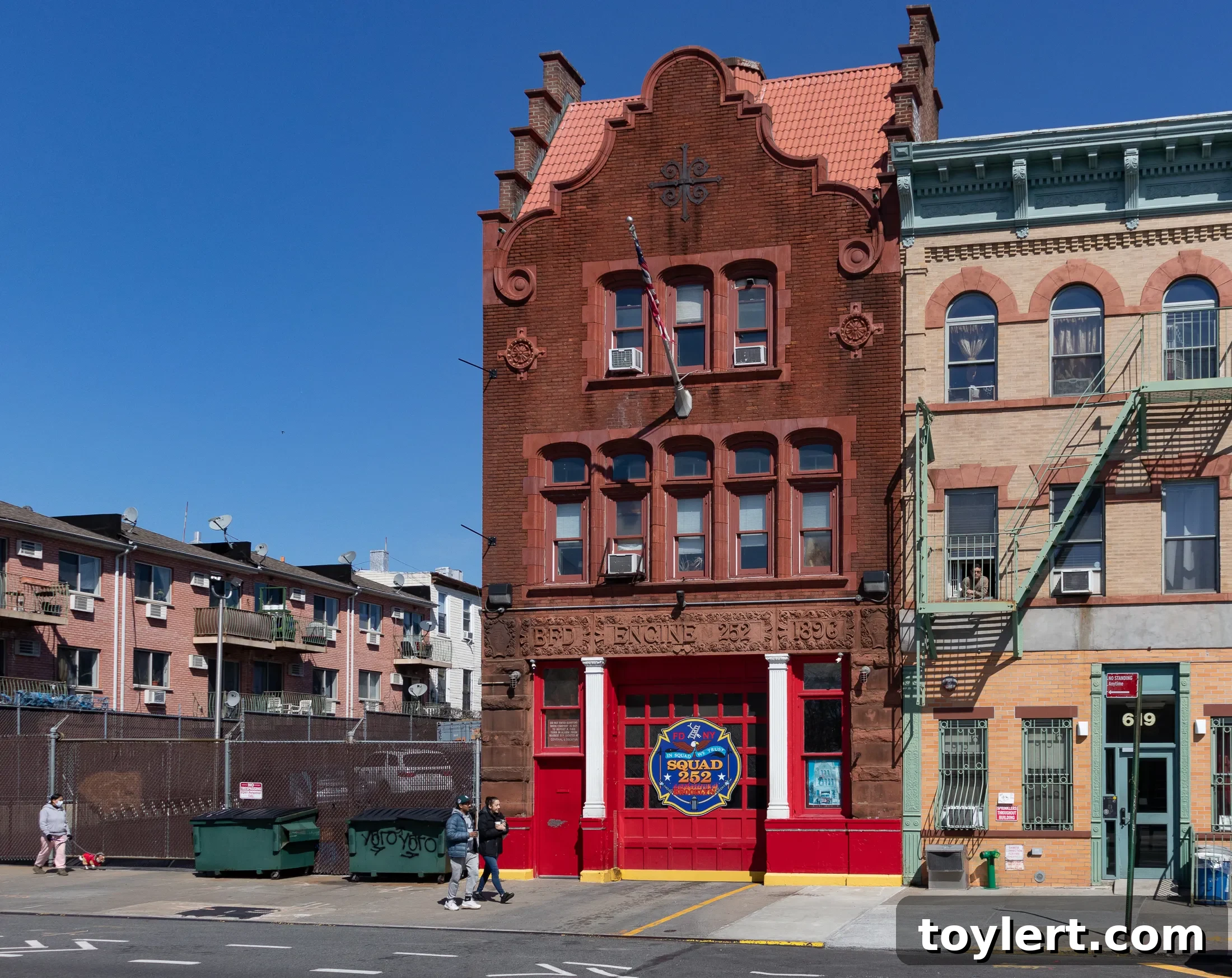
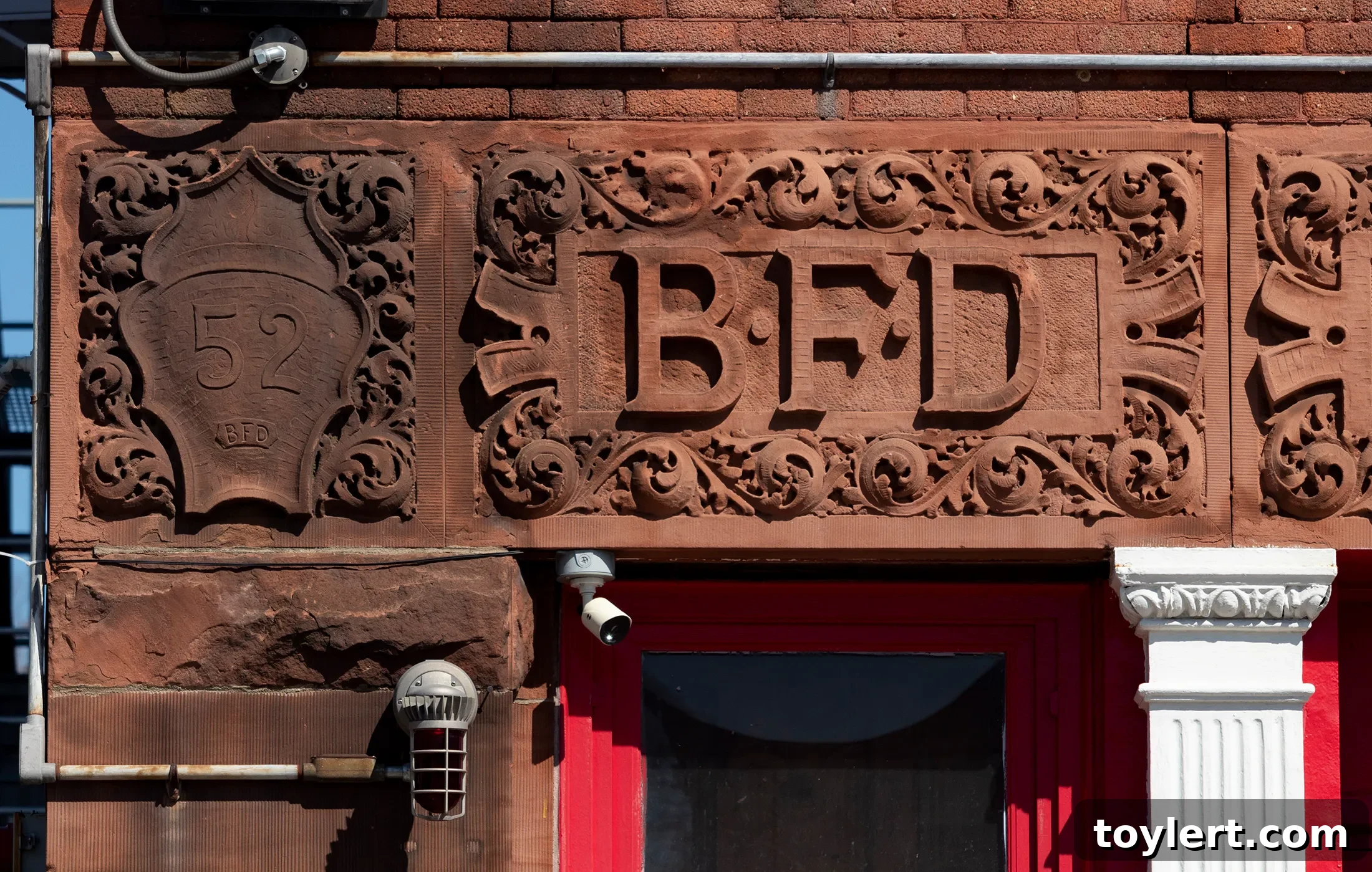
Beyond their indispensable practical function, Brooklyn’s firehouses became powerful architectural statements, reflecting the civic aspirations, artistic trends, and technological advancements of their respective eras. As the image above vividly illustrates with its intricate terra-cotta detailing, these structures were meticulously designed to be far more than mere shelters for apparatus and firefighters; they were intended to convey an undeniable sense of permanence, reliability, and communal pride. City architects and private firms alike were commissioned to create buildings that masterfully blended robust functionality with impressive aesthetic appeal, often drawing inspiration from prevailing architectural styles such as Romanesque Revival, Beaux-Arts, Gothic Revival, and Queen Anne. The deliberate choice of durable materials like brick, robust stone, and often elaborate terra-cotta was not accidental; these conveyed strength, longevity, and a deep-seated commitment to enduring public service.
Intricate facades, grand arched doorways, and decorative elements frequently incorporated symbolic motifs associated with firefighting – such as axes, ladders, fire hydrants, or the city’s official seal. These details proudly proclaimed their identity and purpose, instantly recognizable to citizens. The architectural evolution of firehouses also tells a compelling story of technological progress. Early firehouses, like the initial barn near Cadman Plaza, were primarily built to accommodate horse-drawn steam pumpers and hand-drawn engines. Their architecture necessarily reflected these needs: featuring large, ground-level doors for swift egress, spacious stable areas for horses, and often hay lofts. With the revolutionary advent of motorized vehicles in the early 20th century, firehouse designs ingeniously adapted, featuring wider bays for larger trucks, reinforced floors, and ramps rather than stables. Despite these significant functional changes, the commitment to architectural grandeur and civic symbolism remained steadfast. Many historic Brooklyn firehouses, still standing magnificently today, are prime examples of this remarkable blend of utility and artistry, serving as cherished landmarks within their neighborhoods and providing a tangible link to the city’s storied past. They serve as a constant reminder that public safety was, and continues to be, a matter of paramount civic importance, deserving of structures that reflect its profound significance.
The Firehouse: More Than Just a Station, It’s a Community Heartbeat
Historically, firehouses in Brooklyn, much like in other vibrant urban centers across the nation, were far more than just operational bases for emergency response; they were veritable nerve centers of their communities. Long before the era of widespread public amenities and designated community centers, the local firehouse often served as an informal gathering place, a trusted source of local news, and a visible symbol of neighborhood safety and camaraderie. Firefighters, living and working within these distinctive structures, became integral and respected figures in the social fabric of their districts. Their constant, reassuring presence offered a palpable sense of security, and the firehouse itself often hosted local events, charity drives, or served as a vital focal point during times of crisis, thereby forging deep and lasting bonds between the department and the residents it diligently served. This profound integration solidified the firehouse’s role as a true community anchor.
The distinctive architecture of these buildings further reinforced their indispensable role as community anchors. Their often imposing yet inviting facades, strategically and centrally located within neighborhoods, made them unmistakable landmarks. Generations of children grew up knowing their local firehouse, admiring the gleaming engines, and respecting the brave men and women who served within its walls. This deep-rooted connection fostered a collective sense of ownership and profound pride in these vital municipal assets. Even today, long after many have been decommissioned or thoughtfully adapted for new uses, the original firehouses continue to evoke a powerful sense of history, valor, and belonging. Their unique and distinctive designs tell compelling stories of courage, sacrifice, and the enduring community spirit that defined Brooklyn in its formative years and continues to shape its identity today.
Preserving Brooklyn’s Architectural Heritage and Legacy of Service
The enduring presence of Brooklyn’s historic firehouses is a remarkable testament to the foresight of early city planners and architects, as well as the deep appreciation for architectural heritage that continues to thrive today. Many of these magnificent structures have been meticulously preserved, often earning coveted listings on local, state, or national historic registers, thereby ensuring their protection and appreciation for future generations. Some have found new life through innovative adaptive reuse, thoughtfully transforming into residential lofts, vibrant art galleries, unique commercial spaces, or even stylish restaurants. Yet, in each transformation, they conscientiously retain their distinctive architectural character and the profound echoes of their original, noble purpose. This concerted preservation effort is absolutely crucial, as these buildings offer invaluable insights into Brooklyn’s intricate urban development, its evolving civic priorities, and the fascinating technological and organizational evolution of firefighting.
In conclusion, Brooklyn’s firehouses are much more than mere brick-and-mortar structures; they are critical, vibrant threads in the rich tapestry of the borough’s identity. They proudly represent the indomitable courage of its earliest volunteers, the ingenious artistry of its pioneering architects, and the unwavering commitment of its government to protect its citizens. From the modest barn in Brooklyn Heights that housed the very first brigade to the grand, terra-cotta adorned stations that punctuate the borough’s diverse neighborhoods, these structures stand as powerful, enduring monuments to civic responsibility, architectural excellence, and the resilient spirit of a community that has always prioritized the safety and well-being of its people. Their legacy continues to inspire, reminding us of the profound and lasting impact that well-designed and thoughtfully purposed public buildings have on the very soul, history, and narrative of a truly great city.