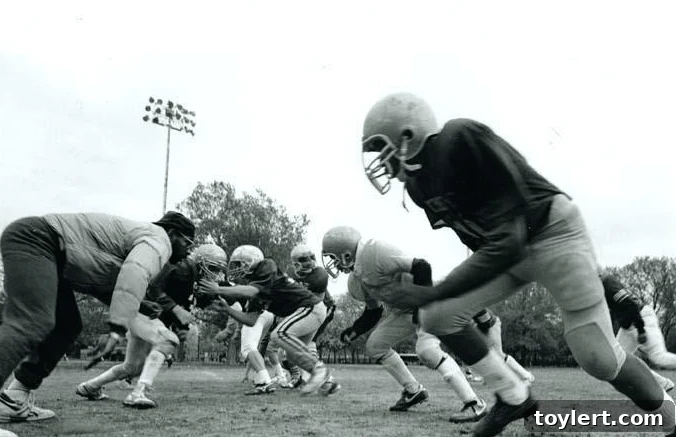
As the NFL playoffs ignite with thrilling matchups each January, the roar of the crowd and the clash of helmets captivate millions. While today Brooklyn, New York, might seem like an unlikely borough to discuss professional football, its gridiron past is surprisingly rich and often overlooked. Indeed, the vibrant streets of Brooklyn once echoed with the thud of pigskin, hosting a legitimate NFL franchise that played a significant role in the sport’s formative years.
Before the glitz and glamour of modern NFL stadiums, Brooklyn was home to the Brooklyn Dodgers NFL team. This franchise wasn’t just a fleeting presence; it was an integral part of the league for sixteen seasons, from 1930 to 1945. Sharing a name with Brooklyn’s beloved baseball team, the football Dodgers brought professional gridiron action to Ebbets Field, a stadium more famously associated with baseball legends. During their tenure, the team navigated the challenging waters of the Great Depression and World War II, contributing to the burgeoning popularity of professional football in America.
The Brooklyn Dodgers NFL team had a fascinating, if somewhat convoluted, journey. After the conclusion of World War II, a period that saw many teams struggle with player availability and financial stability, the franchise relocated to Boston. This move marked the beginning of a complex series of transactions and rebrandings that ultimately linked the Brooklyn Dodgers NFL legacy to one of today’s prominent teams. Through subsequent shifts, including stints as the Boston Yanks, New York Yanks, and Dallas Texans, the lineage of the Brooklyn Dodgers NFL team eventually led to the modern-day Indianapolis Colts. This makes the Colts not just a team with a storied history in Indianapolis and Baltimore, but one whose roots stretch all the way back to the historic borough of Brooklyn.
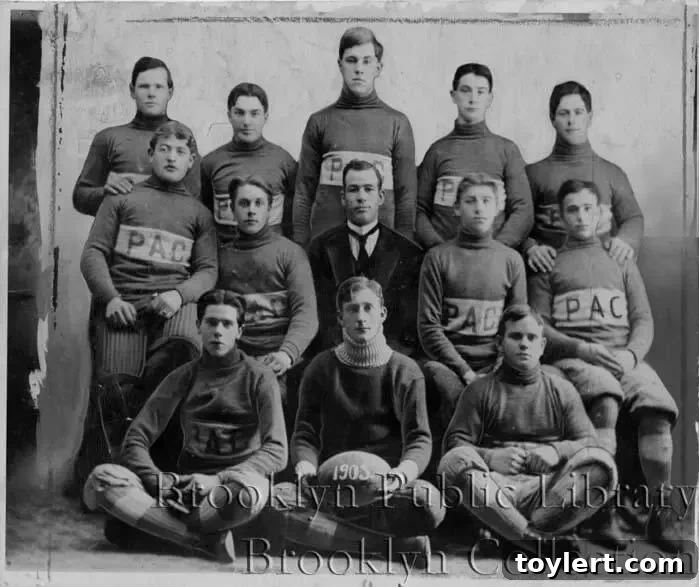
The history of football in Brooklyn, however, extends far beyond the professional NFL era. Long before the Brooklyn Dodgers graced Ebbets Field, local athletic clubs and collegiate teams were fiercely competing. Take, for instance, this captivating photo from 1903, which shows members of the Puritan Athletic Club striking a pose. A keen eye will immediately spot the more-rounded ball positioned prominently in the bottom center of the frame. This detail is crucial, as it offers a vivid glimpse into a bygone era when American football bore a much closer resemblance to its rugby origins.
In the late 19th and early 20th centuries, football was a sport still very much in flux. The rules were evolving rapidly, equipment was rudimentary, and the distinct characteristics that define modern American football were yet to be fully solidified. Teams like the Puritan Athletic Club were at the forefront of this evolution, playing a game that blended the continuous action of rugby with nascent elements of strategy and specialized positions. The “pigskin” itself was a key indicator of this transition; the elongated, pointed shape we recognize today gradually emerged as the forward pass became a more integral and legal part of the game. Before that, a rounder ball was better suited for kicking and lateral passing, aligning perfectly with rugby’s foundational principles. Brooklyn, as a burgeoning urban center, was a hotbed for these early sporting endeavors, fostering numerous amateur and semi-professional teams that laid the groundwork for future professional leagues.
The Genesis of American Football in Brooklyn
Brooklyn’s robust sports culture, deeply rooted in its diverse communities, provided fertile ground for the growth of football. From working-class neighborhoods to elite academic institutions, the sport captivated players and spectators alike. Local newspapers of the era frequently chronicled the exploits of high school, college, and club teams, turning neighborhood rivalries into passionate spectacles. These early games, often played on dusty fields or makeshift pitches, were community events, drawing crowds eager to witness the physical prowess and strategic battles on display. The commitment of these early athletes, playing for pride and local glory, forged a strong connection between the sport and the identity of Brooklyn. This grassroots enthusiasm ultimately paved the way for professional football’s arrival in the borough.
The NFL Dodgers: A Look at Their Legacy
When the Brooklyn Dodgers NFL team began play in 1930, they joined a league that was still finding its footing. The NFL was not yet the monolithic entertainment empire it is today; it was a regional league with teams scattered across the Northeast and Midwest. The Dodgers, under owners like Chris O’Brien and later Dan Topping (who would famously own the New York Yankees baseball team), faced formidable opponents and carved out a respectable, if not dominant, record. Their roster included notable players for the time, such as Ace Parker, a talented quarterback and halfback who was inducted into the Pro Football Hall of Fame. Parker’s versatility and leadership exemplified the tough, all-around play that characterized football in that era.
The team’s home, Ebbets Field, was an iconic venue. While primarily a baseball stadium, it was adapted for football, with temporary goalposts and field markings transforming the diamond into a gridiron. Playing in such a historic ballpark only added to the allure of the Brooklyn Dodgers NFL games, drawing fans who might have also cheered for the baseball team. Despite never winning an NFL championship, the Dodgers maintained a loyal following and contributed significantly to the league’s growing legitimacy and fan base in one of America’s largest markets. Their existence cemented Brooklyn’s place in early professional football history, a legacy that continues to resonate through their direct connection to a modern NFL powerhouse.
Brooklyn’s Enduring Sports Heritage
While an NFL team no longer calls Brooklyn home, the borough’s sporting heritage remains incredibly vibrant and diverse. The legacy of the baseball Dodgers, even after their move to Los Angeles, still runs deep in the borough’s collective memory. Beyond baseball and football, Brooklyn has a rich history in boxing, basketball, and various amateur sports, demonstrating a consistent passion for athletic competition. The presence of the NBA’s Brooklyn Nets and the resurgence of local sports leagues continue to fuel this fervor. The story of the Brooklyn Dodgers NFL team serves as a powerful reminder that Brooklyn has always been a city of champions, innovators, and passionate fans, deeply intertwined with the fabric of American sports history.
The reasons behind Brooklyn’s current lack of an NFL franchise are multifaceted, involving the logistical challenges of stadium development in a densely populated urban environment, the saturation of the New York metropolitan market with the well-established New York Giants and New York Jets, and the economic realities of modern professional sports. However, the absence of a current team does not diminish the borough’s significant contributions to the sport’s past. From the rough-and-tumble games of the Puritan Athletic Club to the professional contests at Ebbets Field, Brooklyn’s connection to American football is a fascinating chapter in sports history.
So, as the NFL playoffs unfold each year, and discussions turn to the greatest teams and moments in football, it’s worth remembering that Brooklyn holds a unique, if understated, place in that grand narrative. The borough’s impact, from influencing the game’s early evolution to hosting a direct predecessor of the Indianapolis Colts, solidifies its historical significance. Brooklyn’s gridiron past is a testament to its enduring love affair with sports, a story of evolving traditions, iconic venues, and the indomitable spirit of competition that continues to define this remarkable New York borough.