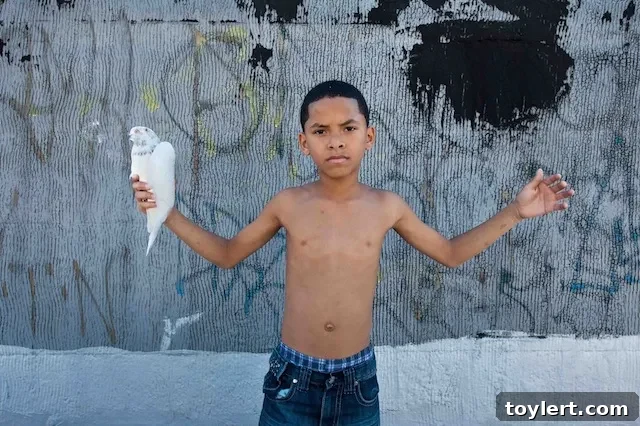
Chris Arnade’s Farewell to Brooklyn: A Photographer’s Love Letter to Community and Change
After an impactful 21-year tenure documenting the diverse tapestry of Brooklyn, renowned photographer Chris Arnade is embarking on a new chapter, relocating to the Bronx. Arnade, a former Wall Street trader who transitioned into a powerful visual storyteller, has become widely recognized for his raw, often poignant, and sometimes controversial portraits of individuals residing in areas frequently overlooked, such as East New York and Brownsville. As he prepares to leave the borough that shaped much of his distinctive photographic journey, Arnade penned a moving, long-form narrative for The Awl titled “Some Things I Will Miss About Brooklyn.” This piece serves not merely as a list, but as a heartfelt tribute and an intimate farewell to the communities and authentic spirit he so passionately captured.
Chris Arnade: From Wall Street to the Streets of Brooklyn
Chris Arnade’s transformation from a high-stakes financial trader to a celebrated street photographer is a story of profound personal evolution. His journey began not in a photography studio, but on the trading floors of Wall Street, a world vastly different from the one he would come to document. Arnade’s shift was driven by a desire to connect with and understand the “back row” of America—the people and places often marginalized, ignored, or misrepresented by mainstream media. He picked up a camera not as a hobby, but as a tool for empathy and a means to give voice to the voiceless.
For over two decades, Brooklyn served as his primary canvas and muse. It was in the vibrant, ever-changing neighborhoods of this iconic borough that Arnade honed his unique photographic style. He developed a methodology rooted in deep immersion, spending countless hours walking the streets, conversing with residents, and slowly building trust within communities. His photographs are not fleeting snapshots; they are the result of genuine connection, revealing the dignity, resilience, and complex humanity of his subjects. This approach often led him to the heart of discussions about poverty, addiction, and social inequality, yet always framed with an unwavering sense of respect for the individual.
The Heart of Brooklyn: People and Places Chris Arnade Will Miss
Arnade’s “love letter” to Brooklyn is much more than a simple inventory of landmarks. It’s a curated reflection on the spirit of the borough, seen through the lens of its people and the unique spaces they inhabit. The items on his list are touchstones of an authentic Brooklyn, a world that is constantly evolving amidst rapid gentrification and cultural shifts. Each entry speaks to a deeper connection, representing facets of community life that left an indelible mark on Arnade.
The Pigeon Keepers of Bushwick and East New York
Among the things Arnade highlighted were the venerable pigeon keepers of Bushwick and East New York. This seemingly niche hobby carries immense cultural and historical weight in many urban working-class neighborhoods, particularly within immigrant communities. For generations, rooftop pigeon coops have been a familiar sight, offering a unique blend of sport, tradition, and connection to nature amidst the concrete jungle. These keepers dedicate themselves to the care and training of their birds, often engaging in races or simply enjoying the spectacle of their flocks soaring high above the city streets.
For Arnade, these pigeon keepers embody a profound sense of rootedness and tradition. They represent a vanishing way of life, a quiet resistance against the tide of modernization that threatens to erase such community-specific practices. Their passion for their birds speaks to a deeper human need for connection, purpose, and a touch of the extraordinary in the everyday. Through his photographs, Arnade brings these often-unseen figures into the light, celebrating their dedication and the intricate subcultures they sustain.
Floyd Bennett Field: Brooklyn’s Untamed Oasis
Another cherished spot on Arnade’s list is Floyd Bennett Field. What was once New York City’s first municipal airport, and later a naval air station, has been transformed into a sprawling urban parkland. Unlike the manicured lawns and bustling playgrounds of typical Brooklyn parks, Floyd Bennett Field offers a rugged, untamed expanse. It’s a place where diverse communities converge for a myriad of activities that require space and freedom: model airplane enthusiasts launch their meticulously crafted aircraft, campers seek solace under the stars, birdwatchers scan the skies, and nature lovers explore its wilder reaches.
Floyd Bennett Field symbolizes an escape, a vast open space within a densely packed metropolis. It provides a sanctuary for hobbies that demand room to breathe and for individuals seeking a connection to something larger and less controlled than the city’s grid. For Arnade, this field represents a kind of freedom and authenticity—a place where people can pursue their passions without inhibition, far from the polished facades of commercialized urban life. It’s a testament to the unexpected wilderness that can still be found and cherished, even in one of the world’s largest cities.
Sunset Park’s Soccer Tavern: A Hub of Community and Passion
Finally, Arnade fondly remembers Sunset Park’s Soccer Tavern. More than just a bar, this establishment serves as a vibrant cultural institution and a quintessential community hub. Located in a neighborhood renowned for its strong Latin American immigrant population, the Soccer Tavern pulsated with the energy and camaraderie born of shared passion for “the beautiful game.” On game nights, it transformed into a lively spectacle, with patrons cheering, commiserating, and celebrating together, forging bonds that extended beyond the final whistle.
The Soccer Tavern exemplifies the concept of a “third place”—a communal space distinct from home or work, where people gather for social interaction and shared experiences. It’s where friendships are solidified, news is exchanged, and cultural identity is celebrated. Arnade understood that these establishments are the lifeblood of a neighborhood, offering a warmth and inclusivity that define the genuine character of a community. His appreciation for such places underscores his belief that true urban vitality lies in these intimate, unpretentious gathering spots where real human connections flourish.
Beyond Physicality: The Enduring Soul of Brooklyn
Arnade’s narrative consistently underscores a crucial point: his deep affection is not for Brooklyn’s buildings or trendy new establishments, but for its people and the vibrant, resilient communities they form. His work serves as a powerful testament to the borough’s enduring soul, especially amidst the relentless forces of gentrification and rapid development. As old storefronts disappear and familiar faces move away, Arnade’s photographs become an invaluable historical record, capturing moments and lifestyles that are steadily fading.
He is an observer of change, an artist who finds beauty and profound humanity in the unpolished realities of urban existence. His photographs challenge viewers to look beyond superficial narratives and to see the dignity and strength in individuals often relegated to the margins. Arnade’s “love letter” to Brooklyn is ultimately a celebration of authenticity—a recognition that the true wealth of a city lies in its diverse inhabitants, their shared histories, and the unique cultural landscapes they create.
A Legacy of Empathy and the Road Ahead
As Chris Arnade transitions to the Bronx, his departure from Brooklyn marks the end of a significant chapter, but his legacy in the borough will undoubtedly endure. His extensive body of work has contributed immensely to our understanding of urban life, poverty, resilience, and the universal human experience. He has consistently championed those often overlooked, ensuring their stories are seen and heard with empathy and respect.
His move to a new borough signals a continued commitment to exploring similar themes in new environments, bringing his unique perspective to different communities. Arnade’s farewell to Brooklyn, encapsulated in his poignant reflection, encourages us all to consider our own connections to the places we inhabit. What are the essential, often unassuming, elements of our neighborhoods that we would truly miss? What are the faces, the traditions, the local institutions that define our sense of place?
Chris Arnade reminds us that a city’s true character is etched not in its skyline, but in the everyday lives of its people, in the hidden pockets of culture, and in the profound human connections that bind communities together. His work stands as a powerful call to cherish and recognize these vital cultural touchstones before they become mere memories.