Gowanus Black Lives Matter Murals Accidentally Painted Over: A Developer’s ‘Gargantuan Misunderstanding’ Sparks Community Dialogue
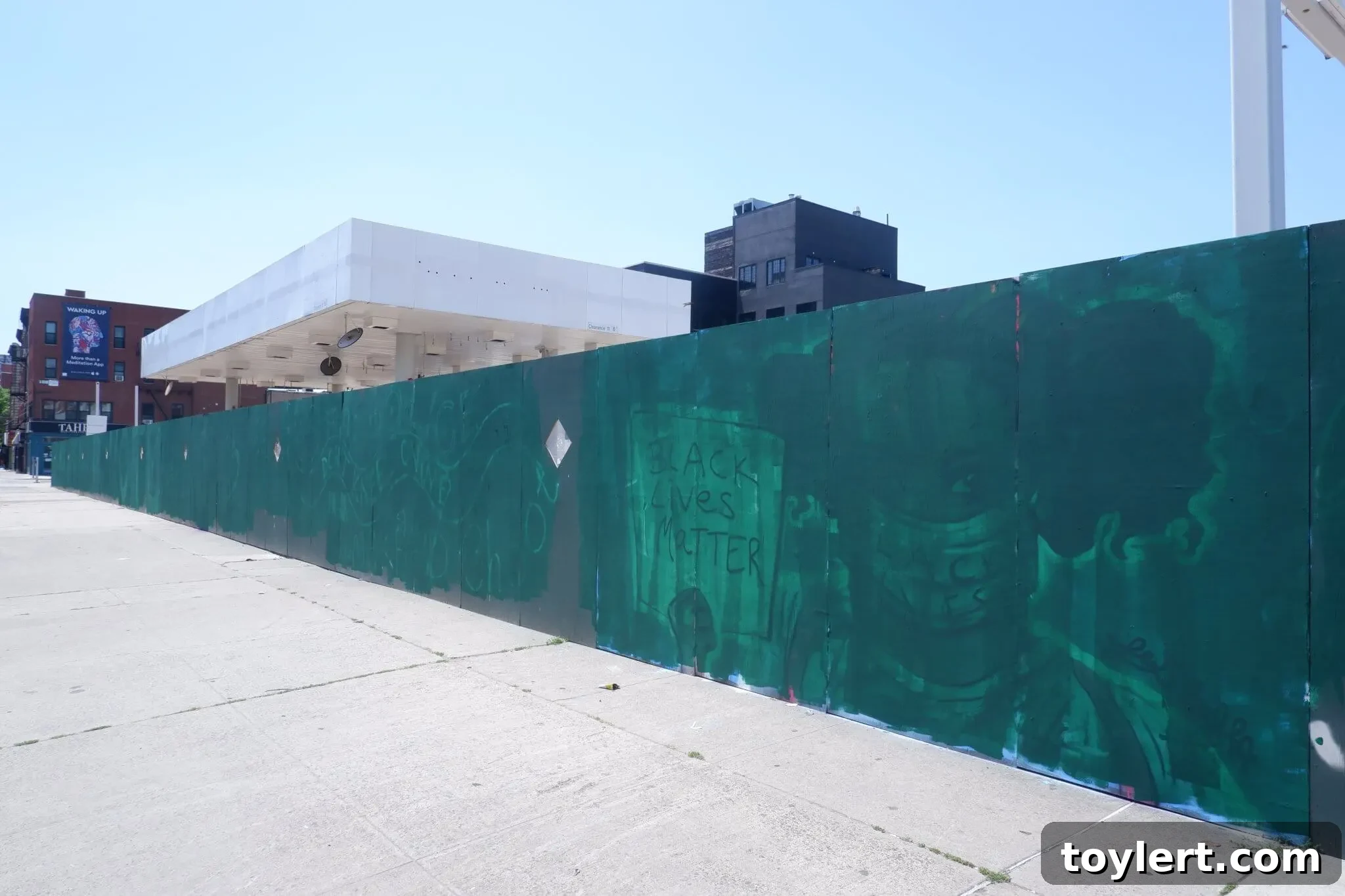
A series of powerful Black Lives Matter (BLM) murals, adorning a construction fence along 4th Avenue in the vibrant Gowanus neighborhood of Brooklyn, were inadvertently painted over on June 9. The incident immediately drew concern and questions from the community, prompting a swift response from the site’s developer, Avery Hall Investments, who described the event as a “gargantuan misunderstanding.” This development has ignited a broader conversation about the delicate balance between urban development, the significance of public art, and the vital role of community expression in a rapidly changing cityscape.
The Canvas of Protest: The Significance of BLM Murals in Public Spaces
The Black Lives Matter movement has profoundly impacted global consciousness, spurring widespread calls for racial justice and equality. Across cities worldwide, public art has emerged as a powerful, accessible medium for expressing solidarity, protest, and remembrance. In Brooklyn, and particularly in neighborhoods like Gowanus, temporary installations such as murals on construction fences have become critical canvases for social commentary. These murals serve not merely as decorative elements but as potent visual declarations, reflecting the prevailing social climate and giving voice to community sentiments.
The murals painted on the 4th Avenue construction fence were more than just paint on wood; they were symbols of a collective struggle, visual affirmations of a movement striving for fundamental human rights. Located in a high-traffic area, they offered daily reminders to residents and commuters of the ongoing fight against systemic racism and police brutality. Such public artworks foster a sense of community, allowing residents to see their values and concerns reflected in their urban environment. Their presence encouraged dialogue, educated passersby, and provided a space for contemplation and solidarity within the diverse Gowanus community.
The Unforeseen Incident: Murals Erased
The morning of June 9 saw a worker at the construction site applying a fresh coat of paint over the fence. Unbeknownst to many and, as claimed, to the worker herself, this action systematically covered the striking Black Lives Matter artwork that had graced the barrier for some time. The immediate visual impact was stark: the vibrant messages and artistic expressions were replaced by a uniform, blank facade. For those who had come to appreciate or even rely on these murals as a symbol of hope and resistance, their disappearance was unsettling, prompting concerns about censorship, disregard for public art, or a deliberate attempt to erase an important message.
The construction fence, located between Sackett and Union streets, has been part of a significant development project by Avery Hall Investments. Construction sites often become informal galleries, particularly in culturally rich neighborhoods like Gowanus, where artists and activists utilize available surfaces to share their messages. The temporary nature of construction barriers makes them ideal for ephemeral art, reflecting current events and community sentiment without requiring permanent installation permits. However, this temporary status also makes them vulnerable to unforeseen incidents, as painfully demonstrated by the painting-over of these significant murals.
A Developer’s Explanation: A “Gargantuan Misunderstanding”
Following the swift public reaction to the removal of the murals, Brian Ezra, a principal at Avery Hall Investments, quickly addressed the issue, characterizing it as a “gargantuan misunderstanding.” Ezra conveyed that the worker responsible for painting the fence had acted without malicious intent, believing she was simply performing her routine duties. “This person did it with no bad intentions. She simply thought that she was doing the work she was supposed to be doing. She did not realize that she was accidentally painting over the artwork,” Ezra stated, emphasizing the inadvertent nature of the act.
This explanation highlights a critical breakdown in communication and awareness. In a city as dynamic and art-filled as Brooklyn, construction companies and developers are increasingly navigating the interface between their projects and the surrounding public spaces, which often host spontaneous community art. The incident raises questions about protocols for managing construction site aesthetics, particularly when fences become canvases for community expression. It underscores the need for clearer guidelines and increased communication between site management, workers, and community stakeholders to prevent similar occurrences in the future. While Ezra’s words aimed to de-escalate concerns, they also inadvertently brought to light the potential for important cultural statements to be unintentionally erased in the course of routine operations.
Community Response and the Value of Public Art in Gowanus
The Gowanus neighborhood, known for its industrial heritage, evolving arts scene, and ongoing gentrification, has a strong sense of community and a deep appreciation for public art. The removal of the Black Lives Matter murals, even if accidental, likely resonated deeply within this community. Public art often serves as a barometer of a neighborhood’s social and political climate, and its sudden disappearance can be perceived as a loss of voice or a disregard for community values. Residents often form emotional connections with such artworks, viewing them as integral parts of their daily lives and shared identity.
The incident also opens up a larger dialogue about who owns public space and who has the right to define its visual landscape. While developers own the property their fences enclose, the exterior of these fences often acts as an unofficial public forum. The community’s reaction to the murals’ removal, whether through social media, local discussions, or direct outreach, underscores the importance of public engagement and sensitivity on the part of developers in urban environments. It reinforces the idea that what happens on the periphery of a development site can have significant cultural and social implications for the broader neighborhood.
Moving Forward: Preserving Expression and Fostering Dialogue
The “gargantuan misunderstanding” in Gowanus serves as a poignant lesson for all parties involved in urban development and community engagement. For developers like Avery Hall Investments, it highlights the importance of implementing robust communication protocols and providing clear instructions to all personnel regarding the preservation of public art, particularly when it holds significant social or political meaning. Training staff to recognize and respect temporary art installations can prevent future accidental removals and demonstrate a commitment to community values.
For the community, this incident may catalyze efforts to create more formalized spaces for public art or to establish clear guidelines for the installation and protection of temporary murals. Initiatives could include designating specific areas for street art, forming partnerships between artists and developers, or even exploring the possibility of recreating the powerful Black Lives Matter murals, perhaps in a more permanent or officially recognized format. The incident could also foster a stronger dialogue between developers, artists, and residents, ensuring that future urban renewal projects in Gowanus are undertaken with a deeper understanding and respect for the neighborhood’s cultural fabric and expressive needs.
Ultimately, the painting over of the Black Lives Matter murals on 4th Avenue, though accidental, underscores the enduring power of public art as a medium for social change and the critical need for open communication and mutual respect within urban development processes. It reminds us that even temporary art can leave a lasting impression and that its removal, intended or not, carries significant weight in the ongoing narrative of social justice and community identity in places like Gowanus, Brooklyn.
To read the whole story by our sister pub Brooklyn Paper, click here.