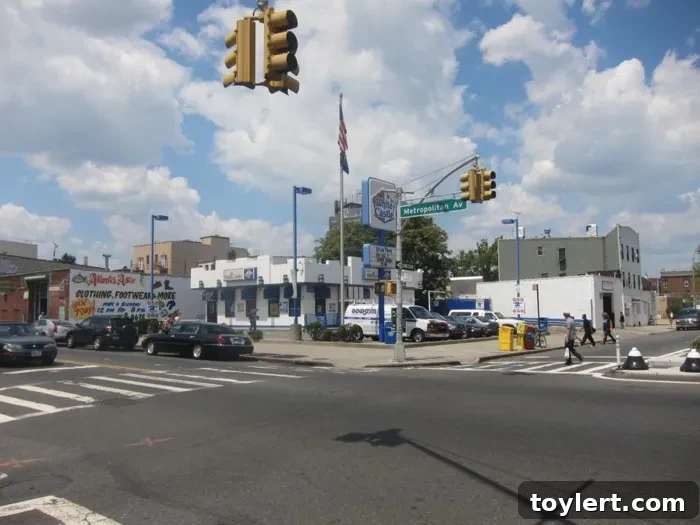
The End of an Era: Williamsburg’s Iconic White Castle Shuts Its Doors Amidst Shifting Landscape
The news arrived as a poignant reminder of Williamsburg’s ever-changing identity: the beloved White Castle outpost, a long-standing fixture near the intersection of Bushwick Avenue and Metropolitan, has officially closed its doors. While whispers of its impending departure had circulated for some time, as reported in earlier reports indicating the land had been sold, the finality of its closure still delivered a significant blow to the community and those nostalgic for a bygone era. For decades, this particular White Castle served as more than just a fast-food joint; it was a cultural touchstone, a late-night refuge, and a symbol of old Williamsburg, standing in stark contrast to the rapidly gentrifying landscape around it.
Located in an historically significant pocket of Brooklyn, not far from a tiny park and a plaque commemorating Bushwick’s founding in 1661, the restaurant held a unique place. Its presence anchored a corner that felt distinctly less polished than other parts of the neighborhood, a testament to the area’s rich and complex history. The closure, confirmed by Gothamist, marks the end of an institution that once thrived in a very different Williamsburg, a place where its humble presence perfectly fit the local fabric.
A Glimpse into Old Williamsburg: More Than Just Sliders
Opened in 1992, this White Castle arrived during a period when Williamsburg was a vibrant, yet raw, crucible of cultures. As Gothamist eloquently put it, “Williamsburg was a gritty, yet nurturing melting pot for working class Brooklynites and Pavement fans alike, a place infinitely, ineluctably better than the place that exists today.” This description perfectly encapsulates the restaurant’s significance. It was a democratic space where blue-collar workers, artists, musicians, and long-time residents could gather over affordable, iconic sliders. Its 24/7 nature often made it a last stop after a long shift or a late-night show, a beacon of greasy comfort in a neighborhood known for its burgeoning underground scene.
The White Castle on Metropolitan Avenue was a tangible link to a Williamsburg that predated the arrival of boutique coffee shops, luxury high-rises, and celebrity chefs. It embodied the spirit of a community that valued authenticity, grit, and accessibility. The classic menu, featuring its distinctive steam-grilled square burgers, was a constant in a world of accelerating change. For many, a visit here wasn’t just about satisfying a craving; it was about experiencing a piece of local history and connecting with the unpretentious essence of Brooklyn that has, in many ways, diminished over time.
The Evolving Landscape of Williamsburg: A Tale of Two Eras
The closure of this White Castle is emblematic of the profound transformation Williamsburg has undergone over the past few decades. From its industrial roots and working-class identity, the neighborhood has evolved into one of New York City’s most sought-after and expensive areas. This rapid gentrification has brought with it an influx of new residents, businesses, and development, often at the expense of the long-standing institutions that once defined its character. The economic forces at play have relentlessly reshaped the urban environment, prioritizing high-end retail and residential projects over community staples.
Rising property values and escalating rents have made it increasingly difficult for legacy businesses, including independent shops and chain establishments like White Castle that catered to a more diverse economic demographic, to survive. The area surrounding Bushwick Avenue and Metropolitan, once considered on the fringes of the ‘hip’ parts of Williamsburg, has also seen significant development pressure. This economic shift creates an environment where the viability of a classic fast-food joint, once a neighborhood staple, becomes questionable in the face of more lucrative redevelopment opportunities, ultimately leading to its inevitable departure.
Community Reactions and the Loss of a Landmark
For many long-time residents and former denizens of Williamsburg, the closure of White Castle elicits a strong sense of nostalgia and loss. It represents not just the end of a restaurant but the fading memory of a particular era, a time when the neighborhood felt more inclusive and less commodified. Social media platforms and local forums were likely abuzz with shared memories of late-night slider runs, post-concert meals, and the simple comfort of a familiar, unchanging spot that reliably offered a taste of home.
The sentiment expressed by Gothamist – that the old Williamsburg was “infinitely, ineluctably better than the place that exists today” – resonates deeply with those who witnessed the neighborhood’s transformation firsthand. The White Castle was a steadfast counterpoint to the relentless march of modernization. Its absence leaves a void that no trendy new eatery, no matter how acclaimed, can truly fill. It’s a reminder that progress, while often bringing new amenities, also comes with the bittersweet cost of losing beloved landmarks that shaped local identity and fostered a unique sense of community belonging.
White Castle’s Enduring Legacy in American Fast Food
White Castle holds a unique and revered place in the annals of American fast-food history. Founded in 1921 in Wichita, Kansas, it is widely recognized as the world’s first fast-food chain. Its innovative approach to standardized production, quick service, and affordable pricing revolutionized the restaurant industry, setting a precedent for countless establishments that followed. The distinctive small, square burgers, known as “sliders,” cooked on a bed of onions, became an instant classic and a staple for generations of Americans looking for a quick, satisfying, and budget-friendly meal.
Beyond its culinary contributions, White Castle has cultivated a strong cultural following. It’s often associated with late-night cravings, road trips, and a deep sense of nostalgic comfort food. The brand has been immortalized in pop culture, from cult classic movies like “Harold & Kumar Go to White Castle” to countless mentions in literature and music, solidifying its place in the American consciousness. Each White Castle location, particularly older ones in urban centers like the one in Williamsburg, carries a piece of this rich legacy, serving not just food but also a slice of Americana. The Williamsburg closure, therefore, isn’t just a local event; it’s a small but significant chapter in the ongoing story of a quintessential American brand grappling with urban change and the relentless march of time.
What Lies Ahead: The Future of the Bushwick/Metropolitan Corner
With the White Castle now gone, speculation naturally turns to the future of the prime corner it once occupied. Given the intense development pressures in Williamsburg, it is highly probable that the site will be redeveloped for a purpose that aligns with the neighborhood’s current economic trajectory. The land, having been sold out from under the establishment years prior to its closure, strongly suggests that plans for a new venture were already in motion long before the doors officially closed. It’s conceivable that the plot, nestled in an increasingly desirable location, will give way to a mixed-use residential building, luxury condominiums, or another high-end commercial enterprise designed to cater to the neighborhood’s evolving demographic and capitalize on the area’s booming real estate market.
Such developments, while bringing new housing and services, often contribute further to the erasure of the neighborhood’s working-class past and its unique cultural fabric. The shift from an affordable, accessible fast-food restaurant to potentially high-density, upscale development underscores the broader economic forces at play in Brooklyn. The closure serves as a potent symbol of urban renewal, which, depending on one’s perspective, can be seen as either a necessary step towards progress and modernization or an undeniable loss of community character and historical continuity.
The Broader Implications for Brooklyn’s Identity
The story of Williamsburg’s White Castle is not an isolated incident but rather a microcosm of a larger trend affecting neighborhoods across Brooklyn and indeed, many rapidly gentrifying urban centers. Iconic, long-standing businesses that once served as anchors for their communities are increasingly vulnerable to economic pressures, particularly rising real estate values and changing consumer demands. From beloved diners and historic bodegas to local bookshops and hardware stores, the narrative of “disappearing Brooklyn” is a familiar and often lamented one, echoing across the borough as development continues unabated.
This erosion of cultural landmarks has significant implications for the borough’s identity. As unique, local establishments are replaced by corporate chains or luxury developments, Brooklyn risks losing the very soul that made it such a vibrant, distinctive, and authentically diverse place. The closure of the White Castle on Metropolitan Avenue stands as a stark reminder of this ongoing battle between preservation and progress, urging a deeper conversation about how to maintain the spirit of a community amidst relentless urban evolution and the seemingly insatiable appetite for new development.
Conclusion: A Bite-Sized Piece of History Gone
The closure of the White Castle in Williamsburg is far more than just the shuttering of a fast-food restaurant; it signifies the end of an era and a poignant marker in the ongoing saga of a neighborhood in constant flux. It was a place that offered affordable meals and a sense of constancy in a world that was rapidly transforming around it. For those who remember Williamsburg before the cranes and luxury developments dominated the skyline, this White Castle was a nostalgic anchor, a tangible connection to a “gritty, yet nurturing melting pot” that fostered diverse communities and unique cultural expressions.
Its departure underscores the bittersweet nature of urban development – the continuous cycle of old making way for new. While the future of the Bushwick Avenue and Metropolitan intersection remains to be seen, one thing is certain: the memory of the White Castle, with its iconic sliders and its role in the daily lives of countless Brooklynites, will endure as a cherished piece of Williamsburg’s rich and ever-evolving history. It reminds us that sometimes, the most profound changes in a city’s landscape begin with the quiet disappearance of something as seemingly simple as a beloved burger joint.