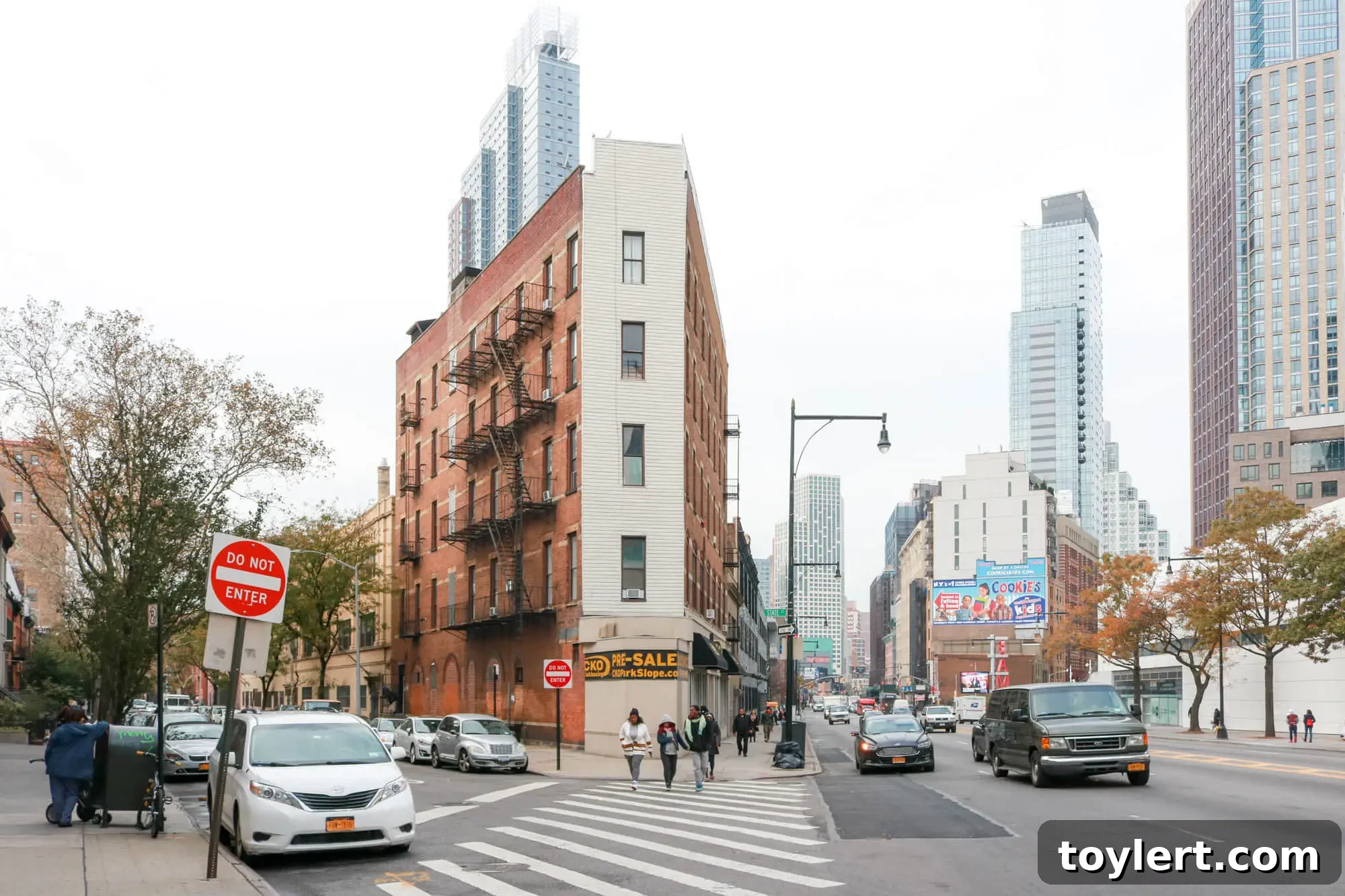
In a decisive and remarkably swift display of local sentiment, Brooklyn’s Community Board 2 delivered an overwhelming rejection to the highly contentious 80 Flatbush development. At its general meeting held Wednesday night at Long Island University, board members voiced their profound concerns and ultimately cast a vote that clearly reflected widespread opposition to the ambitious, multi-tower project proposed for the heart of Boerum Hill.
The outcome of the vote left little room for ambiguity regarding the board’s stance. Of the attending members, a resounding 32 individuals voted against the development, with only one member casting a vote in favor. Five members chose to abstain, indicating neither approval nor disapproval, while two members recused themselves from the vote, likely due to potential conflicts of interest. This lop-sided tally underscores the deep-seated resistance the project faces within the local community it seeks to transform. The swiftness of the vote itself hinted at a consensus that had been building over months, if not years, of public discourse and debate surrounding the project’s scale and implications for the neighborhood.
The Controversial 80 Flatbush Development: A Deep Dive
The 80 Flatbush development, spearheaded by Alloy Development, is not merely another building project; it is a monumental undertaking poised to drastically alter a significant portion of Downtown Brooklyn and its adjacent Boerum Hill neighborhood. The proposal outlines two towering structures – one soaring to an impressive 980 feet and the other reaching 580 feet – on a full block bordered by Flatbush Avenue, State Street, Third Avenue, and Schermerhorn Street. This mixed-use complex is designed to include over 900 residential units, a significant portion of which are designated as affordable housing, along with substantial commercial office space, retail establishments, and two new schools for the area.
From its inception, the project has been a lightning rod for debate. Supporters often highlight the potential for creating much-needed housing, including affordable units, generating new jobs through its commercial and retail components, and contributing to the city’s tax base. They argue that its location, directly adjacent to major transit hubs, makes it an ideal site for high-density development, aligning with principles of transit-oriented urban planning. Furthermore, the inclusion of new public schools is often cited as a direct benefit to a growing Brooklyn population grappling with educational infrastructure strain.
Community Concerns and the Battle for Boerum Hill’s Character
However, these proposed benefits are overshadowed, in the eyes of many, by a litany of concerns that fueled Community Board 2’s decisive vote. The primary apprehension revolves around the sheer scale and height of the proposed towers. Local residents and preservationists fear that these colossal structures will irrevocably alter the historic low-rise character of Boerum Hill, casting long shadows over its brownstone-lined streets and quaint public spaces. The drastic increase in density is also a major point of contention, raising questions about the capacity of existing infrastructure – including public transit, sanitation services, and open green spaces – to accommodate thousands of new residents and workers.
Traffic congestion, an already pervasive issue in this bustling part of Brooklyn, is another critical concern. Opponents argue that the influx of new vehicles and pedestrians will exacerbate gridlock and diminish the quality of life for long-term residents. While the project includes affordable housing, critics often argue that the overall effect of such massive luxury developments contributes to gentrification, driving up property values and pushing out long-term, lower-income residents and small businesses, thus eroding the very fabric of the community.
Community Board 2’s Pivotal, Though Advisory, Role
Community Board 2 serves as a vital conduit for local voices in New York City’s complex Uniform Land Use Review Procedure (ULURP). While the board’s vote is purely advisory and not legally binding, its strong recommendation carries significant political weight. Community Boards are mandated to review and offer recommendations on land-use applications, zoning changes, and other development proposals that impact their districts. Their role is to represent the interests and concerns of the local population, providing a crucial check and balance in a process often dominated by powerful developers and city agencies.
The overwhelming “no” from Community Board 2 sends an unmistakable signal to the Borough President, the City Planning Commission, and ultimately the City Council – the subsequent stages in the ULURP process. It underscores the severity of local opposition and can influence how these higher authorities perceive and deliberate on the project. A unanimous or near-unanimous rejection from a Community Board often prompts closer scrutiny and can necessitate significant revisions to a project to garner broader support, or at least mitigate opposition.
The Road Ahead: Navigating the ULURP Process
The ULURP process is a multi-stage gauntlet designed to ensure public input and review for significant land-use actions in New York City. Following the Community Board’s advisory vote, the 80 Flatbush application will now move to the Borough President’s office. The Brooklyn Borough President, currently Antonio Reynoso, will also issue an advisory recommendation, taking into account the Community Board’s findings, public testimony, and their own assessment of the project’s merits and drawbacks. While advisory, the Borough President’s stance often holds substantial sway due to their elected position and citywide perspective.
Next, the application proceeds to the City Planning Commission (CPC). The CPC is an independent body responsible for reviewing land use applications and making recommendations to the City Council. They conduct their own public hearings and often engage in detailed negotiations with developers to address concerns raised at the community and Borough President levels. It is common for projects to undergo modifications during this stage, such as reductions in height, changes in unit count, or enhancements to public amenities, in an effort to achieve approval.
The final and most crucial step in the ULURP process for zoning changes and special permits, such as those required for 80 Flatbush, is a vote by the New York City Council. The City Council’s vote is binding. Historically, the Council often defers to the local Council Member representing the district where the project is located. This “member deference” system gives significant power to the district’s Council Member to negotiate terms or even block projects that do not have sufficient community support or that fail to meet specific community benefit demands. The current Council Member for the 80 Flatbush area will play a critical role in the project’s ultimate fate, weighing the developer’s proposals against the strong community opposition articulated by Community Board 2.
Broader Implications: Development, Density, and Democracy in NYC
The protracted battle over 80 Flatbush is emblematic of larger tensions in New York City – the urgent need for housing and economic development versus the desire to preserve neighborhood character, ensure equitable growth, and prevent overdevelopment. Brooklyn, in particular, has experienced a dramatic transformation over the past two decades, with its downtown areas and surrounding neighborhoods becoming hubs for high-rise residential and commercial construction. This growth brings both opportunities and significant challenges, placing immense pressure on existing infrastructure and community resources.
The strong stance taken by Community Board 2 at its Long Island University meeting highlights the enduring power of local activism and the democratic process, even in the face of massive development pressures. It serves as a reminder that while developers and city planners operate at a macro level, the micro-level impacts on daily lives and the cherished identities of individual neighborhoods cannot be overlooked. The 80 Flatbush saga will continue to unfold, offering a case study in how New York City attempts to balance its seemingly insatiable appetite for growth with the fundamental right of its communities to have a meaningful say in their future.
The journey of 80 Flatbush through the city’s complex land-use review process is far from over. Community Board 2’s decisive “no” is a powerful opening statement, setting a challenging precedent for the developer and signaling a long road ahead. The upcoming decisions by the Borough President, City Planning Commission, and City Council will ultimately determine whether this controversial project moves forward, and in what form, shaping not just the skyline but also the very soul of this vibrant Brooklyn neighborhood.