Historic Fort Greene Brownstone: A Neo-Grec Gem with Modern Potential at 61A South Elliott Place
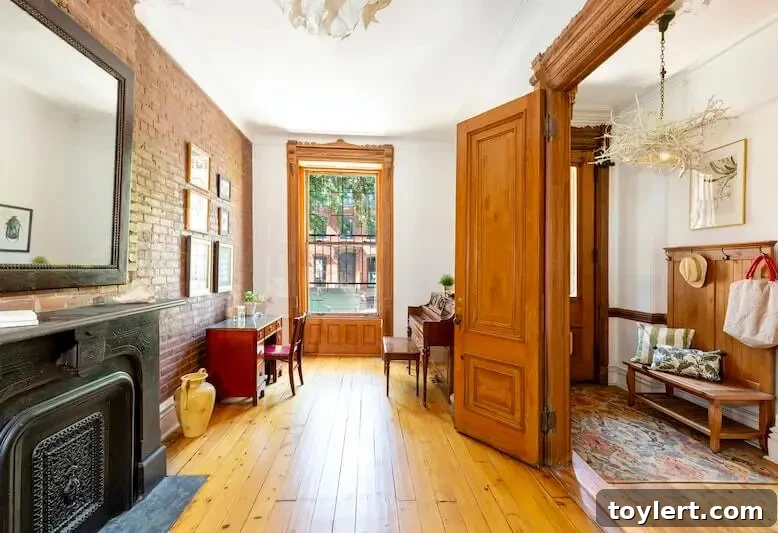
Nestled in the heart of Fort Greene’s esteemed historic district, just a leisurely stroll from the lush expanses of Fort Greene Park, stands a remarkable Neo-Grec brownstone from the 1880s. This architectural treasure, located at 61A South Elliott Place, presents a unique blend of preserved period grandeur and exciting opportunities for a new owner to infuse contemporary style and personalized upgrades. Offering a rare glimpse into Brooklyn’s rich past, this legal two-family dwelling boasts an array of classic features, including original wood floors, six intricately designed mantels, elegant moldings, and charming interior shutters, all contributing to its undeniable historic appeal and inviting atmosphere.
This exquisite brownstone represents more than just a home; it’s a piece of Brooklyn’s architectural heritage. Its nearly 16-foot-wide facade is part of a distinguished row of houses on the block, all conceived by the notable architect Charles Werner and meticulously constructed by the esteemed builders Litchfield & Dickinson between 1881 and 1885. These details are meticulously documented in the official designation report, underscoring the property’s significance within the neighborhood. Historical records reveal that Litchfield & Dickinson proudly advertised these neighboring dwellings for sale in February of 1887, describing them as “choice little houses” distinguished by their impressive stone fronts. This rich historical context adds immeasurable value and character to the property, positioning it as a true legacy investment in one of Brooklyn’s most coveted neighborhoods.
Architectural Elegance: Decoding the Neo-Grec Style and Period Details
The Neo-Grec architectural style, popular in the late 19th century, is beautifully exemplified in the brownstone at 61A South Elliott Place. This style, a revival of classical Greek forms, is characterized by its refined symmetry, intricate geometric patterns, and often a more subdued, elegant ornamentation compared to its Victorian contemporaries. The stone fronts mentioned in the historical advertisements are a hallmark of this era, offering a grand and enduring facade that has stood the test of time. Inside, the house truly comes alive with its authentic period details.
The original wood floors, likely wide-plank oak or pine, speak to the craftsmanship of the 1880s, offering warmth and a timeless aesthetic that modern reproductions often struggle to replicate. These floors tell a story, bearing the subtle marks of generations while providing a sturdy and beautiful foundation for any decor scheme. The presence of six mantels throughout the home is particularly noteworthy, suggesting grand fireplaces that once served as central gathering points. These mantels often feature intricate carvings, decorative tiles, or elegant marble, each a unique work of art that contributes significantly to the home’s historic charm. Imagine cozy evenings by a crackling fire, surrounded by the echoes of the past.
Further enhancing the interior’s historical authenticity are the elaborate moldings that adorn the ceilings and walls. These decorative trimmings add depth, character, and a sense of architectural grandeur to each room, elevating the ordinary into the extraordinary. From delicate cornices to robust baseboards, these details are integral to the Neo-Grec aesthetic. Complementing these features are the interior shutters, a practical yet elegant design element common in homes of this period. Beyond their aesthetic appeal, these shutters offer privacy, light control, and insulation, seamlessly blending functionality with historic charm. Together, these period details create an ambiance that transports residents back to a bygone era of sophisticated living, offering a foundation of authentic beauty that is increasingly rare in today’s market.
A Home with a History: From Boarding House to Legal Two-Family Dwelling
The history of 61A South Elliott Place is as captivating as its architecture, reflecting the evolving residential landscape of Brooklyn. According to Historic I-cards, a vital newspaper ads, and a valid certificate of occupancy, this brownstone served as a boarding house for a significant portion of the 20th century. This transformation from a single-family residence to a multi-room boarding house was a common phenomenon in urban centers like Brooklyn, driven by economic pressures and the influx of new residents seeking affordable accommodation. Boarding houses played a crucial role in the social fabric of early 20th-century New York, providing temporary or long-term housing for workers, students, and new immigrants, fostering vibrant communities within individual homes.
The dwelling underwent another significant transformation in 1947 when it was legally converted into a two-family residence. This shift mirrored the post-World War II housing boom and the desire for more flexible living arrangements, allowing homeowners to generate rental income or accommodate extended family. While the current owners have opted to utilize the entire house as a single-family home, the inherent flexibility of its legal two-family status remains one of its most compelling attributes. This designation offers invaluable versatility, presenting a myriad of possibilities for future inhabitants. Imagine the potential for substantial rental income from a separate unit, making homeownership in Fort Greene more attainable, or creating a dedicated suite for guests, a live-in nanny, or even an aging parent. This legal flexibility is a rare and highly sought-after feature in historic Brooklyn properties, providing both financial advantage and adaptable living solutions.
Flexible Living: The Advantages of a Legal Two-Family Layout
The strategic layout of 61A South Elliott Place, configured as a legal two-family dwelling, offers unparalleled flexibility that caters to diverse modern living needs. Even though the present owners enjoy it as a sprawling single-family abode, the infrastructure for independent living units is already in place, particularly on the top floor. This floor thoughtfully accommodates a second kitchen, a full bathroom, and two well-proportioned bedrooms. This setup is perfectly poised for transformation into a high-demand rental apartment, offering a valuable source of passive income in Brooklyn’s competitive rental market. For those seeking to host out-of-town visitors with ultimate privacy and comfort, it could serve as an exquisite guest suite. Alternatively, it presents an ideal arrangement for a live-in nanny, providing them with their own dedicated and fully equipped living quarters, or it could even function as a private sanctuary for multi-generational living, allowing family members to maintain independence while remaining close.
Beyond its income-generating potential, the two-family configuration offers immense lifestyle benefits. It provides an excellent solution for individuals or families desiring a dedicated home office or studio space, separate from the main living areas, fostering productivity and focus. Entrepreneurs could leverage this space for a professional practice, benefiting from a prestigious Fort Greene address. Furthermore, the inherent adaptability of a two-family home often leads to greater long-term value appreciation, as properties offering such versatility are consistently in high demand. This architectural thoughtfulness ensures that the brownstone can evolve with the changing needs of its owners, from a bustling family home to an income-generating asset, all while preserving its historic integrity and charm.
The Fort Greene Advantage: Location, Culture, and Community
The esteemed location of 61A South Elliott Place within Fort Greene is arguably one of its most significant assets. Fort Greene is celebrated as one of Brooklyn’s most vibrant and historically rich neighborhoods, renowned for its beautiful tree-lined streets, stunning brownstones, and an unparalleled cultural scene. Being “a short stroll from Fort Greene Park” means immediate access to a verdant urban oasis. Fort Greene Park, designed by Frederick Law Olmsted and Calvert Vaux (the landscape architects behind Central Park), is more than just green space; it’s a community hub featuring tennis courts, a playground, a farmers market, and historical monuments, including the Prison Ship Martyrs’ Monument. This park serves as a cherished backyard for residents, offering opportunities for recreation, relaxation, and community engagement throughout the year.
Moreover, residing within the neighborhood’s historic district means being part of a protected architectural legacy. Historic district status ensures the preservation of Fort Greene’s unique character and prevents unchecked development, thereby safeguarding property values and maintaining the area’s aesthetic appeal. This commitment to preservation ensures that the charm and integrity of neighborhoods like Fort Greene endure for generations. The district is also famously known for its proximity to world-class cultural institutions. The Brooklyn Academy of Music (BAM), a renowned performing arts center, is just moments away, offering a diverse array of theater, dance, music, and film. The area boasts an eclectic mix of independent boutiques, art galleries, and an ever-evolving culinary scene, from cozy cafes to acclaimed fine dining establishments. Excellent transportation links, including multiple subway lines, connect Fort Greene seamlessly to Manhattan and other parts of Brooklyn, making it an ideal location for commuters and urban explorers alike. This potent combination of history, culture, green space, and convenience firmly establishes Fort Greene as a premier destination for sophisticated city living.
Future-Proofing a Classic: Modern Upgrades and Investment Potential
While 61A South Elliott Place proudly showcases its 1880s Neo-Grec origins, it also explicitly offers “room for a new owner to make some stylish modern upgrades.” This presents an exciting canvas for personalization and the integration of 21st-century comforts, all while respecting the brownstone’s historical essence. The opportunity to blend classic charm with contemporary design allows for the creation of a truly bespoke living space. Imagine a gourmet kitchen equipped with state-of-the-art appliances, custom cabinetry, and exquisite countertops, seamlessly integrated into the home’s original layout. Bathrooms could be transformed into spa-like sanctuaries, featuring luxurious fixtures, modern tiling, and efficient designs, providing comfort and elegance.
Beyond aesthetic enhancements, modern upgrades could also focus on improving the home’s functionality and energy efficiency. This might include updating plumbing and electrical systems, installing energy-efficient windows that complement the historic facade, or incorporating smart home technology for enhanced convenience and security. HVAC systems could be upgraded to provide optimal climate control throughout the seasons, ensuring year-round comfort. The existing period details, such as the wood floors and mantels, would serve as stunning focal points, beautifully contrasting with sleek, modern interventions. This delicate balance of old and new not only enhances daily living but also significantly contributes to the property’s long-term investment potential. A thoughtfully renovated brownstone in a prime historic district like Fort Greene is a highly desirable asset, promising both an exceptional quality of life and robust appreciation in value. Owning a piece of Brooklyn’s history, while shaping its future, is an unparalleled opportunity that awaits the discerning buyer at 61A South Elliott Place.