In the bustling community of Brooklyn, understanding the nuances of childcare costs and availability is paramount for many families. Renowned for its comprehensive data collection and community insights, Park Slope Parents (PSP) has once again stepped forward, releasing vital information from its latest Babysitter Survey. This eagerly awaited press release, aptly titled “HOW MUCH FOR A LITTLE “PARENTAL R & R”? PARK SLOPE PARENTS RELEASES DATA FROM BABYSITTER SURVEY!”, provides an invaluable snapshot into the local childcare landscape. PSP’s dedication to providing practical, data-driven insights ensures that parents are well-equipped with the knowledge needed to navigate the world of babysitting.
The organization takes this research with utmost seriousness, delving deep into the statistics to offer a clear picture for its members and the wider Brooklyn community. For those who appreciate a detailed breakdown, PSP has even made a comprehensive PowerPoint presentation on the subject available, meticulously detailing the group’s 2012 survey results. This data-friendly approach helps foster transparency and empowers parents to make informed decisions regarding their childcare needs. Let’s delve into some of the key findings this insightful survey has brought to light.
Unpacking Babysitter Pay in Park Slope: What Are the Going Rates?
One of the most pressing questions for parents seeking a night out or simply a few hours of respite is, “How much does a babysitter cost?” The Park Slope Parents survey offers clear averages, highlighting how rates adjust based on the number of children and other crucial factors. Understanding these figures is essential for budgeting and ensuring fair compensation for childcare providers.
- Average cost of a babysitter for 1 child: $14.50/hr
For families with a single child, the average hourly rate stands at $14.50. This provides a baseline for parents seeking occasional care and reflects the general market rate for standard babysitting duties in the area. It’s a competitive rate that balances affordability for parents with fair wages for sitters. - Average cost of a babysitter for 2 children: $15.50/hr
As responsibilities increase with an additional child, so does the hourly rate, moving to an average of $15.50. This modest increase acknowledges the added supervision, engagement, and multi-tasking required when caring for two young individuals. - Average cost of a babysitter for 3 children: $16.80/hr
Caring for three children represents a significant leap in complexity and demands even greater attention and organizational skills. The survey indicates an average rate of $16.80 per hour for three children, reflecting the heightened level of responsibility and effort involved. This tiered pricing structure demonstrates a clear recognition of the increased workload faced by babysitters. - Babysitters under 21 are paid $2-$3 less per hour than those over 21
Experience and maturity significantly influence compensation. Babysitters aged 21 and older command a premium, typically earning $2 to $3 more per hour. This differential likely stems from a perception of greater reliability, experience, and the ability to handle more complex or unexpected situations, factors highly valued by parents. - Babysitters watching children under 1 make $1 more per hour.
Infant care requires specialized skills, unwavering attention, and a deep understanding of developmental needs. Recognizing this heightened level of responsibility, babysitters caring for children under one year old typically earn an additional $1 per hour. This premium underscores the delicate nature of infant care and the specific expertise it demands. - 4 in 10 (38%) of babysitters make $74 or more on a typical night.
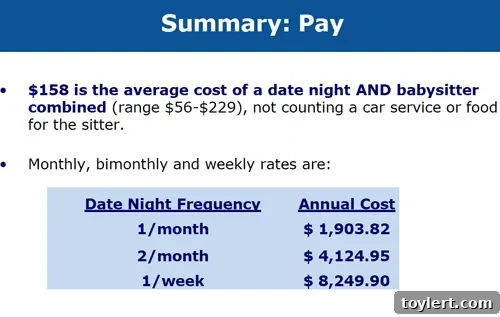
For many babysitters, this role is a significant source of income. The data reveals that a substantial portion – 38% – earn $74 or more on an average night. This figure suggests that typical babysitting sessions in Park Slope are often several hours long, providing meaningful compensation for the sitters. - $158 is the average cost of a date night AND babysitter combined (range $56-$229), not counting a car service or food for the sitter.
The survey provides a realistic look at the total cost of a “date night” for parents, factoring in both the babysitter’s fee and typical entertainment expenses. An average of $158 allows parents to budget for their evening out, though the wide range ($56-$229) indicates significant variability based on the length of the evening and the type of activity. It’s crucial to remember that this figure does not include additional expenses like transportation or providing meals for the sitter, which can further impact the overall cost.
Factors Influencing Babysitter Rates Beyond the Basics
While the survey provides clear averages, several other factors can influence the final hourly rate for a babysitter in a dynamic urban environment like Park Slope. These often include the specific duties requested, the time of day, and any special needs of the children. For instance, sitters required to help with homework, prepare meals beyond simple snacks, or manage children with allergies or special behavioral considerations might command higher rates. Late-night sittings, especially past midnight, also often come with a premium to compensate for the unsocial hours.
Parents also often consider a sitter’s certifications, such as CPR and first aid training, as a significant value-add, potentially justifying a slightly higher hourly wage. The demand for babysitters can also fluctuate seasonally, with peak times like holidays or school breaks potentially driving up rates due to increased competition for reliable caregivers. Understanding these additional variables can help parents negotiate effectively and find a sitter who meets both their needs and their budget.
Babysitter Demographics: Who’s Caring for Park Slope’s Children?
Beyond the financial aspects, the Park Slope Parents survey also sheds light on the demographic profile of babysitters in the community. These insights help paint a picture of the typical caregiver and can be useful for parents in understanding the pool of talent available.
- 90% of all the babysitters are over 21 years old.
A vast majority of babysitters (90%) in Park Slope are aged 21 or older. This high percentage suggests that parents generally prefer, or find it easier to secure, more mature and presumably more experienced caregivers. This aligns with the pay differential noted earlier, where older sitters earn more. - Half (55%) employ babysitters who are 22-30 years old, with 10% using those 18-21 and 3 in ten (29%) use babysitters over 30. Only 7% employ babysitters under 18.
Breaking down the age groups further, the 22-30 age bracket dominates, representing 55% of employed babysitters. This group often consists of college students, recent graduates, or young professionals, many of whom have significant prior childcare experience. Sitters between 18-21 make up 10%, while those over 30 account for a significant 29%. Strikingly, only 7% of parents employ babysitters under the age of 18, reflecting a clear preference for adult caregivers, likely due to legal considerations, maturity, and perceived reliability. - 97% of these occasional babysitters are female.
The survey highlights a striking gender imbalance: 97% of occasional babysitters are female. While societal norms have historically associated childcare more with women, this statistic underscores the continued prevalence of this trend within the Park Slope community. - One third (33%) of babysitters live in the neighborhood, four in ten (41%) live close by (but not directly in the neighborhood), and one-fourth (25%) live father away.
Location is a key practical consideration for parents. Roughly a third (33%) of babysitters are true locals, residing within the Park Slope neighborhood itself. A larger portion, 41%, live close by, indicating a reasonable commute. About a quarter (25%) live further away, which might imply slightly longer travel times for the sitter but also potentially broadens the pool of available caregivers. The proximity of a sitter can often impact their reliability and availability, especially for last-minute needs.
The Significance of Demographics for Parents
Understanding these demographic trends can help parents fine-tune their search for a babysitter. For instance, knowing that most sitters are over 21 and that the 22-30 age group is most common can guide expectations regarding experience levels and hourly rates. The strong preference for local or nearby sitters highlights the community’s value on convenience and minimal travel time for caregivers, which can directly impact punctuality and ease of scheduling. While the gender imbalance is notable, the focus for most parents remains on competence, trustworthiness, and a good rapport with their children, regardless of gender.
Beyond the Numbers: What Parents Value Most
Interestingly, while the PowerPoint presentation delves deep into financial and demographic statistics, it notably does not feature data on the race or ethnicity of the nannies or their employers. This omission suggests that for many parents, the core attributes of a caregiver – reliability, kindness, and effectiveness – often supersede demographic identifiers in the primary decision-making process for occasional babysitting.
What truly shines through in the survey’s qualitative feedback are the personal testimonials. These snippets offer a glimpse into the tangible qualities that forge successful parent-babysitter relationships. For example, one parent enthusiastically shared: “She shows up on time and is prompt in returning calls/texts. My son loves her. She’s a pleasure to work with!” This testimonial encapsulates several critical traits parents seek:
- Reliability and Punctuality: A sitter who arrives on time and is dependable is priceless, especially for parents with tight schedules or important engagements.
- Excellent Communication: Prompt responses to calls or texts demonstrate professionalism and keep parents informed and at ease.
- Strong Rapport with Children: The most crucial element; a child’s genuine affection for their sitter is often the strongest endorsement.
- Professionalism and Pleasant Demeanor: A positive attitude and ease of interaction make the entire experience smoother for everyone involved.
Finding and Retaining a Great Babysitter
Given the valuable insights from the Park Slope Parents survey, families can refine their strategies for finding and retaining exceptional childcare. Networking within local parenting groups, asking for recommendations, and utilizing dedicated online platforms are effective starting points. When interviewing potential sitters, beyond discussing rates and availability, parents should prioritize questions that reveal a sitter’s approach to child engagement, discipline, and emergency situations.
Building a long-term relationship with a reliable babysitter often goes beyond just fair compensation. Providing clear instructions, maintaining open communication, and showing appreciation can foster loyalty and ensure consistent, high-quality care. Offering flexibility when possible, understanding a sitter’s schedule, and being respectful of their time and effort can also contribute significantly to a lasting and positive working relationship. In a vibrant community like Park Slope, a trusted babysitter can become an invaluable extension of the family’s support network, offering peace of mind and the much-needed “parental R&R” that the survey title aptly highlights.
The Broader Impact of Childcare Costs in Urban Environments
The detailed breakdown of babysitter pay rates and associated costs also underscores a broader economic reality for families in urban centers like Brooklyn. Childcare, even for occasional needs, represents a significant budgetary consideration. The average cost of a date night, at $158 without extras, illustrates how quickly expenses can accumulate for parents seeking a brief respite. This data emphasizes the importance of community resources like Park Slope Parents, which provide transparent information that helps families plan and budget effectively for these essential services.
Moreover, these figures contribute to a larger conversation about the accessibility and affordability of childcare. While babysitters provide flexible, short-term solutions, they are part of a wider ecosystem that includes nannies, daycare centers, and after-school programs. Understanding the micro-economics of babysitting, as presented by PSP, can inform parents’ choices across this spectrum, ensuring that they can balance their personal needs for relaxation and self-care with their financial capabilities. The survey serves not just as a guide to rates, but as a critical piece of the puzzle in navigating modern family life in a high-cost-of-living area.
Conclusion: Empowering Park Slope Parents with Data
The Park Slope Parents Babysitter Survey is more than just a collection of numbers; it’s a powerful tool for empowerment. By meticulously gathering and analyzing data on pay rates, demographic profiles, and qualitative feedback, PSP provides its community with an unparalleled resource. This transparency fosters fair practices for both parents and babysitters, helps families budget more effectively, and enables them to make informed choices about who cares for their most precious assets.
In an ever-evolving urban landscape, access to such detailed and localized information is invaluable. Park Slope Parents continues to demonstrate its commitment to supporting families by offering practical insights that address the real-world challenges of childcare. Whether you’re a new parent trying to understand the market or a seasoned caregiver looking to ensure fair compensation, the findings from this survey serve as an indispensable guide, reinforcing the strength and informed nature of the Park Slope community.