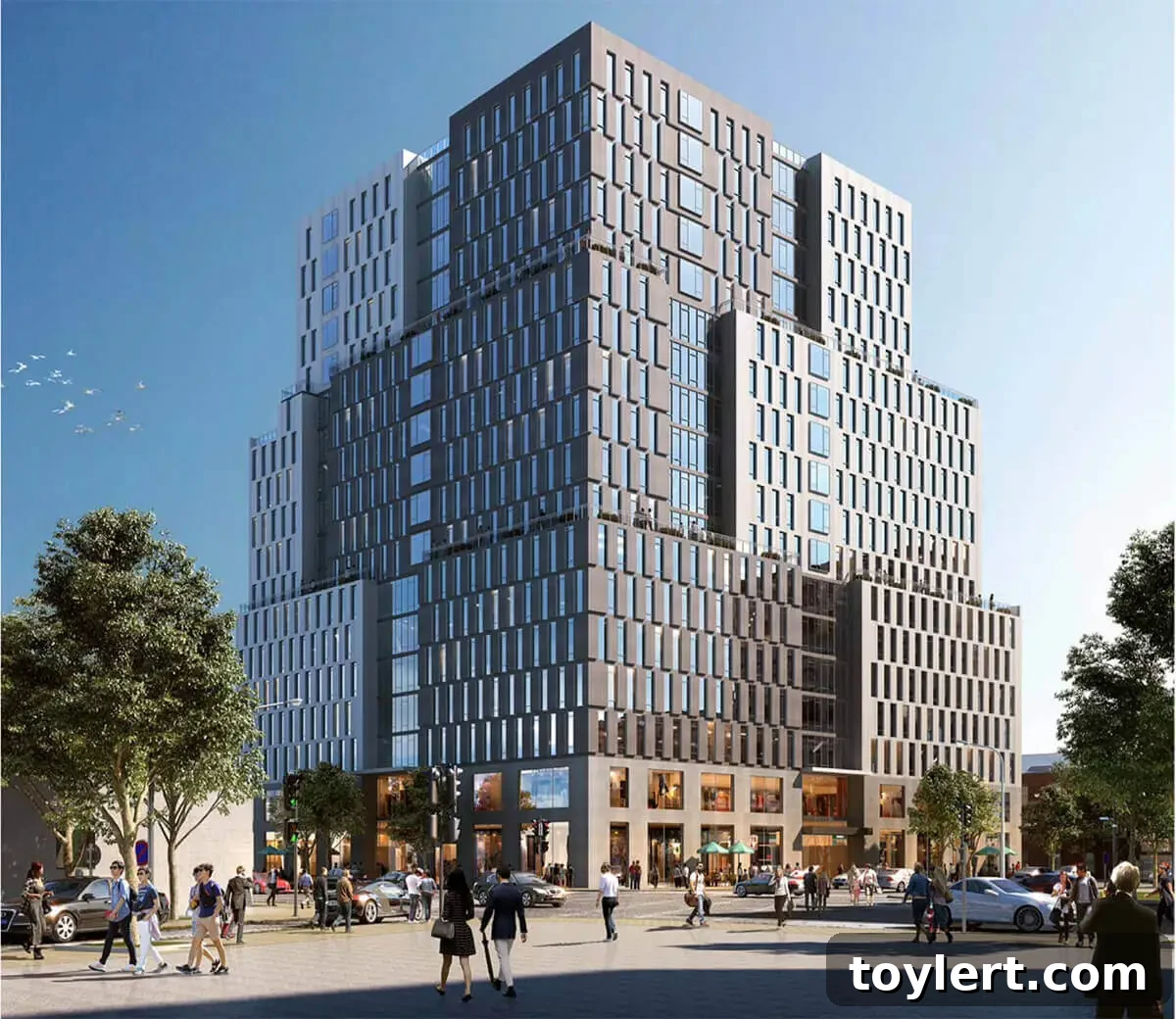
Borough President Rejects 18-Story Development at 840 Atlantic Avenue: A Deep Dive into Brooklyn’s Zoning Battle
In a significant move that underscores the ongoing tensions between urban development and community preservation, Brooklyn Borough President Eric Adams has issued a firm rejection of a proposed 18-story residential building slated for 840 Atlantic Avenue. The site, formerly home to a familiar drive-through McDonald’s, sits at the bustling intersection of Atlantic and Vanderbilt Avenues. Adams cited critical concerns regarding the project’s unprecedented height and its potential to exacerbate density issues within the surrounding vibrant neighborhoods.
This decision reverberates through Brooklyn’s real estate landscape, sparking renewed debate over the future of development in rapidly transforming areas like Prospect Heights, Clinton Hill, and Crown Heights. It highlights the complex challenges faced by city planners, developers, and residents alike as they navigate the urgent demand for housing while striving to maintain the unique character and livability of established communities. The Borough President’s stance is a powerful signal in the larger conversation about equitable growth, infrastructure capacity, and the efficacy of initiatives like the much-discussed M-Crown Rezoning.
The Proposed Development at 840 Atlantic Avenue: A Closer Look
The developer’s vision for 840 Atlantic Avenue was ambitious. The plan entailed an 18-story structure housing approximately 300 residential apartments. A crucial component of the proposal, and often a focal point in such projects, was the inclusion of affordable housing units. Roughly 95 of these apartments were designated to be offered at below-market rates, a common provision aimed at addressing Brooklyn’s pervasive housing affordability crisis. While this number represents approximately 31-32% of the total units, its perceived impact on local affordability and gentrification remains a contentious issue among community groups.
Beyond the residential component, the ground floor of the proposed building was slated for a dance studio. This amenity could potentially serve as a valuable community resource, offering cultural enrichment and recreational opportunities to local residents. Such mixed-use developments are often championed by urban planners for their ability to create more dynamic, pedestrian-friendly streetscapes. However, the perceived benefits of a ground-floor studio were evidently outweighed by the broader concerns about the project’s overall scale and its potential strain on existing neighborhood resources, particularly from the perspective of the Borough President and local community members.
The site itself holds particular significance. A former drive-through McDonald’s, it represents a transition from a car-centric commercial use to a high-density residential one. This kind of transformation is indicative of Brooklyn’s ongoing evolution, moving away from suburban models towards more concentrated urban living. Yet, this evolution must be managed carefully, ensuring that new developments integrate seamlessly and sustainably with the fabric of existing neighborhoods, rather than overwhelming them.
Borough President Adams’ Resounding ‘No’: Reasons and Implications
Borough President Eric Adams’ rejection of the 840 Atlantic Avenue project was not merely a symbolic gesture; it was rooted in specific and publicly articulated concerns. His primary objections centered on the project’s **height and density**. An 18-story building in this specific context was deemed out of character for the immediate surroundings, which, while undergoing change, still largely features lower to mid-rise structures. Such a towering development could cast significant shadows, altering the daylight and feel of public spaces and residential buildings nearby.
The issue of density is multifaceted. Adams and community advocates argued that adding hundreds of new residents to an already dense urban area without commensurate improvements to infrastructure would strain vital public services. This includes increased pressure on public transportation, already crowded schools, limited green spaces, and sanitation services. Moreover, such an influx of new residents inevitably leads to increased traffic congestion and parking challenges, further diminishing the quality of life for long-time residents.
Adams’ decision aligns with a broader philosophy he has often espoused regarding urban development: the need for balanced growth that prioritizes community input and ensures truly equitable outcomes. His office plays a crucial advisory role in New York City’s Uniform Land Use Review Procedure (ULURP), a process through which major land use proposals are reviewed. While his recommendation is not a final veto, it carries substantial weight and often signals significant challenges ahead for a project as it moves through subsequent stages, including review by the City Planning Commission and ultimately the City Council.
Community Backlash: Voices from Prospect Heights, Clinton Hill, and Crown Heights
The proposal for 840 Atlantic Avenue had already faced considerable opposition from local residents and community leaders long before the Borough President’s pronouncement. In March, community board members from the affected areas—Prospect Heights, Clinton Hill, and Crown Heights—had vociferously blasted the plans. Their concerns echoed Adams’ but delved deeper into the specific impacts on their neighborhoods.
Residents fear that increased density will accelerate gentrification, pushing out long-standing businesses and diverse populations that contribute to the unique cultural tapestry of these areas. The introduction of luxury or even “market-rate” housing in significant numbers can drive up property values and rents, making it increasingly difficult for lower and middle-income families to remain in their homes. This often leads to a loss of neighborhood character and a homogenization that many residents actively resist.
Beyond the socio-economic impacts, practical concerns abound. The areas surrounding Atlantic Avenue are already grappling with infrastructure challenges. Public schools in the vicinity are often at or over capacity, and a sudden influx of children from new developments could further strain resources, leading to larger class sizes and reduced educational quality. Similarly, the local transportation network, particularly subway lines, already experiences peak-hour overcrowding. More residents mean more commuters, potentially exacerbating these issues.
These community objections underscore the critical role of grassroots activism and local advocacy in shaping urban development. Residents, often organized through neighborhood associations and community boards, serve as vital watchdogs, ensuring that proposed projects not only adhere to zoning regulations but also genuinely contribute to the well-being and sustainable growth of their communities.
The M-Crown Rezoning: A Wider Lens on Affordable Housing and Development
The debate surrounding 840 Atlantic Avenue is intrinsically linked to the larger, long-debated M-Crown Rezoning. This proposed rezoning plan encompasses a significant portion of central Brooklyn, including parts of Prospect Heights, Clinton Hill, and Crown Heights. The M-Crown Rezoning’s stated goals are typically multifaceted: to spur economic development, create new housing opportunities—including affordable units—and improve public spaces.
However, like many large-scale rezoning initiatives in New York City, M-Crown has been a flashpoint for controversy. Community groups and housing advocates have repeatedly questioned whether the rezoning would genuinely deliver enough *deeply* affordable housing to meet the needs of the existing community, or if it would primarily facilitate the construction of market-rate and luxury housing, thereby accelerating gentrification and displacement. There’s often a significant disconnect between the percentage of “affordable” units mandated by inclusionary zoning policies and the actual affordability levels required by the neighborhood’s current residents.
The M-Crown Rezoning’s critics argue that without robust protections for existing tenants and a higher percentage of truly affordable units, such plans merely serve to make neighborhoods more attractive to wealthier newcomers, inadvertently pushing out long-term residents. The 840 Atlantic Avenue project, with its proposed scale and unit breakdown, became a microcosm of these broader concerns, serving as a test case for how the M-Crown Rezoning might translate into real-world development.
The tension between the undeniable need for more housing in New York City and the equally pressing imperative to preserve community character and prevent displacement is at the heart of the M-Crown debate. Public officials face the difficult task of balancing developer interests with community demands, aiming for a model of growth that is both robust and equitable.
Brooklyn’s Development Landscape: Navigating Growth and Preservation
Brooklyn has witnessed unprecedented growth and transformation over the past two decades. Areas that were once overlooked are now highly desirable, leading to a surge in real estate development. This rapid change has brought both opportunities and challenges. While new investments can revitalize neighborhoods and create jobs, they also pose significant threats to affordability and community cohesion.
The case of 840 Atlantic Avenue is a prime example of the ongoing struggle to define Brooklyn’s future. On one side are developers and some city officials who emphasize the need to build more housing to alleviate the city’s housing crisis, often arguing that density is a necessary component of sustainable urban living. They contend that new developments, even high-rise ones, contribute to the tax base, create construction jobs, and bring modern amenities to underserved areas.
On the other side are community activists, residents, and sympathetic politicians who prioritize preserving neighborhood character, protecting existing residents from displacement, and ensuring that new development genuinely serves the needs of all income levels, not just the affluent. They advocate for context-sensitive development, robust infrastructure planning, and stronger affordable housing mandates.
The decision by Borough President Adams reflects an acknowledgment of the powerful community voice in this debate. It signals a move towards prioritizing the holistic impact of development on neighborhoods, rather than solely focusing on the number of units created. This ongoing dialogue between various stakeholders is critical for shaping a Brooklyn that can accommodate growth while retaining its soul and diverse communities.
Looking Ahead: The Future of 840 Atlantic Avenue and Brooklyn Development
While Borough President Adams’ rejection is a significant hurdle, it is not the final word for the 840 Atlantic Avenue project. The ULURP process involves multiple stages, and the developer may choose to revise their proposal to address the stated concerns, particularly those related to height, density, and affordable housing provisions. Such revisions often involve reducing the building’s height, decreasing the total number of units, or increasing the percentage and depth of affordability.
The project will now move to the City Planning Commission for review, followed by a crucial vote by the City Council. The local City Council member for the district will play a particularly influential role in determining the project’s ultimate fate, as it is customary for the Council to defer to the local member’s wishes on land use matters. The strength of Adams’ rejection, coupled with the community board’s earlier opposition, will undoubtedly factor heavily into these upcoming deliberations.
The outcome for 840 Atlantic Avenue will serve as an important precedent for future development in central Brooklyn and beyond. It will be closely watched by developers, community groups, and urban planners alike, offering insights into the evolving priorities of city governance and the shifting dynamics of community power in New York City’s relentless development landscape. The saga of this former McDonald’s site is far from over, emblematic of the complex and often contentious journey towards shaping a sustainable and equitable urban future.