Transforming Williamsburg: The $27.5 Million Sale of 204 Wythe Avenue Signals New Residential Era
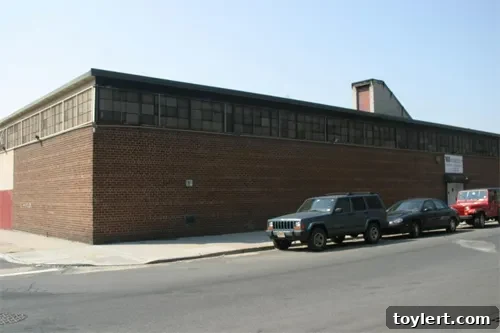
Williamsburg, Brooklyn, a neighborhood synonymous with dynamic transformation, recently witnessed a real estate transaction that underscored its ongoing evolution: the sale of the expansive 54,850-square-foot commercial warehouse located at 204 Wythe Avenue. Situated strategically between North 4th and North 5th streets, this significant property changed hands for an impressive $27.5 million at the close of October, concluding a period of several years during which it was periodically available on the market. This high-profile acquisition by a major real estate fund is not just another property deal; it represents a pivotal moment, signaling a near-certain shift from its industrial past to a vibrant residential future, further cementing Williamsburg’s status as a premier destination for urban living and investment.
A Landmark Transaction: Unpacking the $27.5 Million Deal
The sale of 204 Wythe Avenue stands out as a testament to the surging demand for prime development sites in one of Brooklyn’s most coveted neighborhoods. For decades, the property had been the long-standing home of the family-run Western Carpet company, an enduring fixture in the local commercial landscape. Its departure marks the end of an era for the family business and opens the door for a complete reimagining of the site.
The buyer in this momentous transaction is AREA Property Partners, a real estate fund behemoth with a substantial track record in high-value urban developments. Formerly known as Apollo Real Estate Advisers, AREA Property Partners brings significant capital and expertise to the table, indicating a well-planned and strategic investment. Their acquisition of such a large parcel in North Williamsburg, particularly one with favorable zoning conditions, strongly suggests a sophisticated development strategy aimed at maximizing the property’s potential in a market hungry for new housing options.
The $27.5 million price tag for a commercial warehouse in this location is a clear indicator of the underlying value attributed to its future residential development potential. Investors are not merely buying a building; they are investing in the right to build in a highly desirable area, where residential units command premium prices. The competitive nature of the bidding process, if any, and the final sale price reflect the intense competition among developers vying for a piece of Williamsburg’s burgeoning real estate pie.
Williamsburg’s Irresistible Allure: A Hub of Opportunity
The allure of Williamsburg for real estate developers and residents alike is multifaceted. Once an industrial and working-class neighborhood, Williamsburg has undergone a remarkable metamorphosis over the past two decades. It has transformed into a global hotspot, celebrated for its unique blend of artistic vibrancy, trendy boutiques, world-class dining, and a thriving nightlife. This cultural richness, combined with its strategic proximity to Manhattan, has fueled an insatiable demand for residential living spaces.
The demographic shift has been profound, attracting a diverse mix of young professionals, artists, families, and entrepreneurs. This influx of residents has, in turn, spurred massive investment in infrastructure and amenities, further enhancing the neighborhood’s appeal. Properties in Williamsburg consistently command some of the highest rental rates and sales prices in Brooklyn, making it an exceptionally attractive market for residential development.
Developments along the waterfront, particularly in North Williamsburg, have been instrumental in this transformation, offering residents stunning skyline views and access to new public parks and recreational spaces. The continued evolution from industrial sites to residential havens is a narrative that defines contemporary Williamsburg, and 204 Wythe Avenue is poised to become the latest chapter in this ongoing story. The demand for modern, amenity-rich apartments far outstrips supply, guaranteeing a strong market for any new residential project in this locale.
Unlocking Development Potential: Zoning and Floor Area Ratio Explained
The primary driver behind the significant valuation of 204 Wythe Avenue, beyond its prime location, is its favorable zoning. Under the comprehensive 2005 rezoning of the Greenpoint-Williamsburg waterfront area, this specific building falls within an M1-2/R6A zone. Understanding this designation is crucial to grasping the property’s true development potential.
An M1-2/R6A zoning designation is a prime example of a “mixed-use” district, designed to facilitate a transition from light manufacturing (M1-2) to residential (R6A) uses, often allowing for residential development above a commercial base. This specific zoning permits a Floor Area Ratio (FAR) of 3.0. FAR is a critical zoning metric that dictates the maximum allowable floor area of a building in relation to the size of the lot it occupies. In simpler terms, if a lot has an FAR of 3.0, a developer can construct a building whose total square footage is three times the area of the lot.
Given the property’s substantial lot size of 54,850 square feet, an FAR of 3.0 initially suggested that a developer could construct a residential building with a maximum of approximately 165,000 square feet (54,850 sq ft * 3.0 = 164,550 sq ft). Based on the $27.5 million sale price, this would place the acquisition cost at around $170 per buildable square foot ($27,500,000 / 165,000 sq ft). This figure, while substantial, is often considered a reasonable entry point for prime Williamsburg development, reflecting the high value and profitability of new residential units in the area.
The 2005 rezoning was a landmark policy decision that fundamentally reshaped the trajectory of Greenpoint and Williamsburg. It strategically converted vast tracts of formerly industrial land into residential and mixed-use districts, paving the way for the high-density development that defines much of the area today. Without this critical rezoning, the residential development of 204 Wythe Avenue would likely be impossible, or at least severely restricted, highlighting the profound impact of urban planning on property values and land use.
The Strategic Play: Zoning Lot Merger and Updated Valuation
While the initial assessment of $170 per buildable foot seemed plausible, a deeper understanding of strategic development practices, particularly in complex urban environments like New York City, often reveals additional layers. An important update emerged shortly after the sale, shedding light on a more intricate development strategy involving a zoning lot merger. This maneuver significantly alters the total buildable square footage and, consequently, the effective price per buildable foot, making the deal even more attractive for the developer.
The comment, which provided crucial insight, suggested: “I am hearing that seller likely merged the two zoning lots, keeping the other warehouse for themselves to us, putting all building footage on the one site. So price not 170.” This indicates a sophisticated real estate strategy. A zoning lot merger allows developers to combine the zoning rights of adjacent parcels, effectively consolidating their buildable square footage onto a single development site. In this case, it’s believed that the seller, the Western Carpet company, merged the zoning rights of 204 Wythe Avenue with those of another adjacent property they own – specifically, the 40,000-square-foot building that spans from Kent to Wythe on the north side of North 5th Street. Crucially, the seller likely transferred the *unused* or *transferable* development rights (air rights) from this second, larger property to the 204 Wythe Avenue site, while still retaining ownership and use of the second warehouse itself.
This strategic transfer of development rights means that the total buildable square footage for the 204 Wythe Avenue project is no longer limited to just its original 165,000 square feet. By merging and transferring rights, the combined buildable area could increase substantially, potentially reaching around 250,000 square feet. This dramatically changes the financial landscape of the deal. With a sale price of $27.5 million for a site capable of yielding 250,000 square feet of residential space, the effective cost per buildable foot drops significantly to approximately $110 ($27,500,000 / 250,000 sq ft). This revised figure is exceptionally competitive for a prime Williamsburg location, making the project even more viable and profitable for AREA Property Partners.
This illustrates the intricate world of urban development where creative financial and zoning strategies are paramount. The ability to leverage adjacent property rights through mergers or transfers is a common tactic used by experienced developers to maximize the density and profitability of their projects, especially in land-scarce, high-demand markets like New York City. It also explains what happens to the second 40,000-square-foot building; while its development rights were likely transferred, the physical building itself remains with the original owners, potentially for their continued use or future, separate development.
Beyond 204 Wythe: The Future Landscape of North Williamsburg
With the acquisition complete and the development potential clarified by the zoning lot merger, the primary question now shifts to the specifics of the future development. It is almost a foregone conclusion that 204 Wythe Avenue will be transformed into a significant residential complex. Given the neighborhood’s profile and the buyer’s investment, it is highly probable that the new development will feature luxury condominium units or high-end rental apartments, likely complemented by ground-floor retail or community facilities to serve the burgeoning population.
The scale of a 250,000-square-foot residential building suggests a substantial structure that will undoubtedly contribute to the evolving skyline of North Williamsburg. Such a project would typically include a wide array of amenities, such as fitness centers, rooftop spaces, co-working areas, and concierge services, all designed to cater to the discerning urban resident. The architectural design will likely be contemporary, blending seamlessly with the modern aesthetic prevalent in newer Williamsburg constructions.
The impact of this development will extend beyond the immediate site. It will contribute to the ongoing revitalization of the blocks between North 4th and North 5th streets and along Wythe Avenue, further integrating residential life into what was historically a more industrial corridor. This transformation will bring new residents, increased foot traffic, and potentially new businesses to the area, fostering further economic growth and enhancing neighborhood vibrancy.
Furthermore, this sale underscores the continued confidence of major real estate investors in the long-term value proposition of Williamsburg. Despite fluctuations in broader economic cycles, prime locations with strong demand fundamentals, like North Williamsburg, remain attractive for significant capital deployment. The strategic acquisition by AREA Property Partners is a clear signal that the neighborhood’s growth trajectory is far from over, with more residential and mixed-use developments expected to shape its future landscape. It is a testament to the enduring appeal of Brooklyn as a dynamic, evolving borough and a magnet for urban transformation.
As construction commences and the new residential building takes shape, 204 Wythe Avenue will serve as a prominent example of how intelligent urban planning, strategic real estate transactions, and robust market demand continue to reshape New York City’s most dynamic neighborhoods, turning former industrial spaces into modern, desirable homes for a new generation of urban dwellers.
Photo via Property Shark
GMAP