By Ben Brachfeld, Brooklyn Paper
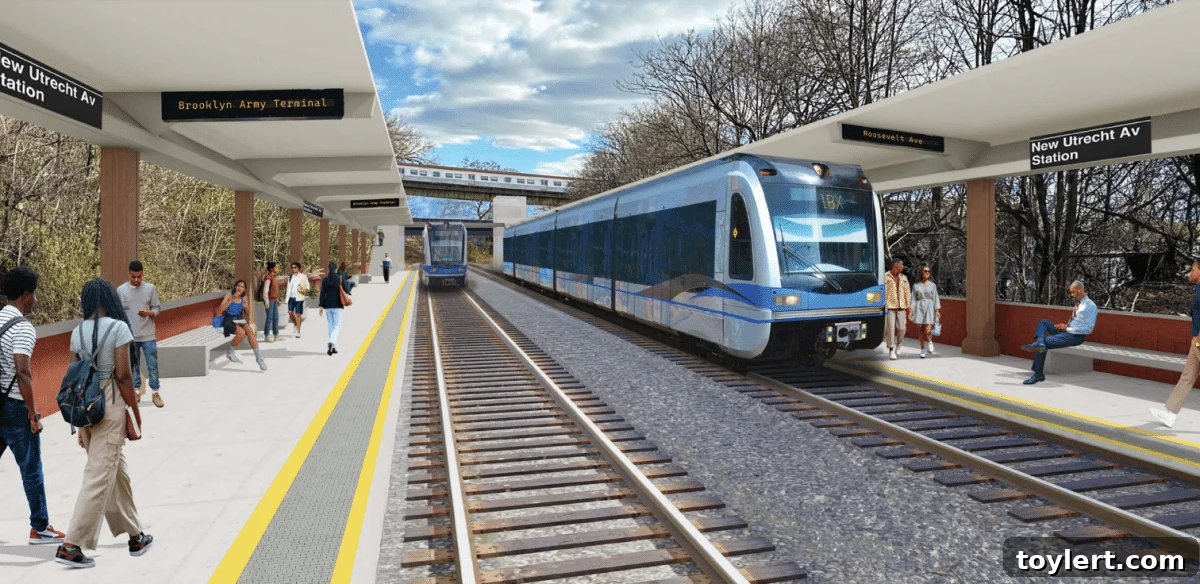
Interborough Express: Pioneering a New Transit Era for Brooklyn and Queens
New York City’s public transportation landscape is on the cusp of a historic transformation with the proposed Interborough Express (IBX). This ambitious light rail project, designed to forge a vital, direct link between the bustling boroughs of Brooklyn and Queens, has taken a significant leap forward. It has received crucial backing within the Metropolitan Transportation Authority’s (MTA) recently unveiled $68 billion capital plan. The vision is clear: to begin construction on this potentially game-changing infrastructure within the current decade, promising a future of enhanced connectivity and dramatically reduced commuting times for millions of New Yorkers.
Crucial Funding Secured: A Major Step Towards Realization
The MTA’s comprehensive 2025-2029 capital plan, which meticulously outlines the transit agency’s five-year spending priorities for essential maintenance, system renewal, and strategic expansion initiatives, allocates a substantial $2.75 billion. This funding is specifically earmarked to propel the Interborough Express into its critical construction phase. This significant financial commitment underscores the project’s paramount importance as a cornerstone of future NYC transit development and a testament to the city’s commitment to modernizing its infrastructure.
The IBX, envisioned as a 14-mile light rail artery, will seamlessly connect the vibrant community of Bay Ridge in South Brooklyn all the way to the diverse neighborhoods of Jackson Heights in Queens. This direct route promises to offer an efficient, much-needed alternative to existing cross-borough travel options, which often necessitate time-consuming transfers through Manhattan. The investment represents not just funds for steel and tracks, but an investment in the future economic vitality and social cohesion of New York City.
The Vision Behind the Interborough Express (IBX)
The concept of a direct transit link between Brooklyn and Queens, strategically bypassing the heavily congested Manhattan core, is not a novel idea. For decades, urban planners and transit advocates have discussed the potential of utilizing existing freight rail corridors, particularly the historic Bay Ridge Branch, to serve this vital purpose. What began as an aspirational idea, often colloquially dubbed the “Triboro RX,” has now matured into the concrete and fully-funded plans for the Interborough Express.
This project reflects a bold, forward-thinking approach to urban planning and public transportation, aiming to proactively address the evolving needs of a rapidly growing and increasingly interconnected metropolis. Governor Kathy Hochul has been a vocal champion for the IBX, recognizing its immense potential to unlock new economic opportunities, foster regional growth, and significantly improve the quality of life for residents in both boroughs. The IBX is more than just a new train line; it represents a fundamental shift in how New Yorkers move around their city, offering a sustainable, efficient, and equitable solution to the complex challenges of urban mobility. It specifically aims to foster greater equity in transit access, ensuring that communities historically underserved by direct cross-borough connections will benefit immensely from enhanced connectivity.
Unpacking the IBX Route and Technology: A Strategic Choice
The 14-mile Interborough Express route has been meticulously planned to maximize efficiency and community benefit, primarily leveraging existing infrastructure while serving a broad spectrum of neighborhoods. Beginning its journey in Bay Ridge, Brooklyn, the light rail will weave through crucial and densely populated areas, including Sunset Park, Borough Park, Midwood, Flatbush, East Flatbush, and Crown Heights, before gracefully crossing into Queens. Once in Queens, it will serve vital communities such as Bushwick, Ridgewood, Maspeth, Elmhurst, and finally, reaching its terminus in the highly diverse and bustling Jackson Heights. This strategic alignment ensures that a wide array of residential, commercial, and industrial zones will gain direct, convenient access to this transformative transit artery.
Why Light Rail? A Deliberate and Data-Driven Decision
The decision to implement light rail technology for the IBX project was a deliberate and strategic one, made after extensive feasibility studies that rigorously compared various transportation options, including heavy rail (like the existing subway system) and bus rapid transit. Light rail offers several distinct advantages that make it an ideal choice for this specific corridor and its unique urban challenges:
- Cost-Effectiveness: Light rail systems are generally less expensive to construct and operate compared to heavy rail, especially when adapting and integrating with existing infrastructure rather than building entirely new, deep-tunnelled lines.
- Operational Flexibility: Light rail vehicles can navigate tighter turns and steeper grades more efficiently than traditional heavy rail, making them highly suitable for the varied urban landscape and existing right-of-way constraints along the Bay Ridge Branch.
- Seamless Integration: Light rail can be more easily integrated into diverse urban environments, often running at grade, on elevated structures, or in existing trenches without requiring extensive and costly tunneling operations.
- Optimal Capacity: While not designed for the same ultra-high capacity as heavy rail, light rail can efficiently move a significant number of passengers, perfectly suiting the anticipated demand for direct cross-borough travel without overbuilding the system.
Crucially, the IBX will primarily utilize the existing Bay Ridge Branch freight rail line, which runs through a dense urban corridor but is currently underutilized for passenger service. This innovative approach minimizes the need for entirely new rights-of-way, significantly reducing environmental impact, property acquisition needs, and overall construction complexity. The co-existence of active freight operations and new passenger light rail on shared tracks will undoubtedly require careful planning, advanced signaling, and precise coordination—a complex challenge the MTA is prepared to address with innovative engineering and sophisticated scheduling solutions to ensure safety and efficiency.
Transformative Benefits for Communities and Commuters Alike
The Interborough Express is poised to deliver a multitude of far-reaching benefits, fundamentally reshaping how residents and visitors interact with and navigate between the vibrant boroughs of Brooklyn and Queens.
Enhanced Commuting Efficiency and Connectivity
- Drastically Reduced Travel Times: For countless commuters traveling directly between Brooklyn and Queens, the IBX will dramatically cut down travel times, eliminating the current necessity of making often arduous and time-consuming transfers through Manhattan. A journey that might currently take over an hour and involve multiple subway lines and transfers could be completed in a fraction of that time.
- Alleviating Manhattan Congestion: By providing a direct, efficient alternative, the IBX will help alleviate significant pressure on the already heavily utilized Manhattan-bound subway lines, making commutes smoother, faster, and more comfortable for everyone.
- Seamless Direct Connections: The new light rail line will offer crucial direct connections to numerous existing subway lines (including the D, N, R, F, G, J, M, Z, and L trains), as well as key Long Island Rail Road (LIRR) stations, thereby creating a truly integrated and intuitive regional transit network that expands options for millions.
A Catalyst for Economic Development and Regional Growth
- Significant Job Creation: The multi-year construction phase alone will generate thousands of well-paying jobs, providing a substantial and much-needed boost to the local economy and supporting skilled labor.
- Stimulating Economic Development: Historically, improved transit access consistently catalyzes economic development along its corridor. Businesses will find it easier to attract employees from a wider geographic area, and new commercial and residential developments are anticipated to emerge around IBX stations, fostering vibrant new hubs.
- Increased Accessibility to Opportunities: Residents will gain significantly easier access to critical job centers, diverse educational institutions, comprehensive healthcare facilities, and a wealth of cultural attractions located across both boroughs, fostering broader economic participation and social mobility.
Positive Environmental and Social Impact
- Sustainable Transportation: By encouraging a substantial shift from private vehicles to efficient public transit, the IBX will directly contribute to a measurable reduction in carbon emissions, improved regional air quality, and a healthier urban environment across the city.
- Reduced Road Congestion: Fewer private cars on the road will translate to less traffic congestion, making streets safer and more pleasant for pedestrians, cyclists, and local businesses.
- Improved Equity and Access: The project is strategically designed to serve many diverse communities that have historically faced transit disparities, providing them with more equitable and reliable access to essential economic and social opportunities. It represents a significant step towards leveling the playing field for residents in underserved areas.
Navigating Challenges and Ensuring Long-Term Success
While the enthusiasm and anticipation for the Interborough Express are understandably high, the realization of such a monumental public works project is inherently not without its challenges. The MTA and city planners must meticulously address several key considerations to ensure the IBX’s successful implementation, operational efficiency, and long-term viability.
Potential Hurdles and Mitigation Strategies
- Construction Disruptions: Building a 14-mile light rail line through densely populated urban areas will inevitably cause temporary disruptions to local traffic patterns, businesses, and daily routines. Effective, proactive communication and robust mitigation strategies will be absolutely paramount to minimize negative impacts.
- Cost Management and Overruns: Large-scale infrastructure projects, by their very nature, are frequently prone to cost overruns. Rigorous financial oversight, transparent reporting, and adaptive project management will be crucial to staying within budget and on schedule throughout the multi-year development.
- Community Engagement and Concerns: Ensuring that local communities feel genuinely heard and that their concerns are thoroughly addressed is vital for gaining public trust and support. This includes proactively addressing potential impacts like noise pollution, managing any necessary property acquisition, and maintaining local access during the various construction phases.
- Coexistence with Active Freight Rail: The Bay Ridge Branch is an active and important freight line. Developing a safe, efficient, and harmonious system that allows both critical freight and new passenger trains to operate without significant delays or safety risks will be a complex engineering and operational feat requiring innovative solutions.
- Seamless Integration with Existing Transit: Achieving truly seamless transfers between the IBX and existing subway, bus, and LIRR lines is absolutely essential for its success and rider adoption. This requires careful planning of station locations, intuitive transfer points, and integrated ticketing to maximize convenience for riders.
The MTA’s unwavering commitment to robust community outreach, transparent project management, and adaptive problem-solving will be critical in effectively overcoming these challenges. Public workshops, informative sessions, and clear, accessible channels for feedback will be instrumental in building trust and fostering broad support among the affected communities throughout the project’s lifespan.
Project Timeline and the Road Ahead
The substantial allocation of $2.75 billion in the 2025-2029 capital plan unequivocally signifies that the Interborough Express is transitioning from a conceptual idea to concrete action. The ambitious goal to commence construction within this decade means that the coming years will be intensively focused on essential preparatory work and detailed planning:
- Comprehensive Environmental Review: A thorough environmental impact statement (EIS) will be conducted to meticulously assess the project’s potential effects on the environment and surrounding communities, and to identify effective mitigation measures to minimize any adverse impacts.
- Final Design and Engineering Phases: Detailed engineering plans, precise station designs, advanced operational schemes, and critical infrastructure specifications will be meticulously finalized by expert teams.
- Procurement and Contract Awards: The rigorous process of soliciting bids and subsequently awarding contracts for construction, the acquisition of modern rolling stock (the light rail vehicles), and various system components will commence.
- Ongoing Community Outreach: Engagement with local residents, businesses, and key stakeholders will be a continuous process throughout all these phases, ensuring transparency and addressing evolving concerns.
While an exact and definitive completion date is still several years away, the significant momentum generated by this capital plan funding strongly suggests that New Yorkers can look forward to seeing the IBX physically take shape in the near future, with the potential for initial segments to open for passenger service in the early to mid-2030s. This project represents a monumental, long-term investment in the city’s future, promising transformative benefits that will extend for generations.
The Broader Impact of MTA’s $68 Billion Capital Plan
The Interborough Express, while a jewel in the crown of the MTA’s ambitious $68 billion capital plan, is by no means the only vital component. This extensive financial blueprint is meticulously designed to address the multifaceted and complex needs of a vast and aging transit network. Beyond groundbreaking expansion projects like the IBX, a significant and essential portion of the plan is dedicated to:
- System Renewal and Modernization: Critically upgrading aging signals, tracks, and power systems across the entire network to dramatically improve reliability, reduce delays, and enhance safety for millions of daily riders.
- Accessibility Improvements: A concerted effort to make many more subway stations fully ADA-compliant, ensuring that the entire transit system becomes accessible and welcoming to everyone, regardless of mobility challenges.
- Fleet Upgrades: The strategic purchasing of new, more efficient, technologically advanced, and comfortable subway cars and buses to enhance the rider experience and reduce environmental impact.
- Essential Maintenance: The continuous routine upkeep, repairs, and preventative maintenance crucial for the safe, smooth, and uninterrupted operation of trains, buses, bridges, tunnels, and all associated infrastructure.
The capital plan’s robust funding mechanisms, most notably including significant revenue anticipated from the implementation of congestion pricing in Manhattan, are absolutely critical to realizing these widespread and necessary improvements. The IBX stands as a prime example of how these vital funds are being strategically deployed not just to fix what’s broken and maintain the status quo, but to boldly innovate, expand, and fundamentally transform NYC’s transit system, preparing it for the challenges and myriad opportunities of the 21st century and beyond.
A Connected Future for New York City: The Promise of the IBX
The Interborough Express is far more than just another transportation project; it is a profound testament to New York City’s continuous evolution, its enduring resilience, and its unwavering commitment to fostering a more connected, sustainable, and equitable future for all its inhabitants. By providing a direct, efficient, and innovative light rail link between the dynamic and diverse boroughs of Brooklyn and Queens, the IBX will unlock an abundance of new opportunities, significantly reduce commuting burdens, and forge stronger, more vibrant ties between two of the city’s most crucial economic and cultural engines. As construction is now poised to commence within this pivotal decade, the long-held promise of the IBX moves ever closer to becoming a tangible reality, signaling an exciting and transformative new chapter in the storied and innovative history of New York City transit.