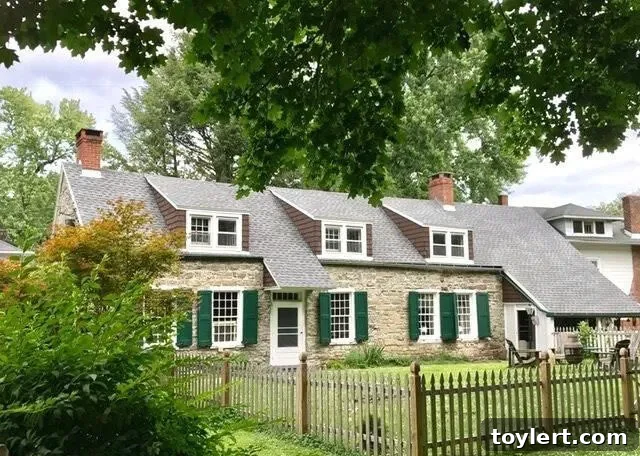
The Enduring Legacy of 142 Pearl Street: Annie Searing’s Visionary Kingston Home Restoration
In the vibrant aftermath of World War I, as the Roaring Twenties loomed, a new spirit of independence and progress swept across America. For women, the right to vote had just been secured, fueling a desire for self-determination in all aspects of life, including homeownership. It was against this backdrop that Annie Eliza Pidgeon Searing, a remarkable figure who embodied the era’s forward-thinking ethos as a suffragette, accomplished home economist, prolific writer, and captivating lecturer, embarked on a deeply personal quest in 1919: to find her dream home. Little did she know, this journey would lead her to an unexpected treasure – a decaying 18th-century stone cottage at 142 Pearl Street in Kingston, New York, and a restoration adventure that would leave an indelible mark on the region’s architectural heritage.
Searing’s ambition to transform this dilapidated structure into a modern, livable home resonated with a burgeoning national interest in “early American” history and architecture. The turn of the 20th century saw a romantic rediscovery of colonial aesthetics, fostering a widespread appreciation for ancient houses and the stories they held. Her project was more than just a home renovation; it was a testament to the era’s growing preservation movement and a personal commitment to breathing new life into a piece of history. With the strategic guidance of a skilled restoration architect, Searing meticulously brought the venerable cottage back from the brink, blending its original charm with the comforts and conveniences of contemporary living.
Annie Eliza Pidgeon Searing: A Life of Accomplishment and Influence
Before she ever set foot in Kingston with the intent to restore a historic property, Annie Eliza Pidgeon Searing had already carved out a distinguished career as a writer and intellectual. Her literary talents were widely recognized, with her insightful stories, compelling essays, and lyrical poetry gracing the pages of some of the most prestigious publications of her time, including Harper’s Bazaar, The Delineator, and The Century magazines. These platforms allowed her to engage with a broad audience, sharing her perspectives on home life, social issues, and the beauty of the natural world.
One of her most notable literary achievements came with the publication of her 1884 book, The Land of Rip Van Winkle: A Tour Through the Romantic Parts of the Catskills. This work not only showcased her descriptive prowess but also her deep connection to the Hudson River Valley, a region that would eventually become her home. The book invited readers on a captivating journey through the myths, legends, and breathtaking landscapes of the Catskill Mountains, further solidifying her reputation as a voice deeply attuned to the American experience and its unique folklore.
Roots in Brooklyn and the Hudson Valley
Annie Searing’s personal history is as rich and varied as her professional accomplishments. Born in Brooklyn, she was the daughter of Frank Pidgeon, a prominent engineer and dock builder in the bustling metropolis. According to records from the Brooklyn Historical Society, her father was also one of the notable founders, in 1855, of Brooklyn’s Eckford Base Ball Club, an early and significant institution in American sports history. This familial background provided Searing with a foundation rooted in ingenuity, community building, and a robust work ethic.
Although her early years were spent in Brooklyn, Searing’s intellectual and creative sensibilities were undoubtedly shaped by time spent in the picturesque Hudson River Valley during her youth. This exposure to the region’s natural beauty and rich historical tapestry likely fostered the deep appreciation that would later draw her back to Kingston. Her formal education continued at Vassar College in Poughkeepsie, where she was a distinguished member of the class of 1878. Vassar, a pioneering institution for women’s education, would have further cultivated her independent thought and commitment to scholarly pursuits, equipping her with the skills and confidence to pursue diverse interests.
In 1880, she married John Welch Searing, a respected lawyer who was a native of Saugerties, a charming town just a short distance up the Hudson River from Kingston. This union further cemented her ties to the Hudson Valley, providing a personal connection to the region long before she undertook the monumental task of restoring 142 Pearl Street.
The Allure of 142 Pearl Street: A Historic Kingston Gem
The decision to purchase an “ancient” and decaying 18th-century stone cottage in 1919 was not a whimsical one for Annie Searing. It was a calculated move, reflecting both her discerning eye for architectural potential and the prevailing cultural currents of the time. Kingston, as New York’s first capital and a city steeped in pre-Revolutionary War history, offered a unique collection of such structures. The Pearl Street area, in particular, was known for its historic homes, many dating back to the Dutch colonial period or shortly thereafter. These houses, often built with robust local stone, possessed a timeless quality that captivated those seeking authenticity and a connection to the past.
The appeal of 142 Pearl Street lay not just in its age, but in the story it silently told of generations past. An 18th-century stone cottage in the Hudson Valley typically features thick walls, small multi-paned windows, and a humble yet enduring aesthetic. While “decaying,” such properties offered a canvas for dedicated preservationists. Searing, with her background as a home economist, would have understood the practicalities of domestic living, while her writer’s imagination would have seen beyond the grime and disrepair to envision a vibrant future for the old dwelling.
The Art of Restoration: Blending History with Modernity
The restoration of 142 Pearl Street was a significant undertaking, requiring vision, patience, and expert collaboration. The “restoration adventure” Searing embarked upon was a microcosm of the larger Colonial Revival movement sweeping the nation. This architectural and decorative arts movement sought to re-emphasize American colonial design, often adapting it for modern sensibilities. For Searing’s cottage, this meant carefully preserving original features while simultaneously integrating modern amenities to ensure the home was both historically accurate and functionally comfortable.
While the original text only mentions “a restoration architect,” historical records and local lore suggest that many such projects in Kingston during that period benefited from the expertise of architects like Myron S. Teller, who was renowned for his sensitive and historically informed approach to restoring Kingston’s architectural treasures. The goal was to transform a “dilapidated little structure” into a “modern, livable home” without stripping away its soul. This involved painstaking work: stabilizing the stone foundations, meticulously repairing or replicating original woodwork, updating plumbing and electrical systems, and thoughtfully designing interiors that respected the home’s heritage while offering contemporary convenience.
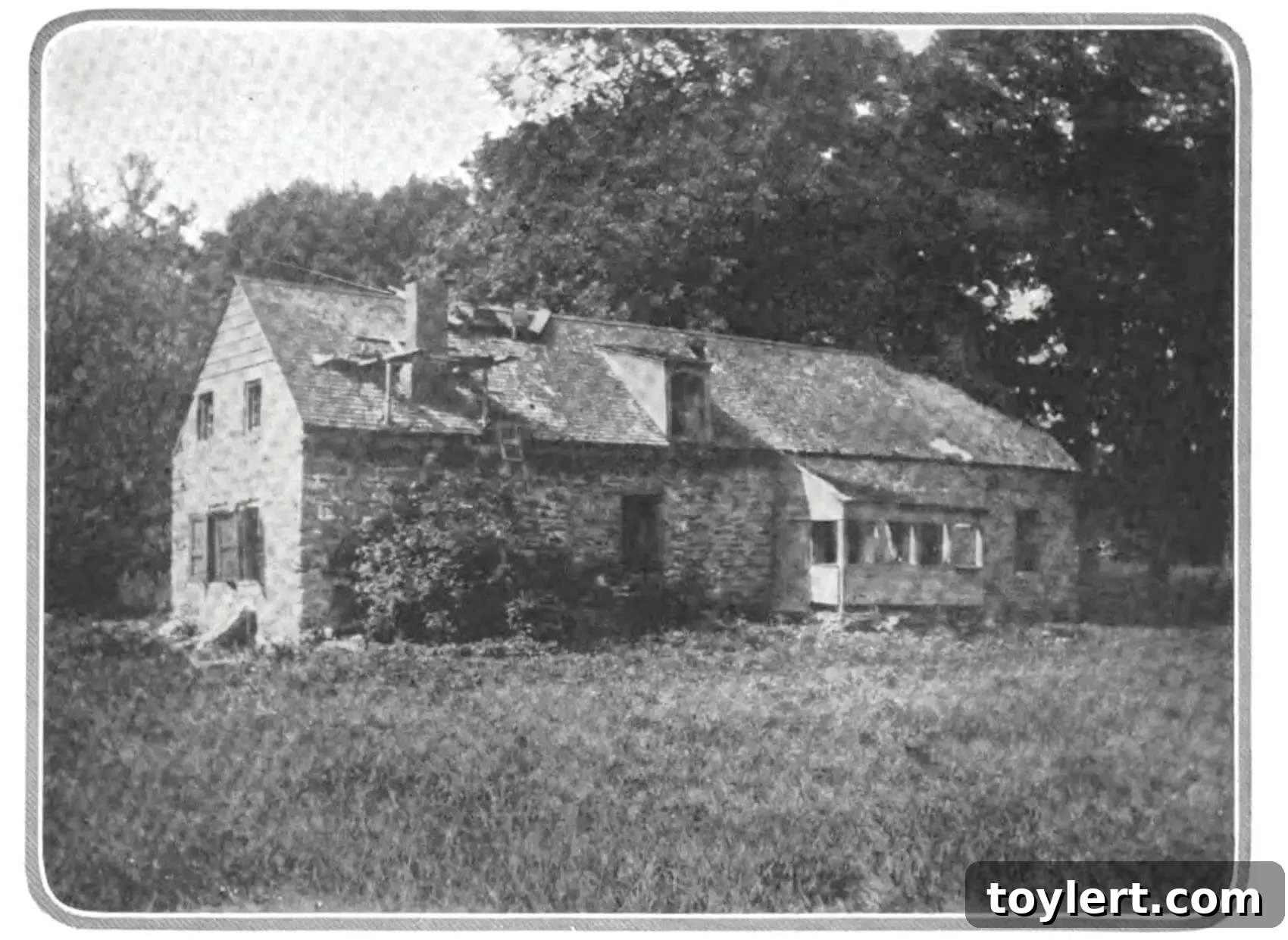
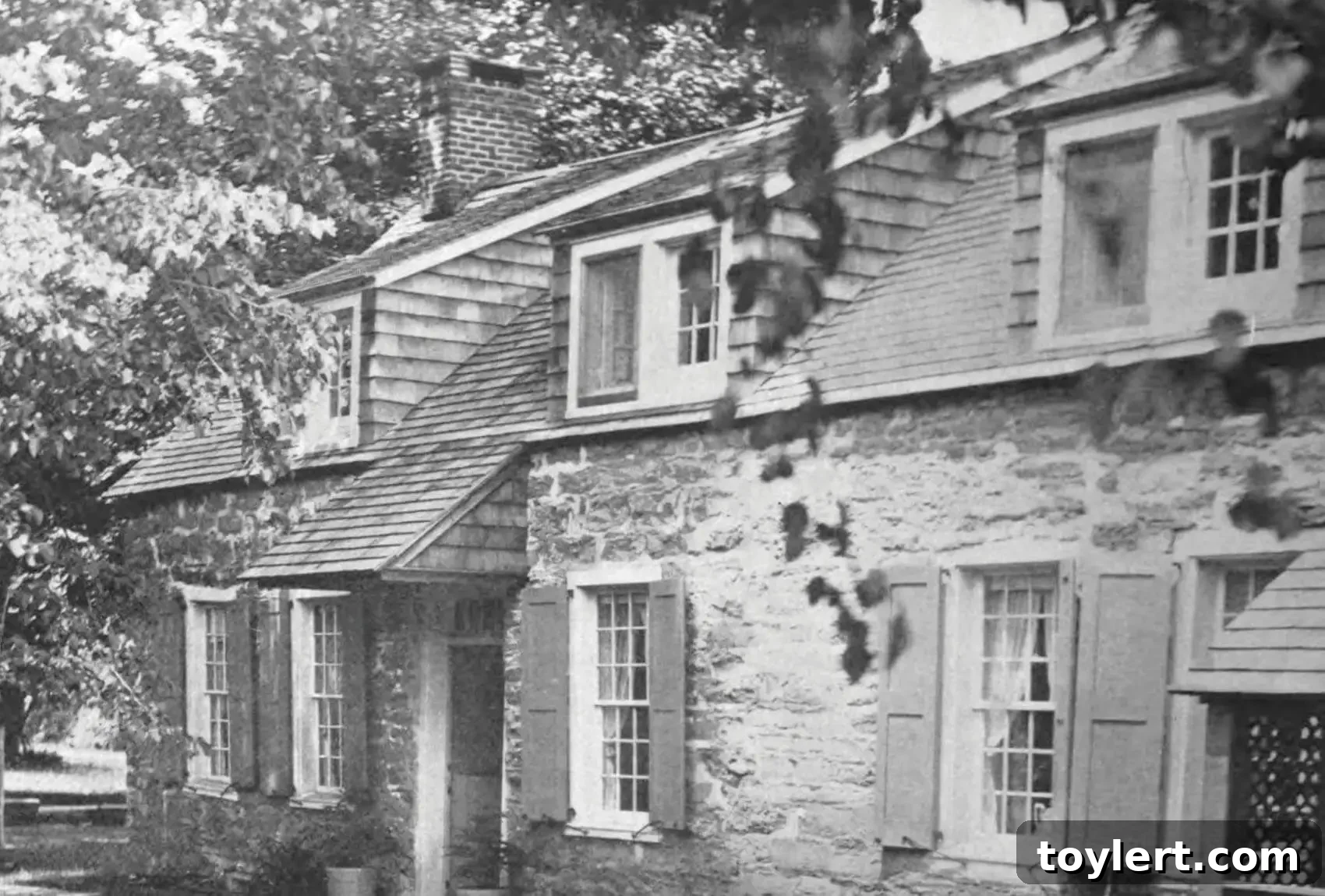
The “before” and “after” photographs vividly illustrate this transformation. The image of the house before restoration reveals a structure burdened by time, perhaps with overgrown landscaping and signs of wear. The “after” image, taken around 1920, showcases a dwelling reborn. It would have featured carefully restored facades, inviting windows, and perhaps a more manicured garden, presenting a harmonious blend of 18th-century charm and early 20th-century refinement. This project was not merely a cosmetic facelift but a thoughtful reinterpretation of the home’s original character, proving that historic homes could be both beautiful relics and practical residences.
Kingston, NY: A Hub of History and Preservation
Annie Searing’s choice of Kingston, NY, for her ambitious restoration project was no coincidence. Kingston holds a distinguished place in American history, having served as the first capital of New York State in 1777. Its streets are lined with architecture that spans centuries, from Dutch stone houses to Victorian mansions, making it a living museum of American development. The city’s commitment to preserving its past was gaining momentum in the early 20th century, providing fertile ground for individuals like Searing who were passionate about safeguarding historical structures.
The Pearl Street neighborhood, with its quiet charm and proximity to the city’s historic Stockade District, offered the perfect setting for such a project. Owning a historic home in Kingston meant becoming a custodian of history, participating in a lineage that stretched back to the earliest European settlements in New York. Searing’s decision to invest in 142 Pearl Street not only fulfilled her personal desire for a home but also contributed significantly to the broader movement of historic preservation in the Hudson Valley, inspiring others to look at old homes not as burdens, but as invaluable assets worthy of revival.
A Lasting Legacy
The story of Annie Eliza Pidgeon Searing and her 18th-century stone cottage at 142 Pearl Street in Kingston, NY, is more than just a tale of a house renovation. It is a powerful narrative of a pioneering woman who, in an era of profound social change, combined her diverse talents and independent spirit to achieve a remarkable feat. Her work on this historic Kingston property stands as a testament to the enduring appeal of early American architecture and the timeless value of preservation.
Searing’s vision helped popularize the idea that these “ancient” houses, far from being relics to be demolished, could be transformed into “modern, livable homes” that honored their past while serving contemporary needs. Her dedication as a home economist shone through in her practical approach to creating a functional dwelling, while her writer’s sensibility ensured that the home retained its narrative charm. Today, 142 Pearl Street remains a symbol of her legacy, a beautiful example of historic Kingston NY real estate, and an inspiration for all who appreciate the beauty and history embedded in the very foundations of our built environment.