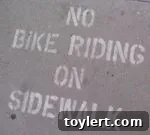
Navigating Urban Streets: The Ongoing Battle Against Sidewalk Cycling
For months, city authorities have been grappling with a persistent urban challenge: cyclists riding on sidewalks. A previous public awareness campaign, playfully dubbed “Don’t Be a Jerk,” aimed to gently nudge cyclists towards safer and more considerate practices. However, this softer approach has evidently fallen short of its intended goal, prompting a significant shift in strategy. Officials are now gearing up for a substantial increase in enforcement, introducing a new cohort of Department of Transportation (DOT) ticket writers. This pivotal change signals a stricter stance against a practice that poses considerable risks to pedestrian safety and disrupts the harmony of city life. An article in the Daily News highlighted that the core of this problem is largely attributed to commercial delivery cyclists, who often operate under immense pressure to deliver food and goods promptly. Yet, the impending legislative changes making their way through the City Council are designed to target any adult found cycling on a sidewalk, regardless of their commercial status. James Vacca, chairman of the Council’s Transportation Committee, sharply articulated the frustration, stating, “Commercial bicyclists treat it as the Wild Wild West. That has to stop.” This sentiment underscores a growing consensus among city leaders that the current situation is untenable and requires decisive intervention.
The Unspoken Dangers of Sidewalk Cycling
While cycling offers an eco-friendly and often faster mode of transport in congested urban environments, taking to the sidewalk fundamentally alters its nature. Sidewalks are specifically designed as dedicated spaces for pedestrians, fostering safe passage away from vehicular traffic. When bicycles, especially fast-moving delivery bikes, enter this domain, they introduce a hazardous element that dramatically increases the risk of collisions. Pedestrians, who may be elderly, have young children, or simply be distracted, do not anticipate fast-moving objects approaching from behind or around blind corners. The sheer speed and mass of a bicycle, even at moderate velocities, can cause serious injuries upon impact. Beyond the immediate physical danger, sidewalk cycling creates an atmosphere of anxiety and discomfort for walkers, eroding the sense of shared public space and fostering animosity between different groups of urban commuters. This tension is palpable in many neighborhoods, leading to frequent verbal confrontations and a general erosion of civility. Ensuring pedestrian safety is paramount for any thriving urban environment, and uncontrolled cycling on sidewalks directly undermines this critical objective.
Why the “Don’t Be a Jerk” Campaign Fell Short
The “Don’t Be a Jerk” campaign was commendable in its intention to foster a culture of mutual respect and awareness. Utilizing light-hearted messaging and public service announcements, it sought to educate cyclists about the dangers and discourtesy of sidewalk riding. The campaign’s premise was that gentle persuasion and a focus on community goodwill could steer riders toward more responsible behavior. However, its effectiveness was inherently limited by several factors. Firstly, a soft touch often struggles against deep-seated habits and the practical pressures faced by specific groups of cyclists. For many commercial riders, time is money, and navigating congested streets or avoiding perceived dangers on the road might lead them to choose the sidewalk as a quicker, albeit illegal, shortcut. Secondly, without consistent enforcement and tangible consequences, educational campaigns often fail to alter behavior significantly. Many cyclists might have seen the messages but felt little direct compulsion to change their routine if they knew the chances of being ticketed were minimal. This disconnect between awareness and action is a common challenge for public safety initiatives that rely solely on persuasion rather than a balanced combination of education and rigorous enforcement.
New Legislation and Stepped-Up Enforcement: A Game Changer?
The city’s pivot towards stricter enforcement marks a significant policy shift, signaling a move from persuasion to tangible penalties. The introduction of dedicated DOT ticket writers signals a commitment to a more visible and consistent presence on the streets. These new personnel will be specifically tasked with identifying and penalizing sidewalk cyclists, ensuring that the rules are applied more uniformly across the city, unlike the sporadic enforcement that characterized previous efforts. This proactive approach aims to send a clear message: sidewalk cycling will no longer be tolerated as a minor infraction. Concurrently, new legislation is being deliberated within the City Council, promising to strengthen the legal framework surrounding this issue. This could involve increased fines, more severe penalties for repeat offenders, or even specific regulations tailored to commercial delivery services, potentially including mandates for companies to better train their riders. The goal is not just to deter but to fundamentally alter the perception and practice of cycling in pedestrian-only zones. Chairman James Vacca’s strong statement reflects the urgency and determination behind these measures, aiming to restore order and safety to what many perceive as a chaotic situation on city sidewalks.
The Predicament of Commercial Delivery Cyclists
While all sidewalk cyclists contribute to the problem, the intense focus on commercial delivery riders is particularly insightful. These individuals are often at the nexus of several conflicting pressures: customer expectations for rapid delivery, employer demands for efficiency, and the inherent challenges of navigating dense urban traffic. The “pronto” expectation mentioned in the Daily News article is a critical factor driving illegal behavior. For a delivery cyclist, even a few minutes saved by cutting through a sidewalk, bypassing a traffic jam, or avoiding a complex intersection can mean the difference between meeting a quota, earning a bonus, or falling behind schedule, potentially affecting their livelihood. Furthermore, many delivery cyclists express genuine concerns about the safety of cycling in vehicular traffic, especially when carrying large or unwieldy insulated bags, making sidewalks appear as a safer, albeit illegal, alternative. This creates a difficult dilemma where commercial cyclists are often caught between two undesirable choices: risking a ticket on the sidewalk or risking slower delivery times, potential road hazards, and even their job security. Addressing this segment requires a nuanced understanding of their operational environment and the systemic pressures they face from the burgeoning on-demand economy.
The Broader Implications: Pedestrian Safety and Urban Harmony
The push for stricter enforcement extends beyond merely ticketing cyclists; it’s about reclaiming public spaces for their intended users and ensuring the safety of all citizens. Pedestrians, particularly vulnerable groups like children, the elderly, and individuals with disabilities, are disproportionately affected by sidewalk cycling. A blind person relying on a guide dog or cane may not detect an approaching bicycle until it’s too late, leading to frightening and dangerous encounters. Parents pushing strollers or holding the hands of small children find themselves constantly vigilant, pulling their children close to avoid potential collisions from unexpected bike traffic. The presence of bikes on sidewalks also exacerbates issues of accessibility, making it harder for those with mobility challenges to navigate their neighborhoods freely and safely, further marginalizing already vulnerable populations. Ultimately, this initiative is about fostering a more harmonious urban environment where different modes of transport can coexist without infringing upon the safety and fundamental rights of others. It underscores the principle that urban planning and enforcement must prioritize the most vulnerable users of public spaces to ensure equitable access and enjoyment for everyone.
Addressing the Root Causes: Infrastructure and Education
While increased enforcement is a necessary and immediate step to curb dangerous behavior, a truly comprehensive and sustainable solution to sidewalk cycling must also address its underlying causes. One of the most frequently cited reasons for cyclists to use sidewalks is the perceived lack of safe and adequate cycling infrastructure. Many urban areas still lack a robust network of dedicated and protected bike lanes, forcing cyclists to choose between busy roads with fast-moving vehicles and seemingly safer, yet illegal, sidewalks. Investing significantly in more protected bike lanes, physically separated from both pedestrian and vehicular traffic, could substantially reduce the incentive for cyclists to use sidewalks by offering a genuinely safe and legal alternative. Furthermore, ongoing and improved education campaigns, perhaps more targeted and integrated with enforcement efforts, can play a crucial role. These campaigns could not only inform cyclists of the rules but also educate all road users about shared responsibilities, promoting a culture of awareness, patience, and mutual respect on shared streets. For commercial delivery services, incentives for compliance, better routing technologies, and perhaps even dedicated urban delivery hubs or drop-off zones could alleviate some of the time pressure on riders, fostering better adherence to traffic laws.
The Path Forward: Collaboration and Sustainable Solutions
The challenge of sidewalk cycling is multifaceted, requiring a collaborative approach involving city officials, law enforcement agencies, cycling advocacy groups, commercial businesses, and the general public. While stricter enforcement is a vital component in altering immediate behavior and demonstrating the city’s commitment to safety, sustainable change will necessitate long-term strategies. This includes continued and strategic investment in urban cycling infrastructure, thoughtful urban planning that prioritizes pedestrian safety and accessibility, and ongoing public dialogue to foster a culture of shared responsibility among all urban commuters. For commercial delivery companies, encouraging best practices, providing adequate training for their riders on urban traffic laws and safe practices, and ensuring realistic delivery expectations can contribute significantly to reducing sidewalk infractions. Ultimately, the goal is not to demonize cyclists but to ensure that all users of urban spaces can navigate them safely and comfortably, allowing bicycles to remain a viable and green transportation option without compromising public well-being. By combining rigorous, fair enforcement with strategic infrastructure development and comprehensive education, cities can aspire to create an environment where the “Wild Wild West” mentality is replaced by orderly, respectful, and safe shared streets for everyone.